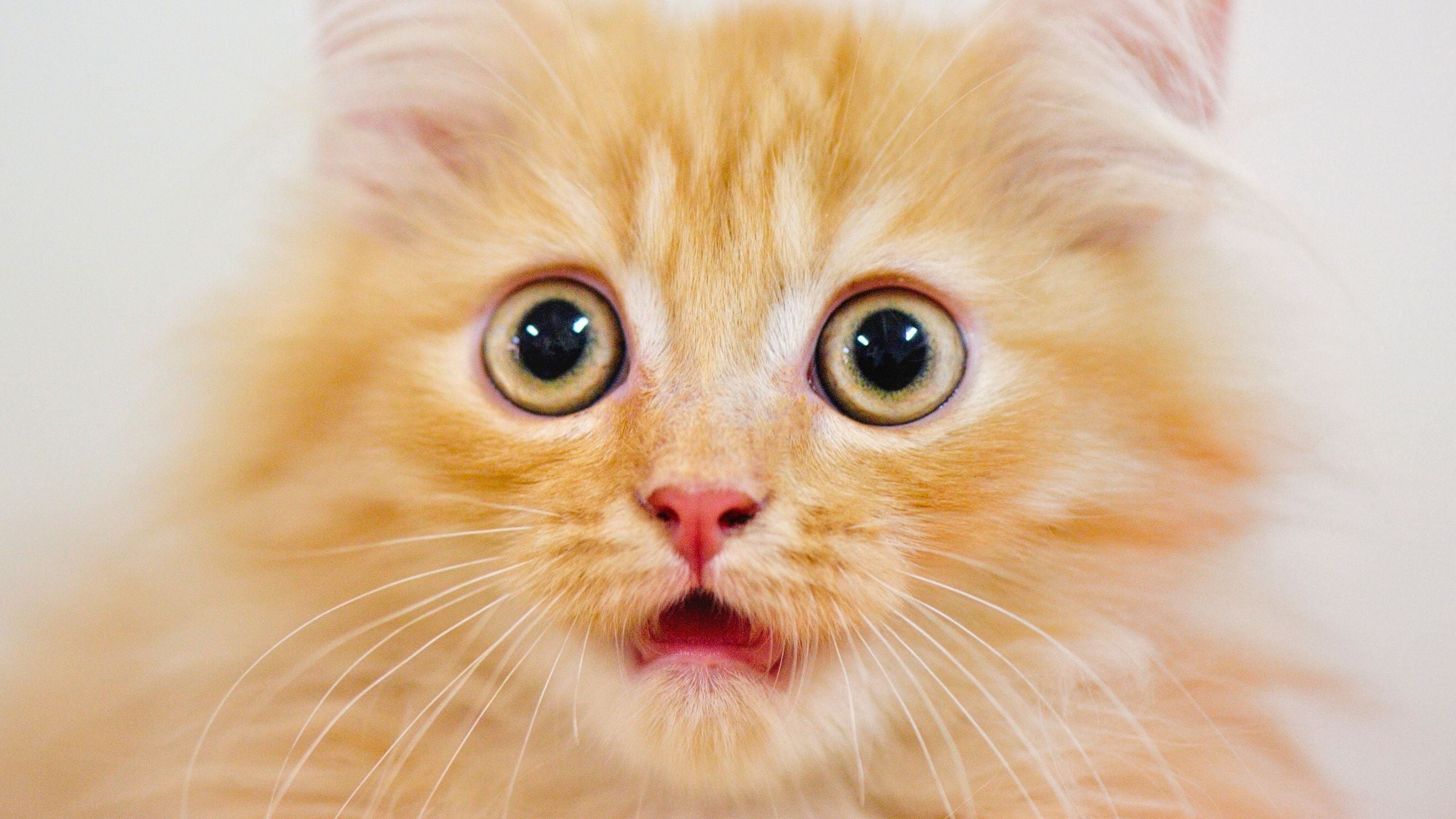
Эрдэмтэд муурны үсний улбар шар өнгийг тодорхойлдог генийн онцлог болон энэ нь хүйсийн хамааралтайгаар хэрхэн илэрдэг болохыг 60 жилийн дараа тайлбарлалаа.
Судлаачдын хоёр бие даасан баг муурны улбар шар өнгийн үсний үндэс нь ДНХ-ийн дарааллын тодорхой хэсэг алдагдсантай холбоотой болохыг тогтоожээ. Стэнфордын их сургуулийн генетикч Грег Барш болон түүний багийнхан улбар шар өнгийн үс ургадаг арьсны эсүүдэд “Arhgap36” хэмээх ген 13 дахин илүү идэвхтэй илэрч байгааг илрүүлсэн байна. Гэвч судалгаагаар генийн уураг кодлох хэсэгт биш, харин түүний өмнөх дараалалд 5 килобазын өөрчлөлт буюу тасалдал байгааг тогтоожээ.
Энэхүү генетикийн өөрчлөлт нь муурны X хромосом дээр байрладаг нь улбар шар өнгийн муурнууд ихэвчлэн эр хүйстэй байдаг шалтгааныг тайлбарлаж байна. Эмэгчин муурны хувьд X хромосомын идэвхгүйжилээс шалтгаалан улбар шар өнгө нь хар эсвэл цагаан өнгөтэй холилдсон хээг үүсгэдэг. Энэхүү мутаци нь муурны эрүүл мэнд болон танин мэдэхүйн чадварт ямар нэгэн сөрөг нөлөө үзүүлдэггүй болохыг эрдэмтэд онцолжээ.
Судалгааны багийнхны дүгнэлтээр, дээрх генийн хэт идэвхжил нь пигментийн эсүүдэд нөлөөлж, хар хүрэн өнгийн эумеланиныг улаан болон шар өнгийн феомеланин пигмент болгон хувиргадаг байна. Ийнхүү олон арван жил нууцлаг байсан муурны өнгөний генетикийн тайлал нь Current Biology сэтгүүлд хэвлэгджээ.
Дэлгэрэнгүйг эх сурвалжаас харах
↓Эх сурвалжийг нээх ↓
If you’ve ever lived with an orange cat, you already know they’re built different. It turns out, genetically speaking, they really are.
Orange fur is one of the most recognizable traits in the feline world, and one of the most stubborn mysteries in cat genetics.
Unlike most coat colors in mammals, it doesn’t follow the usual rules of inheritance – and for more than 60 years, the exact gene responsible stayed hidden.
Two independent teams of researchers found any fiery-hued fuzz on our beloved clawed floofs is likely the result of a missing segment of DNA in a non-protein-coding part of the cat’s genome.
“It’s been a genetic mystery, a conundrum,” Stanford University geneticist Greg Barsh told Sara Reardon at Science in 2024, when the findings were first shared in preprint studies.
Barsh and his colleagues discovered cat skin cells from which orange fur sprouts express 13 times as much RNA from a gene called Arhgap36, compared with skin cells from cats with no orange hair.
Expecting to find the protein-coding section of the over-productive Arhgap36 gene had mutated, the researchers were surprised to find it was the sequence preceding it that instead contained a deletion, presumably affecting the rest of the gene’s expression.
The 5 kilobase deletion was present in every orange cat the researchers examined out of a database of 188 cats, which included 145 orange, 6 calico/tortoiseshell, and 37 nonorange cats.
One finding didn’t come as a surprise. As long predicted, the mutated gene is located on the cat’s X chromosome, explaining why the orange color appears so differently between the sexes. Most orange cats are male, while most female cats with some orange fur end up with patchworks of different colors.
“Taken together, these observations provide strong genetic and genomic evidence that the 5 kb deletion causes sex-linked orange,” Barsh and team write in their paper.
Ever since humans first co-habitated with cats nearly 10,000 years ago, it’s been a curiosity that a black cat and an orange cat can be parents to an unexpected array of kitten colors.
Male kittens from this pairing are mostly either orange or black, as might be expected. But female kittens can have a calico’s patchwork of black, orange and white, or a tortoiseshell’s marbling of orange scattered through black fur.
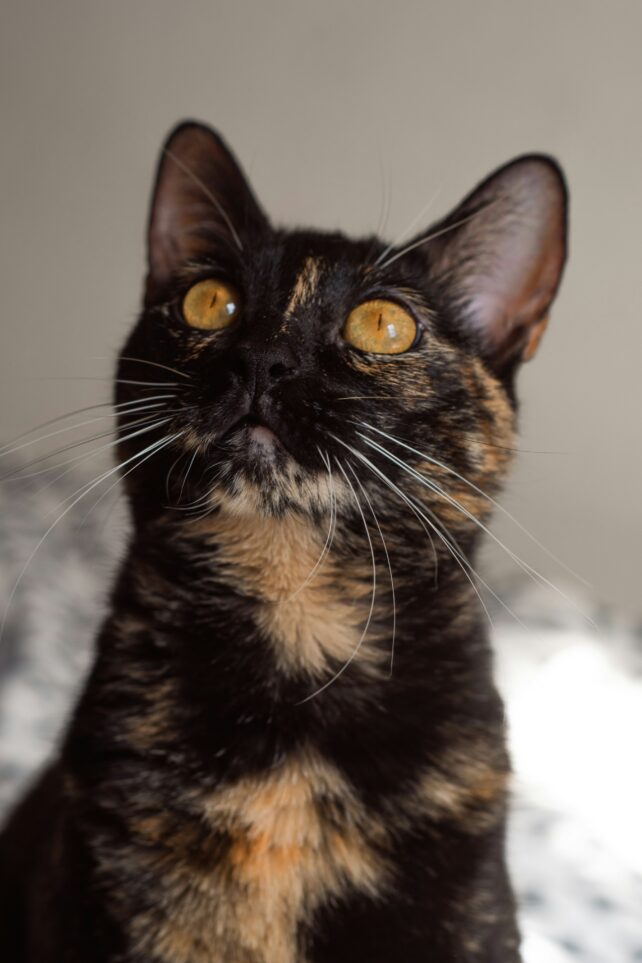
Both teams confirmed the mutation responsible for orange fur is on the X chromosome, which is why such clear differences in colored patterning can appear between the sexes.
Unlike males that end up with just one copy of this mutation on their solitary X chromosome, females end up with two copies, one on each the X’s they receive from each parent.
Mammals randomly inactivate one of the two X chromosomes in each of their cells to avoid expressing an excess of the chromosome’s products. This leaves female orange kitties with an active orange mutation in some of their developing skin-cell tissues, right next to neighboring cells in which the X chromosome with the mutated gene is deactivated.
On rare occasions that both X chromosomes carry the mutation, the female grows into furry fireball as ginger as any male.
Orange cats happen to have a hilarious reputation for not being the brightest of their species. Anecdotes aside, such links between kitty coloration and cognition are scientifically unsupported, with no obvious negative consequences from this mutation in health or mental wellbeing.
Arhgap36is known to cause developmental problems in other animals when it is over- or under-functioning.But it seems that in orange cats, the gene is overexpressed only in developing and mature pigment cells called melanocytes.
“The difference between tortoiseshell and calico cats is the presence of an additional white spotting mutation in calico that affects the ability of developing melanocytes to survive as they migrate away from the neural crest, allowing melanocyte clones that do survive to expand in a larger body region,” Barsh and colleagues explain.
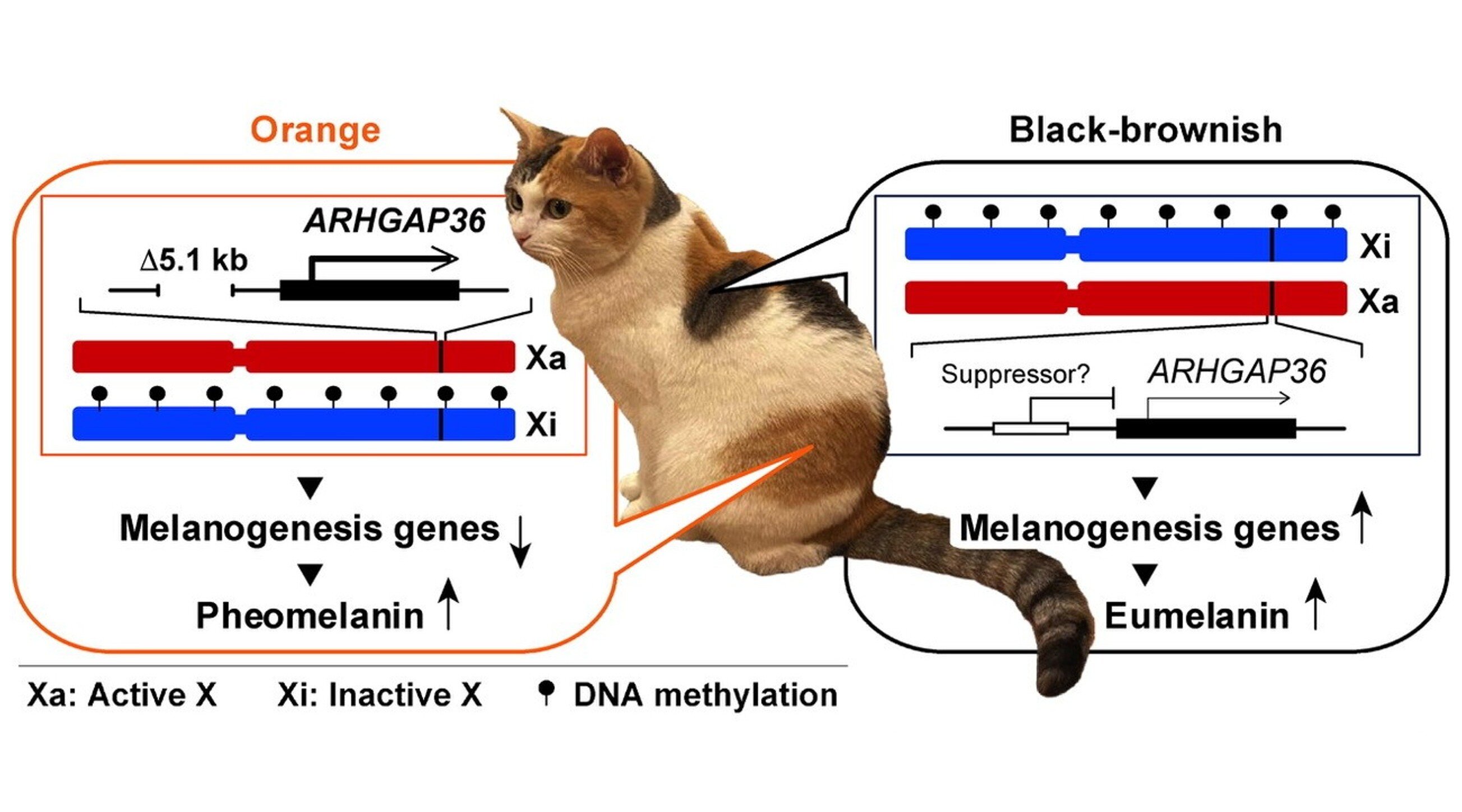
The second study, led by Kyushu University geneticist Hidehiro Toh, also identified Arhgap36 as the orange cat fur gene. They found greater expression of this gene suppresses color pigment genes, shifting the dark brown to black eumelanin pigments to the reddish to yellow pheomelanin pigments.
Whatever’s behind their fiery coats, orange cats are in good company.
A recent study spanning 93 countries found that nations with more cats tended to report higher levels of happiness overall – though as with any 93-country comparison, the researchers are the first to admit correlation isn’t causation.
This research has been published in Current Biology, here and here.
This article was fact-checked by Fiona MacDonald and edited by Fiona MacDonald. While we pride ourselves on our process, we are only human. If you spot a mistake, please let us know.

