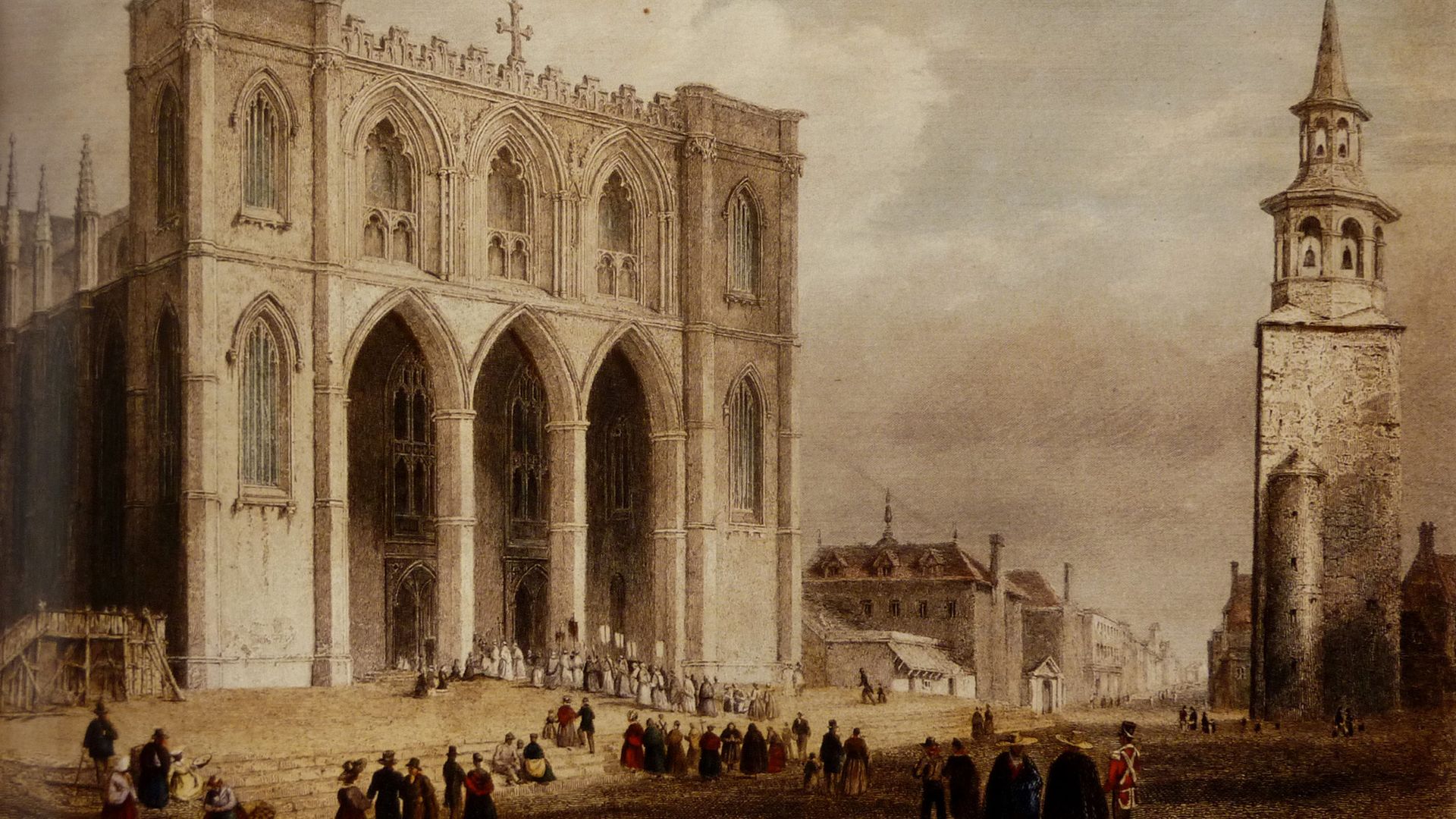
Шинэ судалгаагаар Квебек дэх эртний оршуулгын газарт нутаглуулсан хүмүүс нь зөвхөн Франц-Европ гаралтай болохыг ДНХ-ийн шинжилгээгээр тогтоожээ.
Канадын Труа-Ривьер дэх Квебекийн их сургуулийн биологийн антропологич Диан Мартин-Мояа болон түүний багийнхан 1683-1796 оны хооронд ашиглагдаж байсан Монреалийн Нотр-Дам оршуулгын газрын 45 хүний араг ясанд ДНХ-ийн шинжилгээ хийжээ. Судалгаагаар тэдгээр хүмүүсийн бүгд Франц-Европ гаралтай болох нь батлагдаж, уугуул иргэд эсвэл Африк гаралтай хүмүүстэй холилдсон ул мөр илрээгүй байна. Энэхүү олдвор нь колоничлолын эхэн үед уугуул иргэд болон Европын суурьшигчид хоорондоо гэрлэж байсан гэх түгээмэл түүхэн таамгийг үгүйсгэж байна.
Судлаачдын үзэж буйгаар, тухайн үед уугуул иргэд болон Африк гаралтай хүмүүс нийгмийн хүрээнээс гадуурхагдсан байх магадлалтай бөгөөд тэднийг ихэвчлэн хотын захад эсвэл ядуусын оршуулгын газарт хөдөөлүүлдэг байсан аж. Мартин-Мояа энэхүү судалгаа нь тухайн үеийн бүх хүн амыг төлөөлөхгүй ч, өнөөгийн франц-канадуудын дунд уугуул иргэдийн удамшил маш хязгаарлагдмал байгааг харуулж байна гэв.
ДНХ-ийн шинжилгээгээр олон үе дамжсан удамшлын холбоо илэрсэн ч булшнууд нь тархмал байрлалтай байсан нь тухайн үеийн оршуулгын зан үйл нь биологийн төрөл садангийн холбоогоор бус, өөр бусад хүчин зүйлээс хамааралтай байсныг гэрчилж байна. Эрдэмтдийн дүгнэснээр, удамшлын биологийн шинж тэмдэг нь уугуул иргэдийн харьяаллыг бүрэн тодорхойлохгүй бөгөөд соёл, олон нийт, газар нутагтай холбоотой харилцаа нь илүү чухал ач холбогдолтой юм.
Дэлгэрэнгүйг эх сурвалжаас харах
↓Эх сурвалжийг нээх ↓
Ancient DNA from skeletons buried in a historic cemetery in Quebec is changing people’s understanding of their Indigenous ancestry. Contrary to popular belief, there may be little truth to stories of intermarriage between Indigenous and French people during the early days of colonization, according to a new archaeology study published Oct. 5 in the journal PNAS.
“Family stories of an Indigenous ancestor are very common” in Quebec, study first author Diane Martin-Moya, a biological anthropologist at the University of Quebec in Trois-Rivières in Canada, told Live Science in an email, and “commercial genealogy and DNA tests have amplified this.” But distant or claimed Indigenous identities can actually undermine the rights, resources and recognition of Indigenous nations, she said.
To learn more about the founders of Quebec, Martin-Moya and co-authors investigated Notre-Dame Cemetery, which was established in Montreal in 1683 and used for Catholic burials until 1796. Based on previous studies of the skeletons in the cemetery, experts disagreed on whether people of Indigenous, European, African or mixed ancestry were buried there. To settle the question, Martin-Moya and her colleagues sequenced DNA from 45 people buried in the cemetery and compared it with the genomes of people from Europe, West Africa and Indigenous groups in the Americas.
“The ancient DNA showed that all 45 individuals we analyzed had French European ancestry, with no sign of recent Indigenous or African admixture,” Martin-Moya said of the research, which she conducted while at the University of Montreal.
These findings suggest that people descended from Indigenous and African populations may have been marginalized in early Montreal, challenging the popular narrative of cooperation and intermarriage, she said.
“Our sample is small and comes from a single cemetery, so this does not show that such unions never happened,” Martin-Moya cautioned. “It is, however, consistent with genealogical and genetic studies suggesting that Indigenous ancestry among present-day French Canadians is very limited.”
The apparent lack of genetic mixing among European, African and Indigenous populations in this cemetery group “provides a perspective on population relationships during the colonial period, one where perhaps nongenetic interactions were present but no biological relationships were found,” Raquel Fleskes, a molecular anthropologist at Dartmouth College who was not involved in the research, told Live Science.
The DNA helped the researchers find several genetic lineages of people that spanned multiple generations. But the graves were scattered across multiple areas of the cemetery, suggesting that burials were not organized into family plots. This finding suggests that, in the 17th century, people in Montreal may have been burying their dead in a way that was not defined by strict biological kinship ties, Fleskes said.
One cemetery, many possibilities
Martin-Moya stressed that the results of the new study do not necessarily apply to all of colonial Montreal.
“Not identifying recent Indigenous or African admixture in this sample does not imply that Indigenous or African-descended people were absent from the city,” Martin-Moya said.
In addition, “biological ancestry cannot by itself establish Indigenous belonging,” as it “is rooted in kinship, community and relationships with land, not in blood or DNA,” she added.
Changes in the use of the cemetery over time also may have influenced the findings, as reburials and later urban development disturbed or destroyed earlier graves.
“Those buried inside the church, mostly clergy and wealthier residents, were more likely to be exhumed and moved,” Martin-Moya explained, while the city’s poorer residents were buried outside the church and further buried beneath the expanding city. This means that the skeletons in the study may have been the remains of lower-class French colonists.
- 11,000-year-old settlement in Canada could rewrite history of Indigenous civilizations in North America
- Inuit figurine: A 700-year-old Indigenous carving of a European made a century before Columbus
- The ancestors of today’s Indigenous people arrived in the Americas during the coldest part of the last ice age, study suggests
Archival records show that some Indigenous people were buried in Catholic cemeteries in Montreal as early as the 17th century, Martin-Moya said. “Over time, though, Indigenous communities were increasingly separated from the colonial town through land dispossession and the relocation of missions away from urban centers,” she explained. “Their dead would most likely have been buried in those communities. Enslaved people, both Indigenous and African, were often buried on their enslaver’s property or in cemeteries for the poor.”
The results of the study don’t mean that Québécois have no Indigenous ancestors or that relations between French settlers and Indigenous peoples were only hostile, Martin-Moya said. Those relationships were complex and included alliances, trade, conflict and, sometimes, family ties.
“What our results suggest is that when such ancestry exists, it needs to be put in context,” Martin-Moya said. “A single ancestor who lived more than 300 years ago does not say the same thing about a person today as being raised within an Indigenous family, community or nation.”
How much do you know about the first people to reach the Americas? Find out with our First Americans quiz!

