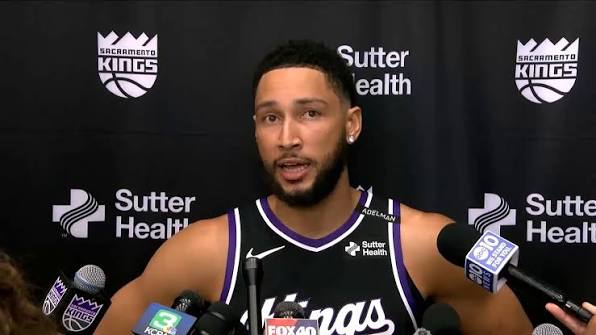
Сакраменто Кингс багийн тоглогч Бэн Симмонс улирлын нээлтийн тоглолтын өмнөхөн бэлтгэлийн үеэр баруун хөлний ахиллес шөрмөсөө тасалсан нь багийн хувьд томоохон гарз боллоо.
30 настай тоглогч өнгөрсөн баасан гарагт Сакраменто Кингс болон Сан Антонио Спөрс багуудын урьдчилсан тоглолтын үеэр 14 оноо, 8 самбараас бөмбөг авалт, 7 оновчтой дамжуулалт хийж, талбай дээрээ эргэн ирснээ харуулсан байсан юм. Гэвч ердөө хоёр хоногийн дараа бэлтгэлийн үеэр хүнд бэртэл авснаар мэс засалд орох шаардлагатай болж, улмаар NBA-ийн ээлжит улирлын нээлтийн тоглолтын өмнөхөн талбайгаас дахин хөндийрлөө.
Бэн Симмонс нь 2016 оны NBA Draft-аас нэгдүгээр сонголтоор шалгарч, Rookie of the Year зэрэг олон амжилтыг үзүүлж байсан ч сүүлийн жилүүдэд бэртэл гэмтэл болон сэтгэл зүйн асуудлуудаас шалтгаалан тогтвортой тоглолтоо үзүүлж чадахгүй байсан юм. Өнгөрсөн 2025-26 оны улирлыг бүхэлд нь өнжсөн тэрээр есдүгээр сард Сакраменто Кингс багтай нэг жилийн гэрээ байгуулж, карьераа дахин эхлүүлэх боломжийг эрэлхийлж байв.
Тэрээр бэртлийнхээ дараа сошиал хуудсаараа дамжуулан “Энэ бол миний түүхийн төгсгөл биш” хэмээн мэдэгдсэн байна. Одоогоор түүнийг дахин хэзээ талбайд эргэн ирэх нь тодорхойгүй байгаа бөгөөд ахиллес шөрмөсний гэмтэл нь хөдөлгөөн болон хамгаалалтын ур чадвараараа онцгойрдог тоглогчийн хувьд хамгийн хүнд сорилт болох юм.
Дэлгэрэнгүй эх сурвалжийг харах
Эх сурвалжийг нээх ↓
For the first time in a long time, Ben Simmons had given basketball a reason to believe again. More importantly, he appeared to have found a reason to believe in himself.
And then, in the space of a single practice, it was all taken away.
On Friday night, Simmons had produced an encouraging performance in the Sacramento Kings’ preseason finale against the San Antonio Spurs. Fourteen points, eight rebounds, seven assists. Nothing extraordinary by the standards he once established, but numbers that meant considerably more than their place on a box score suggested. He was moving, creating, competing. He was playing basketball again.
Two days later, the Sacramento Kings announced that the 30-year-old had torn his right Achilles tendon during a live practice drill. Surgery will follow, and his long-awaited return to regular-season basketball has been derailed before Sacramento could even play its opening game.
Three days before the season opener. After an entire year away from the NBA. After everything he had already endured.
There are injuries in professional sports that feel unfortunate. There are others that feel unfair. And then there are moments like this, when the timing is so merciless that even the most hardened observer struggles to make sense of it.
For Simmons, this is not simply another entry on an increasingly troubling medical record. It is another devastating interruption in a career that has spent years trying to find its way back to something resembling normality.
And for basketball, it is a loss that deserves more sympathy than skepticism.
Simmons was once among the most fascinating talents the NBA had ever seen. A 6-foot-10 playmaker with exceptional court vision, the defensive versatility to guard virtually every position, and the ability to turn a defensive rebound into an immediate scoring opportunity. He could dictate the rhythm of a game without attempting a jump shot. He could make teammates better without dominating the scoring column. He wasn’t a conventional superstar, and that was precisely what made him special.
Selected first overall in the 2016 NBA Draft, Simmons overcame a foot injury that cost him his first season to become Rookie of the Year in 2018. Three consecutive All-Star appearances followed, alongside an All-NBA selection and two All-Defensive First Team honors.
At his best, he was one of basketball’s most distinctive players. Not because he did everything, but because the things he did exceptionally well were almost impossible to replicate.
Somewhere along the way, however, the conversation changed. His shooting limitations became a constant source of criticism. His struggles in Philadelphia became a defining narrative. Injuries, questions about confidence, the difficult separation from the 76ers, and subsequent disappointments in Brooklyn turned a remarkable young talent into one of the league’s most scrutinized figures.
Eventually, the discussion surrounding Simmons seemed to have less to do with basketball than with everything people believed was wrong with him. His talent was questioned. His commitment was questioned. His willingness to compete was questioned.
And through it all, his body continued to betray him.
Persistent back problems robbed him of the physical freedom that had once made his game so extraordinary. His time with the Nets never developed into the fresh beginning many had envisioned. A subsequent stint with the Los Angeles Clippers offered another opportunity, but the player who had once looked capable of redefining his position was now fighting simply to establish a consistent presence on an NBA floor.
He ultimately missed the entire 2025-26 season. It would have been understandable if Simmons had decided that enough was enough.
He had earned significant money, received individual accolades and experienced the very highest levels of professional basketball. Walking away at 30 would not have erased any of those accomplishments. But he chose to come back.
Sacramento offered him a one-year contract in September, giving him another chance to rebuild his career. The expectations were different this time. Nobody reasonably needed Simmons to become the superstar Philadelphia once imagined. Nobody required him to suddenly develop an outside shot or silence every critic who had spent years discussing his shortcomings. He simply needed an opportunity to play, contribute and rediscover some of the joy that the game had seemingly taken from him.
His encouraging preseason performances suggested that such a possibility was real. And that is what makes Sunday’s injury so heartbreaking. Simmons wasn’t standing at the beginning of another offseason promising a comeback. He wasn’t posting workout videos or talking about what he hoped to accomplish months down the road. He was already back on an NBA court. He had completed training camp. He had played preseason games. He had shown flashes of the passing, anticipation and all-around instincts that once made him such a captivating player. For the first time in a long time, the discussion could have returned to what Ben Simmons was doing rather than everything he supposedly couldn’t do.
Instead, another season of uncertainty awaits. A torn Achilles is the cruelest of setbacks for a player whose effectiveness has depended so heavily on movement, athleticism and defensive mobility. The road back will be demanding, and with Simmons now 30 years old, there are legitimate questions about what kind of player he can become after another major injury. Nobody can honestly answer those questions today. And perhaps nobody should have to. Because somewhere behind the contract figures, the draft position, the missed games and the endless debates about his career, there is a person who has spent years fighting to return to the profession he loves.
That reality too often disappears when athletes become internet punchlines. It is easy to criticize a missed shot, a questionable decision or an underwhelming performance. It is considerably harder to comprehend the emotional weight of rehabilitation, the uncertainty of recurring physical setbacks and the frustration of having progress erased through circumstances largely beyond one’s control. Professional athletes live in a world where their bodies are their livelihoods. When those bodies fail them, the consequences extend far beyond the court.
For Simmons, Sunday’s injury means more rehabilitation, more uncertainty and more time watching a game he has already spent far too long watching from the sidelines. For the Kings, it means losing a potentially valuable contributor before their season begins. For the NBA, it means being denied the chance to witness one of its most unusual talents attempt to write a better chapter.
Basketball is richer when different kinds of players can succeed. It is richer when extraordinary passers, disruptive defenders and unconventional talents have room to express themselves. Simmons, for all his flaws and limitations, offered something genuinely different.
The league didn’t need him to become an MVP candidate again. It would have been enough to see whether the player who once made the game look so effortless could find a meaningful place in it once more. That possibility, at least for now, has disappeared.
Yet Simmons has refused to describe this setback as the conclusion of his career. In an emotional social media statement following the diagnosis, he characterized the injury as another chapter in his journey, insisting it was “not the end of my story.”
Whether he can successfully return remains unknown. There are no guarantees in professional sports, and certainly none after the physical challenges Simmons has already experienced. But perhaps this is the moment to stop measuring his career exclusively against the extraordinary expectations that accompanied his arrival in Philadelphia. Perhaps it is time to appreciate how much effort it takes to keep coming back when the game has repeatedly given you reasons to stop.
Ben Simmons has made mistakes. He has had disappointing performances. His career has never followed the trajectory so many envisioned when he entered the NBA. None of that makes what happened on Sunday any less devastating.
He had already lost so much time. He had already endured so many setbacks. And just when there appeared to be some light at the end of an exceptionally long tunnel, another injury pushed him back into darkness.
Basketball will continue. The Kings will play their season. New stars will emerge, new stories will unfold, and the NBA will move forward with the relentless indifference of professional sports. But somewhere, Ben Simmons will be beginning another recovery, trying once again to reclaim something that once came so naturally to him.
There is no guarantee that his comeback story will eventually have the ending he deserves. There is only the hope that he gets another chance to write it. Because the real tragedy here isn’t that Ben Simmons failed to become everything basketball once expected him to be.
It’s that, just when he had fought his way back to being a basketball player again, the game was taken away from him once more.
The post The Heartbreaking Cruelty Of Ben Simmons’ Achilles Injury appeared first on OpenCourt Basketball.

