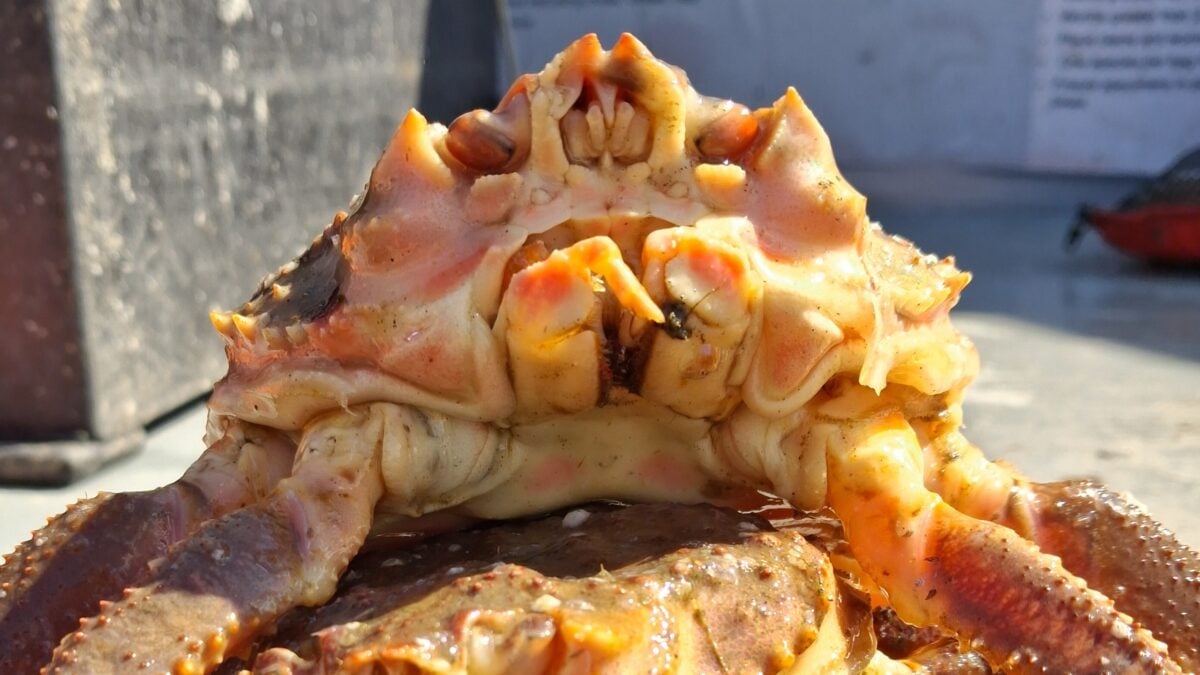
Уур амьсгалын өөрчлөлтийн улмаас далайн усны температур нэмэгдсэн нь Берингийн тэнгисийн экосистем дэх хавчны төрөл зүйлийн харьцаанд эрс өөрчлөлт авчирлаа.
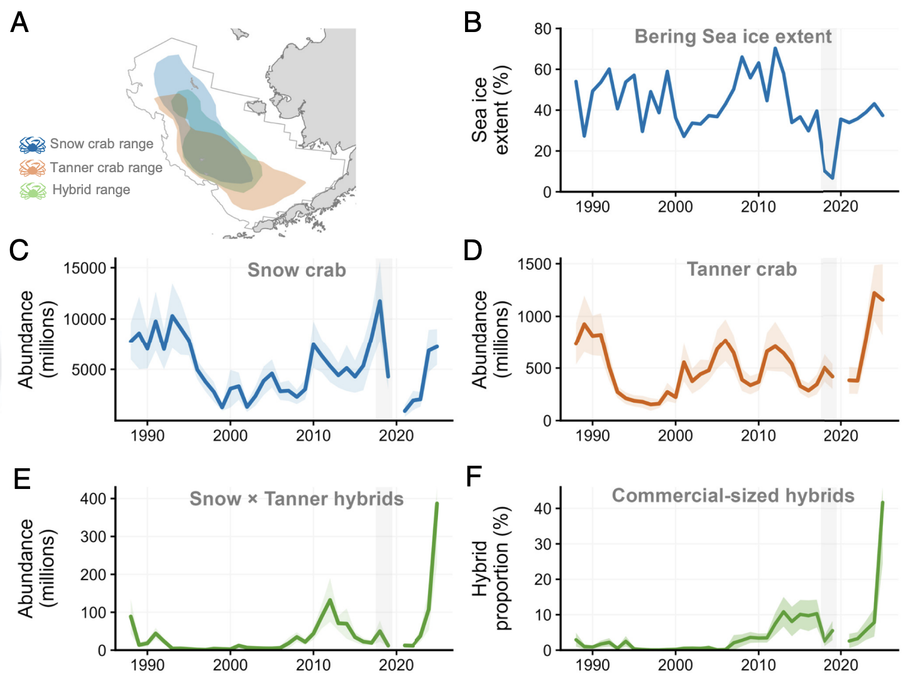
NOAA-ийн Аляскийн загас агнуурын шинжлэх ухааны төвийн судлаачид 2018-2019 онд болсон далайн дулааны давлагааны дараа цасан хавчны (Chionoecetes opilio) тоо толгой эрс цөөрсөнийг илрүүлжээ. Тухайлбал, 2018 онд 8 тэрбум орчим байсан цасан хавч 2021 он гэхэд 1 тэрбум хүртэл буурсан байна. Энэхүү байгалийн гамшиг нь далайн ёроолын хүйтэн бүсийн температурыг нэмэгдүүлж, хавч олноор өлсгөлөнд нэрвэгдэхэд хүргэсэн юм.
Үүний зэрэгцээ эрдэмтэд цасан хавч болон Таннер хавчны (Chionoecetes bairdi) эрлийзүүд Берингийн тэнгист урьд өмнө байгаагүй ихээр олширсныг тогтоожээ. 2025 оны байдлаар эдгээр эрлийз хавчны тоо түүхэн дунджаас 13.4 дахин нэмэгдэж, арилжааны зориулалтаар агнах боломжтой эр хавчны бараг тал хувийг бүрдүүлэх болсон байна. Судлаач Эрин Федевагийн тайлбарласнаар, цасан хавчны тоо толгой эрс цөөрсөн нь тэдний хоол тэжээлийн өрсөлдөөн болон махчин амьтны дарамтыг багасгаж, эрлийз хавч үржих таатай нөхцөлийг бүрдүүлжээ.
Эрлийз хавчны тоо толгой ийнхүү огцом өссөн нь загас агнуурын менежментэд шинэ сорилт болж байна. Учир нь эрлийз хавч нь цасан хавчны нөөцийг нөхөн сэргээхэд хэрхэн нөлөөлөх нь тодорхойгүй бөгөөд тэдний нөхөн үржихүйн чадвар болон экосистемд гүйцэтгэх үүрэг нь шинжлэх ухааны хувьд нээлттэй асуудал хэвээр байна. Аляскийн Загас, ан агнуурын газар эрлийз хавчны тоо толгойг харгалзан агнуурын квотыг өөрчлөх боломжтой ч энэ нь цасан хавчны эмзэг нөөцийг дахин шавхах эрсдэлтэй гэдгийг мэргэжилтнүүд анхааруулж байна.
Дэлгэрэнгүйг эх сурвалжаас харах
↓Эх сурвалжийг нээх ↓
A population of once-rare hybrid crabs has surged to record numbers, following a marine heatwave that hit the Bering Sea in 2018.
This dramatic increase in hybrid crabs is not something marine scientists had factored into their plans for managing this decimated fishery, but now they’ve worked out the likely cause.
Their results are published in Proceedings of the National Academy of Sciences.
Almost every year since 1982, researchers at NOAA’s Alaska Fisheries Science Center have trawled the bottom of the eastern Bering Sea to check the state of the ecosystem.
NOAA is especially interested in keeping track of the commercially valuable species – worth hundreds of millions of US dollars each year – that call this sea home.
When a marine heatwave rolled across the Bering Sea in 2018-2019, it set off one of the most significant marine mass mortality events on record.
The effects of marine heat waves are far-reaching and often unpredictable, since we haven’t historically seen these climate events unfold with the intensity they’ve reached in recent decades.
These marine heat waves are a direct result of the climate crisis, as we continue to burn fossil fuels, which release greenhouse gases into our atmosphere.
The ocean absorbs most of the heat trapped by these gases, which is why we’re seeing marine heat waves more frequently, in ecosystems that are unprepared for such dramatic changes to the temperature.
The NOAA researchers watched the snow crab (Chionoecetes opilio) population collapse via their trawler samples. In 2018, before the heatwave, they estimated the population was about 8 billion crabs strong.
In the years that followed, those numbers began to plummet.
Then, in 2020, the researchers missed the annual trawl for the first time since it began.
When they returned in 2021, they estimated only about 1 billion snow crabs remained.
The heat wave drastically reduced winter sea ice and raised temperatures in the cold pool on the bottom of the Bering Sea, setting off a chain reaction that meant many snow crabs starved to death.
In a critical moment for the fishery, the Alaska Department of Fish and Game banned commercial fishing of snow crabs for the first time.
The ban lasted roughly two years, from 2022 to 2024.
But in the meantime, scientists noticed something very strange. They were pulling up nets with an unusual number of hybrid crabs: part snow crab, part Tanner crab (Chionoecetes bairdi).
Hybrid snow-Tanner crabs are not unheard of, but they’ve always been considered rare. They happen when a snow crab and a Tanner crab mate.
In 2025, the abundance of these hybrids was 13.4 times greater than the historical average.
Hybrids typically never exceeded 10 percent of the commercial-sized male crab population. In 2025, nearly half of the snow crabs available to catch were hybrids.
“Because snow-Tanner hybrid crab have historically been rare in the Bering Sea and very little is known about processes that influence their abundance and persistence, scientists and fishery managers hadn’t expected hybrids to also benefit from these warmer waters,” NOAA fisheries biologist Erin Fedewa told ScienceAlert.
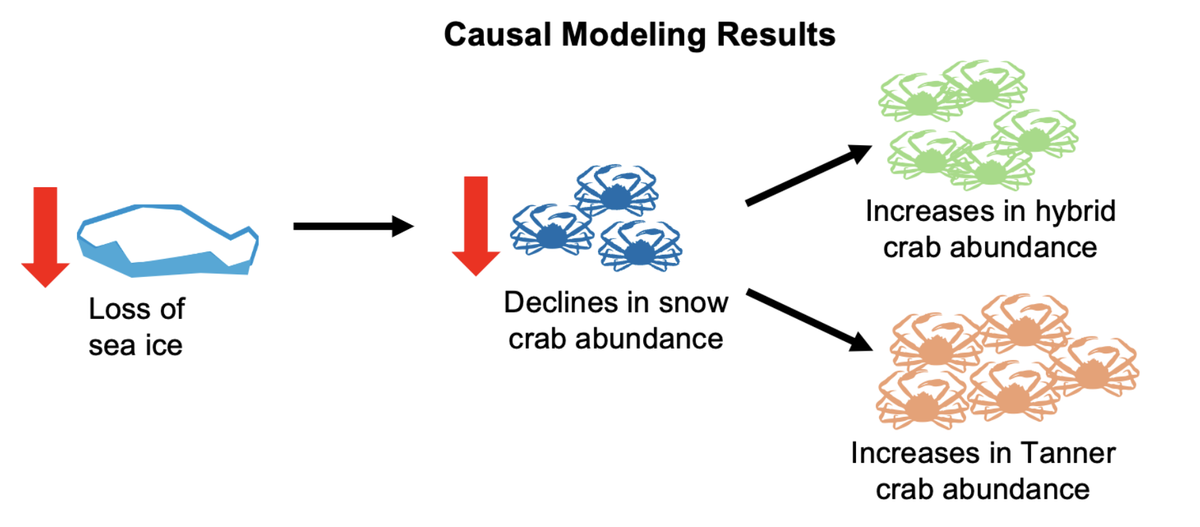
Fedewa and team re-created the possible sequence of events via computer modeling to see which factors could have led to the sudden surge of hybrid crabs.
“Our study provides evidence that decreased sea ice during the marine heatwave drove the snow crab population collapse, which subsequently triggered increases in hybrid crab abundance, likely through reduced competition and predation from snow crab,” NOAA fisheries biologist Erin Fedewa told ScienceAlert.
Hybrids typically never exceeded 10 percent of the commercial-sized male crab population. In 2025, nearly half of the snow crabs available to catch were hybrids.
When two different species interbreed like this, their offspring are sometimes unable to reproduce. For that reason, hybrids are not considered a species in themselves. This kind of interbreeding could therefore further diminish the snow crab population.
“Very little is [known] about the reproductive potential of snow-Tanner hybrid crab, so it’s unclear if hybrids are able to reproduce and become ecologically independent from parent species,” Fedewa said.
“Because the dramatic increase in hybrids has unfolded in the past few years, the potential ecological implications of the event remain to be seen. The ecological role of hybrids remains an important research question and it’s unclear what the consequences, if any, may be on parent species.”
In the meantime, there are immediate consequences for fisheries management.
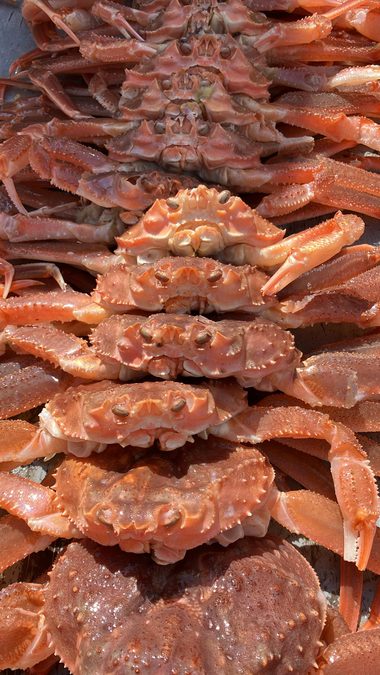
Legal-sized male hybrids are technically harvested as snow crab, but because they’ve been historically rare, they’ve been left out of crab harvest quotas.
That could add further problems when it comes to helping the snow crab population recover.
“It is within the purview of the Alaska Department of Fish and Game… to increase snow crab total allowable catch accordingly to reflect abundance increases in harvestable hybrids,” Fedewa explained.
“However, this strategy is generally not ideal, as it poses the risk of increasing exploitation on snow crab, a population that is still rebuilding following the collapse.”
The research has been published in Proceedings of the National Academy of Sciences.
This article was fact-checked by Fiona MacDonald and edited by Fiona MacDonald. While we pride ourselves on our process, we are only human. If you spot a mistake, please let us know.

