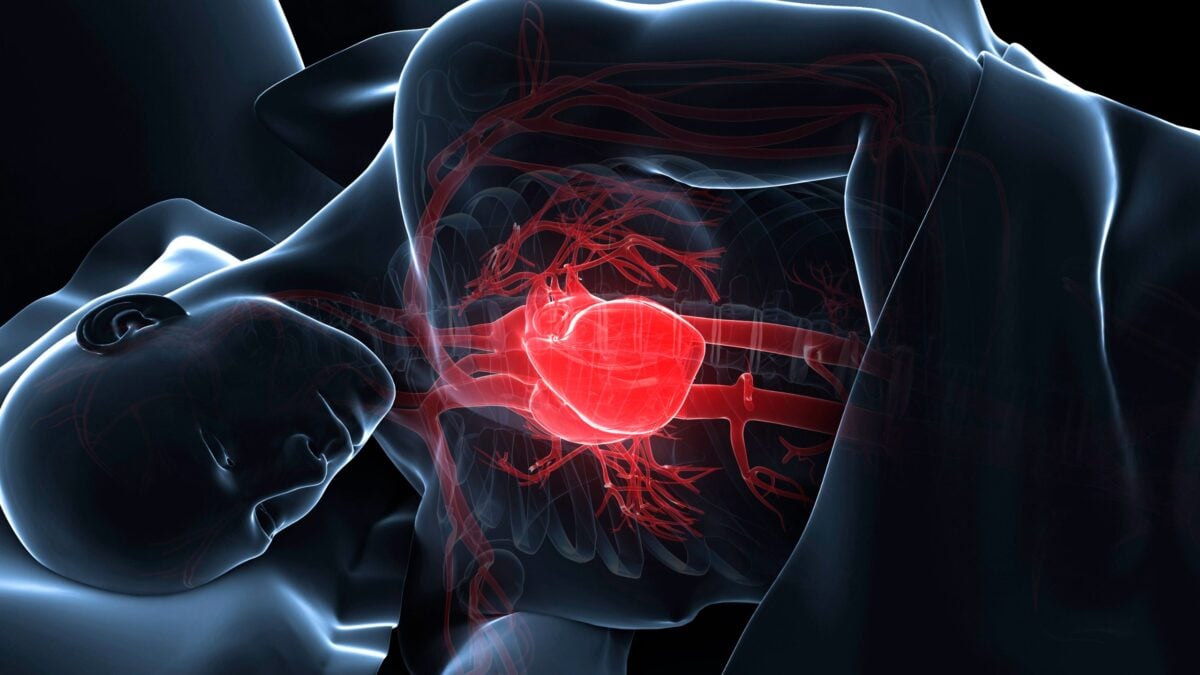
Хиймэл оюун ухаанд суурилсан шинэ аргачлал нь нойрны үеийн зүрхний үйл ажиллагааг шинжлэх замаар ирэх 10 жилийн хугацаанд зүрхний хэм алдагдал, цус харвалт болон зүрхний дутагдлын эрсдэлийг тодорхойлох боломжтойг SLEEP сэтгүүлд нийтэлжээ.
Emory University-ийн эрдэмтдийн удирдсан судалгааны баг 16,000 орчим өвчтөний эрүүл мэндийн мэдээлэлд суурилан гүнзгий сургалтын загварыг боловсруулсан байна. Уг системийг дараа нь 23,000 гаруй өвчтөний өгөгдөл дээр туршиж үзэхэд нас, хүйс, чихрийн шижин, цусны даралт ихсэх болон тамхи татах зэрэг уламжлалт эрсдэлт хүчин зүйлсээс үл хамааран зүрх судасны өвчлөлийг урьдчилан таамаглах чадвартай болох нь тогтоогджээ.
Судалгааны үр дүнгээс харахад хиймэл оюун ухааны эрсдэлийн оноо нэмэгдэх тусам тосгуурын фибрилляци буюу зүрхний хэм алдагдах эрсдэл 103-172 хувиар, зүрхний дутагдал 69-133 хувиар, цус харвалт 19-40 хувиар, аливаа шалтгаант нас баралт 65-82 хувиар тус тус өсөж байв. Ялангуяа нойрны хамгийн хөнгөн үе шатанд зүрхний цохилтын хэмнэл болон цахилгаан дамжуулалтад гарч буй өөрчлөлтүүд нь ирээдүйн эрүүл мэндийн эрсдэлийг илэрхийлэх гол үзүүлэлт болж байна.
Georgia Institute of Technology-ийн биоанагаахын инженерчлэлийн профессор Гари Клиффорд уг аргыг зүрх судасны өвчнийг эрт илрүүлэх, өвчтөний асаргааг илүү идэвхтэй төлөвлөхөд чухал ач холбогдолтой гэж үзжээ. АНУ-ын NIH-ийн харьяа National Heart, Lung, and Blood Institute-ийн захирлын үүрэг гүйцэтгэгч Дэвид Гоффын хэлснээр, энэхүү шинжилгээг ирээдүйд нойрны судалгааны оношилгооны нэг хэсэг болгон нэгтгэх боломжтой юм.
Дэлгэрэнгүйг эх сурвалжаас харах
↓Эх сурвалжийг нээх ↓
Your dreams may not foretell the future, but the way that your heart falls asleep just might.
Researchers have now shown that in the early stages of sleep, as the nervous system undergoes rapid changes, the heart’s electrical activity can be used to determine future health risks.
All that is needed is the data from one electrocardiogram (ECG) lead, placed on the chest during sleep.
With that, artificial intelligence can predict someone’s risk of an irregular heartbeat, stroke, heart failure, or death from any cause in the next 10 years.
The findings are published in the journal SLEEP, with support from the US National Institutes of Health (NIH).
“This new approach has the potential to identify individuals at risk for cardiovascular disease years before clinical symptoms arise,” says David Goff, acting director of NIH’s National Heart, Lung, and Blood Institute (NHLBI).
“Evaluating whether this information improves traditional risk prediction is an important next step.”
The research team, led by scientists at Emory University, first trained a deep learning system on the public health data of nearly 16,000 patients.
These patients were enrolled in a sleep study at Massachusetts General Hospital in Boston, and as part of the trial, they had their heart activity measured during sleep by an ECG.
Once trained, the AI system was then put to the test on two more datasets, including nearly 10,000 patients from Emory University Hospital and 13,000 patients from Beth Israel Deaconess Medical Center in Boston.
In the end, the model was able to sort participants into different levels of long-term cardiovascular risk.
After adjusting for conventional risk factors and sleep characteristics, the AI system could predict the 10-year risk of several cardiovascular outcomes.
For each standard deviation increase in the AI’s risk score, there was a 103 to 172 percent higher risk of atrial fibrillation, which is an irregular heartbeat.
There was also a 19 to 40 percent higher risk of stroke, a 69 to 133 percent higher risk of heart failure, and a 65 to 82 percent higher risk of death from any cause.
Only one group showed a significantly increased risk of future myocardial infarction, or heart attack.
“Importantly, we found that adding the score from our deep learning model improved prediction of cardiac outcomes beyond established risk factors,” says Gari Clifford, study author and professor of biomedical engineering at Georgia Institute of Technology.
“Adding these scores into sleep studies has great potential for improving early detection of cardiovascular disease, determining who is most at risk, and being more proactive in patient care.”
Issues with sleep, like insomnia, are known risk factors for cardiovascular disease.
During a polysomnography (PSG) test, which is the gold standard for diagnosing sleep disorders, the heart is often recorded as well.
But unless this data throws up a serious red flag, the findings are rarely considered.
All that subtle information on cardiac function could be going to waste.
Traditional models for cardiovascular risk usually consider ECG recordings when a person is awake or walking.
But during sleep, they may also record important fluctuations.
Using a deep learning algorithm, researchers in the US have now found that ECG recordings show strong predictive value for cardiovascular health outcomes when combined with sleep stages.
That’s true even when adjusting for other cardiovascular risk factors, such as age, sex, diabetes, hypertension, and smoking.
During the lightest stage of sleep, for instance, changes to heart rate patterns and electrical conduction seem to be especially indicative of future health risks.
“These rapid autonomic fluctuations may amplify subtle abnormalities in heart-rate dynamics or conduction patterns,” the authors explain.
In fact, incorporating ECG-derived data from sleep improved current cardiovascular risk models by up to 6 percent for atrial fibrillation, up to 9 percent for heart failure, and up to 7 percent for mortality prediction.
These absolute increases might seem modest, the authors explain, but they still improve our ability to separate individuals who do and do not develop heart failure beyond traditional means.
With continued development, the AI system has the potential to help health practitioners screen for patients with sleep disorders who may be at extra risk of heart failure.
“In the future, proven analytical approaches like this could be integrated into existing diagnostic tests for patients undergoing sleep studies as a screening tool for multiple adverse cardiovascular outcomes,” says Goff.
The research has been published in SLEEP.
This article was fact-checked by Fiona MacDonald and edited by Fiona MacDonald. While we pride ourselves on our process, we are only human. If you spot a mistake, please let us know.

