НҮБ-ын тайлангаар дэлхийн дундаж температур энэ зууны дунд үе гэхэд 2 хэмээс давах төлөвтэй байгаа тул ялгаруулалтыг бууруулах арга хэмжээг эрс эрчимжүүлэх шаардлагатай байна.
НҮБ-ын Байгаль орчны хөтөлбөрөөс (UNEP) аравдугаар сарын 21-нд танилцуулсан жил тутмын тайланд дурдсанаар, дэлхийн хүлэмжийн хийн ялгаруулалт өнгөрсөн онд тогтворжсон шинжтэй байгаа ч уур амьсгалын өөрчлөлтийг хязгаарлах зорилтууд биелэгдэхгүй байна. Одоогийн бодлого хэвээр үргэлжилбэл дэлхийн дулаарал энэ зуунд аж үйлдвэржилтийн өмнөх үеэс 2.6-2.8 хэмээр нэмэгдэх төлөвтэй байгаа нь 2015 оны Парисын хэлэлцээрийн дээд хязгаараас хол давсан үзүүлэлт юм.
НҮБ-ын Ерөнхий нарийн бичгийн дарга Антониу Гутерриш дэлхий нийтээр 1.5 хэмийн дулаарлын хязгаарыг давж байгааг тэмдэглээд, халууны давтамж, түймэр болон үер усны гамшиг нь уур амьсгалын өөрчлөлтийн үр дагавар болохыг сануулав. 2026 он нь 1.5 хэмийн босгыг давсан хоёр дахь жил болох төлөвтэй байгаа ч нүүрсхүчлийн хийг ялгаруулахаа зогсоож, агаар мандлаас нүүрстөрөгчийг зайлуулах технологийг өргөжүүлснээр энэхүү хэтрэлтийг эргүүлэн татах боломжтой гэж тайланд дурджээ.
Гэсэн хэдий ч тайланд эерэг хандлагууд бас байна. Тухайлбал, 2025 оны хүлэмжийн хийн ялгаруулалт 2024 оныхоос бага зэрэг буурсан эсвэл тогтвортой байгаа нь газар ашиглалт болон ойн түймрийн ялгаруулалттай холбоотой байж болзошгүй гэж үзэж байна. Мөн сэргээгдэх эрчим хүчний хүчин чадал 2015 оноос хойш таамаглаж байснаас гурав дахин хурдан өссөн бөгөөд нарны эрчим хүчний салбарт өсөлт долоо дахин хурдтай байна.
Centre for Research on Energy and Clean Air байгууллагын судлаач Лаури Мюлливиртагийн тайлбарласнаар, ялгаруулалт оргил үедээ хүрсэн эсэхийг батлахын тулд хэдэн хувиар буурах шаардлагатай гэв. Хэдийгээр нэг жилийн үзүүлэлт хангалтгүй ч цэвэр эрчим хүчний шилжилт, чулуужсан түлшний өртөг нэмэгдэж байгаа зэрэг хүчин зүйлсээр 2030 он гэхэд ялгаруулалт 5-8 хувиар буурах төлөвтэй байна.
Дэлгэрэнгүйг эх сурвалжаас харах
↓Эх сурвалжийг нээх ↓
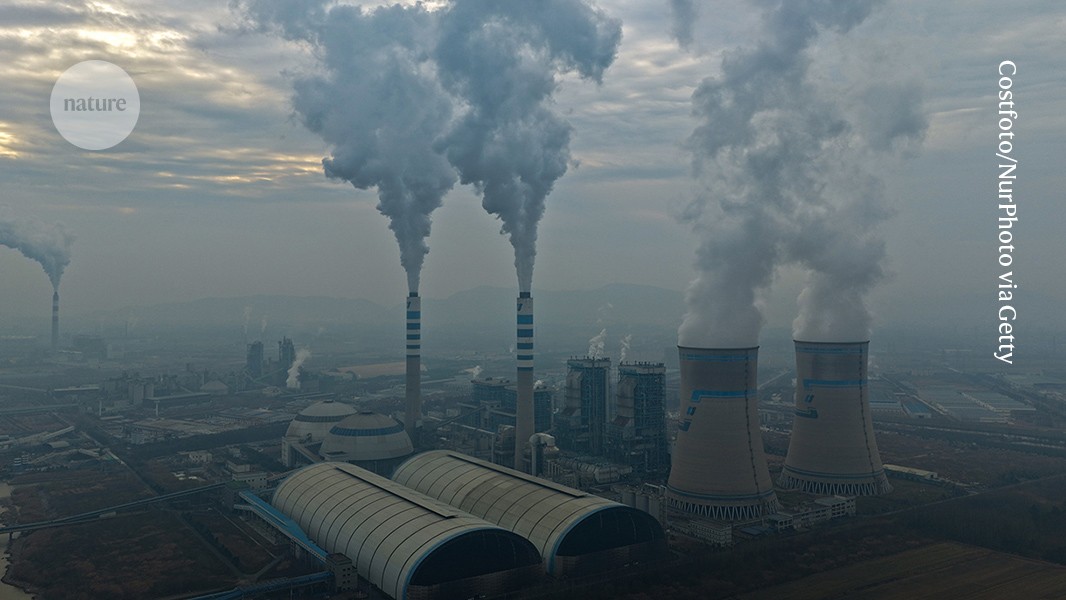
Global greenhouse-gas emissions were flat from 2024 and 2025.Credit: Costfoto/NurPhoto via Getty
Despite a possible plateau in global greenhouse-gas emissions last year, average temperatures are set to hurtle past 2 °C of warming around mid-century barring a major acceleration in emissions cuts, finds the United Nations’ latest report on climate change.
The super El Niño is already wreaking havoc: here’s what’s in store
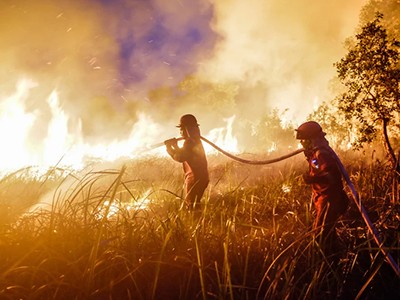
“The world can no longer avoid overshooting the 1.5 °C limit, and the consequences are already devastating,” said outgoing UN secretary-general António Guterres in a press briefing announcing the report — an annual accounting of progress towards tackling climate change published by the UN Environment Programme (UNEP) on 21 October. Guterres pointed to extended heat waves, massive wildfires and deadly floods that have disrupted much of the world in 2026. He called for faster action from governments to cut emissions by transitioning away from fossil fuels, expanding clean electricity and reversing deforestation.
Under current policies, scientists estimate warming of 2.6 °C to 2.8 °C above pre-industrial levels this century — substantially exceeding the 2 °C upper limit of the 2015 Paris Agreement targets to avoid the most dangerous consequences of climate change. There is also a smaller, 10% chance of warming exceeding 3.4 °C on the current trajectory, which researchers say would be catastrophic. Even under a scenario where countries achieve all existing emissions pledges, the report projects 2.1 °C of warming.
Although the 1.5 °C goal is out of reach — 2026 is projected to be the second year in which temperatures have surpassed that level of warming — the report maintains it might be possible to “overshoot” that target, then bring temperatures back down through rapid decarbonization combined with a massive expansion of carbon dioxide removal.
UNEP’s assessment comes ahead of November’s COP31 climate summit in Antalya, Turkey, where governments will take stock of efforts to mitigate and adapt to climate change. “The emissions gap is now a leadership gap. And the world is running out of time and excuses to close it,” Guterres said.
Bright spots
There is some good news in this year’s report. Initial estimates show that global greenhouse-gas emissions in 2025 were about the same or slightly lower than in 2024. That was mainly due to a decrease in emissions from land use, particularly those from wildfires after unprecedented blazes in 2024.
That would be the first decline seen since the COVID-19 pandemic, and it could represent the start of a plateau or even a peak in emissions (see ‘Have emissions peaked?’). But researchers caution that a single year is not enough to determine if this is a lasting shift.
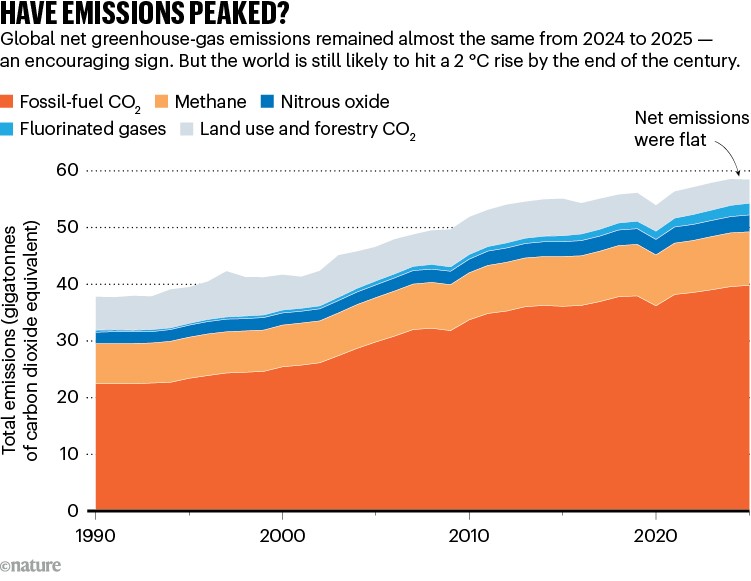
Source: United Nations Environment Programme
“Global emissions will have to fall several per cent before there can be any certainty that they have peaked,” says Lauri Myllyvirta, a researcher at the Centre for Research on Energy and Clean Air, a research organization in Helsinki. “Until then, one particularly hot summer or other cyclical development can cause a jump above the preceding peak, even if the structural trend is downward.”
Another encouraging trend is the rapid expansion of renewables. Clean-energy capacity has increased around three times faster than anticipated since 2015, and solar energy has expanded seven times faster than expected as costs have fallen.
Myllyvirta points out that even if this year doesn’t represent an emissions peak, the report projects a 5–8% drop by 2030 relative to 2025 levels. “The door to a much larger reduction than this over the next five years is open,” he says, as clean energy accelerates, fossil fuels become costlier, and because of the potential for China and India to overachieve their promised emissions cuts.
UN finally admits global warming will shoot past 1.5 ºC climate limit

