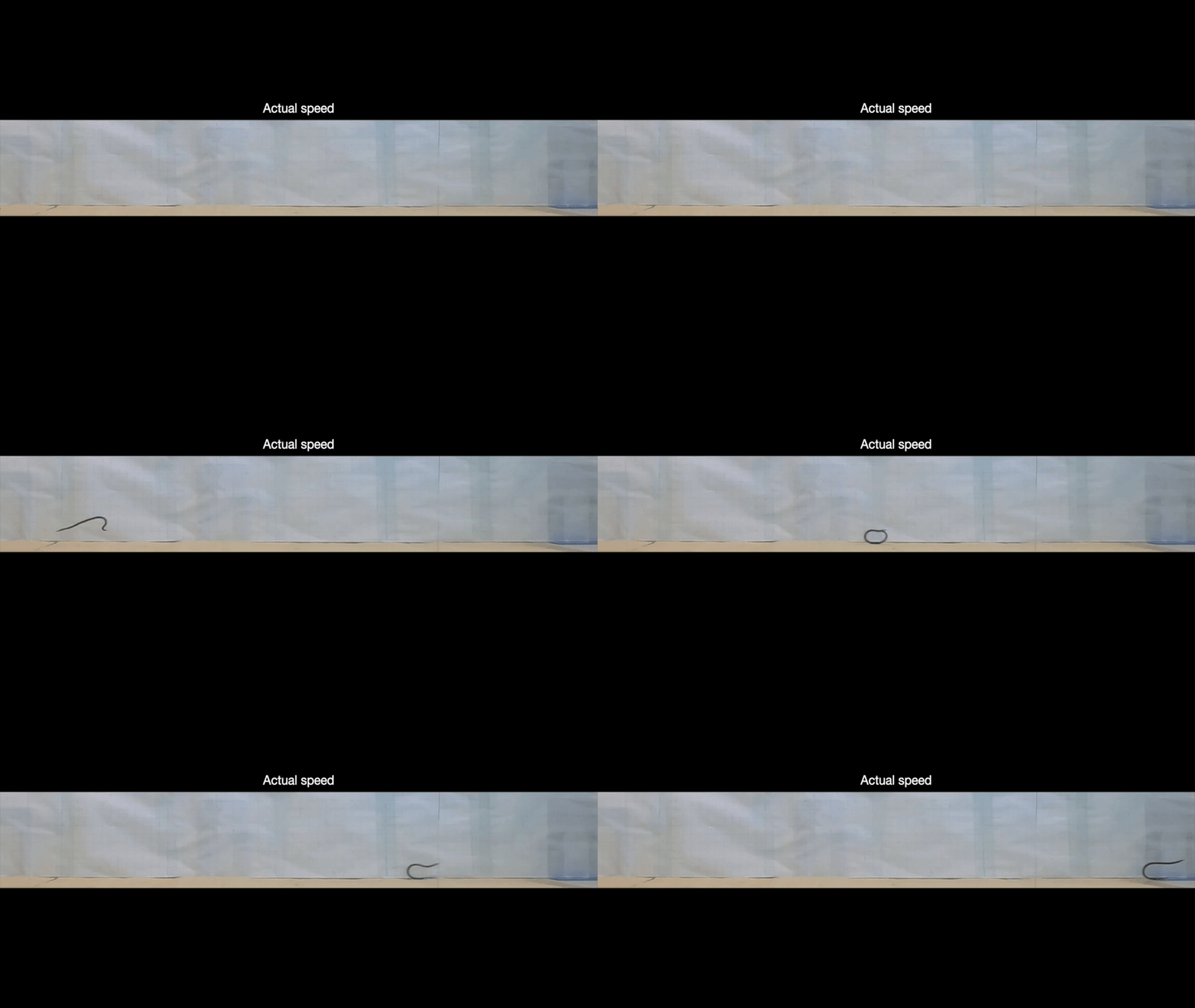
Судлаачид Pseudorabdion төрлийн могойнууд биеэ нумлан, өнхрөх замаар хурдан зугтдаг болохыг шинжлэх ухааны үндэслэлтэйгээр баталлаа.
Зүүн Өмнөд Азид амьдардаг, нууцлаг амьдралтай Pseudorabdion төрлийн могойнууд махчин амьтнаас зугтахдаа биеэ эрчлэн өнхрөх өвөрмөц чадвартай болохыг Current Biology сэтгүүлд нийтлэгдсэн шинэ судалгаа харууллаа. Тохо их сургуулийн судлаач Ёосүкэ Кожима тэргүүтэй баг уг могойнуудын хөдөлгөөнийг дүрс бичлэгээр баримтжуулан судалжээ. Судалгаагаар эдгээр могой нь өнхрөх үедээ ердийн мөлхөх хурдаасаа дунджаар дөрөв дахин илүү хурдтай буюу секундэд 3.69 метр хүртэл хурдлах боломжтой нь тогтоогдсон байна.
Судлаачид 2019-2022 оны хооронд Pseudorabdion төрлийн гурван зүйл болох P. saravacense, P. collaris болон P. longiceps-ийн энэхүү зан төлөвийг ажиглажээ. Эдгээр могой нь өнхрөх үедээ толгойгоо тогтвортой, газраас дээш өргөгдсөн байрлалд барьж чаддаг нь хөдөлгөөнийг удирдах боломжийг олгодог байна. Мөн тэд өнхрөх явцдаа чиглэлээ алдалгүй, шулуун шугамаар хөдөлж, аюулаас зугтсаны дараа ойр орчмын зүйлсийн дор нуугдах чадвартай болохыг ажиглалт харуулжээ.
Энэхүү зан төлөв нь могойг махчин амьтдыг төөрөгдүүлэх, үнэрийн мөрийг нь тасалдуулах замаар амьд үлдэхэд тусалдаг байж болзошгүй гэж эрдэмтэд үзэж байна. Кожимагийн үзэж буйгаар, зан төлөвийн ийм шинэлэг дасан зохицол нь амьтны гадаад төрхөөс төсөөлөөгүй чадваруудыг бий болгодог байна. Байгаль дээр зарим төрлийн аалз болон эрвээхийн авгалдай мөн өнхрөх аргыг ашигладаг ч могойнуудын хувьд хөдөлгөөнөө маш сайн хянах чадвар нь тэднийг онцгойруулж байна.
Дэлгэрэнгүйг эх сурвалжаас харах
↓Эх сурвалжийг нээх ↓
Cryptic snakes in Southeast Asia have evolved a remarkable trick for evading predators: Instead of slithering, they arch their long bodies and tumble away at high speeds.
The dwarf reed snakes (Pseudorabdion) pull off this acrobatic feat by keeping their head in a relatively fixed position while rotating the rest of their body, according to a new study published Monday (Oct. 19) in the journal Current Biology.
Researchers filmed the snakes from different angles to better understand the mechanics of the rolling, or cartwheeling, behavior. They found that the snakes were capable of reaching velocities of up to 12.1 feet per second (3.69 meters per second), which is much faster than they can slither (technically referred to as undulating locomotion).
“Rolling allows them to escape from danger very quickly,” study first author Yosuke Kojima, a lecturer in the biology department at Toho University in Japan, told Live Science. “In our study, their peak forward velocity during rolling was, on average, four times that of normal undulating locomotion.”
Dwarf reed snakes are secretive, often nocturnal species that live across Southeast Asia, where they are prey for birds and other snakes. Although the snakes are extremely cryptic and usually hidden beneath leaves or other natural objects, people occasionally observe the serpents’ dazzling rolls.
In a 2023 study, researchers formally documented the rolling behavior for the first time in one dwarf reed snake species (P. longiceps), which researchers observed in northwestern Malaysia in 2019. Kojima’s team started independently observing the behavior around the same time in the Malaysian state of Sarawak, on Borneo.
“I had never seen anything like it before, and I immediately wanted to learn more about it,” Kojima said.
For the new study, researchers filmed the rolling behavior multiple times in three dwarf reed species — P. saravacense, P. collaris and P. longiceps — between 2019 and 2022. The team also studied three reed snakes from another genus (Calamaria), which didn’t perform the behavior.
Kojima said their study builds on the 2023 research by quantifying the rolling movements, confirming the overall movement pattern that research described, and revealing further details, including how the snakes stabilize their heads.
Snakes aren’t the only tumblers in nature. For example, some desert spiders can roll away from danger, as can mother-of-pearl moth caterpillars (Pleurotya ruralis or Patania ruralis). However, the snakes are unique in that they seem to have good control over their rolls.
Rolling movements typically destabilize the head and disrupt sensory-guided adjustment, especially at high speeds, according to the authors of the new study. In other words, it’s hard for animals to control their bodies when they’re rolling around. The snakes’ technique of keeping their heads relatively fixed and often elevated off the ground likely counters what would otherwise be destabilizing effects.
In addition to studying speed and form, the researchers found that the snakes could move in a relatively straight line, readily moving along a “racetrack” that was only 8 inches (20 centimeters) wide. The researchers noted that the snakes often ended their tumbling routine by diving underneath nearby objects, so they seem to remain aware of their surroundings.
The rolling is a behavioral innovation that allows the snakes to overcome their physical constraints and pull off an otherwise impossible movement, according to the researchers.
“Behavioral innovation can give rise to surprising new abilities that we would not expect from an animal’s appearance alone,” Kojima said.
Researchers have speculated that the bizarre behavior could surprise and confuse predators, in addition to being a rapid means of escape. The authors of the 2023 study also hypothesized that rolling would result in a patchy scent trail, and because king cobras (Ophiophagus) use scent cues to locate their prey, this could make it harder for the predators to hunt dwarf reed snakes.
How much do you know about snakes? Test your knowledge with our snake quiz!

