
Сүүлийн жилүүдэд дэлгэцийн бүтээлүүдийн үргэлжлэх хугацаа уртасч, хоёр цаг гаруй үргэлжлэх кинонууд олон улсын зах зээлд түгээмэл болжээ.
Судлаач Стивен Фоллоусын 1980-2025 оны хооронд гарсан 36,431 кинонд хийсэн судалгаагаар өргөн дэлгэцийн киноны дундаж үргэлжлэх хугацаа 106 минутаас 114 минут болж өссөн байна. Тухайлбал, Кристофер Ноланы “The Odyssey” кино 173 минут үргэлжилсэн ч 1.8 тэрбум ам.долларын орлого олж, тухайн жилийн хамгийн өндөр орлоготой хоёр дахь киногоор тодорчээ. Венецийн кино наадмын тэргүүн Альберто Барберагийн тэмдэглэснээр 2 цаг 15 минут болон 2 цаг 30 минутын хугацаа нь орчин үеийн кино салбарын шинэ стандарт болон хувираад байна.
Стриминг үйлчилгээнүүдийн өрсөлдөөн дунд кино театрууд үзэгчдийг татахын тулд илүү том цар хүрээтэй, үйл явдлын хувьд баялаг бүтээлүүдийг гаргахыг эрмэлзэж байна. “Avengers: Doomsday” киног бүтээгч Жо Руссо киноны урт нь үзэгчдэд мөнгөнийхөө үнэ цэнийг мэдрүүлэх нэгэн хүчин зүйл болдог хэмээн онцолжээ. Гэвч найруулагч Рюсүкэ Хамагүчигийн “All of a Sudden” (197 минут) зэрэг бүтээлүүд урт хугацааг хүний амьдралын төрөлх хэмнэлтэй холбон тайлбарладаг бол Польшийн найруулагч Павел Павликовский “Fatherland” (82 минут) зэрэг богино хэмжээний бүтээлээрээ эсрэг байр суурийг илэрхийлж байна.
Кино наадмын сонгон шалгаруулалтын үеэр Альберто Барбера урт хугацаатай кинонууд нь зохион байгуулалтын хувьд хүндрэл учруулдаг төдийгүй зарим тохиолдолд 10-20 минут хасах шаардлагатай байдгийг анхааруулсан юм. Хэдийгээр урт хугацаатай кинонуудын тоо нэмэгдэж байгаа ч энэ нь киноны чанарт шууд нөлөөлөхгүй бөгөөд түүх өгүүлэхэд шаардлагатай хугацаа л чухал болохыг салбарынхан онцолж байна.
Дэлгэрэнгүй эх сурвалжийг харах
Эх сурвалжийг нээх ↓
Want to bookmark your favourite articles and stories to read or reference later? Start your Independent Membership today.
Already a member?
Moviegoers are not imagining it: feature films are steadily growing longer.
From grand studio blockbusters to subtle art house projects, cinematic runtimes are expanding across the board.
While common wisdom suggests that an engaging film feels brief regardless of length, empirical research confirms that runtime inflation in theaters is a concrete reality.
An analysis of 36,431 theatrical releases between 1980 and 2025 by researcher Stephen Follows revealed that the average duration of a wide-release movie has expanded from 106 minutes to 114 minutes.
For frequent cinema patrons, this trend comes as no surprise. Anticipation surrounding a film’s overall duration has become a familiar pre-release talking point.
When the official length of “The Odyssey” was confirmed at 173 minutes, it felt to many as if director Christopher Nolan had laid down a monumental challenge.
Yet there is little evidence to suggest that extended durations are deterring ticket buyers; in fact, they may be serving as an attraction.
“The Odyssey” has accumulated $1.8 billion in box office receipts, ranking as the second-highest-grossing film of the year while standing as a leading candidate for best picture at the Oscars.
This ongoing shift has reshaped the broader film landscape. Speaking ahead of last year’s Venice Film Festival, festival boss Alberto Barbera observed that productions lasting 2 hours and 15 minutes or 2 hours and 30 minutes had become “the new international standard.”

Watch Apple TV free for 7 day
New subscribers only. £9.99/mo. after free trial.
Plan auto-renews until cancelled.
ADVERTISEMENT. If you sign up to this service we will earn commission. This revenue helps to fund journalism across The Independent.
Barbera warned that this evolution poses logistical difficulties for festival programmers and can hamper otherwise strong cinema.
He noted that selection committees frequently review works that would have benefited from trimming 10 to 20 minutes from their length.
This year’s leading award contenders reflect the trend, with “The Odyssey,” “La Bola Negra” (159 minutes), and “You Can See Everything” (174 minutes) all extending past two and a half hours. The pattern is equally visible in mainstream entertainment: the upcoming “Hunger Games” entry, “Sunrise on the Reaping,” reaches a franchise record of 158 minutes.
The growth of home streaming services has pressured theatrical releases to emphasize scale and longer runtimes. Confronted by comfortable home viewing options, theaters aim to present films as grand, essential events to justify the outing, operating under the assumption that bigger translates to better.
Gauging the duration of ‘Doomsday’
Filmmakers Joe and Anthony Russo, who oversee the “Avengers” series including the upcoming “Avengers: Doomsday,” understand this dynamic well.
“The moviegoing experience is evolving,” Joe Russo said in a recent interview.
“Eventized cinema seems to be the draw to get people out of their homes. That can be premium storytelling, premium moviegoing experience, and length can certainly contribute to the feeling of an experience. In a lot of ways, it’s the feeling of getting your money’s worth.”
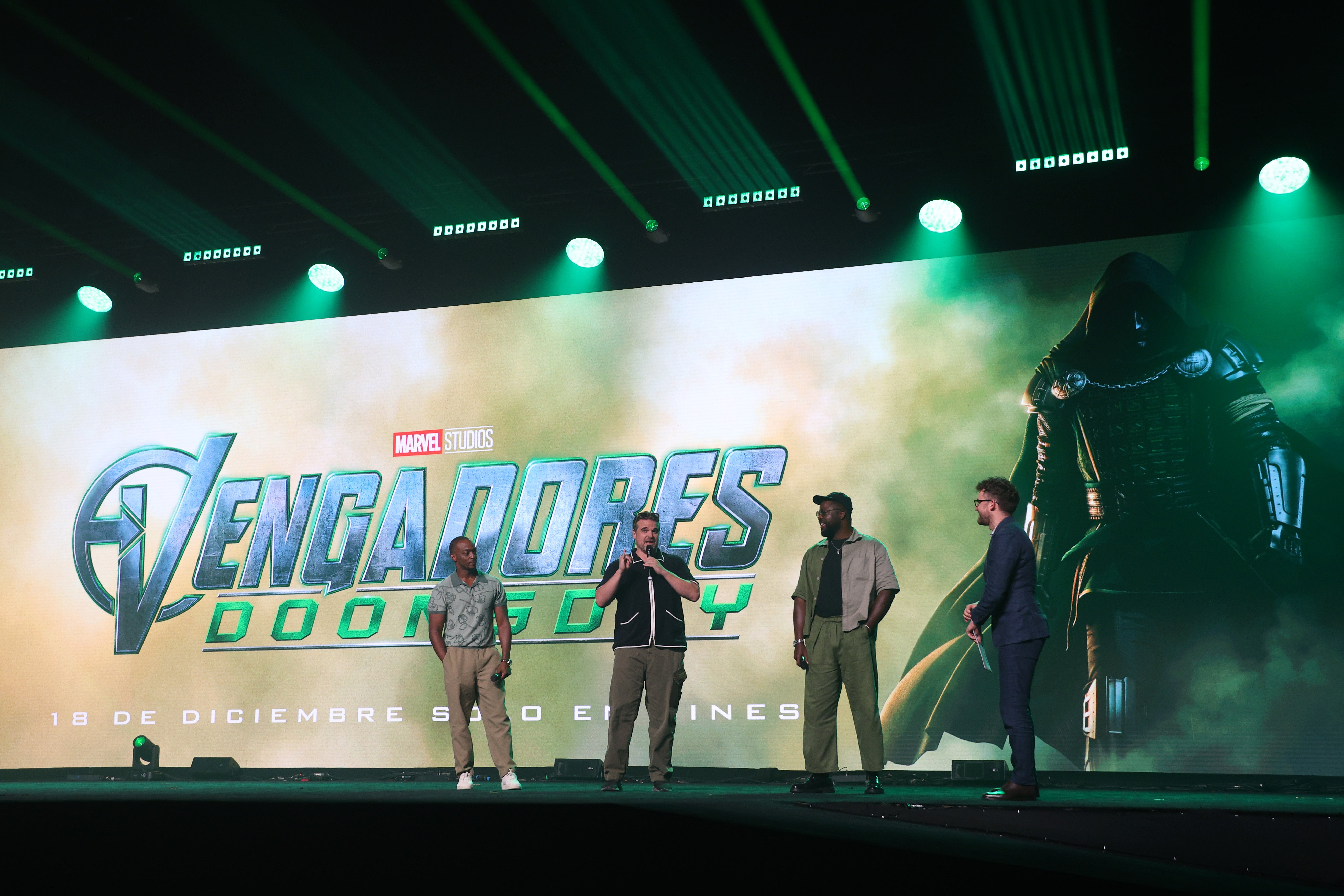
Although “Doomsday” has not yet received an official runtime, extensive media coverage remains focused on determining its length. The Russo brothers expect the feature to settle around two and a half hours — significantly shorter than the three-hour “Endgame,” despite capturing a substantial section of the Marvel Cinematic Universe.
For Russo, expanded length offers benefits, though it is not a requirement for quality.
“It doesn’t mean that you can’t pack a punch in a shorter runtime,” Russo said. “It’s whatever the story requires. It’s about squeezing the story into a diamond, and if that diamond ends up three-and-a-half hours, sure. If it ends up two-and-a-half hours, sure.”
Why deliberate pacing matters to certain directors
Japanese director Ryusuke Hamaguchi creates intimate, deeply human stories that stand apart from blockbusters, yet his releases often match their substantial runtimes.
Hamaguchi’s work prioritizes life’s natural cadence over conventional plot structure. His 2021 drama “Drive My Car,” which made history as the first Japanese film nominated for best picture, ran just under three hours while establishing a patient, contemplative rhythm.
“Storytelling as an action, you’re sort of forcing certain things to happen to make an interesting film,” Hamaguchi said. “Oftentimes, when I watch other films, they say this is how it is and continue to push the plot forward. I find that to be uncomfortable.”
Hamaguchi offered those remarks following the Cannes Film Festival debut of his newest project, “All of a Sudden.” Despite its title, the film spans 197 minutes, offering a quiet, thoughtful exploration of time that Neon will bring to theaters Nov. 25.
The narrative features Virginie Efira as the director of a Paris care facility implementing Humanitude, a compassionate but slow-paced care technique. Despite encountering pushback from colleagues, her effort yields noticeable improvements for residents and caregivers alike.
Hamaguchi sees a direct connection between caregiving philosophy and his artistic process.
“My own values and thoughts around filmmaking come into the film,” he said. “I first learned about Humanitude in a different context and I decided to work within the field of caregiving. But when I started to research about it, I realized there were so many shared issues in common with the film industry.”
The traditional 90-minute format persists
Not all directors share the inclination toward three-hour running times. Polish filmmaker Paweł Pawlikowski has created three consecutive acclaimed features that each run under 90 minutes, aiming to distill his stories down to their purest elements.
“I love ‘Lawrence of Arabia.’ It felt proportionate to the film and the landscape,” says Pawlikowski of David Lean’s 327-minute 1962 epic. “But nowadays there are films where it’s just too much. There are five endings and it’s just showing off. I won’t mention names but there are some really great directors doing it, too.”
Pawlikowski’s latest work, “Fatherland,” comes in at a concise 82 minutes. The story stars Hanns Zischler as German Nobel Prize winner Thomas Mann alongside Sandra Hüller as his daughter Erika during a road trip across post-World War II Germany.
Pawlikowski remains fully conscious that his concise approach departs from current industry habits.
“It feels a bit controversial what I’m doing,” Pawlikowski says, chuckling. “I’m quite aware that it’s provocative to be so stripped down. I’m all into simplifying life, anyways. Stick to your friends. Like what you like. Try to be honest. If you can do that in film, or any kind of art form, it helps.”

