— Air-Power | NatSec Ledger (@NatSecLedger) June 7, 2025
It appears that the AGM-188A “Rusty Dagger” cruise missile has undergone field testing in Ukraine.
Russian sources are publishing photos of an unknown 8-element CRPA antenna. On the back side of the unit there is a circuit board with a large heatsink, which carries the CAGE code… pic.twitter.com/phZeOJfHJ0
— 𝔗𝔥𝔢 𝕯𝔢𝔞𝔡 𝕯𝔦𝔰𝔱𝔯𝔦𝔠𝔱 (@TheDeadDistrict) June 7, 2026
KONGSBERG announced today that it has closed the acquisition of US missile company Zone 5 Technologies LLC, following approval by US regulatory authorities.
Zone 5 has not disclosed where or when the pictures were taken, or which programs, specifically, the ground-based launches were conducted under. The images do not offer a clear view of the trailer-mounted launcher, either. A spokesperson for the company did stress to TWZ that versions of Rusty Dagger have now been selected for separate U.S. Army and Navy programs, in addition to its initial development through the U.S. Air Force.
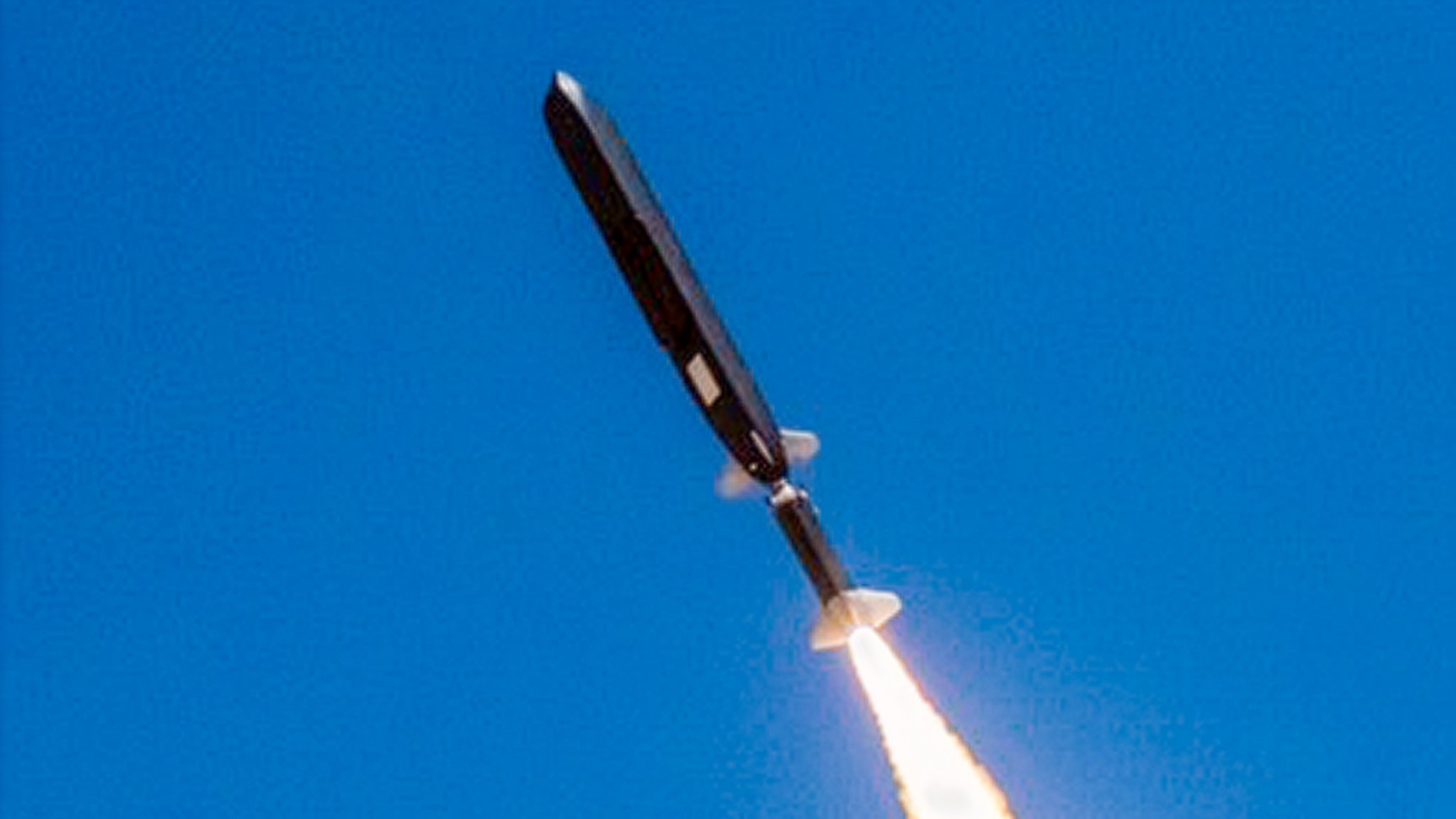
One of the first images showing the surface-launched version of the Rusty Dagger in action. Zone 5 Technologies
In May, Zone 5, as well as Anduril, CoAspire, and Leidos, received framework agreements from the Pentagon under the Low-Cost Containerized Missile (LCCM) program. The U.S. Army’s Portfolio Acquisition Executive Fires (PAE Fires) is running LCCM in cooperation with the Office of the Under Secretary of War for Research and Engineering (OUSW R&E). The aim of this program is to procure more than 10,000 low-cost cruise missiles, in total, over three years, beginning in 2027.
“We designed a surface-launch Rusty Dagger to be the foundation of U.S. and allied mass-produced affordable precision deep strike weapons,” Tom Kanewske, chief strategy officer at Zone 5, told TWZ in a statement.
“Our team went from design to demonstration in less than three months, bringing Rusty Dagger from pylons and pallets to ground launcher and shipping containers,” added Kyle Maxhimer, Zone 5’s president.
Another picture of a Block 40 Rusty Dagger being fired from a launcher on the ground. Zone 5 Technologies
Zone 5 says the Block 40 version of Rusty Dagger can accommodate warheads in the 100-to-250-pound classes. It can still be configured for air-launch, either from pylons under the wings of aircraft or via palletized munitions systems. In order to be fired from launchers on the ground or at sea, the new version of the missile is fitted with a solid-fuel booster rocket at the tail end.
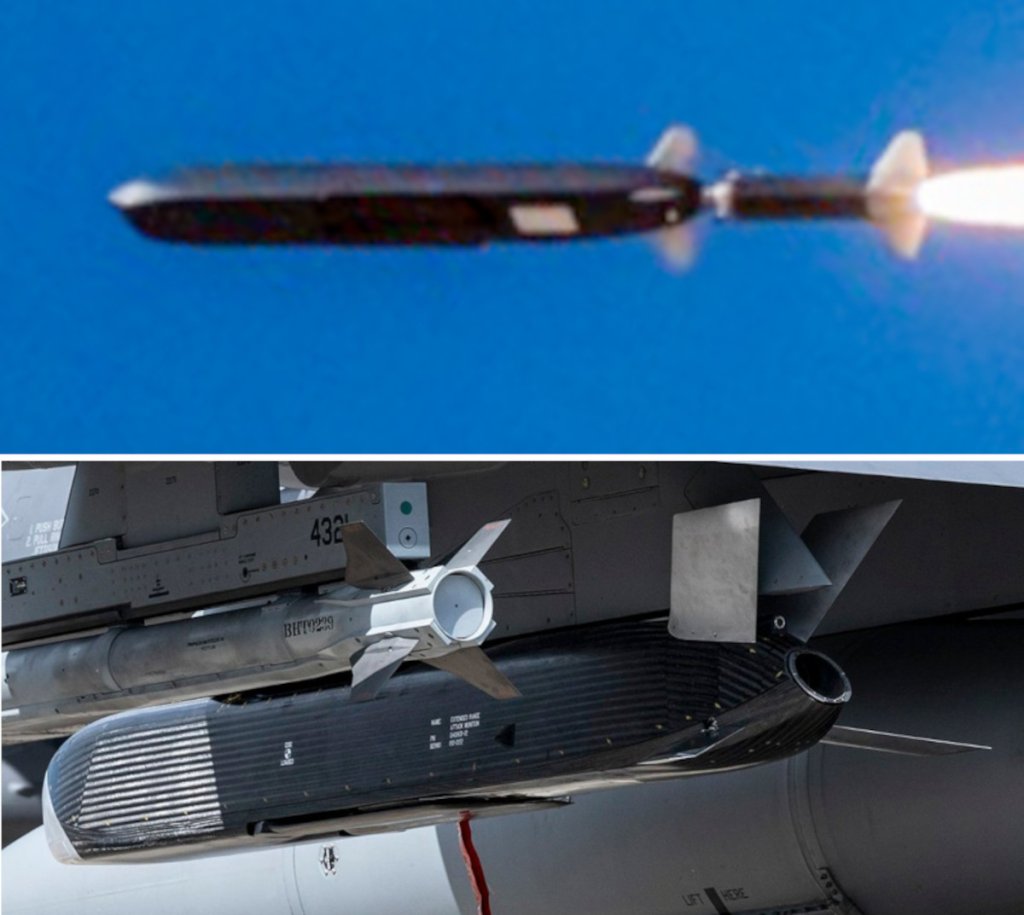
More specific details about the Block 40’s capabilities compared to the preceding air-launch-only version, also referred to as the Block 20, remain limited. From what we can see now, the two variations appear outwardly similar in many respects, at least broadly speaking. Earlier variations had a distinctive tail configuration with four squared-off fins, two facing upward and two more angled to either side. The shaping of the fins on the Block 40 does look to be more rounded. It’s also possible the missile may have a new cruciform tail fin arrangement, but this could also be a trick of the angle from which the missile is being viewed, coupled with the low resolution of the available images.
A side-by-side comparison of the Block 40 Rusty Dagger configured for surface launch, at top, and an earlier air-launched version, at bottom. Zone 5 Technologies/USAF
Previous reports have said that Rusty Dagger has a range of 300 nautical miles when delivered at low altitude, which is increased to 500 nautical miles when launched by aircraft at medium altitudes and flying at higher speeds. In general, surface-launched versions of missiles typically have shorter maximum ranges compared to their air-launched counterparts.
— Air-Power | NatSec Ledger (@NatSecLedger) June 7, 2025
Regardless, the Block 40 version is an important further evolution of the Rusty Dagger design. The initial air-launched version of the missile, now designated the AGM-188A, has already been in development for several years, in part now under the U.S. Air Force’s Extended Range Attack Munition(ERAM) program. This has included live-fire tests conducted at Eglin Air Force Base in Florida in January 2025. We now know that Rusty Dagger has been cleared for use on four different types of fighters, including the F-16. Development of CoAspire’s Rapidly Adaptable Affordable Cruise Missile (RAACM) was also conducted as part of the ERAM effort.
Three views of a Rusty Dagger live-fire test on January 22, 2025, at Eglin Air Force Base, Florida. The service did not identify the weapon by name at the time.via U.S. Air Force
Like the Navy’s CHAOS effort, ERAM has been focusedprimarily on supporting allies and partners, starting first with Ukraine. A Zone 5 spokesperson told TWZ that, as things stand, Rusty Dagger remains the only publicly reported operational missile in its class fielded by the Ukrainian military.
It appears that the AGM-188A “Rusty Dagger” cruise missile has undergone field testing in Ukraine.
Russian sources are publishing photos of an unknown 8-element CRPA antenna. On the back side of the unit there is a circuit board with a large heatsink, which carries the CAGE code… pic.twitter.com/phZeOJfHJ0
— 𝔗𝔥𝔢 𝕯𝔢𝔞𝔡 𝕯𝔦𝔰𝔱𝔯𝔦𝔠𝔱 (@TheDeadDistrict) June 7, 2026
ERAM has also been feeding into the Air Force’s own Family of Affordable Mass Missiles (FAMM) plans. The service wants to acquire 28,000 FAMM munitions in pylon-launched and palletized configurations over the next five years.
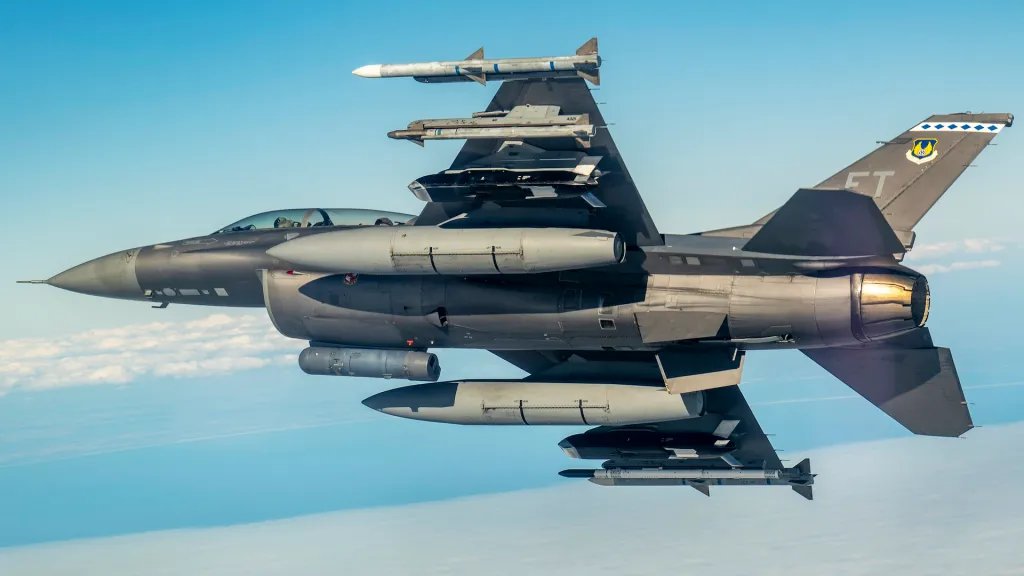
A U.S. Air Force F-16 carrying a pair of Rusty Dagger missiles, as well as other stores, under its wings. U.S. Air Force photo by Staff Sgt. Blake Wiles
As we reported earlier this year, Rusty Dagger is now part of a broader portfolio under Norwegian defense company Kongsberg, which acquired a 90 percent stake in Zone 5. Kongsberg has positioned the missile alongside its stealthyJoint Strike Missile (JSM), with the two weapons serving different, complementary roles.
KONGSBERG announced today that it has closed the acquisition of US missile company Zone 5 Technologies LLC, following approval by US regulatory authorities.
Rusty Dagger is designed around affordability and volume, while JSM offers a sophisticated, low-observable strike capability. The concept gives customers a mix of weapons suited to different targets and mission requirements, rather than relying exclusively on expensive, high-end missiles.
Zone 5 says it is now expanding manufacturing in the United States. Production is established in San Luis Obispo, California, with production beginning in the Dallas-Fort Worth area of Texas. A franchised facility is also being developed in Miamisburg, Ohio, with Hawthorn Aero, a company that describes itself as specializing “in high-rate airframe manufacturing, offering scalable solutions from design to full vehicle integration for aerospace industries.”
The company says each site is designed to reach a capacity of more than 2,500 missiles annually by the end of 2027. If all three reach that level, combined annual capacity would exceed 7,500 missiles.
The expansion reflects the growing emphasis on affordable weapons that can be manufactured in large quantities and replenished quickly, something that is considered especially critical if the United States is to face China in a future high-end conflict in the Indo-Pacific region.
The ground-launched Rusty Dagger shown in the photos underscores how far the missile family is moving beyond its original air-launched role. With production expanding and multiple U.S. military programs in the picture, the surface-launched variant adds another potential route to getting the weapon into service.
(@TheDeadDistrict) June 7, 2026


https://t.co/meRxfmYHH6 pic.twitter.com/EXVbYhDers