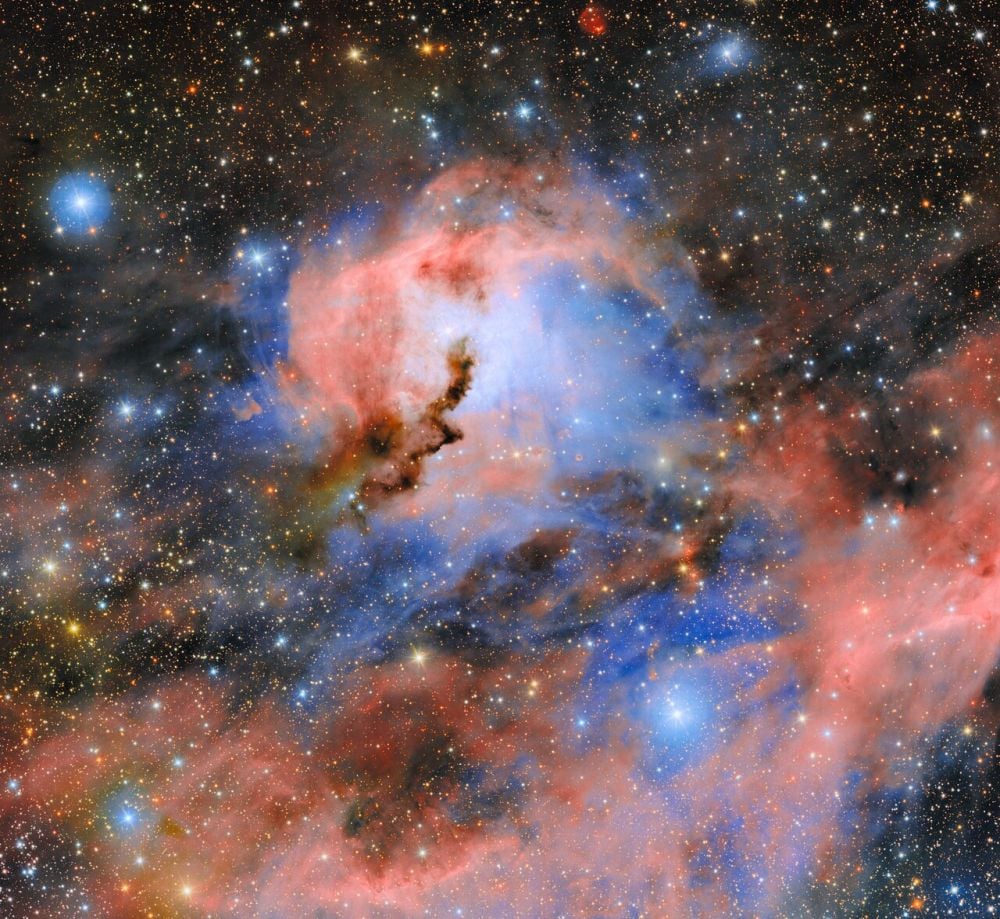
Vera Rubin ажиглалтын төвийн инженерчлэлийн ComCam камер нь үндсэн төхөөрөмжөөс өмнө сансрын уудамд хийсэн туршилтын ажиглалтаараа гайхалтай үр дүн үзүүллээ.
Vera Rubin ажиглалтын төвийн инженерчлэлийн туршилтын камер буюу ComCam нь тус төвийн системүүдийг цогцоор нь шалгах зорилгоор бүтээгдсэн бөгөөд 2022 онд Simonyi Survey Telescope дуран дээр суурилуулагдсан юм. Энэхүү камер нь Legacy Survey of Space and Time (LSST) камерын бүрэн ажиллагаатай, харин овор хэмжээгээр багасгасан хувилбар нь юм. ComCam нь 2024 оны сүүлээр долоон долоо хоногийн турш ажиглалт хийж, 16,000 орчим дүрс бичлэг цуглуулсны дараа 2024 оны арванхоёрдугаар сард буулгагджээ.
Туршилтын үйл явцын хоёр жилийн ойг тохиолдуулан ажиглалтын төвөөс ComCam-аар авсан Seagull Nebula буюу IC 2177 мананцрын шинэ зургийг олон нийтэд дэлгэв. Дэлхийгээс 3,700 орчим гэрлийн жилийн зайд орших энэхүү мананцрын зураг нь Sharpless 2-292 хэсгийг буюу шувууны толгойг тод харуулжээ. Хэдийгээр ComCam нь LSST камертай харьцуулахад хүчин чадлын хувьд бага боловч 144 мегапикселийн нягтаршилтай, хоёр бүтэн сарны талбайтай тэнцэх хэмжээний тэнгэрийн хэсгийг нэг дор харах чадвартай юм.
Зурган дээрх ягаан өнгө нь халуун залуу одуудын ионжуулагч цацрагт өртсөн устөрөгчийн хийг, харин цэнхэр өнгө нь бусад оддын гэрлийг ойлгох тоосны үүлсийг тус тус илтгэж байна. Энэхүү камер нь LSST камерт ашиглагдах дүрс боловсруулах ижил технологийг ашигласан нь түүнийг туршилтын төхөөрөмж гэхэд өндөр үзүүлэлттэй болохыг харуулж байна.
ComCam-ын үндсэн үүрэг дууссан хэдий ч цаашид LSST программ хангамжийг шалгах болон бусад засвар үйлчилгээний ажилд ашиглагдсаар байх юм. Хэдийгээр ирээдүйд LSST камерын илгээх илүү нарийвчилсан зургууд олны анхаарлыг татах нь тодорхой ч, энэхүү инженерчлэлийн камерын бүтээсэн зургууд нь одон орон судлалын технологийн дэвшлийг тод томруун гэрчилж байна.
Дэлгэрэнгүйг эх сурвалжаас харах
Эх сурвалжийг нээх ↓
The Vera Rubin Observatory’s First Look Event happened in July 2025, when the observatory revealed its first look at the cosmos. That was when we were gifted the stunning Cosmic Treasure Chest image, among others.
But the VRO’s commissioning camera was active before that. It was mounted on the Simonyi Survey Telescope at the VRO in 2022 and observed for seven weeks in late 2024, then was removed in December 2024. It’s a fully functional, yet smaller, version of the Legacy Survey of Space and Time camera, which is, as all spaceheads should know, the largest digital camera ever built.
The Commissioning Camera was built for comprehensive, end-to-end testing of the VRO’s systems. It’s an engineering test camera, fondly referred to as ComCam.
To mark the two year anniversary of the beginning of testing with ComCam, the NSF–DOE Vera C. Rubin Observatory has released a new image from the ComCam. Maybe they sensed the palpable, built-up anticipation for more VRO images and this is meant to satisfy our appetite.
During its seven-week testing run, ComCam gathered about 16,000 exposures. This image shows a nebula about 3,700 light years away called the Seagull Nebula, more formally named IC 2177. Three gas clouds make up the Seagull Nebula, and this image highlights Sharpless 2-292, which represents the bird’s head.
This image of the Seagull Nebula from amateur astrophotographer Arnaud Geoffroy shows the complete Seagull Nebula. It places ComCam’s image in context, and illustrates how it represents the Seagull’s head. Image Credit: By Kropernic – Own work, CC BY-SA 4.0, https://commons.wikimedia.org/w/index.php?curid=196401215
ComCam is much smaller than the VRO’s LSST camera, but still produces 144 megapixel images, and each one covers an area of the sky equal to two full Moons.
Even though the ComCam is nowhere near as capable as the LSST camera, it still produces amazing images that would turn an astrophotographer green with envy. After all, ComCam was still used with the same image-processing that the LSST camera will use.
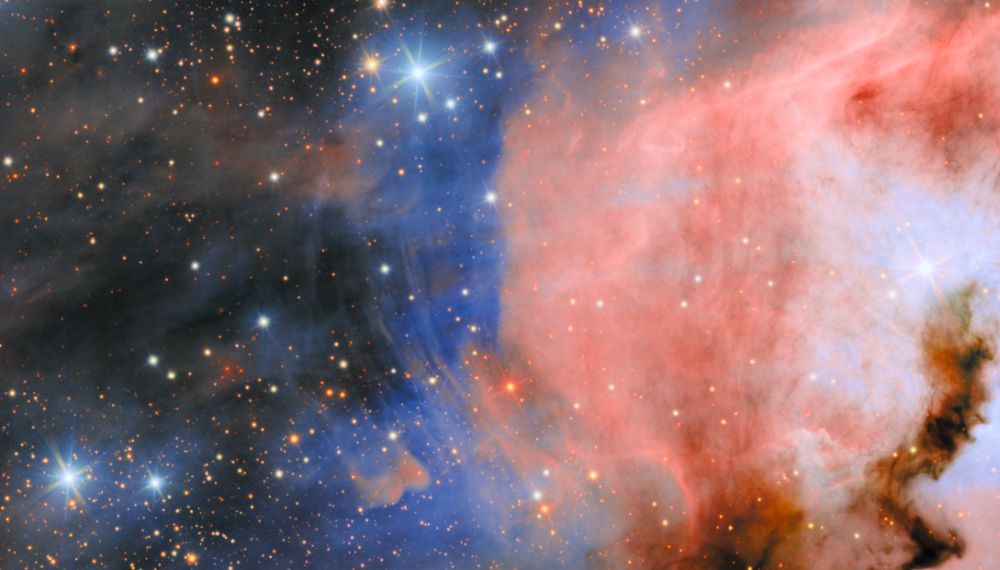 This zoomed-in portion of the image shows some of the incredible detail in the Seagull Nebula. It’s an area of intense, active star-formation, where hot young stars emit ionizing radiation. The radiation removes any obscuring dust and lights up hydrogen gas in the molecular clouds that the stars form in. The hydrogen gas is pink, and the blue comes from dust reflecting light from other young stars. Not bad for a test camera. Image Credit: NSF–DOE Vera C. Rubin Observatory/NOIRLab/SLAC/AURA. Image Processing: T.A. Rector (University of Alaska Anchorage/NSF NOIRLab), D. de Martin & M. Zamani (NSF NOIRLab)
ComCam’s main job is now done, but it still has some responsibilities. It’ll still be used to test LSST software, and to aid with other maintenance operations.
Once we start seeing more images from the LSST camera, we’ll probably forget about ComCam. But that fact that an engineering camera like it can produce such stunning images is a definite marker of how far astronomy and astronomical images have come.

