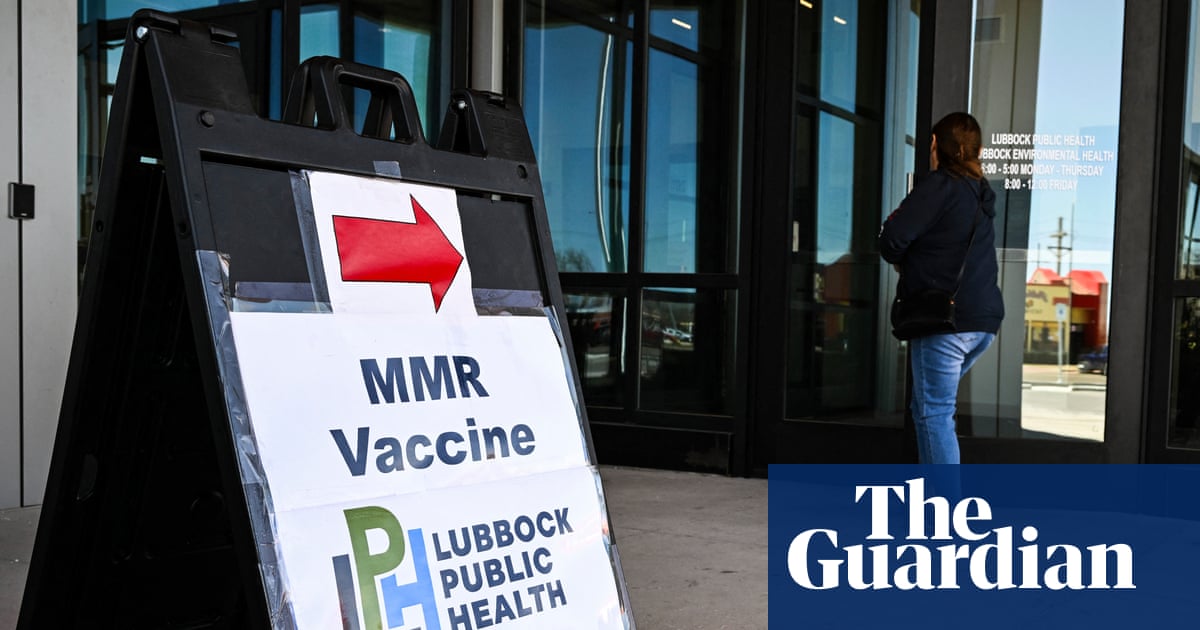
Калифорни, Вашингтон зэрэг муж улсын эрүүл мэндийн байгууллагууд улаанбурхан өвчнийг илрүүлэх шинэ, хурдан оношилгооны аргыг баталгаажуулах хүсэлт гаргасныг АНУ-ын Өвчний хяналт, урьдчилан сэргийлэх төв (CDC) татгалзжээ.
Тавдугаар сард гаргасан уг хүсэлтийн хариуд CDC “бусад нэн тэргүүний зорилтууд”-ыг шалтгаан болгон хоёр сар хүлээлгэсний эцэст татгалзсан шийдвэр гаргасан байна. Баруун эргийн эрүүл мэндийн холбооноос CDC-ийн захирал Эрика Шварцад илгээсэн захидалд, улаанбурхан өвчний томоохон дэгдэлтээс урьдчилан сэргийлэх үүднээс өндөр хүчин чадалтай, хурдан оношилгооны аргыг нэн даруй баталгаажуулахыг дахин уриалжээ. Мөн ирээдүйд гарч болзошгүй бусад аюултай халдварт өвчнийг илрүүлэх протоколуудыг боловсруулахыг шаардсан байна.
Одоогийн байдлаар лабораториуд улаанбурхан өвчнийг илрүүлэхдээ PCR шинжилгээ зэрэг бага хүчин чадалтай аргуудад найдаж байгаа нь дэгдэлтийн үед цаг алдахад хүргэж байна. Ковид-19 цар тахлын үед ашигласан Hologic Panther Fusion зэрэг 500 хүртэлх сорьцыг найман цагт боловсруулах чадвартай өндөр хүчин чадалтай тоног төхөөрөмжүүд байгаа ч, улаанбурхан өвчнийг оношлох чиглэлээр CDC-ээс баталгаажуулсан протокол байхгүй байгаа юм.
ARUP лаборатори болон Техас мужийн лабораториуд уг өвчнийг илрүүлэх шинэ оношилгооны аргачлалыг боловсруулсан боловч CDC эдгээрийг бүрэн баталгаажуулаагүй байна. Мэргэжилтнүүдийн үзэж буйгаар, нэг хүн 12-18 хүнд халдвар тараах эрсдэлтэй улаанбурхан өвчний үед цаг хугацаа маш чухал бөгөөд хурдан оношилгоо нь халдварыг хумихад шийдвэрлэх үүрэгтэй юм. Шинжилгээний хариуг түргэн гаргаснаар өвчтөнийг тусгаарлах, ойрын хавьтлуудыг тогтоох, вакцинжуулалтыг 72 цагийн дотор хийх зэрэг арга хэмжээг цаг алдалгүй авах боломж бүрдэнэ.
АНУ-ын Эрүүл мэндийн яамны хэвлэлийн төлөөлөгч Эмили Хиллиард хэлэхдээ, CDC муж улсын эрүүл мэндийн байгууллагуудад улаанбурхан өвчнийг илрүүлэх, хариу арга хэмжээ авахад шаардлагатай дэмжлэгийг үзүүлж байгаа гэв. Гэсэн хэдий ч тус агентлаг өндөр хүчин чадалтай оношилгооны аргыг баталгаажуулах төлөвлөгөөтэй эсэх талаар тодорхой хариулт өгөөгүй байна.
Дэлгэрэнгүйг эх сурвалжаас харах
↓Эх сурвалжийг нээх ↓
California and Washington asked the US Centers for Disease Control and Prevention (CDC) in May to validate a new way to test for measles – but after waiting two months, the CDC denied the request, citing “other competing priorities”, according to a letter from the West Coast Health Alliance to the CDC director, Erica Schwartz.
The letter, signed by health officials in California, Hawaii, Oregon and Washington, asks Schwartz to reconsider and validate a rapid, high-volume measles test in preparation for major outbreaks. The alliance also asked the CDC to create protocols to test for other high-priority pathogens to prepare for future outbreaks.
The CDC is “ensuring state and local health departments have the support needed to strengthen measles detection and outbreak response”, said Emily Hilliard, a spokesperson for the US Department of Health and Human Services (HHS). The agency was “prioritizing emerging technologies” to respond to the measles outbreak, Hilliard said.
The spokesperson did not answer questions about whether the CDC had plans to validate a high-throughput measles test or assay.
Such a test would “dramatically strengthen” the ability of laboratories to respond quickly to outbreaks, the health officials said – which would help preparedness for known pathogens like Ebola or hantavirus as well as emerging threats.
Right now, laboratories have to rely on lower-volume tests for measles, like individual polymerase chain reaction (PCR) tests.
In the Covid pandemic, most public health labs bought high volume equipment, like the Hologic Panther Fusion, a PCR platform for diagnosing illness that can process up to 500 tests in eight hours. That way, labs could process large batches of Covid tests very quickly.
But there is no high-throughput test to diagnose measles that has been validated by the CDC.
Texas state laboratories developed such a test during the measles outbreak in west Texas last year, but they have not distributed or published the protocol. ARUP Laboratories, a national, academic, non-profit reference laboratory, published their assay for measles in the Journal of Clinical Microbiology in December. The CDC could validate this or another protocol so other public health labs could run diagnostic tests.
High-throughput tests can process a lot of samples at once, but the automated instruments can also be faster and easier than manually conducting tests. “One of the big advantages that they offer is essentially more flexibility,” said Benjamin Bradley, an assistant professor of pathology at the University of Utah and medical director of virology at ARUP.
That’s especially important in a fast-moving outbreak. “With a measles outbreak, time is really of the essence,” Bradley said. One measles patient can infect 12 to 18 other unvaccinated people, and the virus can linger in the air for two hours. “You can quickly see how that goes exponential, from a handful of cases to an entire community of cases,” he said.
Quicker tests can help curb an outbreak like that, helping to identify and isolate positive patients as quickly as possible and leading to faster contact tracing. It also means officials can promptly offer vaccines to anyone who was exposed and isn’t already vaccinated. If vaccines are taken within 72 hours of exposure, they can prevent infection.
There are no commercially available tests for measles; the current tests are developed by laboratories. Validating and publishing the process for creating these tests is crucial for labs to be able to create and conduct them.
“You essentially have to do science for it,” said Bradley. That means planning, undergoing and documenting experiments, and then checking to make sure the test is reliable. “A lot of that work is very burdensome for laboratories to put together. So by having groups that can share their protocols, that helps labs.”
The CDC has reportedly completed studies on the assays from Texas and ARUP Laboratories, “but they were not full validations or a comprehensive comparison”, the west coast officials said in the letter.
The alliance asked Schwartz to develop an assay, or test, for measles diagnostic testing on the Panther Fusion and to publish that protocol so any lab can run the tests. Having tests ready to go is an essential part of preparing, the letter said: “If a large outbreak were to occur in our region, without high-throughput capacity, it would be more difficult to scale up diagnostic testing appropriately, impairing patient care and public health investigation.”

