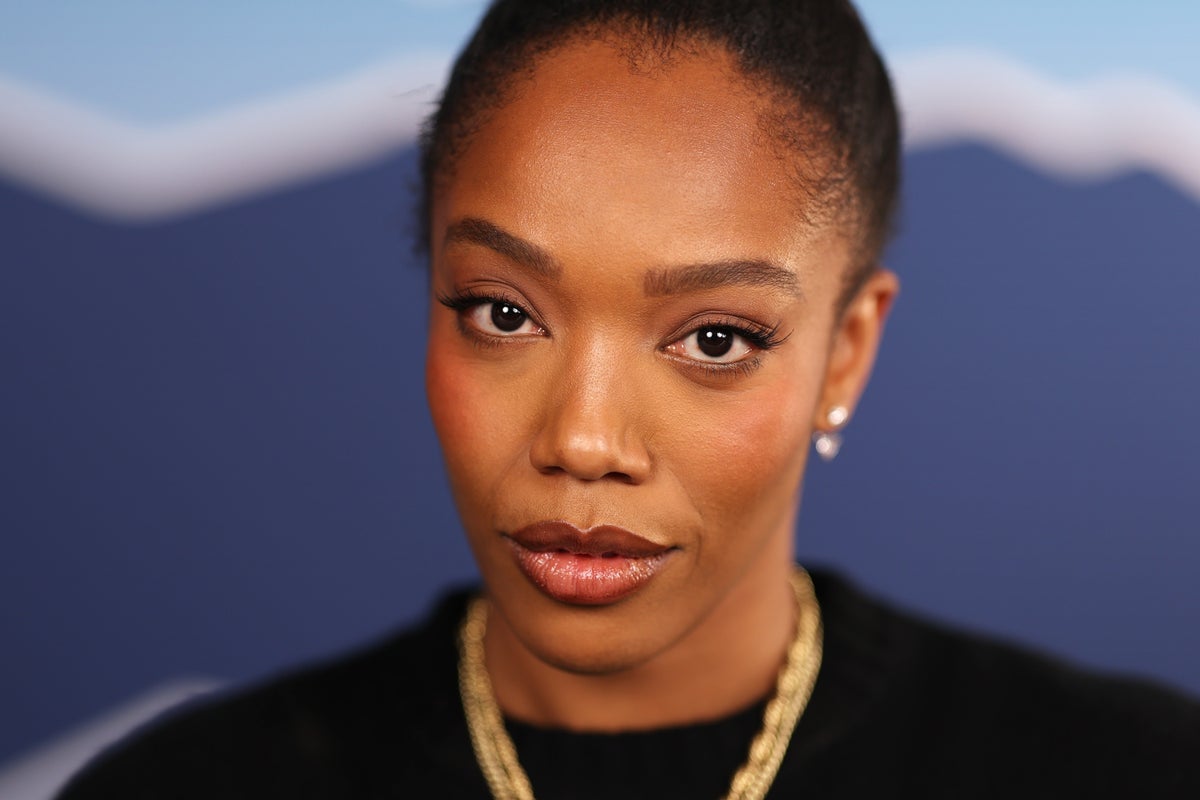
Жүжигчин Наоми Аки Уитни Хьюстоны дүрийг бүтээж, нэр хүнд нь өссөн ч киноны дараах бодит байдал огт өөр байсан тухайгаа хуваалцлаа.
“I Wanna Dance with Somebody” киноны зураг авалтын дараа Наоми Аки өөрийгөө хуучин байрандаа эргэн ирэхэд сэтгэл зүйн хувьд хүндрэлтэй байсныг дурссан юм. Тэрээр тухайн үед киноны шүүмж болон санхүүгийн үр дүнгээс үүдэн карьерынхаа хувьд тодорхойгүй байдалд орсон ч одоо үүнийг өөрийгөө танихад тусалсан сорилт гэж үздэг. Өдгөө 35 настай жүжигчин бүсгүй өнгөрсөн хугацаанд өөрийнхөөрөө байх нь хамгийн чухал гэдгийг ойлгосон байна.
Наоми Аки энэ долоо хоногт Warner Bros-ын DC Comics-ийн “Clayface” кинонд эрдэмтний дүрийг бүтээж, удахгүй Boots Riley-ийн “I Love Boosters” хар инээдмийн кинонд тоглож байна. Тэрээр сүүлийн үед “Blink Twice”, “Mickey 17”, “Sorry, Baby” зэрэг олон төрлийн кинонд дүр бүтээж, карьерынхаа оргил үеийг үдэж байна. Жүжигчин бүсгүй одоо ч гэсэн кино төслүүддээ сонголттой хандаж, шинэлэг санаа бүхий бүтээлүүдэд тоглохыг эрмэлздэг аж.
Бодит амьдрал дээр тэрээр алдар нэрээс илүү энгийн зүйлсийг үнэлдэг бөгөөд аавынхаа дэмжлэгтэйгээр ажлын ачааллыг даван туулдаг гэдгээ хэллээ. Тэрээр кино ертөнцөд 11 жил ажиллахдаа олон татгалзсан хариу сонссон ч уран бүтээлчийн хувьд хязгаараа даван туулах нь хамгийн том зорилго гэдгийг онцолсон юм. “Clayface” кино одоо кино театруудаар гарч байгаа бол “I Love Boosters” кино 10 дугаар сарын 30-наас эхлэн үзэгчдийн хүртээл болно.
Дэлгэрэнгүй эх сурвалжийг харах
Эх сурвалжийг нээх ↓
Want to bookmark your favourite articles and stories to read or reference later? Start your Independent Membership today.
Already a member?
When I go through hectic times, I end up wiping my memory,” Naomi Ackie explains. It’s a good thing, she insists. “I do it if I’m overwhelmed, or if I’m around people I don’t like. I can just lift them out of my mind without effort.”
We’re talking about selective amnesia because we’re talking about Whitney Houston, who Ackie played in a 2022 biopic called I Wanna Dance with Somebody. It was an enormous opportunity, one that promised to propel the London-born actor – then having just turned 31 – into the big leagues. But with it came extra scrutiny, extra commitments. “Pray I don’t get thrown into some lion’s den,” she had told me back then, before being whisked away for more press junkets and radio appearances. The reviews for the film came out soon afterwards, praising her performance but criticising everything else about it. It made no real money. Ackie went home. “I got real whiplash,” she recalls now. “I was Whitney Houston and then I’m just back sitting in my damp little basement flat in [North London district] Angel.”
For Ackie, that whiplash meant unemployment or, at least, a return to the endless hustle – for parts, for recognition, for a shot. But now she appreciates it. “Everything was brand-new back then, and I didn’t know who I was going to be within it,” she says. “But it turned out that not much changed. I didn’t change.”
Today, Ackie is one of Britain’s most successful movie stars, even if she hasn’t yet become a household name. This weekend she stars as the scientist responsible for creating a gloopy Gotham City anti-hero in the DC Comics movie Clayface, and next weekend she’s a radical feminist shoplifter in Boots Riley’s gonzo black comedy I Love Boosters. Recently, she’s also led Zoe Kravitz’s rape-revenge thriller Blink Twice, romanced Robert Pattinson and Robert Pattinson in Bong Joon-ho’s dystopian duplicate tale Mickey 17, and provided oceans of empathy as the best friend to Eva Victor’s withdrawn assault survivor in last year’s award-winning Sorry, Baby.
Clayface fans are definitely like, ‘oh no, it’s not canon!’ But who needs normal canon?
“I think Naomi is honestly the best actor in the world,” Victor tells me. “I always said that my character in Sorry, Baby is the moon, and what we needed was our sun. And Naomi walked in and immediately I was like, ‘Oh God – there it is.’”
Ackie does radiate. She arrives in a suite at Soho Hotel dressed to the nines and trailed by an elaborate entourage – publicists, agents, hair and make-up. But she’s very much a passenger in it, still speaking in that straight-to-the-point east London accent and quick to dismantle any worry that Hollywood has got its claws in her. She has a big, gappy smile that envelops everyone in her immediate vicinity. She’s 35 now, and cringes when I remind her that she was once terrified at the prospect of being in her thirties.
“Thirty is a baby!” she shrieks. “I’m sure women older than me would have been like, shut aaap!” She runs her nails down the sleeves of her taupe jacket. “I was convinced that I’d get less opportunities the older I got. I remember thinking, ‘Oh no, have I missed my window?’ But I’ve got so much more life to live!” She cringes again, then cackles. “That sounds so dumb, please don’t write that.”
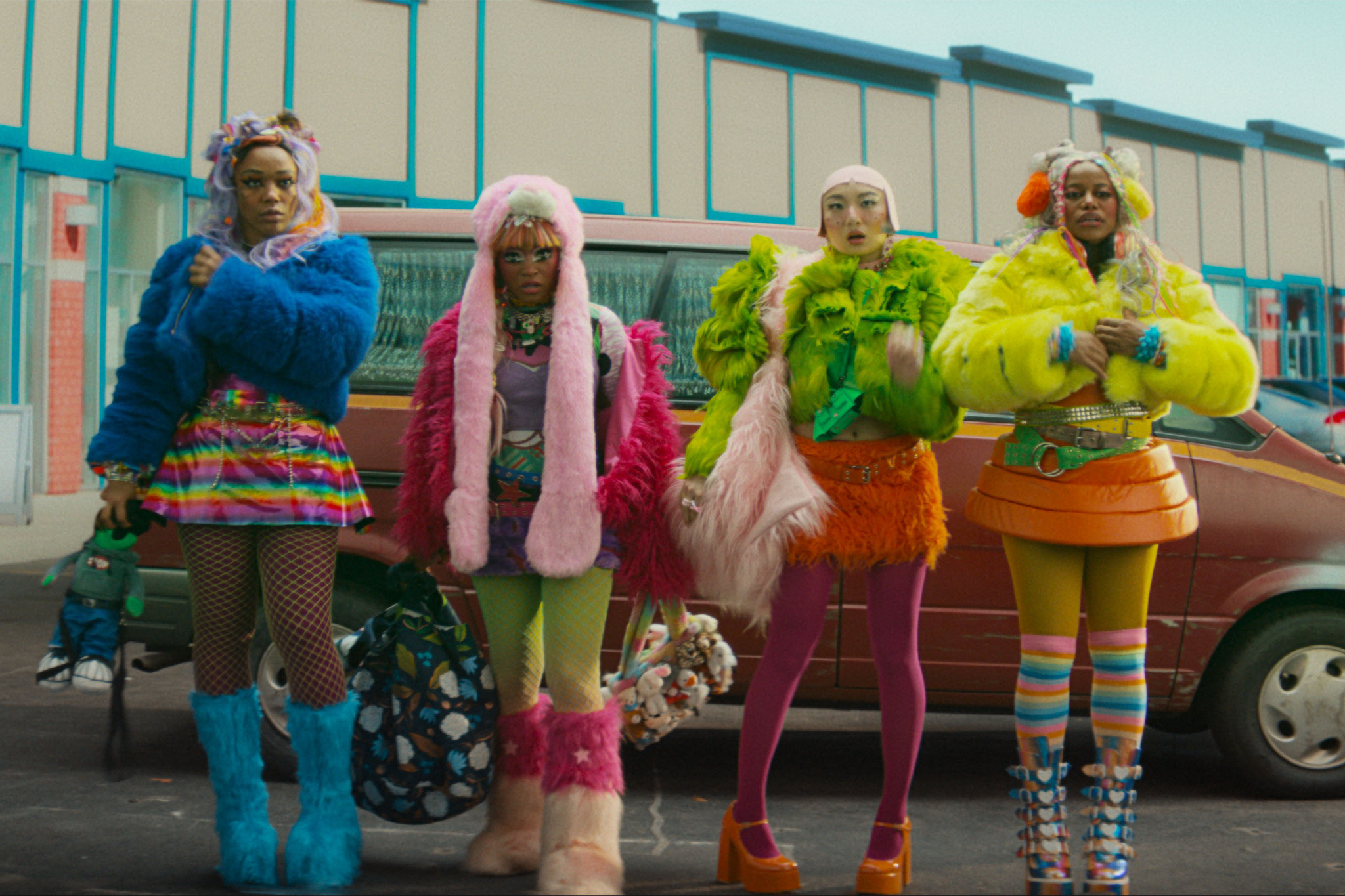
In I Love Boosters, she is Sade, a resolutely earthbound communist in a succession of outrageous wigs, who spends her nights as part of The Velvet Gang, a troupe of women (Keke Palmer, Eiza Gonzalez and Zola’s Taylour Paige are among them) who rob luxury stores and then flog their pilfered wares for a discount. The women collide with Demi Moore’s ruthless fashion maven, before becoming embroiled in a scheme involving blackmail, teleportation and Chinese sweatshops. Boots Riley, its writer/director – he broke out with 2018’s gig-economy comedy Sorry to Bother You – has a unique ability to slip progressive politics into the most easily digestible and visually inventive forms, and it’s no different here. It made Ackie think about community, and who gets credit for work and who can make an actual living off it.

Watch Apple TV free for 7 day
New subscribers only. £9.99/mo. after free trial.
Plan auto-renews until cancelled.
ADVERTISEMENT. If you sign up to this service we will earn commission. This revenue helps to fund journalism across The Independent.
“Take my clothes,” she says. “What I’m wearing isn’t just a reflection of me but also the team around me. The clothes are from a brand, but on top of that were made by someone else. We don’t think about the labour behind all of these things, and the work that goes into it. It all comes from somewhere, and absolutely everyone deserves a chance to be appreciated and paid appropriately for their work.”
Riley said he cast Ackie and her co-stars for their “specificness”. “Some actors have sanded their edges down so much that they can be whoever,” he explained. “But it comes off as a lot of nothing to me.”
Ackie smiles when I repeat this. “There’s a Spice Girl-y vibe about us,” she laughs. “We each come with a different story, and what I see in us – and I think what Boots is talking about – is that we’re authentic and honest. Because now I try to be as honest as I can.”

After studying at the Royal Central School of Speech and Drama and bagging a role as Florence Pugh’s handmaid in the period thriller Lady Macbeth, there were the initial years of nothing. She spent much of that time trying to be somebody else – speak a different way, express herself differently. “But it doesn’t work,” she says. “You can’t fake being whatever you think the zeitgeist is looking for. I’ve been in this business for nearly 11 years and been told no hundreds of times. I know I have limits, but the job of an artist is to find out what those limits are, and then try and push through them.”
She’s been great at picking projects, and fighting for roles that feel novel and original. We’re speaking in the week of the Paramount-Warner Bros studio merger, which has raised concerns about the future of original films and a possible mandate to focus on franchises and intellectual property. Warner Bros chiefs Pam Abdy and Mike De Luca were two of the merger’s biggest fatalities – they lost their jobs, despite being the people who greenlit ambitious and often commercially successful original movies including Sinners, Weapons, One Battle After Another and Mickey 17. Ackie sighs and shakes her head when I mention their exits.
“I can understand that going with an IP works, but I think it’s running out,” she says. “People are getting bored of it. And it’s about passing down the gauntlet, and investing in filmmakers with something to say. It doesn’t even take as much money – look at Obsession! That was like a cute little 20-quid movie!” (Curry Barker’s spooky wish fulfillment horror cost $750,000 to make and has to date earned a colossal $523m at the box office.) “Every single film is a gamble. I’ve never signed onto anything that I’m convinced will be a surefire win. But why not take the risk on things that are big swings?”
Which brings us nicely to Clayface. It’s an example of taking a piece of IP and having fun with it – Clayface is traditionally a Batman villain capable of extraordinary shapeshifting, but James Watkins’ film axes Batman and instead uses the character as the jumping-off point for a tale of madness and Cronenbergian ooze. The movie is subsequently disgusting, full of sludgy body freakiness and scissors taken to fused eyelids.

“People are definitely like, ‘Oh no, it’s not canon!’,” Ackie says. “But who needs normal canon? I don’t want to say anything controversial, but adding new things to the conversation is so important. Film is something that needs to evolve over time. It’s why so many remakes don’t work. Yes, it worked in the Nineties or the Eighties, but that’s because it was a different time. We need to be present with what’s going on in the world now, so that we can reflect it.”
Ackie tends to oscillate between conviction and catastrophising. She admits that it usually takes her dad, a Transport for London worker, to talk her down off the ledge – it was him who convinced her to keep acting when she nearly walked away from it in the years after Lady Macbeth, and it’s him who always lets her know when he thinks she’s travelling too much. “That’s his main thing right now,” she says. “He’s very used to my life otherwise. Like he doesn’t even come to the premieres any more – no wait, don’t put that. He’ll be like, ‘What the hell, Nay?’” Ackie’s mother, who worked for the NHS, died when she was 22, and didn’t get to see the accomplished career her daughter would go on to build. But she’s grateful that her father has. “I know he’s proud of me, but I hope he’s proud of my ordinary-life stuff more so,” she says. “I dip in, have a little fun, wear some nice clothes and talk about a job that I love, and then I go back home and daydream about getting a dog.”
Her dad won’t like it, but she’s due in Los Angeles imminently for more Clayface promotion, then New York, then back to London again. Before that, though, she’s headed to a screen talk thrown in her honour as part of the London Film Festival. “I’m scared!” she admits. “What if I show up and there’s only, like, 10 people there?”
The next day, of course, hundreds gather to hear Ackie speak. True to form, she really didn’t have anything to worry about.
‘Clayface’ is in cinemas, and ‘I Love Boosters’ is in cinemas from 30 October

