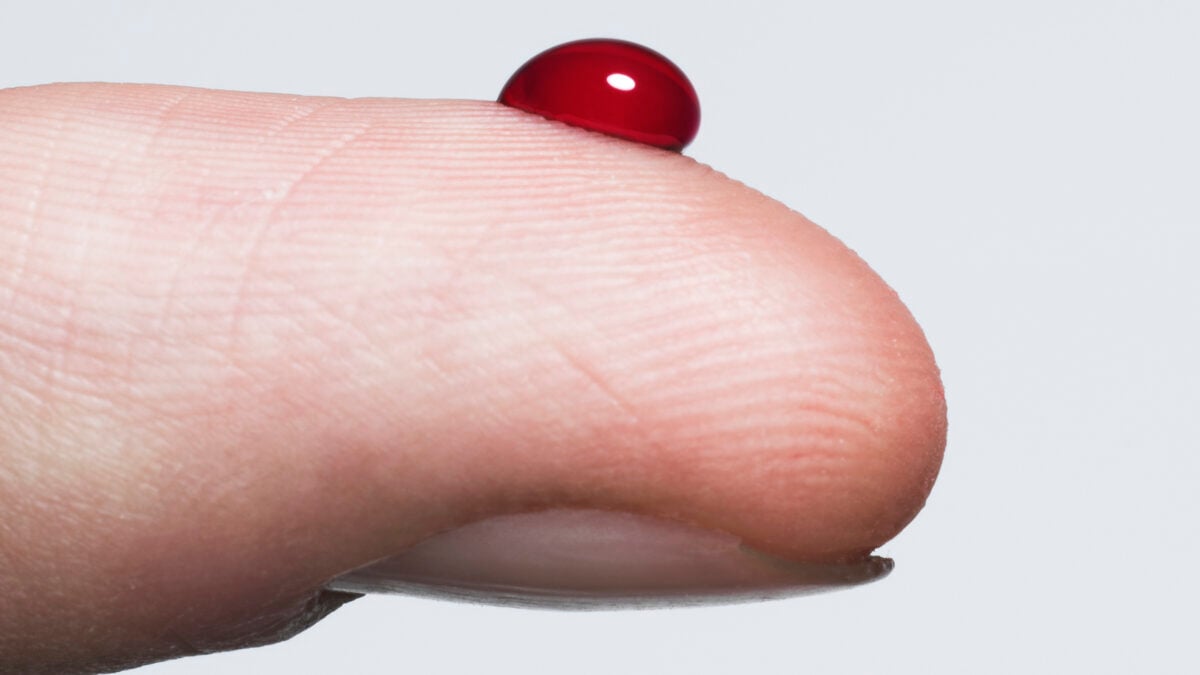
Гар ажиллагаатай төхөөрөмж багахан хэмжээний цусны сорьцоор цусны бүлэг болон улаан эсийн түвшнийг хурдан хэмжихээр бүтээгджээ.
National Taiwan University-ийн судлаачдын баг цахилгаан, тусгай сургалт шаардахгүй, гар эргүүлж ажиллуулдаг төхөөрөмж бүтээсэн байна. Нэг минутын дотор цусны бүлэг болон гематокритыг тодорхойлох бөгөөд шинжилгээнд багахан дусал цус шаардлагатай. Гематокрит нь сорьц дахь хүчилтөрөгч зөөвөрлөдөг улаан эсийн эзлэх хувийг илэрхийлдэг үзүүлэлт юм.
Төхөөрөмжийн эргэлтээс үүсэх төвөөс зугтах хүч цусыг нарийн сувгуудаар дамжуулж, эсүүдийг бөөгнөрүүлдэг эсрэг биеттэй холино. Гурван өөр эсрэг биет байрласан сувгийн аль хэсэгт бөөгнөрөл тогтсоноор цусны бүлгийг тогтоох бол жижиг завсарт баригдсан бөөгнөрлийн хэмжээгээр гематокритыг үнэлнэ. Энэ үзүүлэлт нь их хэмжээний цус алдалт болон цус багадалтыг илрүүлэхэд ач холбогдолтой.

Эмнэлзүйн 21 сорьцод хийсэн баталгаажуулалтаар төхөөрөмжийн хэмжилт автомат анализаторын үзүүлэлттэй сайн тохирчээ: дундаж зөрүү 0.126 хувь, тохирлын 95 хувийн хязгаар −0.63-аас 0.88 хувь байв. Эргүүлэх хурд хэмжилтийн нарийвчлалд нөлөөлөөгүй бөгөөд үндсэн найман цусны бүлгийг таньж чадсан байна.
Гэхдээ сорьцын тоо цөөн, ховор бүлгийн цус болон гематокритын хэт өндөр, хэт бага үзүүлэлтэд төхөөрөмж хараахан тохирохгүй. Судлаачид бусад цусны бүлгийн систем болон гематокритын хэмжих хүрээг хамруулж, олон төвт томоохон судалгаа хийхээр төлөвлөж буй бөгөөд гамшгийн бүс зэрэг бодит нөхцөлд турших шаардлагатай. Судалгааг Biosensors and Bioelectronics сэтгүүлд нийтэлжээ.
Дэлгэрэнгүйг эх сурвалжаас харах
↓Эх сурвалжийг нээх ↓
Medical emergencies aren’t always considerate enough to happen close to hospitals or clinics, and all the professional equipment and trained staff that go along with them.
Now researchers led by a team from the National Taiwan University have developed a hand-cranked device that can be operated by anyone, anywhere, without a power source – and which can reveal blood type and red blood cell levels in a sample within a minute.
Those are two crucial pieces of information that medics and doctors often need to know quickly about patients when an emergency happens. All that’s needed is a tiny drop of blood for analysis. Details of the device and its promising early tests have been published in Biosensors and Bioelectronics.
“Our goal is to bring two essential blood tests out of the laboratory and into the hands of first responders, with no electricity or specialized training needed,” says biomedical engineer Chien-Fu Chen, from the National Taiwan University.
The machine uses centrifugal force to push the blood droplets through a series of winding channels, where they’re mixed with antibodies. These antibodies encourage the blood cells to clump together, and the clumps then get caught by tiny slits in the device.
There are three different antibodies, sitting in three different channels, and by looking at which channel the blood cell clumps get stuck in, blood type can be determined.
The amount of clumped material stopped by the small slits indicates a higher hematocrit (HCT), the level of oxygen-carrying red blood cells in the sample. This is useful for identifying heavy blood loss or anemia.
Readings given by the device matched up almost exactly with readings taken on standard hospital equipment, confirming its accuracy. What’s more, the speed of the cranking didn’t affect the accuracy, so there’s no ‘perfect’ speed the operator needs to stick to.
“Validation using 21 clinical samples demonstrated strong agreement with automated analyzers, with a mean bias of 0.126 percent and 95 percent limits of agreement of -0.63 percent to 0.88 percent,” write the researchers in their published paper.
At 180 mm x 60 mm x 50 mm (7 inches x 2.4 inches x 2 inches), the device isn’t much bigger than a standard chunky TV remote, so portability wouldn’t be an issue.
There’s still work to do before this can be deployed out in the field, however: A sample size of 21 is relatively small, and while the eight main blood types are covered, it doesn’t yet work with rarer blood types or unusually high or low hematocrit levels.
“Future work will therefore focus on extending the assay to additional blood group systems, broadening the validated HCT range, and conducting larger-scale, multi-center clinical studies to further establish reliability,” write the researchers.
It will also be important to test the device out in the field too – a disaster zone can be quite different from a science lab.
This isn’t the first time we’ve seen simple blood testers like this. A few years ago we saw ‘the paperfuge’ that tests for diseases including malaria via paper and string, while some of the same researchers have previously come up with a simple centrifuge design that tests for hematocrit on its own.
However, this is the first time we’ve seen a device that can test for blood type and red blood cell levels together, in such a short time, in something that’s so portable and that doesn’t require a power source.
With further testing and validation, the invention will potentially start showing up in portable medical kits – and may even save lives.
“This portable and user-friendly platform shows strong potential as a practical diagnostic solution for challenging healthcare environments,” write the researchers.
The research has been published in Biosensors and Bioelectronics.
This article was fact-checked by Fiona MacDonald and edited by Fiona MacDonald. While we pride ourselves on our process, we are only human. If you spot a mistake, please let us know.

