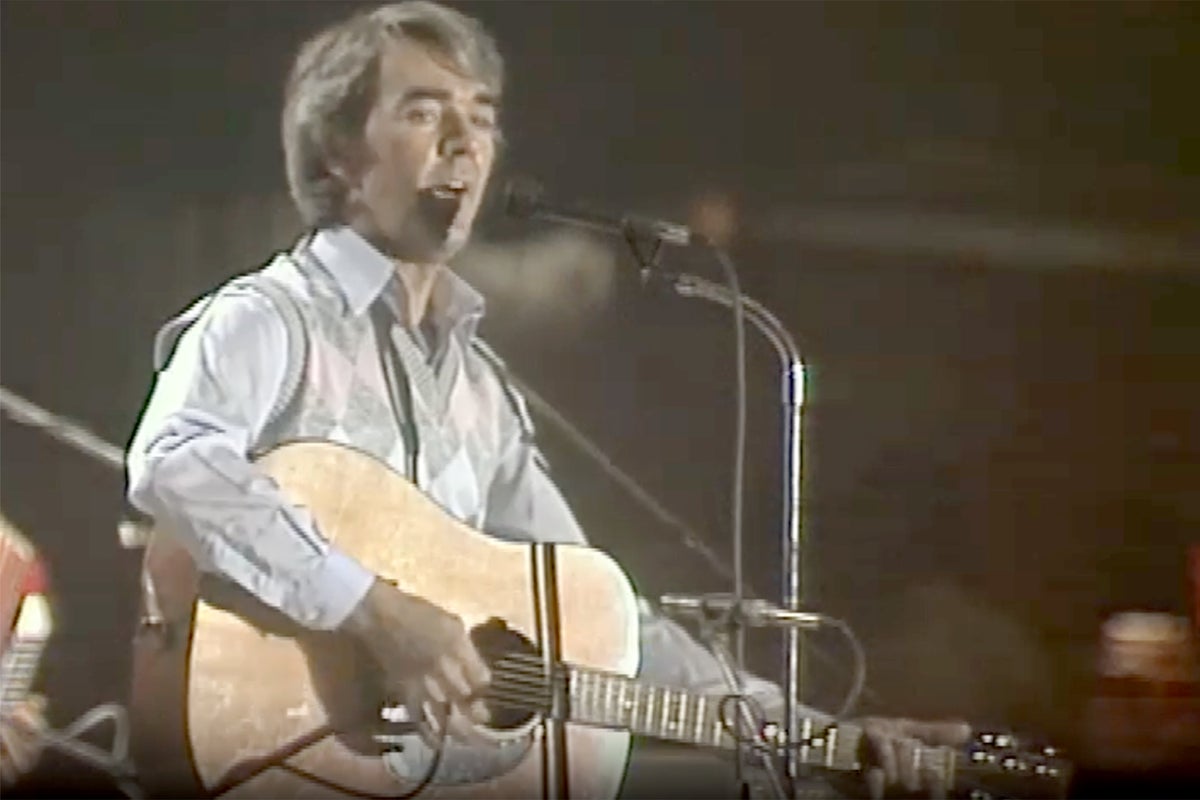
“The Boston Burglar”, “Nora” зэрэг Ирландын чартын тэргүүнд бичигдсэн дуугаар танигдсан тэрээр ням гарагт өөд болжээ.
Жонни МакЭвой ням гарагт буюу арваннэгдүгээр сарын 8-нд Уиклоу мужийн Грейстоунс дахь гэртээ нас барсан тухай хүүхдүүд нь мэдэгдэв. Тэд аавынх нь уран бүтээл олон хүнд үнэ цэнтэй байсан ч гэр бүлийнх нь хувьд тэр зүгээр л аав нь байсан хэмээн дурсаж, оршуулгын ёслолыг гэр бүл, дотнын найз нөхөд болон хамтран ажиллаж байсан хүмүүсийн хүрээнд хийхээр болсныг мэдээлжээ.
Оффали мужийн Банахер хотод төрсөн МакЭвой багаасаа Folk хөгжим, баллад дуу сонирхож, 1960-аад оны эхээр Майкл Кроттитой The Ramblers Two хослон тоглодог байв. Тэд Rolling Stones-ийн Дублин дахь тоглолтын өмнөх хөтөлбөрт оролцох үеэр МакЭвой Мик Жаггертэй тайзан дээр гарч “The Merry Ploughboy” дууг хамтран дуулжээ.
Хос удалгүй тарж, МакЭвой бие даан уран бүтээлээ үргэлжлүүлсэн бөгөөд 1966 онд “Mursheen Durkin” дууны хувилбар Ирландын чартыг тэргүүлж, дараа нь “The Boston Burglar” мөн амжилт гаргасан юм. Тэрээр 1967 онд АНУ-д анхны аялан тоглолтоо хийж, Нью-Йоркийн Карнеги Холлд тоглосон бөгөөд амьдралынхаа турш 18 студийн цомог гаргажээ. Эхнэр Одеттэд зориулан “The Planter’s Daughter” дууг бичсэнээс гадна “Nora” нь Шон О’Кейси зохиолчийн “The Plough and the Stars” жүжигт багтсан байна.
МакЭвой 1979 онд архи уухаа больж, алдар нэрээс үүдсэн сэтгэцийн эрүүл мэндийн бэрхшээлийнхээ талаар олон нийтэд ярьж байв. Одетт өндгөвчний хорт хавдартай гурван жил тэмцсэний эцэст 2013 онд нас барсны дараа тэрээр хөгжмийн ажлаа үргэлжлүүлж, дурсамж номоо хэвлүүлэн тоглолтоо хийсээр байжээ. 2026 оны нэгдүгээр сард дууны хөвчид нь жижиг зангилаа илэрсэн тул авахуулах багахан ажилбарын дараа эдгэрэхээр аялан тоглолтоо цуцалсан бөгөөд хоёр хүүхэд, гурван ач зээгээ үлдээв.
Дэлгэрэнгүй эх сурвалжийг харах
Эх сурвалжийг нээх ↓
Want to bookmark your favourite articles and stories to read or reference later? Start your Independent Membership today.
Already a member?
{
experienceElement.style.display = ‘none’;
let checks = 0;
const maxChecks = 50;
const checkDrawerVisibility = setInterval(() => {
const drawer = document.querySelector(‘.pn-drawer–login, .pn-drawer, #login-drawer, .login-drawer-container, [class*=”login-drawer”]’);
const drawerCloseBtn = document.querySelector(‘#drawer > div > button’);
const isDrawerVisible =
(drawer &&
(drawer.offsetParent !== null ||
drawer.classList.contains(‘is-open’) ||
window.getComputedStyle(drawer).display !== ‘none’)) ||
drawerCloseBtn;
checks++;
if (isDrawerVisible) {
clearInterval(checkDrawerVisibility);
const monitorClosure = setInterval(() => {
const drawerStillHere = document.querySelector(
‘.pn-drawer–login, .pn-drawer, #login-drawer, .login-drawer-container, [class*=”login-drawer”]’
);
const innerContent = document.querySelector(‘#drawer > div’);
const isVisible =
(drawerStillHere &&
(drawerStillHere.offsetParent !== null ||
drawerStillHere.classList.contains(‘is-open’) ||
window.getComputedStyle(drawerStillHere).display !== ‘none’)) ||
innerContent;
if (!isVisible) {
clearInterval(monitorClosure);
experienceElement.style.display = ‘flex’;
}
}, 500);
if (drawerCloseBtn) {
drawerCloseBtn.addEventListener(
‘click’,
() => {
setTimeout(() => {
experienceElement.style.display = ‘flex’;
}, 100);
},
{ once: true }
);
}
} else if (checks >= maxChecks) {
clearInterval(checkDrawerVisibility);
experienceElement.style.display = ‘flex’;
}
}, 200);
};
{
document.documentElement.classList.add(‘mos-bookmark-open’);
const el = document.querySelector(‘.bookmark-experience’);
if (el) el.style.display = ‘flex’;
document.cookie = ‘mos-plan-select=; Max-Age=0; path=/; expires=Thu, 01 Jan 1970 00:00:00 UTC;’;
el?.querySelector(‘.subscribe-link’)?.addEventListener(‘click’, (e) => {
e.preventDefault();
document.cookie = ‘mos-plan-select=; Max-Age=0; path=/; expires=Thu, 01 Jan 1970 00:00:00 UTC;’;
setTimeout(() => {
window.location.href = “https://www.independent.co.uk/subscribe/app?regSourceMethod=Bookmarks”;
}, 500);
}, { once: true });
el?.querySelector(‘.close-btn’)?.addEventListener(‘click’, () => {
document.documentElement.classList.remove(‘mos-bookmark-open’);
}, { once: true });
});
]]>
Johnny McEvoy, the legendary Irish musician who played with the Rolling Stones, has died aged 81.
Known for his Irish chart-topping songs “The Boston Burglar” and “Nora”, McEvoy died on Sunday (8 November) at his home in Greystones, County Wicklow.
His death was announced by his children Jonathan and Alice, who said: “Dad’s music meant so much to so many people, but to us, he was just Dad. We’re so grateful for all the love shown to him over the years.”
The family thanked McEvoy’s fans for their “many kind messages” and for giving them privacy, and said that the funeral would be a private affair, “attended by his family, close friends and some of those he worked alongside over the years”.
The son of a bus driver and housewife, McEvoy was born in Banagher, County Offaly and had an interest in folk music and ballad songs from a young age.
cookie.trim() === ‘__DEBUG__=true’)) { console.log(‘Ad logs: “mpu1”, injectedAtParagraph: 4’); }]]>
While his father was less supportive of his musical ambitions, his mother was more keen, with McEvoy initially performing as part of duo The Ramblers Two with Michael Crotty in the early 1960s.
The pair released a number of singles, toured and appeared on television, and even supported the Rolling Stones when they performed at Dublin’s Adelphi cinema. During the concert, McEvoy joined Mick Jagger on stage to play “The Merry Ploughboy”.
cookie.trim() === ‘__DEBUG__=true’)) { console.log(‘Ad logs: “taboola-carousel-thumbnails”, injectedAtParagraph: 6’); }]]>
Writing in his 2017 memoir, My Songs, My Stories, My Life In Music, McEvoy recalled: “My manager called me one day and said, ‘The Rolling Stones are in town – would you be interested in going on and doing an opening spot?’ Of course, I jumped at the idea, full of bravado, and we went in.
“Before the show, the compere got cold feet. They asked me would I introduce them and I said, again without thinking, ‘Yeah I’ll do that!’ I wouldn’t do it nowadays.”
cookie.trim() === ‘__DEBUG__=true’)) { console.log(‘Ad logs: “mpu2”, injectedAtParagraph: 8’); }]]>

Enjoy unlimited access to 100 million ad-free songs and podcasts with Amazon Music
Sign up now for a 30-day free trial. Terms apply.
ADVERTISEMENT. If you sign up to this service we will earn commission. This revenue helps to fund journalism across The Independent.
Soon afterwards, the duo split and McEvoy went solo, landing his first first hit in 1966 with a cover of the ballad “Mursheen Durkin”.
His mother had encouraged McEvoy to release the cover, which topped the Irish chart, just as follow up single “The Boston Burglar” did.
cookie.trim() === ‘__DEBUG__=true’)) { console.log(‘Ad logs: “mpu3”, injectedAtParagraph: 10’); }]]>
McEvoy played his first US tour in 1967, during which he performed at the Carnegie Hall in New York.
The same year, McEvoy met his future wife, Odette, when she was working as a hairdresser in Dublin. Odette was a Protestant while McEvoy was a Catholic, with the pair marrying in a Catholic church in 1970.
He told the Irish Independent last year: “I did it for my parents. I didn’t stand up. I should have said no, we’re going somewhere else. To be honest with you, we did marry in the Donnybrook church to please my parents.
“I’m still kind of ashamed of that. I should have stood my ground. My problem all my life was always trying to please people.”
“The Planter’s Daughter” was written by McEvoy about his wife, with the entertainer releasing many more number one singles and future musical standards, including “Nora”, which featured in The Plough and the Stars by Irish playwright Seán O’Casey.
He spent much of the 1970s touring in Ireland and across the world, while also releasing seven of the 18 studio albums he would put out in his lifetime.
McEvoy gave up drinking in 1979 and would go on to speak publicly about his struggles with his mental health that were exacerbated by his fame.
A documentary about his life titled For the Poor and for the Gentry aired in 2010, for which McEvoy re-recorded “Mursheen Durkin” with fellow Irish musician Sharon Shannon and her Big Band.
He kept producing music into the 21st century, but put his career on hold when Odette was diagnosed with ovarian cancer. She lived with the condition for three years and died in 2013, after which McEvoy decided to continue working in music.
“When Odette died, she was dying for three years and had no quality of life with chemotherapy. I then made up my mind that I’d like to keep this life in the music industry until I do die. I don’t fear being 80, I embrace it,” he told RSVP Country in 2025.
McEvoy eventually resumed working, releasing his memoir and continuing to play live. In January 2026, McEvoy shared that doctors had found a small nodule on his vocal cords, and that he needed to cancel his upcoming tour in order to recover from a “minor procedure” to remove it.
“I’m truly sorry to everyone who was looking forward to the shows – I was too! But I’ll be back singing again once I get the all-clear, and we’ll announce some dates as soon as we can,” he wrote.
McEvoy is survived by his two children and three grandchildren, and shared a poignant life lesson just a year before his death.
“Everything has a beginning and an ending,” he said. “No matter how big or small your ego is, in the end we are all just stem cells. But it’s also important to remind yourself, there will never be another you. Those are the words I live by every day.”

