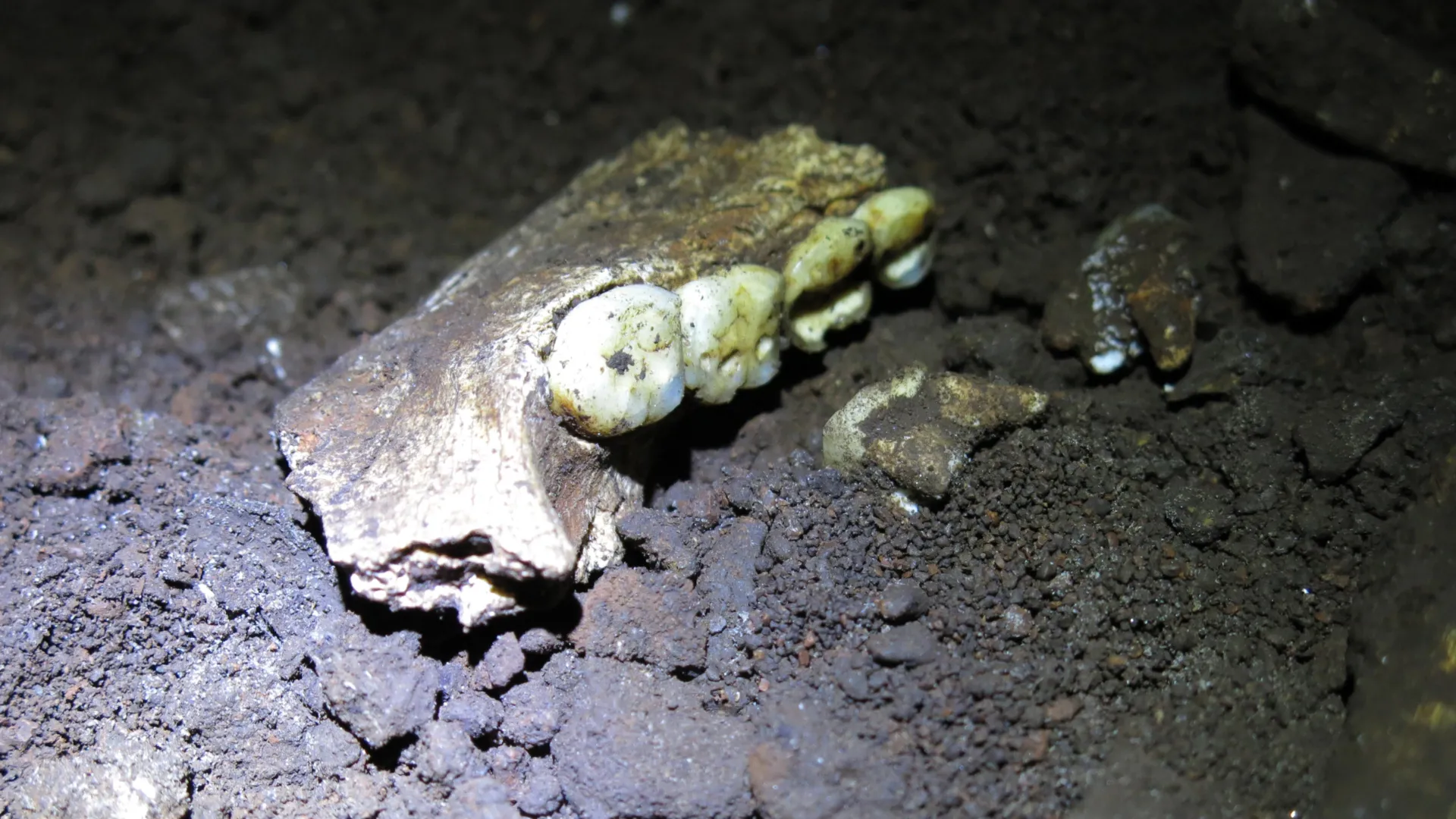
Өмнөд Африкийн Rising Star агуйн олдвороос эрэгтэй Y хромосомтой холбоотой уураг илрээгүй ч үүнийг бүх бодгаль эмэгтэй байсны баталгаа гэж үзэх боломжгүй байна.
Cell сэтгүүлд нийтлэгдсэн судалгаагаар эрдэмтэд 335,000–241,000 жилийн өмнө амьдарч байсан Homo naledi-ийн Диналеди танхимаас олдсон шүдний пааланд хадгалагдсан уургийг анх удаа шинжилжээ. Нас бие гүйцсэн бодгалиудын олдворууд хоорондоо биеийн хэлбэрээрээ тун төстэй байсан нь судлаачдын удаан хугацаанд тайлбарлахыг зорьсон оньсого байв.
Йоркийн их сургууль, Копенгагены их сургууль болон арав гаруй байгууллагын судлаачид шүдний пааланг хүчилээр зөөлөн сийлж, 20-иос доошгүй бодгалийн 23 шүднээс пептид хэмээх жижиг уургийн хэсгүүдийг гарган авчээ. Тэд эрэгтэй Y хромосомын гентэй холбоотой амелогенин-Y уургийг хайсан ч илрүүлээгүй бөгөөд Йоркийн их сургуулийн шинжилгээгээр дээжийн уураг орчин үеийн бохирдлоос бус, эртнийх болохыг баталсан байна.
Энэ үр дүн Диналеди танхимыг зөвхөн эмэгтэй бодгалиудын оршуулгын газар болгон зориуд ашигласан байж болзошгүй гэсэн таамгийг дэвшүүлж байна. Гэвч судлаачид үүнийг цорын ганц тайлбар гэж үзэхгүй байгаа бөгөөд тусгаарлагдсан популяцид амелогенин-Y үүсгэдэг ген мутацид орсон эсвэл бүрмөсөн алга болсон бол зарим бодгаль эрэгтэй байсан ч маркер нь илрэхгүй байх боломжтойг тэмдэглэжээ.
Шүдний паалан биологийн материалыг удаан хугацаанд хамгаалдаг тул тэнд хадгалагдсан уураг эртний хүний төрөл төрөгсдийн талаар яснаас дангаар нь мэдэх боломжгүй мэдээлэл өгч чадна. Судалгаа нь устаж үгүй болсон нэг төрлийн гоминины хамгийн олон бодгалийг эртний уургаар шинжилсэн ажил бөгөөд Homo naledi-ийн нийгмийн амьдрал, оршуулгын зан үйлийн талаарх ойлголтыг тэлэх ач холбогдолтой.
Дэлгэрэнгүйг эх сурвалжаас харах
↓Эх сурвалжийг нээх ↓
Deep inside South Africa’s Rising Star Cave system, scientists have uncovered a surprising clue about an extinct human relative that lived hundreds of thousands of years ago. For the first time, researchers have recovered and studied ancient proteins from Homo naledi fossils, revealing evidence that the cave may have contained an exclusively female burial site.
The discovery, published in the journal Cell, raises an extraordinary possibility. The cave could represent the earliest known burial location reserved for one sex by a human relative other than Homo sapiens.
Homo naledi lived approximately 335,000 to 241,000 years ago and has fascinated scientists since its discovery in 2013. This extinct species combined primitive features resembling those of apes with other characteristics more closely associated with modern humans.
A Strange Mystery Hidden in Ancient Human Fossils
One of the biggest puzzles surrounding Homo naledi involves the remarkably similar appearance of adult fossils recovered from the cave’s Dinaledi Chamber. For more than a decade, researchers have struggled to explain why these individuals showed so little of the physical variation normally associated with differences between males and females.
To investigate, an international research team involving the University of York, the University of Copenhagen, and more than 10 other institutions turned to proteins preserved in the ancient remains.
The scientists used a technique involving gentle acid etching to recover tiny protein fragments known as peptides from fossilized tooth enamel. This approach allowed them to collect samples while minimizing damage to the valuable fossils. In total, they examined 23 teeth belonging to at least 20 different individuals.
The researchers specifically searched for Amelogenin-Y, a protein produced from a gene on the male Y chromosome. Surprisingly, they found no evidence of this male-specific marker.
To verify that their findings were reliable, specialists at the University of York’s chemistry facility examined the amino acids in the samples. Their analysis confirmed that the proteins were genuinely ancient rather than the result of contamination from modern sources.
Could Homo naledi Have Had an All-Female Burial Site?
Dr. Marc Dickinson, from the University of York’s Department of Chemistry, said: “The lack of male markers with the group is truly fascinating. It is incredibly exciting to gain a window not only into the biology of our ancestors, but also into how they lived.
“These findings offer rare insights into a culture that has, until now, been difficult to access directly. Advances in ancient protein analysis are opening the door to a far richer and more nuanced understanding of ancient hominins.”
The results raise important questions about how Homo naledi individuals lived, organized their communities, and treated their dead. If the Dinaledi Chamber was intentionally used only for females, it could point to surprisingly elaborate social customs among these ancient human relatives.
Such a practice might even suggest symbolic burial traditions once believed to be exclusive to Homo sapiens, or modern humans.
However, the researchers emphasize that an all-female burial site is not the only possible interpretation of the evidence.
Another explanation involves the genetics of Homo naledi itself. If the population lived in extreme isolation, the gene responsible for producing Amelogenin-Y could have undergone a mutation or disappeared entirely.
Under that scenario, some of the individuals could actually have been male, even though their teeth did not contain the protein normally used to identify them.
Ancient Tooth Enamel Opens a New Window Into Human Evolution
The ability to recover proteins from fossils this old is particularly valuable because tooth enamel can protect biological material for extraordinarily long periods.
Palesa Madupe, who carried out the research during her postdoctoral work at the University of Copenhagen, explained why teeth offer such an important source of evidence.
“Unlike those found in other remains like bone fragments, proteins in tooth enamel are preserved because dental enamel — the hardest tissue in the human body — shields proteins from environmental contamination even for millions of years.
“This makes them ideal carriers of genetic information from deep time. Our study helps in the long-standing mystery of why Homo naledi lacked significant variation; it’s probably because they could have all belonged to one sex.”
The research represents the largest collection of individuals from an extinct hominin species ever examined using ancient protein analysis.
Whether the fossils belong entirely to females or include males with an unusual genetic signature, the discovery provides an important new perspective on Homo naledi. It also demonstrates how proteins preserved in ancient teeth can reveal clues about extinct human relatives that their bones alone cannot provide.
As researchers continue investigating the mystery, the findings could reshape our understanding of the social lives and possible burial traditions of ancient human species.

