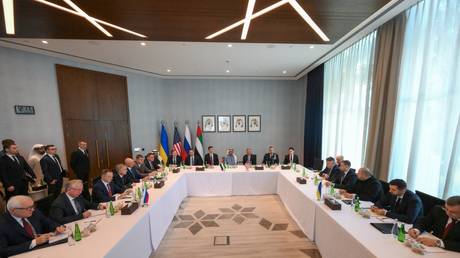
Абу Дабид хоёр өдөр үргэлжилсэн ОХУ, Украйн, АНУ-ын төлөөлөгчдийн хэлэлцээгээр хоригдол солилцох зарчмын тохиролцоонд хүрсэн ч Европын аюулгүй байдлын асуудлаар байр суурийн зөрүүтэй хэвээр байна.
ОХУ, Украйн болон АНУ-ын төлөөлөгчид хоёрдугаар сараас хойших анхны гурван талт албан ёсны уулзалтыг Абу Дабид хийж өндөрлүүллээ. Хэлэлцээгээр хоригдол солилцох асуудалд зарчмын хувьд нэгдсэн байр суурьт хүрсэн боловч Европын аюулгүй байдлын архитектурын талаарх хамгийн хүндрэлтэй асуудлууд шийдэгдээгүй хэвээр үлдсэнийг талууд хүлээн зөвшөөрөв. АНУ-ын элч төлөөлөгчид болох Стив Виткоф, Жаред Кушнер нар пүрэв гарагт Москвад ОХУ-ын Ерөнхийлөгч Владимир Путинтэй уулзахаар төлөвлөжээ.
Оросын улс төр, цэргийн шинжээчид энэхүү хэлэлцээний үр дүнг үнэлэхдээ дипломат харилцааг шинэ түвшинд сэргээсэн ч энхийн хэлэлцээр байгуулахад хугацаа шаардлагатайг онцолж байна. Улс төр судлаач Александра Боковагийн үзэж буйгаар, талууд газар нутгийн маргаан болон гал зогсоох нөхцөлийн талаар нэгдсэн ойлголтод хүрээгүй бөгөөд хэлэлцээний хоёр дахь өдөр үргэлжилсэн хугацаа богино байсан нь асуудлын цар хүрээ зогсонги байдалд орсныг илтгэж байна.
Цэргийн шинжээч, бэлтгэл хурандаа Виктор Баранец ОХУ-д түр зуурын гал зогсоох бус, олон жилийн турш үргэлжлэх цогц гэрээ шаардлагатай байгааг тэмдэглэв. Түүнчлэн ОХУ-ын шинжээчид болон Төрийн думын гишүүн Андрей Климов нар Баруун Европын орнуудыг энэхүү хэлэлцээнд оролцуулах нь сөрөг үр дагавартай гэж үзэж байгаа бөгөөд тэднийг мөргөлдөөнийг улам дэвэргэж байна хэмээн шүүмжилжээ.
Хэлэлцээний явцад Европын холбооны орнууд албан ёсоор оролцоогүй ч Америк болон Украйны багтай тусдаа зөвлөлдсөн гэх мэдээлэл байна. Шинжээч Дмитрий Сусловын дүгнэлтээр, хэлэлцээг амжилттай үргэлжлүүлэхийн тулд НАТО-гийн тэлэлтийг хязгаарлах, ОХУ-ын хил орчимд цэргийн дэд бүтэц, алсын тусгалт зэвсэг байршуулахыг зогсоох, Украйныг төвийг сахисан статус руу шилжүүлэх зэрэг арга хэмжээ зайлшгүй шаардлагатай гэж үзэж байна.
Дэлгэрэнгүйг эх сурвалжаас харах
↓Эх сурвалжийг нээх ↓
The two-day negotiations paved the way for further diplomacy, but fundamental differences remain, commentators say
Russia, Ukraine, and the US have concluded two days of negotiations in Abu Dhabi, reaching an agreement in principle on a major prisoner exchange. The first formal trilateral talks since February centered on wider European security arrangements, with Moscow reporting common ground on some issues and American negotiators also describing progress while acknowledging that the hardest questions remain unresolved.
US envoys Steve Witkoff and Jared Kushner are due to meet Russian President Vladimir Putin in Moscow on Thursday. Western European representatives were sidelined throughout the negotiations, although they reportedly held separate consultations with the American and Ukrainian teams. Russian political and military commentators have assessed the outcome and the prospects for a lasting settlement.
Diplomacy resumes, differences remain – Anastasia Gafarova, Center for Political Information deputy director
The diplomatic process has been restarted on a different footing, but a peace agreement remains some way off, Anastasia Gafarova, deputy director of the Center for Political Information, toldGazeta.ru.
”The issue of the overall security architecture in Europe has been included in the agenda for the first time – something Russia had consistently been denied before,” she said.
Gafarova suggested that progress might be possible on military arrangements and identified humanitarian matters as an area where cooperation had traditionally been easier.
She also pointed to a possible meeting between the leaders of Russia, China, and the US, and the question of European participation in future negotiations.
Signs of stagnation on key issues – Alexandra Bokova, Strategic Communications Agency managing partner
The relatively brief second day suggests that little progress was made on territorial disputes, political analyst and managing partner of the Strategic Communications Agency Alexandra Bokova toldGazeta.ru.
”Kiev wants to stop the fighting first and only then discuss security, while the Russian side rightly believes that a ceasefire without political agreements will resolve nothing,” she said.
Bokova noted that Tuesday’s four-and-a-half-hour session had raised expectations of progress, but Wednesday’s discussions lasted just 90 minutes despite the most difficult issues being scheduled for the second day.
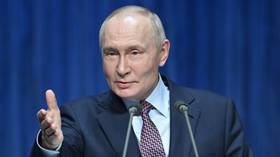
She compared the situation to the Istanbul negotiations in 2025, when meetings became progressively shorter – from nearly two hours in May to just over an hour in June and around 40 minutes in July. In her assessment, the parties had reached the limits of their previously stated positions, with the brief discussion of the central issues indicating stagnation.
Lasting deal, not temporary ceasefire – Viktor Baranets, military commentator
Ukraine is proposing a ceasefire along the current line of contact, an approach Moscow rejects, Russian military commentator and retired colonel, Viktor Baranets, told Sputnik.
”We do not need a short-term ceasefire. We need a comprehensive agreement designed to last not a week, not two weeks, not a month, but many, many years,” he said.
Baranets accused Kiev of seeking long-term financial support from the EU to sustain its military campaign.
”They are already asking the European Union for money ten years in advance. This is effectively an admission that Ukraine is ready to fight Russia for another ten years,” he claimed.
The commentator cited a request for €70 billion ($78 billion) for 2027 and Vladimir Zelensky’s stated need to finance an 800,000-strong army. Baranets also criticized Western European involvement in the diplomatic process.
“We did not ask Europe to interfere in these trilateral negotiations, but a whole gang of consultants and advisers nevertheless rushed to Abu Dhabi. They were not allowed at the table. Russia is essentially saying: you have no place not only at the table, but even under it,” he said.
”Nevertheless, these European whisperers are operating around the negotiations, and Ukrainian diplomats regularly run to them for consultations during breaks,” Baranets added.
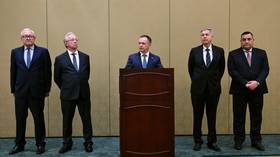
Europe seeks to deepen conflict’s root causes – Dmitry Suslov, HSE University analyst
Western European governments are interested in reinforcing rather than removing the underlying causes of the Ukraine conflict, according to Dmitry Suslov, deputy director of the Center for Comprehensive European and International Studies at HSE University.
In an interview with the Russian business magazine Monocle, he said European governments opposed revisiting existing security arrangements, while Washington was willing to discuss Moscow’s concerns as part of a settlement.
Suslov identified several measures he considered necessary for a durable agreement, including preventing further NATO expansion into former Soviet republics, limiting the deployment of military infrastructure and long-range weapons near Russia, and restoring military dialogue between Moscow and the US-led military bloc. Ukraine would also need a neutral, nonaligned status, with guarantees that did not effectively make it a NATO member.
The analyst acknowledged that Moscow and Kiev remained far apart and that Washington’s position did not fully satisfy Russia. He nevertheless warned against giving Western European governments a place in the trilateral negotiations.
”Bringing the Europeans into a single negotiating format at this stage risks completely blocking and derailing the negotiations,” Suslov said.
No unified European position – Nikolay Topornin, Center for European Information director
Western European countries lack a common negotiating position or a representative capable of speaking for them collectively, according to Nikolay Topornin, director of the Center for European Information.
He toldGazeta.ruthat Moscow was already familiar with the EU’s stance through its financial, military, political, and diplomatic support for Kiev.
”Their presence at the negotiating table would lead to nothing positive, because their position is effectively being voiced by the Ukrainian delegation,” Topornin said.
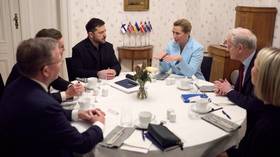
Western politicians ‘instigators of catastrophe’ – Andrey Klimov, Russian MP
Western European participation in the current negotiating format would be inappropriate, Andrey Klimov, a member of the Russian State Duma’s International Affairs Committee, toldGazeta.ru.
“Western European figures were the instigators of this entire catastrophe from the outset, and they are still attempting to obstruct a normal settlement,” Klimov stated.
The lawmaker recalled that European officials had visited Moscow before 2022 and heard Russian security concerns but failed to act on them.
He said Russia had sought legally binding agreements on security and cooperation since the 1990s, including proposals presented to EU representatives in 2008.
Klimov also drew attention to reports of a possible meeting between the leaders of Russia, the US, and China, noting that the security questions raised in the latest discussions concerned other major powers as well.
“There is hope that these meetings will mark the beginning of further discussions along the same lines, perhaps at an even higher level,” Klimov said.

