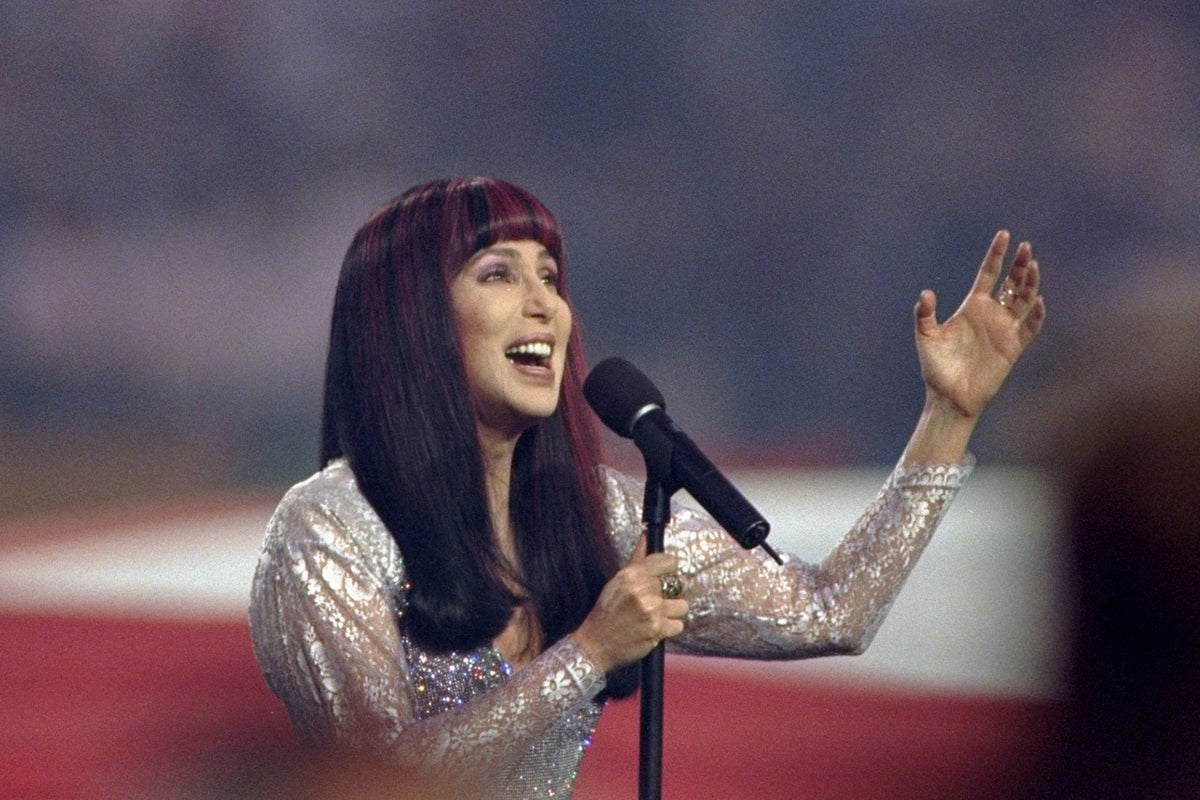
1998 онд гарсан хитэд ашигласан вокал эффект студийн засвараас бие даасан уран сайхны арга болж, хожим “Cher effect” хэмээн танигджээ.
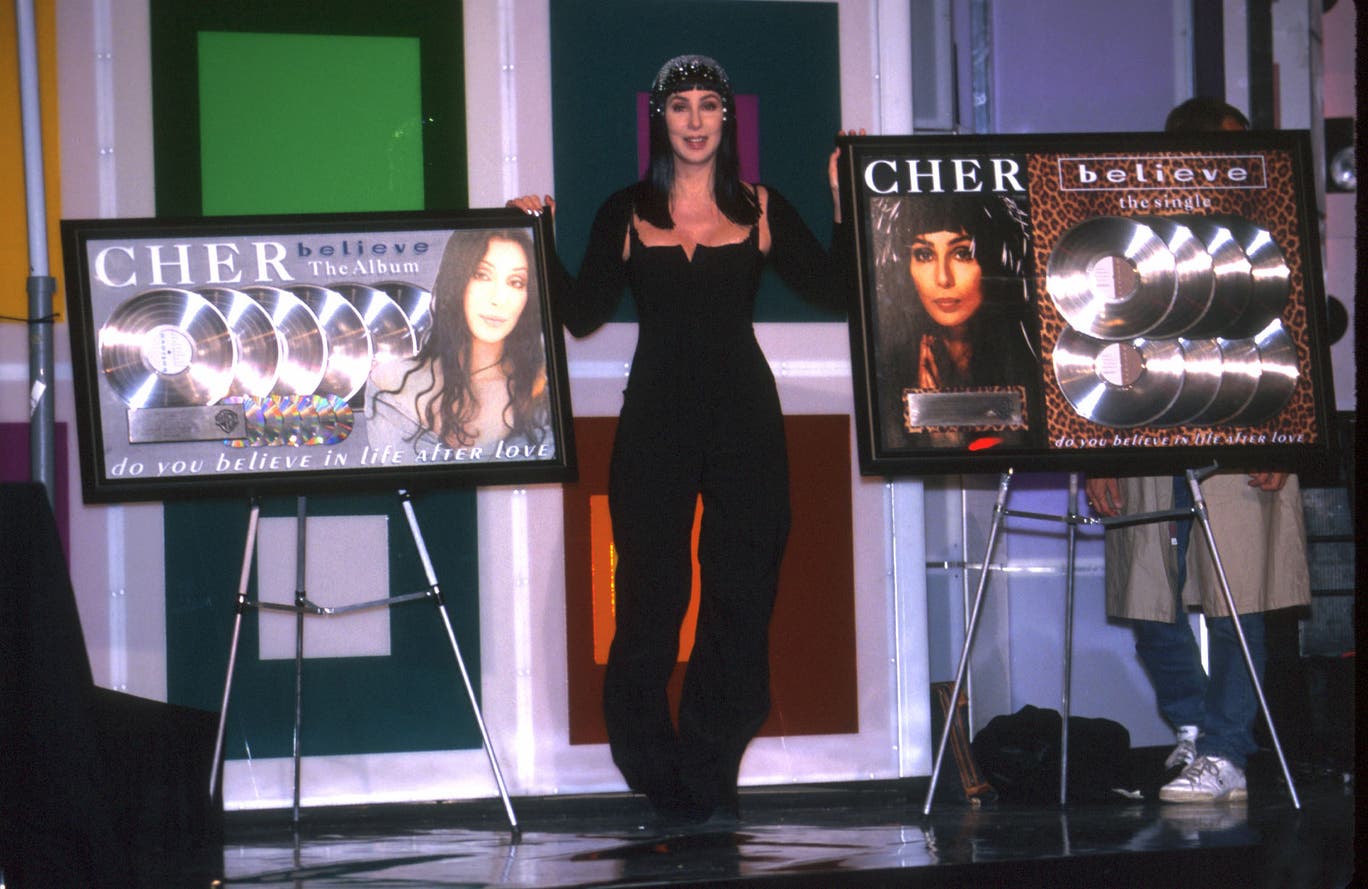
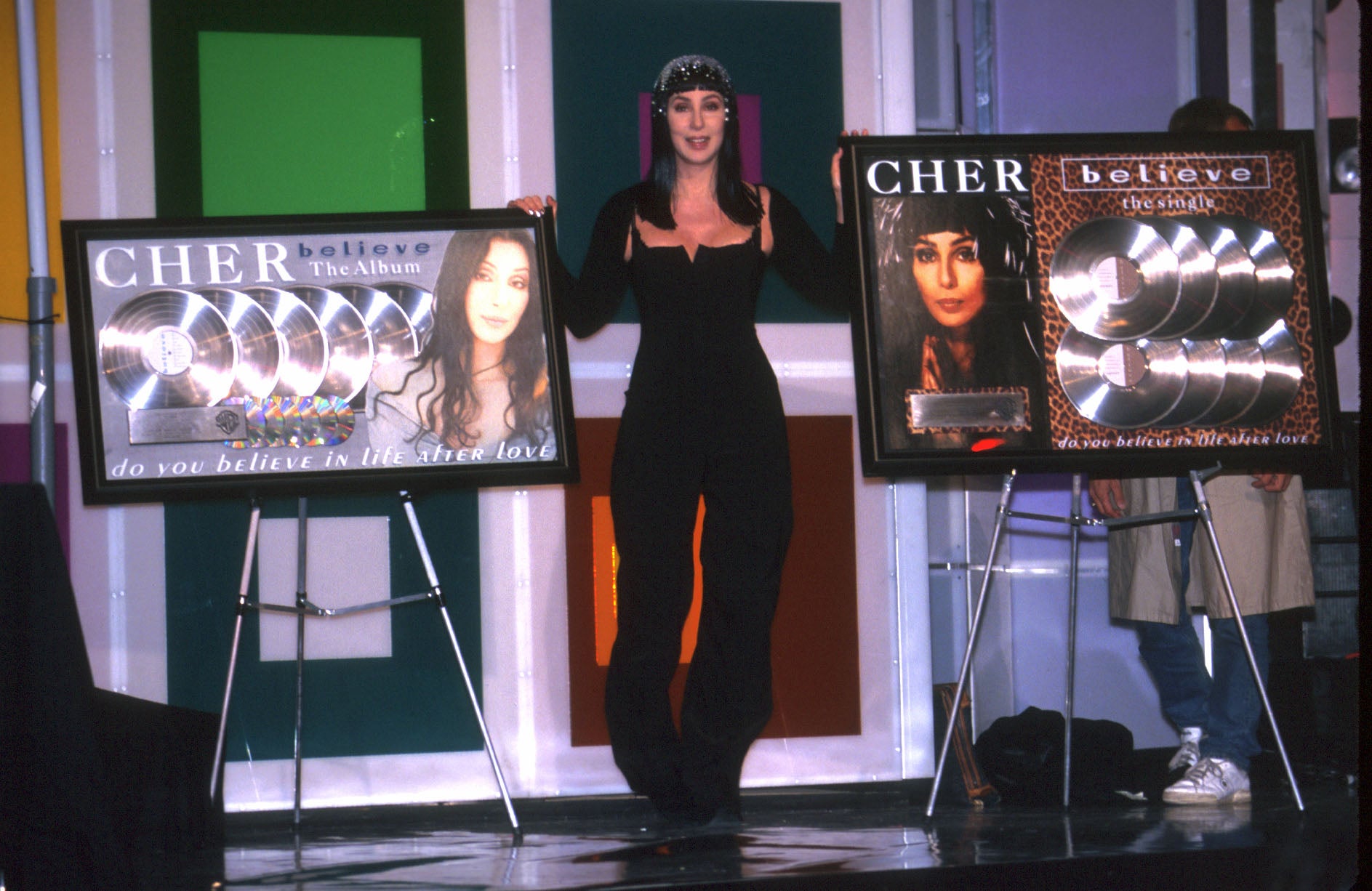
Шер 1998 онд 50 гаруй насандаа залуу уран бүтээлчид давамгайлсан чартын үед ностальгид түшиглэлгүй, бүжгийн хөгжмийн чиглэлд алхам хийж “Believe” синглээ гаргасан. Тухайн үед түүний уран бүтээлийг Сонни Бонотой харилцаатай нь холбон тайлбарлах нь түгээмэл байсан ч энэ дуу Шерийн бие даасан уран бүтээлчийн байр суурийг дахин тодотгосон юм.
Auto-Tune-ийг геофизикийн инженер, математикч Энди Хилдебранд 1995 оны хөгжмийн тоног төхөөрөмжийн үзэсгэлэнгийн үеэр сонссон санаанаас эхлэн бүтээжээ. Анх дуучны хоолойн өнгийг үл мэдэг засах студийн хэрэгсэл байхаар төлөвлөсөн программ 1997 он гэхэд продюсерүүдийн анхаарлыг татаж, дараа нь АНУ-ын болон Европын олон студид ашиглагдах болсон байна.
“Believe”-ийн бичлэгийн үеэр продюсер Марк Тейлор Шерийн хоолойн бичлэгт Auto-Tune ашигласан бөгөөд дуучин эффектэд дуртай болжээ. Тэд тохируулгын хурдыг тэг болгосноор дууны өнгө тухайн нотод шууд шилждэг, илт цахим сонсогдох эффект бий болсон нь Хилдебрандын анхны зорилгоос өөр байв.
Шүүмжлэгчид уг эффектийг дууны сэтгэл хөдлөл, Шерийн өөртөө итгэлтэй атлаа эмзэг төрхийг илэрхийлсэн уран сайхны сонголт гэж үнэлсэн. “Believe” амжилтад хүрсний дараа Auto-Tune-ийг ил тод ашиглах нь гутаан доромжлол бус, хөгжмийн өөрийн өнгө төрх болж түгсэн бөгөөд Лиор Филлипсийн “Believe” ном Bloomsbury Publishing-ээс хэвлэгджээ.
Дэлгэрэнгүй эх сурвалжийг харах
Эх сурвалжийг нээх ↓
Want to bookmark your favourite articles and stories to read or reference later? Start your Independent Membership today.
Already a member?
There are few songs as inescapable as “Believe”. But then again that makes sense for Cher, a culturally totemic star. She’s been a girl group backing vocalist, half of a beloved pop music romance, a nightclub staple, a variety TV star, an Academy Award winner, a Mermaid, a fashion icon, an inspiration, a master of social media. Through thick and thin, she just kept on reinventing, even long past the age at which female pop stars were supposed to have burned out or faded away. Cherilyn Sarkisian refused to bow to ageism or misogyny, to the critics and fans who had moved on to younger, shinier pop stars. And she did so by taking powerful steps onto the dancefloor and being unapologetically herself.
For decades, many saw Cher’s music career as a cyclical evolution away from her relationship with Sonny Bono. Their love story had been considered essential to her artistry when the world first met her. They recorded together, performed together, starred in movies and TV shows together. It was Sonny and Cher, inseparably. And after their breakup, many defined her by his absence, by how new albums differed from the time when they had each other, babe. And in 1998, Cher was in her early fifties—more than twice the average age of the four women in the top 5 of that year’s Billboard Year-End Hot 100 (Brandy, Monica, Shania Twain, and LeAnn Rimes). But rather than pander to the nostalgia set or aim to recapture the Sonny vibes, she ventured into UK dance clubs—complete with an assist from an Exxon-contracted mathematician.
A geophysical engineer and mathematician with a background as a classically trained flutist and former studio session player, Dr Andy Hildebrand holds an incredible place in pop history. He was a pioneering researcher in auto-correlation algorithms… which he explains as dealing with the concept of how a variable in a series is correlated to past values, establishing the degree of similarity in a pattern over time. In the Eighties, Hildebrand was using this research to record seismic waves to help map sites that might contain oil in three dimensions. But the musician in Hildebrand refused to be silenced and he left to study composition at Rice University, going on to develop software that would help improve the quality of synthesized orchestral instruments.
A few years later, while attending the 1995 National Association of Music Merchants (NAMM) conference, Hildebrand asked a lunch table of people what he should invent. One of his distributor’s wives offered a joking suggestion: “She said, ‘Why don’t you make me a box that’ll make me sing in tune,” Hildebrand recalls. “So that’s when I invented AutoTune.” And sure enough, just two years later at NAMM 1997, producers were clamoring for the result.
The tool was envisioned as a “studio ‘secret weapon,’” a behind-the-scenes tool that could pick out seconds or syllables that needed a bit of tweaking, a way to polish even the already shiniest singers. An additional feature that Hildebrand built into the software a few years later allowed users to make large changes in perceived tone independent of pitch – in an algorithm called formant correction. “Within a year, every single studio in the US and many in Europe had AutoTune,” he says.
And that’s where Cher re-enters this story. As Cher described it for The Hollywood Reporter, producer Mark Taylor wasn’t satisfied with her vocal takes in an early “Believe” session, and the two argued about it until she left the studio. While in her hotel room, she saw a performance that would change pop music. “I saw this beautiful boy on the morning show in England. His name was [Andrew] Roachford, and he was singing with a vocoder,” she says. The only problem was that Taylor’s studio didn’t have a vocoder. But they did have an AutoTune.
According to Warner Music UK exec Rob Dickins, Taylor turned on the AutoTune, planning to tune it down to a subtler setting. But Cher was in, hook, line, and sinker. “She loved it,” Dickins says. And that’s when AutoTune went from hiding in the shadows, designed to shift tones imperceptibly, to being daubed aggressively over the whole track – to becoming its own aesthetic. As Hildebrand explains, AutoTune works by instantaneously figuring out the current pitch of the input and moving the pitch closer to the nearest note on a scale. Rather than setting the adjustment speed at a set number of milliseconds, Cher and Taylor set the speed to zero, the adjustment to the scale happening the exact moment the signal was received. That wasn’t what Hildebrand had initially envisioned, but once “Believe” caught on, that exaggerated version of AutoTune became known temporarily as “the Cher effect”, with Hildebrand even relabeling it as such in the software.
Critics not only exalted the track, but specifically singled out the AutoTune as a powerful artistic choice. Neil Strauss’ review for The New York Times made a particularly compelling case: the AutoTune could be seen as a way to represent Cher forcing herself to find some emotion, some strength, in the face of heartbreak. “Do you believe in life after love?” she asks, directed to the partner she’s ending things with. “I really don’t think you’re strong enough, no.” This is a song of moving on, of questioning someone else. Cher is emphatic, confident even in her fragility, dismissive of a man where in her younger years she would’ve been beholden. “I know that I’ll get through this/ Cause I know that I am strong.”


Enjoy unlimited access to 100 million ad-free songs and podcasts with Amazon Music
Sign up now for a 30-day free trial. Terms apply.
ADVERTISEMENT. If you sign up to this service we will earn commission. This revenue helps to fund journalism across The Independent.
There’s something to further enhancing the depth and malleability of Cher’s voice, of adding another layer of mysticism to an artist and queer icon who for decades had rolled her eyes at traditions and gender dichotomies. Putting a then-shocking vocal effect on “Believe” that emphasised the already legendary deeper parts of her register must have allowed even more people to connect with the message than had it been sung by a traditional, upper register femme pop star. And because of that confidence, AutoTune as an aesthetic has to a large extent become an accepted musical choice rather than a stigma. And Cher, for so long defined by a relationship or her attempts to reinvent herself away from it, that confidence also fully re-established her ownership of herself and her art, further solidifying her place as a singular icon.
‘Believe’ by music journalist and author Lior Phillips is out now on Bloomsbury Publishing

