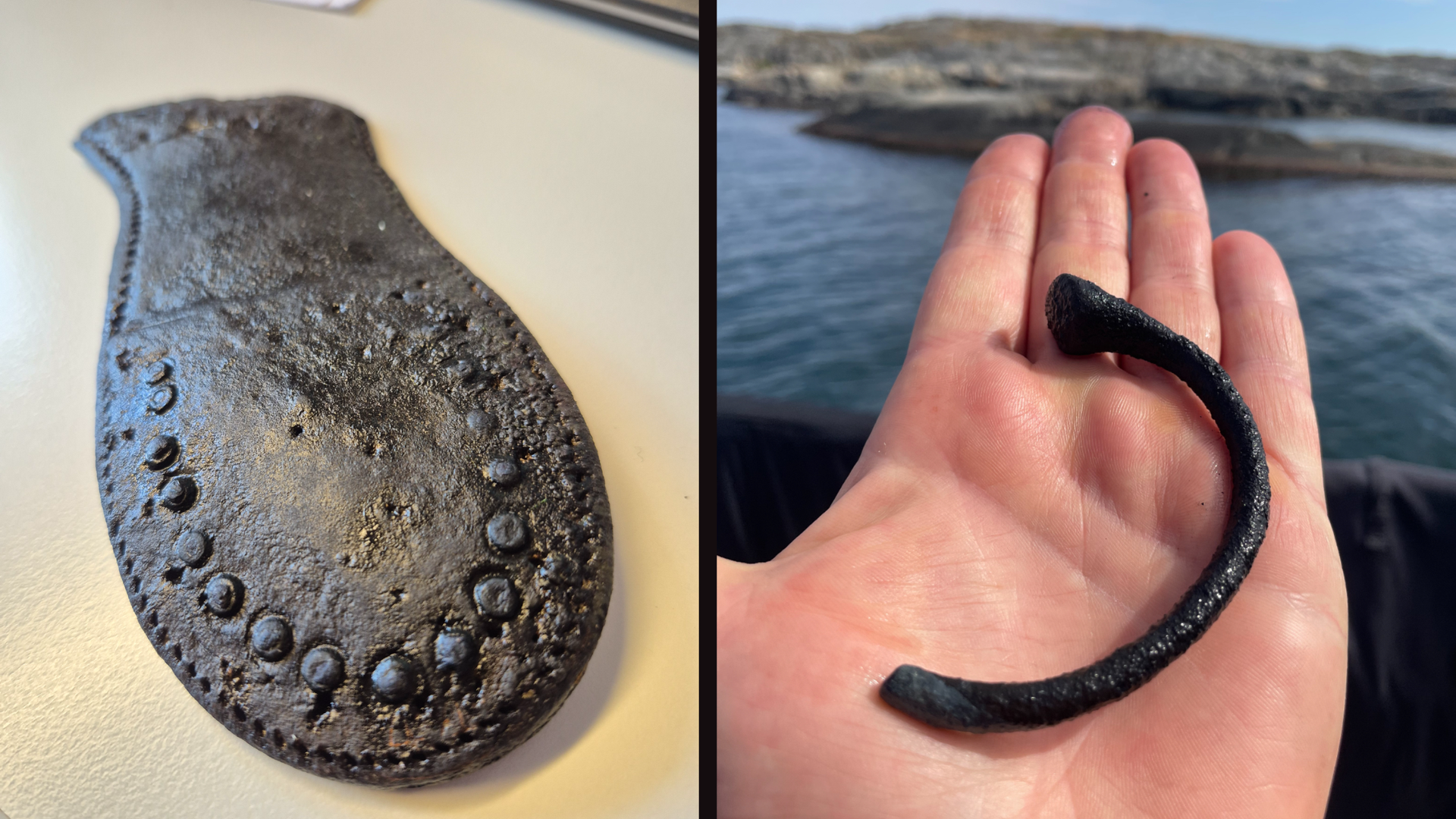
Далайн археологичид Шведийн эргээс олдсон 1683 онд сүйрсэн Данийн “Хавманден” хөлөг онгоцны үлдэгдлээс чамин хийцийн гутал болон боолын наймаанд ашиглаж байсан хоёр металл цагираг олжээ.
Тус хөлөг нь Данийн Баруун Энэтхэгийн компанийн мэдэлд байсан бөгөөд колоничлогчдыг Карибын тэнгис рүү тээвэрлэж, улмаар Баруун Африк руу боол худалдаж авахаар төлөвлөж байв. Гэвч хүнс, усны нөөц дууссаны улмаас хөлгийн багийнхан бослого гаргаж, ахмадаа буудан, Баруун Энэтхэгийн анхны захирагч Йорген Иверсен Диппелийг далайд хаяж амийг нь бүрэлгэсэн байна. Сүүлд хөлөг онгоц Шведэд газардаж, бослого гаргагчдыг Копенгагенд цаазаар авах ялаар шийтгэжээ.
Данийн Үндэсний музейн археологичдын олсон эрэгтэй хүний гутал нь маш өндөр ур хийцтэй, нарийн нүхлэлттэй бөгөөд тухайн үеийн элит давхаргын хүмүүсийн өмсдөг үнэтэй эд байсныг шинжээчид онцолсон байна. Судлаачид энэхүү гутлыг далайд хаягдсан захирагч Йорген Иверсен Диппелийнх байх магадлалтай хэмээн үзэж байгаа нь тухайн үеийн Данийн колоничлол болон боолын худалдааны түүхийг тодотгож өгч байна.
Түүнчлэн олдворын дундаас Баруун Африкт боолын наймаанд мөнгөн тэмдэгт болгон ашиглаж байсан “манилла” хэмээх хоёр металл цагираг илэрсэн нь Дани улсын колоничлолын үйл ажиллагааг батлах чухал баримт болж байна. Дани улс энэхүү хөлөг онгоц сүйрснээс хойш зуу гаруй жилийн турш боолын худалдааг үргэлжлүүлсээр ирсэн бөгөөд 1848 онд боолуудын бослогын дараа л боолчлолыг бүрмөсөн халжээ.
Дэлгэрэнгүйг эх сурвалжаас харах
↓Эх сурвалжийг нээх ↓
Maritime archaeologists investigating a 17th-century shipwreck off the coast of Sweden have discovered a fancy shoe and two metal rings used as currency in the transatlantic slave trade. The items were lost during a mutiny on a slave ship in 1683, during which the governor of the Danish West Indies was thrown overboard.
The Danish frigate Havmanden (which translates to “Merman”) was en route to St. Thomas, a Caribbean island that is now part of the U.S. Virgin Islands, with convicts and indentured servants aboard destined for work on the island with the Danish West India Company. The plan for the Havmanden, after dropping off the new colonists, was to sail to West Africa to buy enslaved Africans. But due to a shortage of food and water, several crewmembers and convicts aboard seized control of the ship near the Azores in the North Atlantic and began sailing it back to Copenhagen.
The mutineers shot the ship’s captain and threw other officers — including Jørgen Iversen Dyppel, the first governor of the Danish West Indies — overboard in the English Channel. After the ship ran aground, the mutineers were tried for their crimes in Copenhagen and sentenced to death.
The story of the Havmanden is one of the most violent mutinies in Denmark’s history, according to a Nov. 11 translated statement from the National Museum of Denmark. But now, underwater archaeologists are learning more about the fateful voyage from the wreck, which lies on the seabed just east of Gothenburg, Sweden.
Archaeological divers discovered the rear half of a man’s “unusually fine” shoe in the wreckage, according to the statement.
“I see a great many shoes from shipwrecks, but I have never before seen a shoe of such high quality,” Vivi Lena Andersen, director of the Rudersdal Museums in Denmark, said in the statement.
The sole has a high level of craftsmanship, Andersen said, which can be seen in the minuscule holes perforating the edge of the shoe. The regularity of the holes would have required tools and expertise that only the most skilled shoemakers had at the time. It was “undoubtedly an expensive and exclusive shoe that only the elite could afford to buy,” Andersen said.
Because the shoe was likely owned by an upper-class individual, experts think it could have belonged to Iversen, the Danish West Indies governor who was thrown overboard.
“The shoe testifies not only to Jørgen Iversen Dyppel’s life and dramatic death, but also provides a personal point of entry into the larger story of the establishment of the Danish colonies in the West Indies and the widespread slave trade Denmark was a part of,” Andreas Kallmeyer Bloch, a maritime archaeologist at the National Museum of Denmark’s Center for Maritime and Underwater Cultural Heritage, said in the statement.
Additional clues to the Danish slave trade on board the Havmanden included two manillas, ring-shaped pieces of metal that were used as currency in West Africa. European merchants cast manillas from copper, brass or iron and traded them for enslaved people in West Africa, particularly along the coast of modern-day Nigeria. But manillas are rarely found in Scandinavia, according to the statement.
“The manillas add another layer to Havmanden’s story and underscore the connection to the slave trade, which was a central part of Denmark’s colonial activities in both the West Indies and on the west coast of Africa,” Kallmeyer Bloch said.
Denmark continued to engage in the transatlantic slave trade for more than a century after the Havmanden sank. Although King Christian VII of Denmark-Norway banned the trade in 1792, slavery continued in the Danish West Indies until 1848, when hundreds of enslaved people revolted and were finally granted their freedom.

