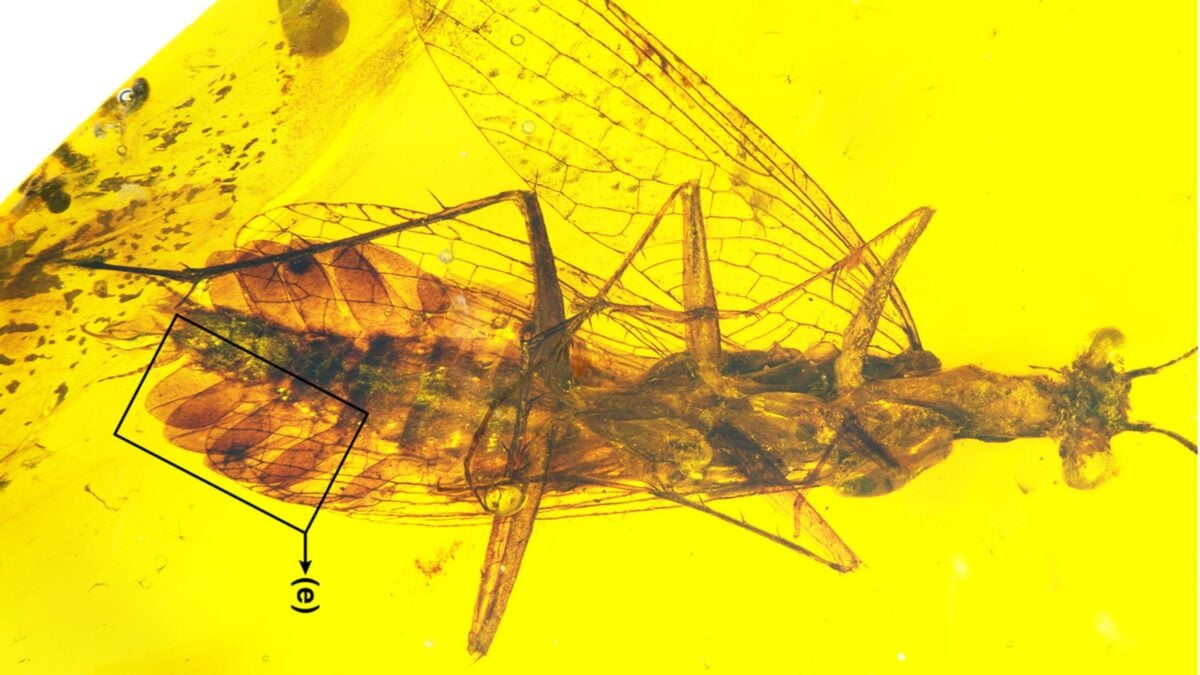
Мьянмарын хувнаас олдсон чулуужсан шавж нь мантисууд ургамлын навчийг дуурайж байсныг харуулсан хамгийн эртний тодорхой баримт болжээ.
Цэрдийн галавын дунд үед халуун орны ойд модны наалдамхай давирхайд баригдсан энэ шавжийг 98 сая жилийн дараа судлаачид Folimantis hyalinala хэмээн нэрлэжээ. Судалгааг New Phytologist сэтгүүлд нийтэлсэн байна. Шавжны хэвлийн хэсгийн навч мэт ургацаг нь мөн тухайн нутгийн хувнаас олдсон устаж үгүй болсон Selaginella grimaldii ургамалтай төстэй бөгөөд далавч нь шил шиг тунгалаг байжээ.
Тухайн үед цэцэгт ургамлууд өргөн тархаагүй байсан тул энэ мантис ургамлын цэцэг бус, навчийг дуурайж байсныг эрдэмтэд онцолжээ. Ургамалтайгаа илүү төстэй болсон мантисууд олзондоо мэдэгдэлгүй ойртож, өөрсдөө ч махчин амьтдаас нуугдах давуу талтай байв. Навч төст бүтэц нь зөвхөн хэвлийд нь байгааг судлаачид дуурайлган хувирах үйл явц биеийн ар хэсгээс эхэлж, хожим бусад хэсэгт хөгжсөн байж болох шинж гэж үзжээ.
Энэ олдвор мантисууд ургамлыг дуурайх чадварыг дор хаяж 98 сая жилийн өмнөөс хувьслын явцад бий болгосныг харуулж байна. Гэвч Мьянмарын хув олборлолт, худалдаа нь тус улсын улс төрийн мөргөлдөөнтэй холбоотой тул ийм олдворыг судалгаанд ашиглах асуудал маргаантай хэвээр; 2015 онд тус улс чулуужсан олдвор экспортлохыг хориглосон ч хуванд хадгалагдсан олдворууд хууль эрх зүйн тодорхой бус нөхцөлд үлджээ. Уг сорьцыг цуглуулагч Фанъюань Ся 2015 онд худалдан авч, мөн онд Бээжингийн Капитал Багшийн Их Сургуулийн шавжны хувьслын лабораторид хандивласан байна.
Дэлгэрэнгүйг эх сурвалжаас харах
↓Эх сурвалжийг нээх ↓
In the mid-Cretaceous, a tropical rainforest in what is now Myanmar was dripping with sticky tree resin that entombed a very peculiar praying mantis.
Now, 98 million years later, this insect is the earliest clear evidence in the fossil record of praying mantises mimicking plant leaves.
Its abdomen bears an uncanny resemblance to the extinct plant Selaginella grimaldii, which is also known from amber specimens found in the same region.
Scientists have named the insect Folimantis hyalinala in a paper published in the journal New Phytologist.
The genus name Folimantis translates literally to ‘leaf mantis’, while hyalinala refers to the glass-like transparency of the creature’s wings.
“Though the mimicry relationship between insects and plants has evolved over at least 200 million years, reliable fossil examples of insect-plant mimicry are scarce,” writes paleoentomologist Hongru Yang and colleagues.
“The mimicry style of F. hyalinala with Selaginella has never been reported before, and there are no species that mimic Selaginella among modern Mantodea.”
In the modern era, there are many examples of mantises that have spent so many generations on specific plants that they’ve come to resemble them.
The most impressive of these is the orchid mantis, Hymenopus coronatus, a Southeast Asian species that looks like a flower, from the pink and cream hues of its petal-like body to the way it sways its body like a flower in the wind.
But when F. hyalinala lived, flowering plants had not yet taken over – so its body has evolved over generations to look like leaves instead.
Every mantis that looked a little more like its host plant had a better chance of sneaking up on unsuspecting prey, while being better disguised from its own predators.
Meanwhile, the plants benefitted too, protected from herbivorous insects by their mantid inhabitants.
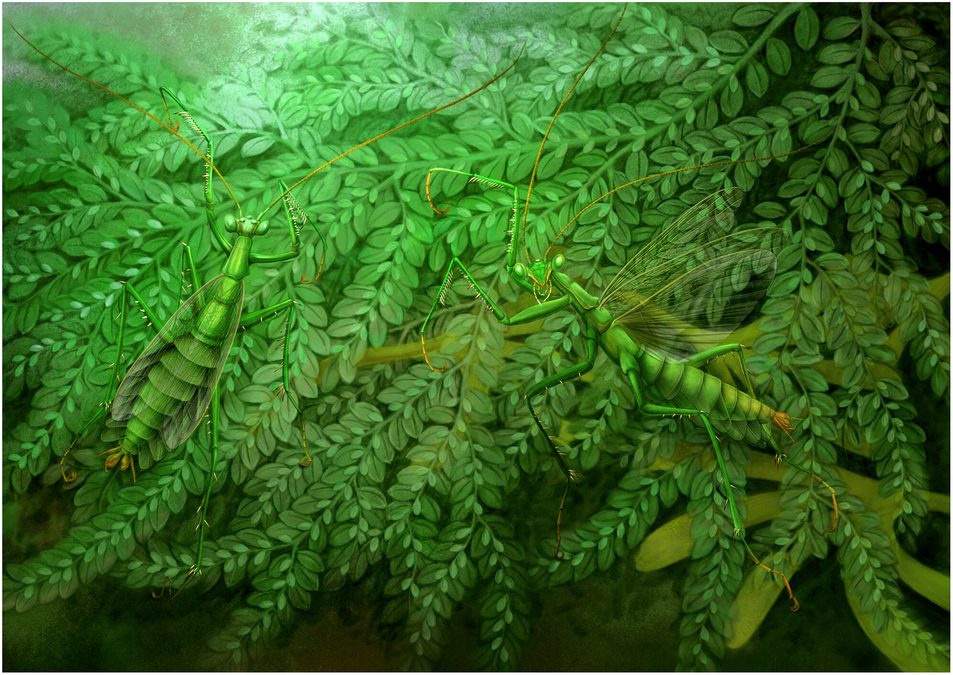
Evolutionary theory says those mantises reaping the benefits of looking a little more plant-like would have had a better chance of surviving to pass on their genes to the next generation.
Over time, this eventually resulted in the uncanny resemblance to the leaves of Selaginella.
The prehistoric specimen reveals that this kind of plant mimicry has been part of the mantids’ evolutionary toolkit for at least 98 million years.
But there’s something strange about F. hyalinala.
Many modern mantises that have evolved to mimic plants wear foliar features all over different parts of their body.
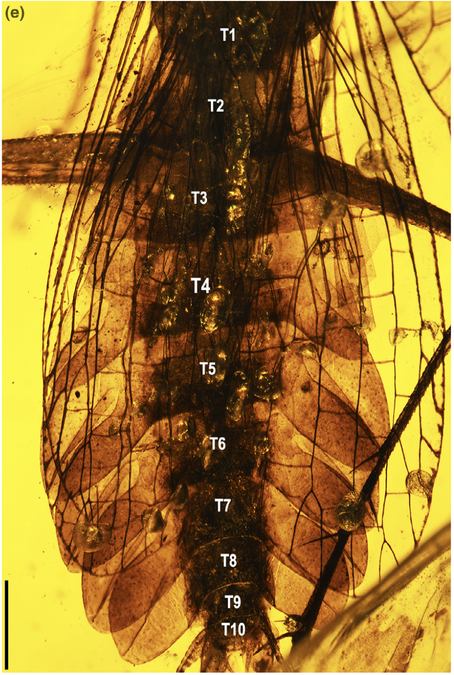
F. hyalinala has leaves on its abdomen only, which could be a hint that plant mimicry began first at the rear, with modifications to other appendages like the wings and thorax emerging later.
Praying mantises actually share an ancestor with cockroaches, which lived around 274 million years ago.
In recent taxonomic research, scientists suggest the first distinct mantises emerged around 185 million years ago, during the Jurassic.
At that time, the supercontinent Gondwana was in the process of breaking up.
This geological origin story could help explain why mantises are so widespread, diverse, and so tightly adapted to their specific environments. They’ve had millions of generations to hone their disguises.
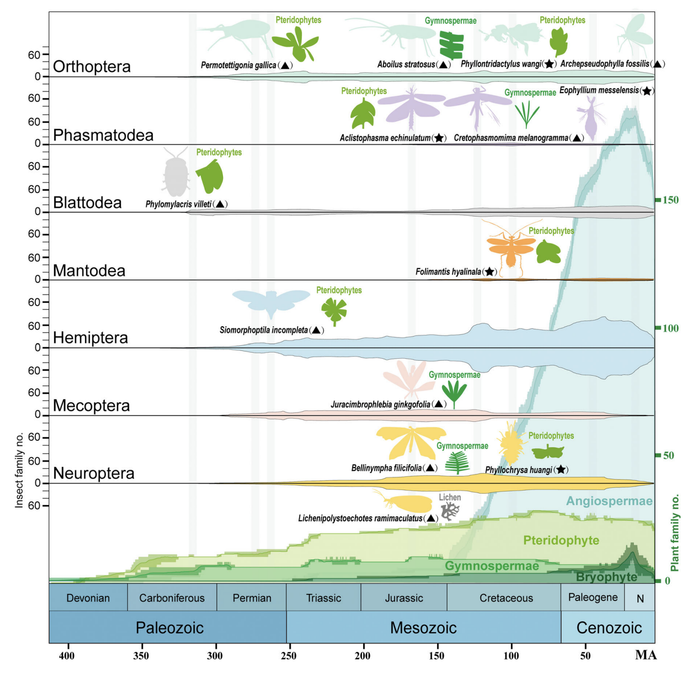
And they’re not the only insects to have done so early in the fossil record: some cockroaches (Blattodea), grasshoppers (Orthoptera), stick insects (Phasmatodea), and members of other insect families were also evolving plant-like features around this time.
The diagram below maps out leaf mimicry seen in fossil insects against the radiation of plant species on Earth.
It offers a sense of how tightly-wound the lives of plants and insects must have been as both lineages established a growing presence on land.
Unfortunately, Kachin amber mining and trade is linked to ongoing sociopolitical turmoil in Myanmar. There are concerns that the amber trade is helping to fund what the United Nations condemns as a “genocidal crime against humanity”.
In 2015, Myanmar banned the export of fossils, but specimens embedded within amber have fallen into a legal grey area.
In 2021, the Society of Vertebrate Paleontology even called for a “hard moratorium on the publication of all fossil specimens in amber obtained from sources in Myanmar after January 2021”, following a military coup.
The F. hyalinala mantis specimen was acquired in 2015 by a collector, Fangyuan Xia, who later that year donated it to the insect evolution lab at Capital Normal University in Beijing.
The research has been published in New Phytologist.
This article was fact-checked by Rachel Garner and edited by Peter Dockrill. While we pride ourselves on our process, we are only human. If you spot a mistake, please let us know.

