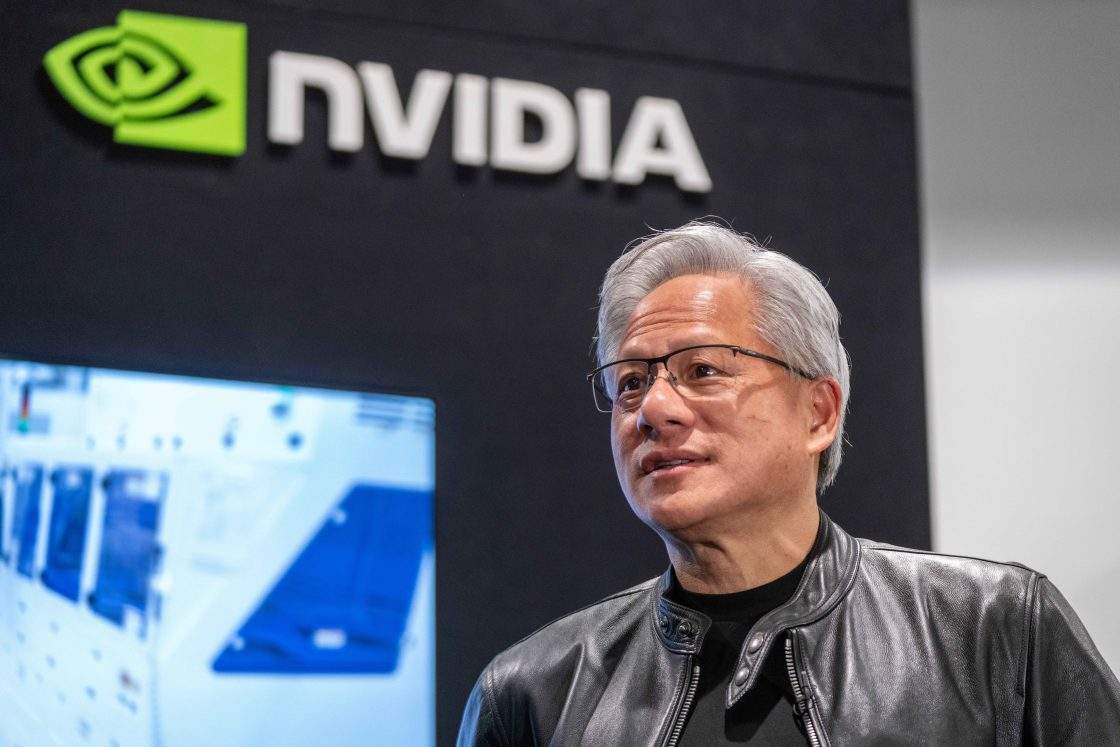
Женсен Хуан Nvidia компанийн гүйцэтгэх захирлаар эргэн томилогдсон ч Хятадад чип нийлүүлэх хязгаарлалт болон үндэсний аюулгүй байдлын асуудал анхаарал татсаар байна.
1993 онд Nvidia-г хамтран байгуулсан Женсен Хуан хиймэл оюуны салбарын гол төлөөлөгчдийн нэг болж, компанийн чипүүд OpenAI зэрэг байгууллагын технологийг ажиллуулахад чухал үүрэг гүйцэтгэжээ. АНУ-ын Ерөнхийлөгч Дональд Трамп хиймэл оюун ухаан, хагас дамжуулагчийн үйлдвэрлэл, Хятадтай өрсөлдөх бодлогод анхаарч буй энэ үед Хуан Вашингтоны улс төрийн хүрээтэй улам нягт холбогдсон байна.
Related Videos

National security concerns over Nvidia
2025 оны нэгдүгээр сарын 13-нд Nvidia Трампын тангараг өргөх ёслолын хороонд нэг сая ам.доллар хандивласан гэж Холбооны сонгуулийн комиссын баримтад дурджээ. Мөн 2025 оны дөрөвдүгээр сард АНУ Хятадын цэрэгт ашиглагдаж болзошгүй гэсэн болгоомжлолоор Nvidia-ийн H20 чипийн борлуулалтад хязгаарлалт тогтоосон бөгөөд долоодугаар сарын 14-нд тус компани зарим чипийг Хятадад худалдах зөвшөөрөл авснаа баталсан байна. The Washington Post сонины аравдугаар сарын 15-нд мэдээлснээр, Nvidia Цагаан ордны хүлээн авалтын танхимын төсөлд 25 сая ам.доллар өгөхөөр амлажээ; тус компани хандивыг бизнесийн ашиг сонирхлоос ангид, нам бус итгэлцлийн санд өгсөн гэж тайлбарласан байна.
The New York Times сонин Хуан Сингапурын Megaspeed компанийн удирдах албан тушаалтан Элис Хуантай (төрөл садан биш) дотно харилцаатай байсан гэх мэдээлэл гаргажээ. Тус сонины мэдээлснээр, АНУ-ын тагнуулын албаныхан Элис Хуанг Бээжинд мэдээлэл дамжуулж, чипийн хязгаарлалтыг тойроход тусалсан байж болзошгүй гэж шалгаж, үнэлсэн бөгөөд энэ талаар Трампад 2025 онд болон 2026 оны тавдугаар сард Марко Рубио мэдээлсэн ч ямар нэг арга хэмжээ аваагүй аж. Арваннэгдүгээр сарын 10-нд Nvidia Хуаныг гадаадын тагнуулын ажиллагааны бай болгосон гэх мэдээллийг бие даан шалгахаа зарласан бол арваннэгдүгээр сарын 11-нд түүнтэй компанийн өөр нэг удирдах ажилтан Кимберли Пауэлл холбоотой гэх тусдаа мэдээлэл гарсан.
Хуан арваннэгдүгээр сарын 12-нд гүйцэтгэх захирлын албан тушаалаасаа огцрохоо мэдэгдсэний дараа Nvidia-ийн хувьцаа болон хиймэл оюуны салбарын бусад хувьцааг зарж эхэлсэн хөрөнгө оруулагчид байв. Арваннэгдүгээр сарын 17-нд тэрээр Хятад улс экспортын хязгаарлалтыг тойрч Nvidia-ийн чип худалдаж авсан гэх мэдээлэлтэй холбоотойгоор арванхоёрдугаар сард АНУ-ын хууль тогтоогчдод мэдүүлэг өгөхийг зөвшөөрчээ. Арваннэгдүгээр сарын 23-нд компанийн ТУЗ Хуаныг гүйцэтгэх захирлаар эргэн томилж, Хятадын чипэд нэвтрэх боломжтой холбоотой болгоомжлолын хариуд Үндэсний аюулгүй байдал, экспортын хяналтын хороо байгуулахаа зарласан бөгөөд Трамп ТУЗ-ийн шийдвэрт өөрөө нөлөөлсөн гэж мэдэгдэв. Конгрессын Ардчилсан намын удирдлагууд нэгдүгээр сард Төлөөлөгчдийн танхим болон Сенатад хяналт тогтоосныхоо дараа уг шийдвэрийг шалгахаа мэдэгдсэн.

Trump questions ‘Chinese spy’ allegations as he backs Huang’s Nvidia reinstatement
Nvidia-ийн удирдлага солигдохгүй байх нь хөрөнгө оруулагчдын итгэлийг ойрын хугацаанд дэмжиж магадгүй гэж шинжээчид үзэж байна. Харин Олон улсын валютын сан дэлхийн эдийн засаг “нэг хөл дээрээ зогсож” буй мэт эмзэг байгааг анхааруулсан бөгөөд Nvidia-ийн ТУЗ-ийн шийдвэр, үндэсний аюулгүй байдалд үзүүлэх болзошгүй нөлөөний талаарх асуултууд нээлттэй хэвээр байна.
Дэлгэрэнгүйг эх сурвалжаас харах
↓Эх сурвалжийг нээх ↓
Jensen Huang has found himself at the centre of a string of extraordinary developments at Nvidia, where he is back as CEO, with implications that reach far beyond Wall Street and into public discourse.
As the head of the company, Huang has become increasingly intertwined with developments in Washington over the last few years, where U.S. President Donald Trump has prioritized policies surrounding AI, semiconductor manufacturing and competition with China.
Governments worldwide, including Canada, are embracing AI’s potential to transform industries and society while grappling with the significant security risks that come with it.
Amid these rapid changes, Huang and Nvidia have become household names in the AI industry.
“It’s not just Nvidia, it’s the whole sector. He has an outsized footprint there. With him gone, I think a lot of companies were worried,” says Richard Powers, an associate professor at the Rotman School of Management.
From romantic affairs to national security concerns and trillions of dollars on the line, here’s a look at the key developments involving Huang, Nvidia and Trump.
Related Videos
National security concerns over Nvidia
What is Nvidia and who is Jensen Huang?
1993 – Huang co-founds Nvidia and becomes president of the company, which makes hardware that powers both consumer and industrial computer systems.
Nvidia’s increasingly advanced processor chips help power newer AI innovations at technology companies throughout the 2000s and 2010s, including OpenAI later on.
Nov. 30, 2022 – OpenAI launches its large language model chatbot known as ChatGPT.
Nvidia soon came into the spotlight as companies like OpenAI launched new AI tools and features, driving demand for the physical computing infrastructure needed to power them.
Since the launch of ChatGPT in 2022, Nvidia’s stock price climbed over 1,300 per cent to a recent peak on Oct. 6, 2026.
What’s been happening lately?

Get breaking National news
Get breaking Canada news delivered to your inbox as it happens so you won’t miss a trending story.
Jan. 13, 2025 – Nvidia makes a $1 million contribution to Trump’s inaugural committee, according to FEC documents.
Jan. 31, 2025 – Trump meets Huang at the White House to discuss concerns about AI developments in China, according to government documents.
April 2025 – The U.S. imposes sales restrictions on Nvidia’s H20 chips to China over concerns they could be used for the Chinese military.
July 14, 2025 – Nvidia confirms Huang met with Trump and U.S. policymakers to promote domestic AI infrastructure, alongside a government agreement granting Nvidia licenses to sell some H20 chips to China.
Oct 29, 2025 – Huang confirms to reporters that Nvidia is contributing to Trump’s White House ballroom project, saying, “I’m delighted to be part of it.” Huang did not disclose the amount at the time.
Nov. 3, 2025 – Senator Richard Blumenthal sends Huang a letter seeking details on the ballroom donation, including the pledged amount and whether there were any conditional agreements. Similar letters were sent to other suspected donors.
Oct. 15, 2026 – Leaked documents obtained by The Washington Post indicate Nvidia committed US$25 million for Trump’s White House ballroom project and was one of several other donors named.
A spokesperson confirmed Nvidia made the donation to a nonpartisan trust independent of business interests. Nvidia has a strict policy prohibiting contributions to political candidates, parties and political action committees (PACs), though lobbying is permitted.
Oct. 29 – The New York Times reports that Jensen Huang had an alleged affair with Alice Huang (no relation), an executive at Singapore-based AI company Megaspeed, and that U.S. intelligence officials had investigated or assessed her over suspicions of passing intelligence to Beijing and aiding efforts to bypass U.S. chip restrictions.
The report says that Trump was briefed on these details in 2025, and again by Marco Rubio in May 2026, including the connection to Jensen Huang, but took no action.
Nov. 3 – The U.S. midterm elections result in a Democratic blue wave, which lays the groundwork for possibly massive policy changes, including AI regulation and data centre development.
Nov. 5 – Top Republican lawmakers in the House of Representatives call on Jensen Huang to brief Congress about the alleged affair with a Chinese businesswoman suspected of passing information to Beijing, according to a letter seen by Reuters.
Nov. 8 – Huang sends a message about his infidelity without naming the specific person involved.
“I was unfaithful to my wife. My actions hurt her and our children. There is no excuse for what I did. I am deeply sorry,” he wrote in a letter emailed to company employees and posted to the company’s website.
Nov. 10 – Nvidia announces it is launching its own independent investigation into reports that Jensen Huang has been targeted by a foreign intelligence effort, sometimes referred to as a “honey trap.”
Nov. 11 – The New York Times reports another alleged affair, in which Huang was involved with Kimberley Powell, one of Nvidia’s executives who reports to him.
Nov. 12 – Huang announces his resignation as CEO of Nvidia, although he suggests he could eventually return.
In the days that followed, many investors began selling Nvidia shares and other AI stocks.
“He’s a great leader. That’s an argument I think people can make. I’m not sure it overrides the ethical missteps along the way,” says Powers.
“He’s been sort of like the godfather of the AI industry, so now you have the idea that the godfather was gone. I think that impacted a lot of firms.”
Nov. 17 – Huang agrees to deliver testimony to U.S. lawmakers in December in relation to reports that China was able to purchase Nvidia chips through supposed loopholes despite restrictions.
On the same day, Nvidia reports blowout earnings, and executives tell analysts on a conference call that they will not take questions about Huang’s departure. Separately, Nvidia’s board issues a statement slamming the door on the possibility of Huang returning as CEO.
Nov. 20 – Trump tells reporters at a news conference that he “would love to see Jensen be given a second chance.”
Nov. 23 – Nvidia announces Huang is reinstated as CEO of Nvidia after the company received input from U.S. government officials. The board also announced a National Security and Export Control Committee in response to concerns about China’s access to Nvidia’s chips.
“We have said Nvidia is a US$300 stock with Jensen and a $225 stock without him, and with the board’s unanimous vote, announced this morning (Monday), the founder is back in the driverseat,” said analyst and partner Dan Ives at Yorkville Ives Monday in a statement.
“In our view, the board reversed itself because the alternative, a founder-less Nvidia with a CEO search running into next year, was the bigger risk to shareholders.”
Trump then says in an interview with CNBC that he personally intervened and convinced Nvidia’s board to reinstate Huang.
“I spoke to ‘em. Let me just put it that way, and I convinced ‘em. And I must tell you, it was a lot easier to convince them yesterday than it was a week and a half ago,” said Trump, adding: “I believe my intervention was very important.”
Democratic Party leaders in the U.S. Congress then vow to launch investigations into the decision when they take control of both the House of Representatives and the Senate in January.
Trump questions ‘Chinese spy’ allegations as he backs Huang’s Nvidia reinstatement
For now, it’s business as usual for Nvidia, but questions remain about the board’s decision to reinstate Huang and the potential national security implications.
This also comes as the International Monetary Fund has warned the global economy is “standing on one leg” and underscored broader uncertainty in the AI sector.
Despite long-term uncertainty or risk, investors may feel more confident in Huang at the wheel in the near term than anyone else.
“Our stress test stands: assume 20 per cent of the data centers do not get built, the Asia loophole revenue is shut off, and financing is curtailed by 25 per cent, and we are still bullish on the thesis into the next two to three years,” said Ives.
“At the end of the day, the board [at Nvidia] knew it had no choice but to bring him [Huang] back, and for the U.S. technology sector, this was the move it had to make.”
– with files from Global News’ Sean Prevail, Uday Rana and Reuters

