Таван хүн оролцсон I үе шатны туршилтаар ноцтой гаж нөлөө илрээгүй бөгөөд дөрвөн оролцогчийн танин мэдэхүйн үзүүлэлт сайжирсан гэж мэдээлжээ.
Regeneration Biomedical Inc. компанийн боловсруулсан RB-ADSC эмчилгээг Альцгеймерийн өвчтэй таван хүнд туршсан байна. I үе шатны туршилтын үндсэн зорилго нь эмчилгээний аюулгүй байдлыг үнэлэх бөгөөд үр дүнгийн хураангуй Alzheimer’s & Dementia сэтгүүлд нийтлэгджээ.
Эмчилгээнд өвчтөний өөхөн эдээс авсан үүдэл эсийг Wnt бүлгийн уургаар идэвхжүүлж, мэс заслын суулгацаар тархины ховдол руу хүргэдэг. Судлаачдын зорилго нь мэдрэлийн эсийн гэмтэл, үрэвслийг бууруулж, Альцгеймерийн өвчинтэй холбоотой амилоид-бета болон тау уургийн хуримтлалд нөлөөлөх юм.
Туршилтад ноцтой гаж нөлөө бүртгэгдээгүй бөгөөд таван оролцогчийн дөрөвт танин мэдэхүйн сайжрал ажиглагдсан гэжээ. Компанийн мэдээлснээр, 52 долоо хоногийн хугацаанд биомаркерын статистикийн ач холбогдолтой өөрчлөлт мөн илэрсэн байна. Гэвч оролцогчдын тоо цөөн тул үр дүнг баталгаажуулахын тулд илүү том судалгаа шаардлагатай.
Дараагийн шатны II үе шатны туршилтад 115 хүн оролцож, эмчилгээг плацеботой харьцуулахаар төлөвлөжээ. АНУ-ын Хүнс, эмийн захиргаа уг эмчилгээнд “шуурхай хяналтын” статус олгосон бөгөөд компанийн мэдээллээр туршилт арванхоёрдугаар сараас эхлэх боломжтой; үр дүнг баттай дүгнэхэд хэдэн жил шаардагдаж болзошгүй.
Дэлгэрэнгүйг эх сурвалжаас харах
↓Эх сурвалжийг нээх ↓
You only need to take a look at the risk factors for Alzheimer’s – sleep quality, eyesight, air pollution, diet, reading habits, genetics, and mental health to name just seven – to realize what a complex and difficult disease this is.
That complexity means researchers are attacking the disease from all angles when it comes to potential treatments, and there are promising early results to report from a recent Phase 1 clinical trial, summarized in a brief abstract at Alzheimer’s & Dementia.
The trial was led by a team from Regeneration Biomedical Inc (RBI), a pharmaceutical company that’s behind the new therapy, which uses patients’ own stem cells – regenerative cells that can turn into many other types of cells – to clear away some of the toxic build-up in neurons that characterizes Alzheimer’s.
Not only was the treatment shown to be safe in five participants in the Phase 1 trial, but there were positive early signs in terms of cognitive improvements. A more comprehensive Phase 2 trial is scheduled to get underway very soon.
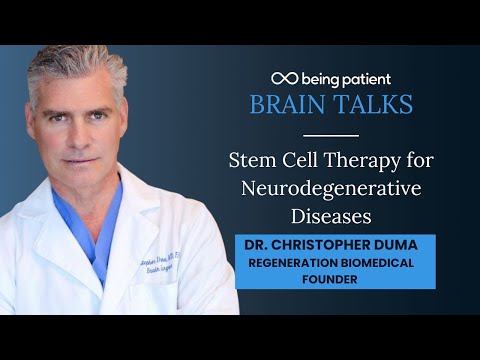
“Our direct-to-brain platform is designed to bypass the blood-brain barrier and deliver a patient’s own stem cells throughout the central nervous system,” says neurosurgeon Christopher Duma, the founder and president of RBI.
“We believe Alzheimer’s disease is a whole-brain disorder requiring a comprehensive therapeutic approach – one capable of influencing neuroinflammation, tau biology, amyloid processing, and neuronal health simultaneously.”
Here’s how the treatment (RB-ADSC) works: stem cells from a patient’s body fat are extracted and ‘supercharged’ using a family of proteins known as Wnt, which act as chemical messengers telling other cells to grow and repair themselves.
These stem cells are then piped down from a surgical implant to fluid-filled areas of the brain called ventricles, which then, in theory, rejuvenate the brain’s own repair and waste management systems.
The aim is to repair broken neurons, reduce inflammation, and clear out the harmful amyloid-beta and tau protein build-up that comes along with Alzheimer’s, all through a single therapy.
As well as sweeping away toxic proteins, as other treatments do, RB-ADSC aims to repair the processes creating them.
“If you have a refrigerator and it’s producing spoiled food, why would you keep removing the spoiled food instead of fixing the refrigerator?” says Duma.
“Our hypothesis is you have to fix what’s going wrong in the brain.”
The primary purpose of a Phase 1 trial is to establish safety, hence the low number of participants. However, in addition to demonstrating that there were no serious side effects, the trial results recorded cognitive improvements in four out of five of the volunteers.
It means that the research can now progress to a Phase 2 trial, where RB-ADSC will be tested in 115 participants and put up against a placebo. The Food and Drug Administration (FDA) in the US has approved ‘fast track’ status for the next stage, which means testing and reviewing can happen more quickly.
“We believe this designation recognizes the urgent need for innovative therapies that address Alzheimer’s disease through mechanisms beyond any single pathological pathway,” says Duma.
The next stage of the research will look more closely at improvements in brain function and cognition, as well as the effect the Wnt-charged stem cells have on toxic amyloid-beta and tau protein clumps.
According to the latest information from RBI, the Phase 2 trial could get underway as early as December, though it’s likely to be several years before we get confirmed results.
It’s an exciting addition to the growing number of treatment options being analyzed by researchers in recent years, getting us gradually closer and closer to the point of being able to stop, reverse, and prevent Alzheimer’s disease.
“Our first-in-human stem cell trial demonstrated favorable safety and statistically significant biomarker changes through 52 weeks,” says Duma. “FDA Fast Track Designation marks an exciting step toward Phase 2.”
An abstract summarizing the results of the phase 1 trial has been published in Alzheimer’s & Dementia.
This article was fact-checked by Peter Dockrill and edited by Peter Dockrill. While we pride ourselves on our process, we are only human. If you spot a mistake, please let us know.

