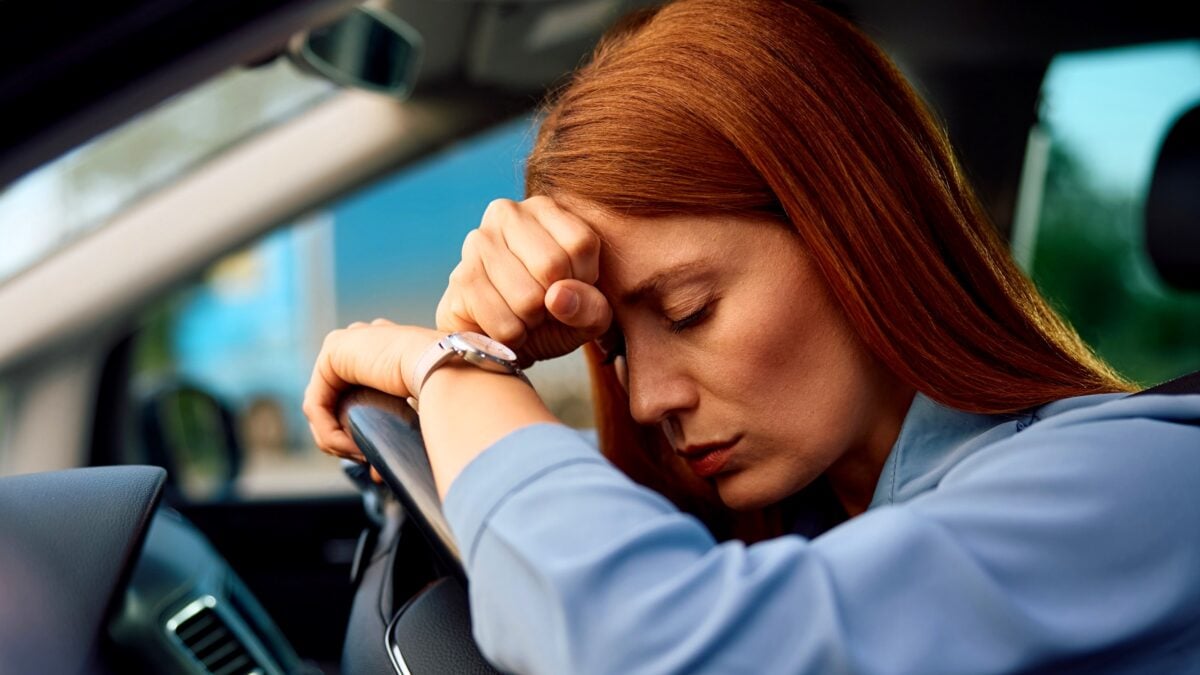
Жолоо барих үеийн зүрхний цохилт бусад хөдөлгөөн багатай үйл ажиллагаанаас илүү тогтвортой өндөр байсныг судлаачид тогтоожээ.
npj Digital Public Health сэтгүүлд нийтлэгдсэн судалгаанд дунджаар 26.2 настай 57 насанд хүрэгчийг нэг долоо хоногийн турш ажигласан байна. Оролцогчдын 30 нь эрэгтэй, 27 нь эмэгтэй байсан бөгөөд зүрхний цохилтыг Apple Watch-аар, өдөр тутмын хөдөлгөөн, үйл ажиллагааг ухаалаг утас болон автомашинд суурилуулсан төхөөрөмжөөр бүртгэжээ.
Бараг 3,000 цагийн мэдээлэлд 1,000 орчим удаагийн аялал, 300 гаруй цагийн жолоодлого багтсан байна. Ажигласан хугацааны 10.4 хувийг жолоо барихад, 3.2 хувийг биеийн хөдөлгөөнд, 86.4 хувийг жолоодохоос бусад хөдөлгөөн багатай үйл ажиллагаанд зарцуулжээ.
Жолоодох болон бусад хөдөлгөөн багатай үед оролцогчдын дундаж зүрхний цохилт ойролцоо байсан ч хэмжилтийн хэв маяг ялгаатай байв. Зүрхний цохилт амралтын үеийн суурь түвшнээс өндөр байсан хугацаа бусад хөдөлгөөн багатай үйл ажиллагаанд 81 хувь байсан бол жолоодох үед 94 хувь хүрч, жолоодох үеийн хэлбэлзэл харьцангуй нарийн, суурь түвшиндээ эргэн орох давтамж хоёр дахин бага байжээ; энэ ялгаа ажлын болон амралтын өдрүүдэд ажиглагдсан байна.
Судлаачдын үзэж буйгаар жолоодох үед анхаарал төвлөрүүлэх, орчныг мэдрэх, үйлдлээ зохицуулах хэрэгцээ тасралтгүй байдаг нь ийм хэв маягтай холбоотой байж болох юм. Гэхдээ зүрхний цохилт ийнхүү удаан хугацаанд өндөр байх нь эрүүл мэндэд заавал хортойг судалгаа харуулаагүй бөгөөд урт хугацааны нөлөө тодорхойгүй хэвээр байна. Өөрөөр хэлбэл, дасгалын үеийн зүрхний ачаалалтай адил үр ашиг өгдөг гэж үзэх үндэслэлгүйг судлаачид тэмдэглэжээ.
Дэлгэрэнгүйг эх сурвалжаас харах
↓Эх сурвалжийг нээх ↓
Driving a car seems like the ultimate free ride.
You sit in a stationary position while the vehicle does all the work, transporting your body at speeds your legs could never hope to reach.
But what if we’ve got this wrong?
What if driving demands more of us than we realized, and the inevitable stresses of driving exert a hidden strain on the body that we never knew about?
According to a new study in npj Digital Public Health, that might actually be happening.
“Driving requires continuous attention, decisions, and readiness to react,” says computer scientist Ioannis Pavlidis from the University of Houston.
“The body may be sitting, but the mind is working – and the heart reflects those demands.”
In the study, Pavlidis and fellow researchers monitored 57 adult participants – 30 men and 27 women, with an average age of 26.2 years – over the course of one week.
During the week, each of the participants wore an Apple Watch, which recorded their heart rate, while their smartphones and a device installed in their car captured other information about their daily movements and activities from morning to evening.
All up, across almost 3,000 hours of observations, the participants racked up over 300 hours of driving in nearly 1,000 separate trips.
In total, the participants spent 10.4 percent of the monitored time driving, and a small amount of time doing physical activity (3.2 percent). The majority of the recorded time was taken up by various forms of non-driving sedentary activity (86.4 percent).
But while their activity time can be neatly drawn up and categorized, their heart data told a different story.
While participants’ average heart rates were similar during driving and other sedentary activities, one pattern of their cardiac activity was markedly different.
During other sedentary activities, participants’ heart rates remained above their resting baseline heart rate (an estimate of the participants’ lowest heart rate during periods of rest) for 81 percent of the observed activity time.
But during driving, that increased to 94 percent of the observed driving time.
In other words, their heart rates remained elevated more consistently, with fewer instances of the heart slowing down to its resting rate.
Participants’ heart rates also fluctuated within a narrower range while they were driving, and returned to baseline roughly half as frequently, compared to other sedentary activities.
These differences were observed on both weekdays and weekends, suggesting the phenomenon wasn’t simply attributable to the different mix of activities people engage in during the working week.
“Driving occupies a distinct and persistent baseline-referenced cardiac operating regime,” the researchers explain in their paper.
“The principal difference from non-driving sedentary behavior lies not in average activation magnitude, but in its temporal organization: driving-associated activation remains above baseline more continuously, fluctuates within a narrower range, and returns to baseline less often.”
But why do our heartbeats adopt this pattern when we’re driving, and not at other times when we’re sitting down?
It could be because the unique circumstances of driving necessitate a certain, constant level of awareness and control, and maintaining that effort and focus triggers physiological effects, which can be identified in our pulse.
Time on the sofa? Not so much.
“One plausible interpretation is that driving represents a more constrained behavioral regime, involving a comparatively coherent set of attentional, perceptual, and motor requirements and, in the present observational data, a more stable cardiac operating level once baseline was taken into account,” the study authors write.
“Non-driving sedentary behavior, in contrast, aggregates a wider range of low-motion situations and therefore leaves more room for person-level and temporal factors to shape residual variation.”
While there’s no evidence in the research to suggest the consistently elevated heartbeats seen during driving are necessarily harmful, it remains a possibility that they are, the researchers say.
In ordinary circumstances – physical activity, for instance – an elevated heart rate is usually considered a positive sign, spurring a range of physiological adaptations that promote cardiorespiratory fitness.
But unless you’re Fred Flintstone, driving is very different to going for a run.
“When the heart works harder during exercise, that is generally a good thing,” Pavlidis says.
“But when it works harder while we are sitting behind the wheel, we get none of the benefits of exercise. And when this happens for prolonged periods, day after day, we must wonder about the long-term health consequences.”
The findings are reported in npj Digital Public Health.
This article was fact-checked by Fiona MacDonald and edited by Fiona MacDonald. While we pride ourselves on our process, we are only human. If you spot a mistake, please let us know.

