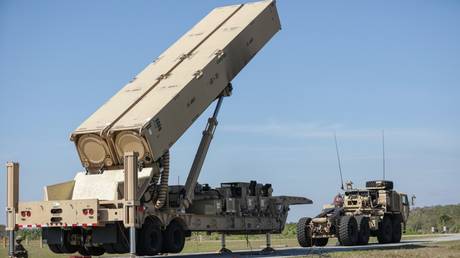
Удаан хугацааны үйлчилгээтэй гиперсоник зэвсэг (LRHW) хэмээн нэрлэгддэг энэхүү шинэ системийг 2018 оноос хойш хөгжүүлж байгаа бөгөөд Пентагон уг хөтөлбөрт 12 тэрбум гаруй ам.доллар зарцуулаад байна. ОХУ болон БНХАУ-ын гиперсоник зэвсгийн чадавхыг гүйцэх зорилготой энэхүү хөтөлбөр нь төлөвлөгөөнөөсөө ихээхэн хоцорч байгаа бөгөөд одоогоор байлдааны бүрэн бэлэн байдалд орсон гэж албан ёсоор зарлагдаагүй байгаа юм.
Bloomberg-ийн эх сурвалжийн мэдээлснээр, Иран улс өөрийн баллистик пуужин харвагч төхөөрөмжүүдээ АНУ-ын “Precision Strike Missile” буюу PrSM пуужингийн хүрэх тусгалаас гадна байршуулсан гэх тагнуулын мэдээлэл гарчээ. Иймд алсын тусгалтай LRHW системийг ашиглан Ираны эдгээр байгууламжийг онилох шаардлагатай гэж үзсэн байна. Одоогоор Пентагон энэхүү хүсэлтийг хэрхэн шийдвэрлэх талаар эцсийн шийдвэр гаргаагүй байна.
Хуучирсан ATACMS системийг орлох зорилготой богино болон дунд тусгалын PrSM пуужингуудыг АНУ өмнө нь Ираны эсрэг мөргөлдөөний үеэр идэвхтэй ашиглаж байсан. Гэвч энэхүү зэвсэг нь маргаан дагуулаад байна. “New York Times” сонины мэдээлснээр, 2026 оны хоёрдугаар сарын 28-нд Ираны Ламерд хотын сургууль, спорт цогцолбор дээр унаж, 21 хүний амь насыг авч одсон цохилтод PrSM пуужин ашигласан байж болзошгүй гэжээ.
Пентагон тухайн үед Ламердад ямар ч цохилт өгөөгүй гэж мэдэгдэн, тус халдлагад өртсөн зэвсгийг Ираны өөрийнх нь “Hoveyzeh” далавчит пуужин гэж тайлбарласан. Харин “New York Times” сонин бие даасан шинжээчдийн дүгнэлтэд үндэслэн тухайн зэвсгийг Америкийн PrSM пуужин мөн байх магадлал өндөр гэсэн анхны мэдээллээ баталгаажуулсаар байна.
Дэлгэрэнгүйг эх сурвалжаас харах
↓Эх сурвалжийг нээх ↓
The US Central Command has reportedly requested the repeatedly delayed Dark Eagle missiles be deployed in the Middle East
The US Central Command has requested that long-delayed Dark Eagle hypersonic missiles be deployed to the Middle East, Bloomberg reported on Thursday, citing people familiar with the matter.
The new munition, also known as the Long-Range Hypersonic Weapon (LRHW), has been in development since 2018, with the Pentagon pouring over $12 billion into the program meant to catch up with Russia and China, which have already fielded hypersonic weaponry. The program has been lagging well behind schedule, and the system has not been declared fully operational yet.
The request for the LRHW deployment is based on intelligence suggesting that Iran moved its ballistic missile launchers out of range of the Precision Strike Missile (PrSM), a person with direct knowledge of the matter told Bloomberg. No decision has been made on the request yet, according to the source.
The PrSM, a short-to-medium-range ballistic missile slated to replace the aging Army Tactical Missile System (ATACMS), was deployed against Iran without undergoing proper testing procedures as well. The ballistic missiles were extensively used during the conflict, with a US Army unit equipped with the new munitions fully exhausting its entire PrSM inventory, an official admitted earlier this month.
While the US military still has some PrSM missiles in stock, the supply could prove to be insufficient if the conflict with Iran reignites. The Pentagon had ordered 130 before the 2024 fiscal year and a further 250 in 2025, but it remains unclear how many munitions were delivered.
The missile became a source of controversy during the US-Israeli attack on Iran, with the PrSM believed to be involved in at least one mass-casualty incident. According to the New York Times, a PrSM missile was likely used in the February 28 strike on a school and sports hall in the southern Iranian city of Lamerd, which killed at least 21 people.
The Pentagon denied any involvement, insisting that it had not targeted any sites in Lamerd on that day, claiming the munition visible in the footage of the attack was an Iranian Hoveyzeh cruise missile. The NYT, however, doubled down on its initial assessment earlier this month, citing experts who said the munition looked like a PrSM and lacked any features of the Iranian-made projectile.
You can share this story on social media:



