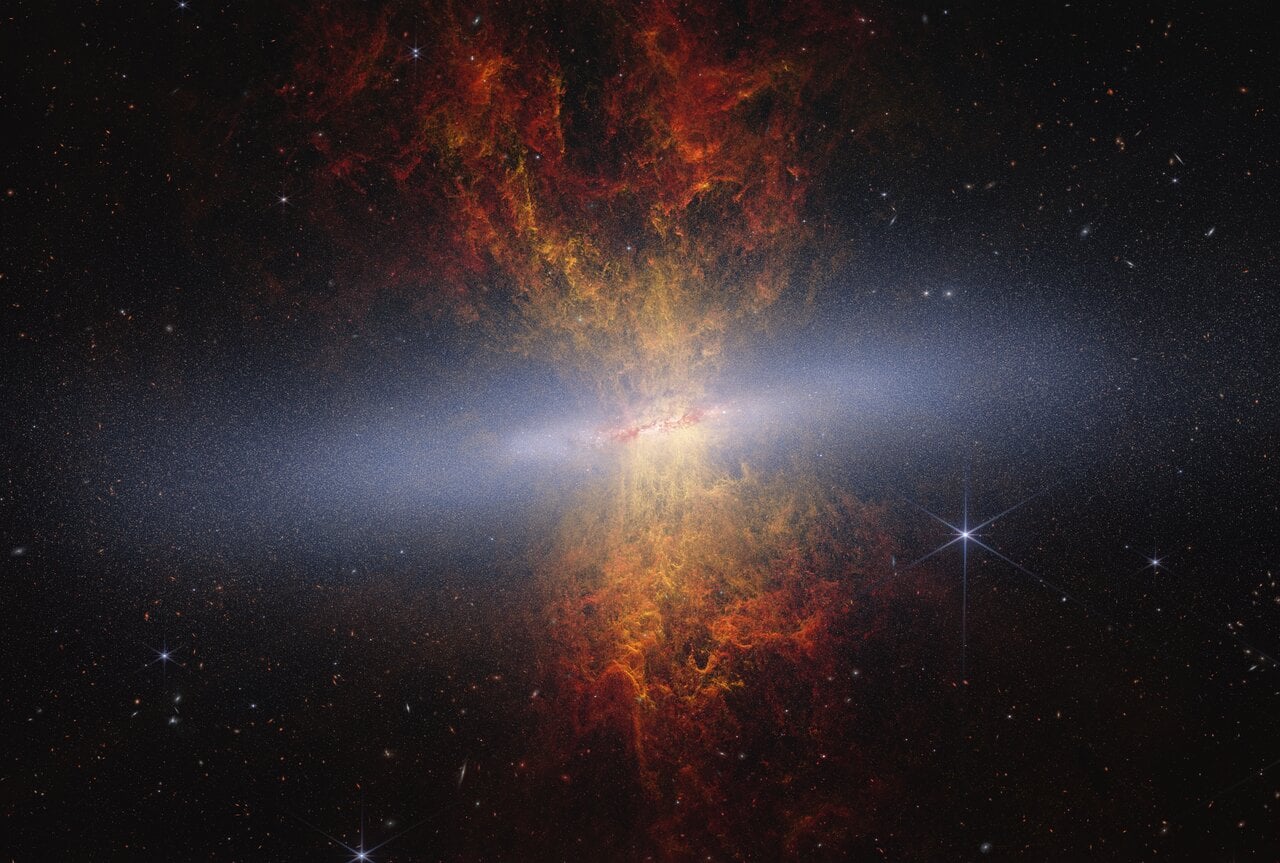
Жэймс Вэбб сансрын дуран авай өмнө нь тоосонцрын өтгөн үүлний цаана нуугдаж байсан Messier 82 галактикийн 16.5 сая оддыг тод томруун илрүүлэв.
Дэлхийгээс 12 сая гэрлийн жилийн зайд орших Messier 82 (M82) галактик нь манай Сүүн зам галактикаас 10 дахин хурдтайгаар шинэ оддыг үүсгэж буй эрчимтэй үйл явц юм. Өмнөх дурангууд энэ галактикийг тоосонцрын өтгөн үүлний улмаас бүдэгхэн дүрсээр хардаг байсан бол Жэймс Вэбб дуран хэт улаан туяаны мэдрэгчийнхээ тусламжтайгаар 65 цагийн турш ажиглалт хийж, 16.5 сая гаруй бие даасан оддыг ялган харжээ.
Одон орон судлаачдын таамаглаж буйгаар, M82 галактик өөр нэгэн галактиктай мөргөлдсөний улмаас ийнхүү оддын үүсэл эрчимжсэн байна. Галактикийн хэлбэр дүрс алдагдсан байдал нь энэхүү мөргөлдөөний ул мөр бөгөөд одоо ажиглагдаж буй оддын галзуу хурдтай үүсэл нь хэдэн зуун сая жилийн дараа дуусах түр зуурын үзэгдэл юм.
Жэймс Вэбб дуран мөн галактикийн төвөөс гадагш цацагдаж буй ионжсон хий болон сансрын тоосонцрын давхаргуудыг тод харуулсан нь оддын хэт их эрчим хүч галактикийн хил хязгаараас хэрхэн гадагшилж байгааг илтгэж байна. Эрдэмтэд Hubble дурангийн харагдах гэрлийн зураг болон Жэймс Вэббийн хэт улаан туяаны мэдээллийг харьцуулан судалснаар тус галактикийн түүх болон хувьслыг нарийвчлан тогтоох боломжтой боллоо.
Дэлгэрэнгүйг эх сурвалжаас харах
Эх сурвалжийг нээх ↓
What does a galaxy look like when it is living too fast? Twelve million light years from Earth, a smudge of light called Messier 82 is doing exactly that, forging new stars at roughly ten times the rate of our own Milky Way. We see it edge on, a slim cigar of brilliance, and astronomers have long wanted to look inside. The trouble is the dust. M82 is so choked with the stuff that for decades it has hidden its secrets, blurring every telescope pointed its way.
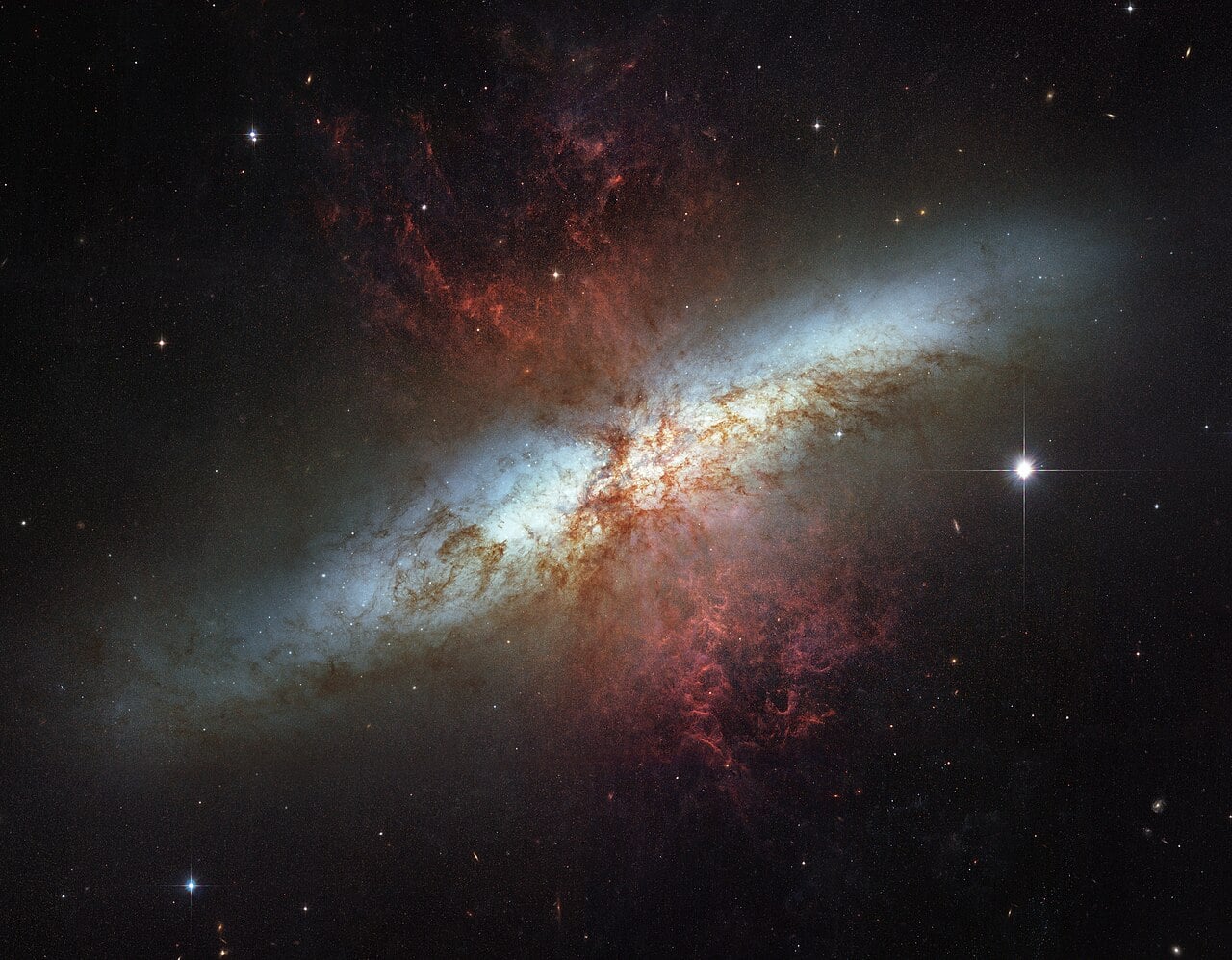
To celebrate the Hubble Space Telescope’s 16 years of success, the two space agencies involved in the project, NASA and the European Space Agency (ESA) released this image of Messier 82 (M82) back in 2006 (Credit : NASA/ESA)
The James Webb Space Telescope has now solved that problem in spectacular fashion. Over 65 hours of patient observation, Webb’s infrared eyes peered straight through the murk and picked out an astonishing 16.5 million individual stars, each one a pinprick of light in the galaxy’s crowded heart. Where earlier telescopes saw only a glowing blur, Webb sees a teeming city.
This matters because those millions of stars are a fossil record which, if read carefully holds the story of how M82 came to be, and why it is behaving so strangely now. The leading suspect is a collision. Astronomers think M82 sideswiped a neighbour, and the galaxy’s lopsided, distorted disk, brighter and broader on one side than the other, still carries the bruise of that encounter. The crash appears to have lit the fuse on the firestorm of star birth we see today.
That firestorm cannot burn forever and the current frenzy is fleeting by astronomical standards, likely to last only a few hundred million years before the galaxy exhausts itself. It’s a phase, a brief and violent chapter, which is exactly what makes M82 such a prize. Catch it now and you catch a galaxy in the act.
Webb also captured the drama spilling out of the galaxy in a way rarely seen before. Vast hourglass plumes of material are being flung above and below the disk, and the new images reveal them in delicate layers, ionised gas nearer the core giving way to cooler grains of cosmic soot farther out. These outflows are the galaxy venting the sheer energy of so many young stars born at once.
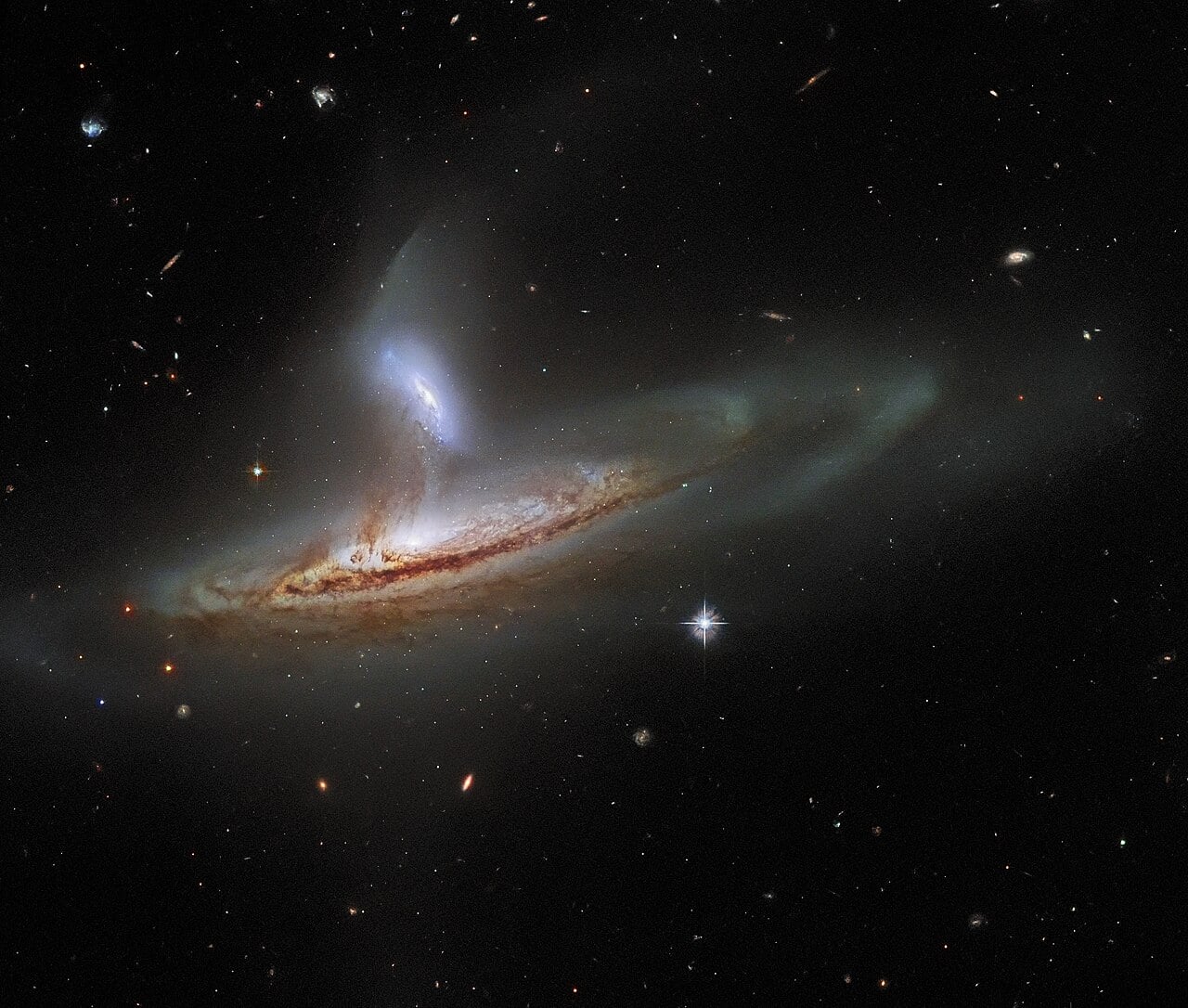 Galaxy collisions are not unusual, here NGC 169 (bottom) and IC 1559 (top) are seen in their slow gravitational dance (Credit : NASA Hubble Space Telescope)
No single telescope can tell the whole tale, which is why the team laid Webb’s view alongside Hubble’s older portrait of the same galaxy. Hubble mapped the gas and dust in visible light; Webb counted the stars hiding behind it and together they reach further than either could alone.
Researchers will now spend years sifting through those 16.5 million stars to trace how star formation has drifted across M82 over billions of years. A galaxy that once seemed a chaotic mess is slowly giving up its history, one resolved star at a time.
Source : NASA’s Webb Pinpoints Millions of Stars Within Cigar Galaxy