Хувьслын генетикчид “сонголтын сүүдэр” хэмээх онолыг ашиглан хүний хөгшрөлт болон нас ахих тусам эрүүл мэнд мууддаг шалтгааныг судалжээ.
Эволюцийн генетикч Хандан Мелике Дёнэрташ болон Линда Партриж нар орчин үеийн генетикийн томоохон мэдээллийн сангуудыг ашиглан хөгшрөлтийн талаарх судалгаануудыг нэгтгэн дүгнэв. “Сонголтын сүүдэр” гэдэг нь байгалийн шалгарлаар дамжин ирсэн хувьслын дарамт нь зөвхөн үр удмаа үлдээх үе хүртэл хүчтэй үйлчилж, түүнээс хойш сулардаг гэсэн санаа юм. Үүний улмаас залуу насанд ашигтай ч хөгширсөн хойно хор уршигтай генийн мутацууд хувьслын явцад устаж үгүй болохгүйгээр хадгалагдан үлддэг байна.
Судлаачдын үзэж буйгаар залуу насанд үржихүйд тусалдаг боловч нас ахих тусам хорт хавдар зэрэг өвчний эрсдэлийг нэмэгдүүлдэг генийн хувилбарууд нь хувьслын хувьд “ашигтай солилцоо” болдог аж. Энэхүү үйл явц нь хөгшрөлтийн явцад архаг үрэвсэл болон үүдэл эсийн ядаргаа зэрэг нийтлэг шинж тэмдгүүд үүсэхэд нөлөөлдөг болохыг тогтоожээ. Иймээс хөгшрөлтийг зөвхөн нас уртасгах гэж харахаас илүүтэйгээр, хувьслын явцад үүссэн сөрөг нөлөөллийг бууруулж, эрүүл амьдрах хугацааг нэмэгдүүлэх нь чухал гэдгийг тус судалгаа онцолсон байна.
Энэхүү судалгааны үр дүн нь хөгшрөлттэй холбоотой өвчин эмгэгийг эмчлэх, хөгшрөлтийн биологийн суурь шалтгааныг чиглэсэн эмчилгээний шинэ арга замыг эрэлхийлэхэд тус дөхөм болох юм. Судалгааг Nature Reviews Genetics сэтгүүлд нийтэлжээ.
Дэлгэрэнгүйг эх сурвалжаас харах
↓Эх сурвалжийг нээх ↓
The world’s population is shifting. We’re living longer than ever before, with elderly people taking up a greater proportion of the people on the planet.
And yet those extra years aren’t necessarily being enjoyed in good health.
So how do these shifts interact with what we know about genetics and evolution? How might old age – a relatively recent concept, in the history of Homo sapiens – change our species?
And is the association between getting older and being less healthy inevitable?
To try to answer those questions, evolutionary geneticists Handan Melike Dönertaş and Linda Partridge reviewed several huge modern-day genetic datasets to test an idea that’s been around since the mid-20th century: the ‘selection shadow’.
“Advances in comparative genomics, large-scale human genetic studies and multi-omics aging biomarkers now enable rigorous testing of evolutionary predictions,” write the researchers in their published paper.
The selection shadow concept is the idea that the natural filtering carried out by evolutionary pressures – the classic ‘survival of the fittest’ mantra – is driven by the need for a species to reproduce.
Once the next generation has arrived, however, how fit or otherwise we are matters much less in evolutionary terms.
That impacts health in old age in a couple of ways. First, harmful genetic mutations that manifest themselves when we’re elderly aren’t being weeded out by evolution – at that stage, we’ve already had kids.
Second, genes that are helpful in youth and damaging in old age are also kept around, because evolution strongly favors the early benefits.
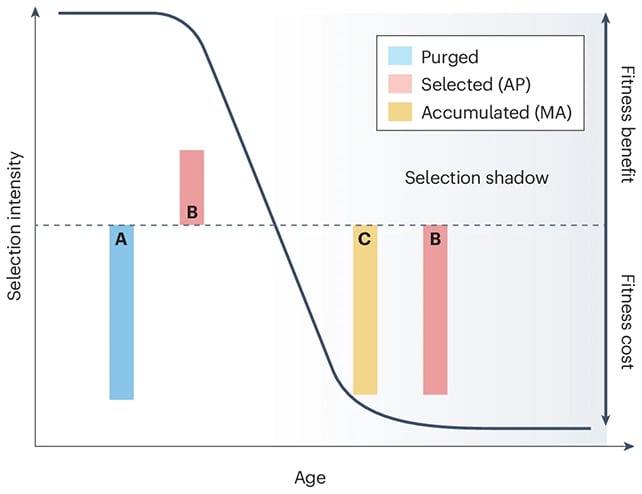
For example, if a gene or gene variant increases cancer risk in old age but helps you reproduce in your 20s and 30s, that’s a good trade-off from an evolutionary perspective.
That’s the theory – and because we now have so much more genetic data to analyze, Dönertaş and Partridge were able to see how it stacks up against the available evidence.
“An evolutionary view of aging isn’t just a historical curiosity,” says Dönertaş, from the Fritz Lipmann Institute in Germany.
“It points to the conserved, ancient pathways whose continued activity in later life contributes to age-related disease, and where interventions are therefore most likely to work.”
The researchers referred to several studies, covering hundreds of thousands of individuals, that highlight weaker natural selection in old age – essentially confirming the selection shadow is real.
They didn’t stop there.
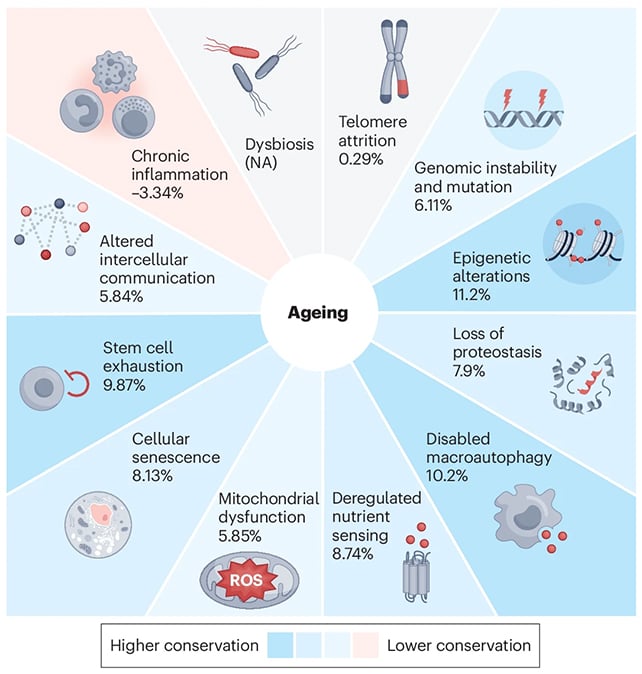
Dönertaş and Partridge also looked at how old age looks different in different species, such as the long-living mole rat. Biological tricks that these species use to work around the selection shadow could help inform research into healthy aging for humans, too.
In other words, a deeper understanding of aging from an evolutionary perspective will give us clues about how aging might be modified.
“It also reframes the goal: not simply extending lifespan, but partially relieving the late-life costs of a biology that natural selection optimized for early life – so that more of life is spent in good health,” says Partridge, from the University College London.
There’s also wide variability in the lifespan of humans, of course, which the researchers also noted.

Fundamentally, we get older and eventually die because our cells wear out.
But there’s the tantalizing prospect that there might be ways to shift the body’s priorities to some extent, and this review offers a new angle on how that might be done.
“The selection shadow that permitted aging to evolve now offers a framework for reversing its consequences,” write the researchers.
Related: Younger Adults May Be Aging Faster Than Previous Generations
“Aligning evolutionary theory with mechanistic studies and human genomics will enable research to advance from cataloging age-related changes to rationally targeting their upstream causes, compressing morbidity and extending human healthspan.”
The research has been published in Nature Reviews Genetics.

