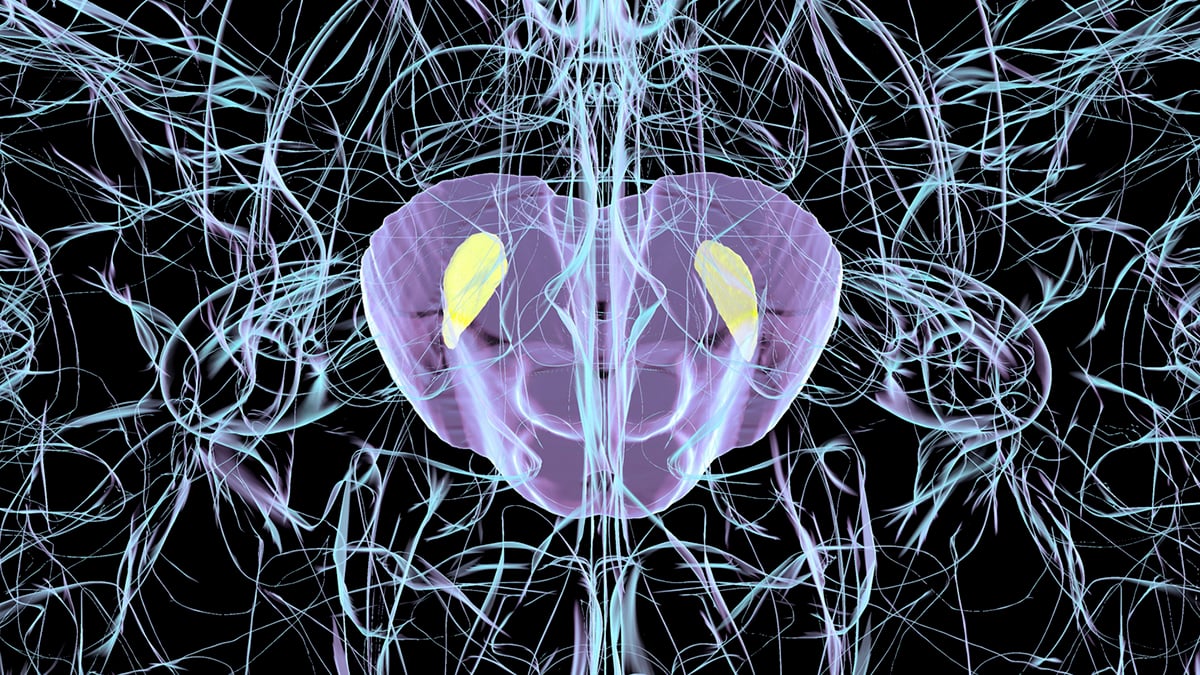
Texas A&M University-ийн эрдэмтэд вирус нь тархины допамин ялгаруулдаг мэдрэлийн эсийг гэмтээснээр Паркинсоны өвчин үүсэх эрсдэлийг нэмэгдүүлдэг гэх таамаглалыг хулганы загвар ашиглан судалжээ.
Судлаачид хулганад “Theiler’s Murine Encephalomyelitis Virus” (TMEV) нэртэй вирусийг халдварлуулсан байна. Уг вирус нь Паркинсоны өвчний үед гэмтдэг допамин ялгаруулдаг мэдрэлийн эсийг устгаж байгааг тогтоосон бөгөөд халдвар арилсны дараа ч хулганад хөдөлгөөний зохицуулалтын алдагдал удаан хугацаагаар үргэлжилж байв. Энэ нь вирусийн халдвар нь Паркинсоны өвчний хөгжилд нөлөөлж болохыг харуулсан нотолгоо юм.
Генетикч Candice Brinkmeyer-Langford-ын тайлбарласнаар, вирус нь дангаараа өвчин үүсгэхээс илүүтэйгээр тархинд тодорхой хэмжээний гэмтэл учруулж, улмаар бусад эрсдэлт хүчин зүйлстэй хавсран өвчнийг өдөөдөг байж болзошгүй аж. Одоогоор Паркинсоны өвчнийг судлахад ихэвчлэн хорт бодис эсвэл генетикийн өөрчлөлт ашигладаг боловч энэ нь хүний биед өвчин хэрхэн үүсэж, хөгждөгийг бүрэн дүүрэн тайлбарлаж чаддаггүй байна.
Дэлхий даяар 10 сая гаруй хүн Паркинсоны өвчнөөр өвчилсөн бөгөөд хүн амын хөгшрөлтөөс шалтгаалан энэ тоо өсөх хандлагатай байгааг судлаачид онцолжээ. Энэхүү шинэ загвар нь Паркинсоны өвчний нарийн төвөгтэй шалтгааныг тайлж, ирээдүйд эмчилгээний шинэ арга боловсруулахад туслах ач холбогдолтой юм. Судалгааны үр дүнг Brain, Behavior, and Immunity – Health сэтгүүлд нийтэлжээ.
Дэлгэрэнгүйг эх сурвалжаас харах
↓Эх сурвалжийг нээх ↓
There’s a long-standing hypothesis around Parkinson’s disease: that one of the contributors could be viruses that knock out key neurons in the brain, which then makes someone more vulnerable to other genetic and environmental risk factors.
Plenty of evidence exists for this idea, like the wave of neurological disease that followed the 1918 Spanish flu pandemic.
Now, we might have a more accurate way to study how Parkinson’s disease might emerge from a virus-induced starting point.
A team from Texas A&M University ran a mouse model study using the Theiler’s Murine Encephalomyelitis Virus (TMEV), a naturally occurring virus in mice that kills off the dopamine-producing neurons also attacked by Parkinson’s.
Two key findings emerged.
The virus did indeed infect and wipe out dopamine-producing neurons, and more importantly, the motor control problems that are characteristic of Parkinson’s continued in the mice long after the virus had been cleared from their systems.
“This indicates that the motor coordination loss due to the effects of dopaminergic neuron loss is replicated by TMEV injection in our model, and these effects continue to be observed chronically following the initial injection of the virus,” the researchers explain in Brain, Behavior, and Immunity – Health.
“We anticipate that our model can serve as a novel tool to unravel the complex etiology of Parkinson’s disease.”
Currently, most Parkinson’s studies in mice use genetic modifications or the injection of toxic chemicals to cause the loss of dopamine-making neurons in a part of the brain called the substantia nigra, where motor planning is handled by the brain.
This neuron and dopamine deficit leads to the tremors, stiffness, and slowness of movement that characterize Parkinson’s.
While genetic or toxin-induced models approaches are useful, they don’t necessarily represent how Parkinson’s disease develops in humans. And if viral infections are partly to blame for the disease in humans, research like this isn’t necessarily can’t always reveal the pathway.
“The toxic-exposure models are useful for studying Parkinson’s, but not all people who are exposed to chemicals go on to develop Parkinson’s,” says geneticist Candice Brinkmeyer-Langford.
“So these models cannot show all the ways a disease as complex as Parkinson’s actually begins or develops over time in people.”
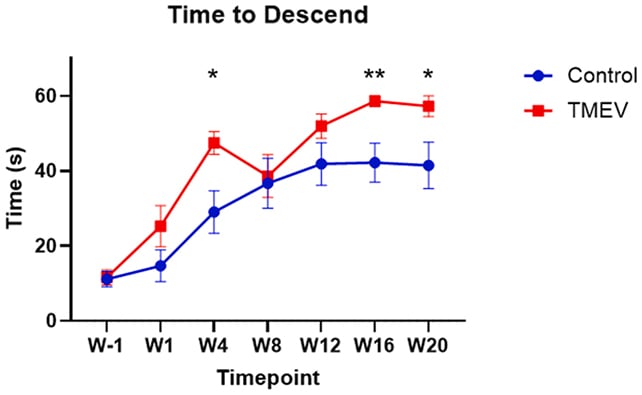
Using their new TMEV technique, the researchers were able to confirm the loss of dopamine-producing neurons at the injection site after a week. They then tested the mice with movement and gait tests over the next 20 weeks.
Even after the virus had gone, problems with motor control similar to those seen in Parkinson’s were still evident. The collateral damage from the virus was long-term, evidence that these pathogens might be contributing to the disease.

The thinking isn’t that a virus would trigger Parkinson’s on its own, but that it might lead to enough damage in the brain for other factors to then tip the balance into disease.
“Viruses are known to cause entirely different diseases based on a person’s genetics,” says Brinkmeyer-Langford. “For example, the Epstein-Barr virus causes mononucleosis, but may also contribute to cancer or multiple sclerosis, and SARS-CoV-2 can attack the heart and brain as well as the lungs.”
It’s worth bearing in mind that people can’t get infected by TMEV.
But studying the neurological progression of the disease in mice after a viral infection could lead to a better understanding of Parkinson’s in humans, especially if viruses do contribute. Further down the line, this may inform the development of treatments for the disease.
Related: Parkinson’s Protein Could Help Explain Alzheimer’s Gender Imbalance
Parkinson’s disease affects over 10 million people worldwide, which means it’s the second-most common brain disorder behind dementia. It’s also on an upward trend, which means new treatment options are badly needed.
“The clock is ticking, since the rapidly aging global population means the number of people with Parkinson’s is expected to jump significantly,” says Brinkmeyer-Langford.
The research has been published in Brain, Behavior, and Immunity – Health.
This article was fact-checked by Michael Irving and edited by Peter Dockrill. While we pride ourselves on our process, we are only human. If you spot a mistake, please let us know.


