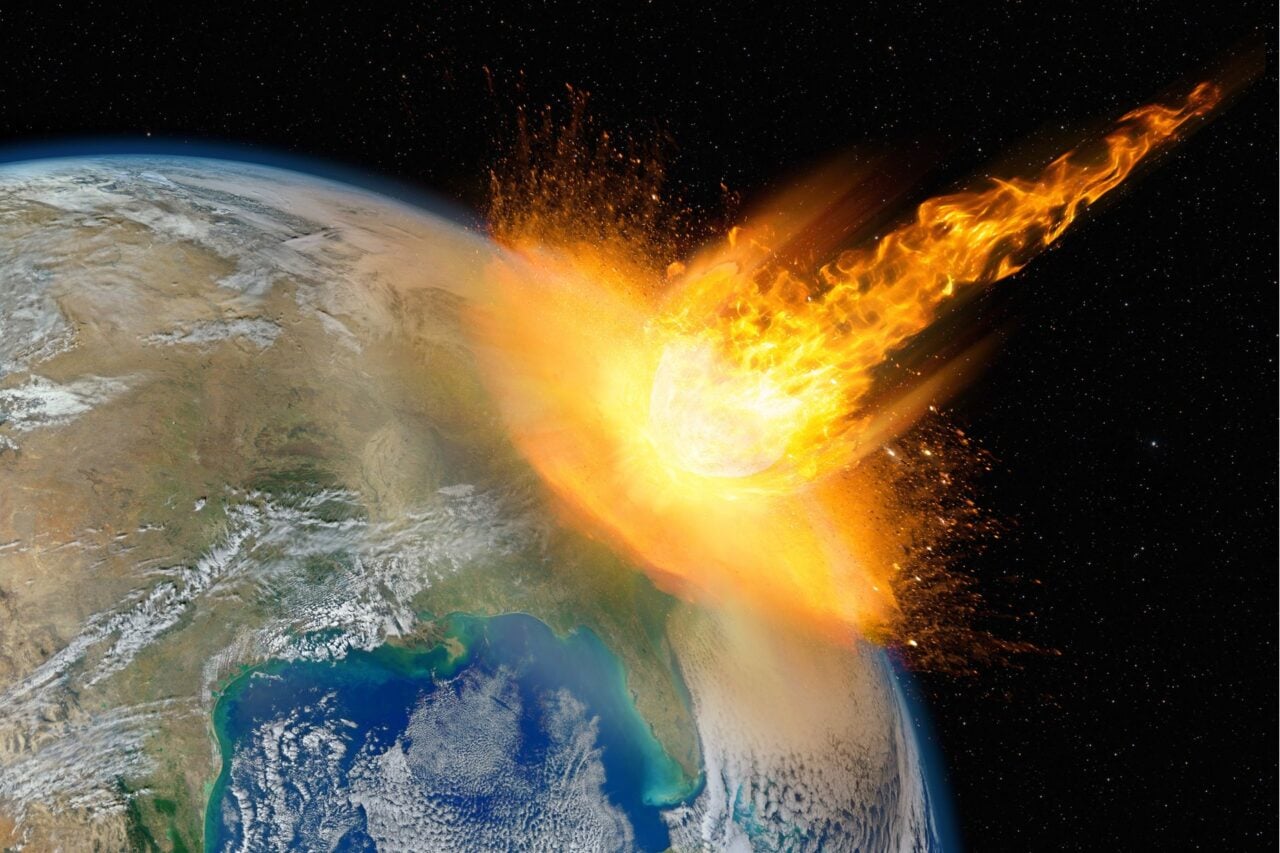
Эрдэмтэд 66 сая жилийн өмнө Дэлхий дээр унасан астероидыг урьд өмнө төсөөлж байснаас өөр төрлийн биет байсныг тогтоожээ.
Одоогоос 66 сая жилийн өмнө Мексикийн Юкатаны хойгт унасан аварга том астероид нь үлэг гүрвэлүүд болон бусад олон зүйлийн амьтдын мөхлийн шалтгаан болсон юм. “Science Advances” сэтгүүлд нийтлэгдсэн шинэ судалгаагаар, уг астероид нь нарны аймгийн хязгаар нутгаас ирсэн маш ховор төрлийн “CO chondrite” хэмээх сансрын чулуулаг болохыг тогтоожээ. Энэхүү дүгнэлт нь дэлхий даяар тархсан хурдас давхаргын дээжид хийсэн никелийн изотопын нарийвчилсан шинжилгээнд үндэслэсэн байна.
Өмнөх судалгаануудад астероидын найрлагад байсан хүхэр нь агаар мандалд тархаж, нарны гэрлийг хааснаар дэлхийн уур амьсгалыг эрс хүйтрүүлж, мөхөлд хүргэсэн гэж үздэг байв. Гэвч шинэ судалгаагаар “CO chondrite” төрлийн астероид нь өмнө нь тооцоолж байснаас хоёр дахин бага хүхэр агуулдаг болохыг илрүүлжээ. Энэ нь хүхэр бус, харин цохилтын улмаас агаар мандалд дэгдсэн тоос, шороо нь уур амьсгалын өөрчлөлтийн гол хүчин зүйл байсныг харуулж байна.
Бельгийн Брюсселийн чөлөөт их сургуулийн гариг судлаач, профессор Филипп Клэс хэлэхдээ, энэхүү нээлт нь үлэг гүрвэлийн мөхлийн онолыг үгүйсгэхгүй ч астероидын хүхэр гол үүрэг гүйцэтгэсэн гэх таамгийг сулруулж байна гэжээ. Судлаачдын үзэж буйгаар ийм ховор, алс холын биет Дэлхий дээр унасан нь үлэг гүрвэлүүдийн хувьд туйлын азгүй тохиолдол байжээ.
https://www.science.org/doi/10.1126/sciadv.aef4858
https://science.ubc.ca/news/2026-07/researchers-identify-class-oddball-meteorite-killed-dinosaurs
Дэлгэрэнгүйг эх сурвалжаас харах
Эх сурвалжийг нээх ↓
Roughly 66 million years ago, a giant asteroid slammed into what is known today as Mexico’s Yucatán Peninsula, triggering the extinction of all non-bird dinosaurs and many other species. Scientists know this thanks to a wealth of geological evidence, but a new study has them rethinking how the impact contributed to that mass extinction.
The findings, published Friday in the journal Science Advances, suggest that the asteroid was an exceptionally rare visitor from the edge of our solar system. After analyzing samples from a thin layer of clay that the impact deposited across the globe, the researchers concluded that the impactor was a CO chondrite. This type of space rock has relatively low concentrations of volatile elements such as water, carbon, zinc, and particularly sulfur, which throws the widely accepted extinction mechanism into question.
“It doesn’t alter our theory of what caused the extinction event—but it makes it less likely that sulphur contained in the impactor was the smoking gun,” co-author Philippe Claeys, a planetary scientist and professor at the Free University of Brussels in Belgium, said in a statement. “The fine debris thrown into the atmosphere would have [been] the primary factor.” Claeys contributed to this research as a visiting professor at the University of British Columbia.
Revisiting the Chicxulub impact
The end-Cretaceous mass extinction, which killed 75% of Earth’s species, coincided with the asteroid impact that created the 112-mile-wide (180-kilometer-wide) Chicxulub crater in the Yucatán. The impact is further evidenced by the Cretaceous–Paleogene (K–Pg) boundary,a thin, globally occurring layer of clay that is widely recognized as the settled material ejected by the Chicxulub asteroid.
Before that material settled into what would eventually become K-Pg layer, it was suspended in the atmosphere. This, along with gases released from the asteroid itself and soot from enormous wildfires, triggered an impact winter that blocked out sunlight, rapidly cooled the planet, and devastated ecosystems.
Previous research led scientists to believe that the asteroid’s released gases—particularly sulfur, which is excellent at blocking sunlight—played a key role in ushering in an impact winter, but these new findings suggest otherwise.
The researchers performed advanced nickel isotope analysis of samples collected from the K-Pg boundary to narrow down the Chicxulub asteroid’s composition. Their results pointed to a CO chondrite, which would have contributed only about half as much sulfur as previous studies estimated. This suggests that dust ejected into the atmosphere when the asteroid slammed into Earth was primarily responsible for the climatic shift that killed the dinosaurs.
An exceptionally rare killer asteroid
Only a tiny fraction of carbonaceous chondrites—which make up just 5% of all meteorites found on Earth—are of the Ornan class, also known as CO chondrites. These space rocks represent some of the most primitive, pristine materials from the birth of the solar system.
The exact origin of the Chicxulub asteroid remains uncertain, but previous research suggests it may have come from a distant, debris-rich region at the edge of the solar system.
“Being impacted by such a rare, distant projectile really underscores how unlucky the dinosaurs were,” Claeys said.
He and his colleagues believe their study opens the door to further research into the connection between the Chicxulub impact and the end-Cretaceous mass extinction. Even 66 million years later, it’s clear there is still much to learn about this world-changing asteroid.

