АНУ-ын Массачусетс муж улсын Сенат анхан шатны эмнэлгийн тусламж үйлчилгээний хомсдолыг шийдвэрлэх зорилготой хуулийн төслийг баталж, одоо Төлөөлөгчдийн танхимын шийдвэрийг хүлээж байна.
Массачусетс мужид анхан шатны тусламж үйлчилгээний хүртээмж муу байгаагаас иргэд эмчийн үзлэгт орохын тулд сар хүртэл хүлээх, эсвэл огт эмч олдохгүй байх асуудалтай нүүр тулж байна. Ялангуяа Нью-Бедфорд хотод 20,000-25,000 орчим иргэн анхан шатны эмчгүй байгаа нь тус бүс нутгийн эрүүл мэндийн тогтолцоонд ноцтой сорилт болж байгаа юм. Шинжээчдийн дүгнэлтээр, эрүүл мэндийн байгууллагууд ашиг багатай анхан шатны тусламжаас илүүтэйгээр өндөр орлого олох боломжтой нарийн мэргэжлийн үйлчилгээнд анхаарлаа хандуулж байгаа нь энэхүү хомсдолыг улам гүнзгийрүүлжээ.
Сенатаас баталсан хуулийн төсөлд эмнэлгийн байгууллагууд 2030 он гэхэд нийт зардлынхаа 15 хувийг анхан шатны тусламж үйлчилгээнд зарцуулахыг үүрэг болгосон байна. Мөн эмнэлгийн ажилтнуудын ажлын ачааллыг бууруулах, бичиг цаасны ажлыг цэгцлэх, Medicaid хөтөлбөрийн хүрээнд эмч нарыг бэлтгэх сургалтыг дахин сэргээх зэрэг арга хэмжээг тусгажээ. Хэрэв Төлөөлөгчдийн танхим энэ оны долдугаар сарын 31-ний дотор уг хуулийг батлахгүй бол төсөл хүчингүй болох эрсдэлтэй байна.
Хуулийн төслийг дэмжигчид энэ нь зөвхөн иргэдийн эрүүл мэндийн байдлыг сайжруулаад зогсохгүй, урт хугацаанд эрүүл мэндийн салбарын нийт зардлыг бууруулна гэж үзэж байна. Гэсэн хэдий ч Массачусетс мужийн Эмнэлгүүдийн нийгэмлэгээс санхүүгийн дарамт болон холбооны бодлогын өөрчлөлтөөс үүдэлтэй эрсдэлийг харгалзан үзэхийг уриалж, болгоомжтой хандахыг сануулжээ.
Дэлгэрэнгүйг эх сурвалжаас харах
↓Эх сурвалжийг нээх ↓
<![CDATA[{"className":"sc-1ge0fwe-0","newsletterData":{"pianoFieldName":"receiveEveningHeadlinesUSNews","regTitle":"Evening Headlines","subscriptionGroup":"us_evening_headlines","subscriptionGroupId":"4326e634-422a-4447-8e1e-604a937cd3b5","type":"daily_news","pathPrefix":["/us","/news/world/americas","/news/world/americas/crime"],"title":"The latest headlines from our reporters across the US sent straight to your inbox each weekday","mobileTitle":"Your briefing on the latest headlines from across the US","imageSrc":"https://static.independent.co.uk/static-assets/images/newsletters/usEveningHeadlines1_1.png","label":"I would like to receive morning headlines Monday – Friday plus breaking news alerts by email“,”newsletterKey”:”receiveEveningHeadlines”,”regSourceSection”:”Americas”,”regSourceNewsletter”:”NSC”},”isClimate”:false}]]>
Out of medication and without a doctor — her former physician had left Hawthorn Medical Associates three months earlier — Fairhaven resident Noelle Aubin was given a 60-day prescription and sent on her way. If she couldn’t find a new doctor before it ran out, she says the practice told her, she could get refills at urgent care or the emergency department.
Finding a new primary care doctor has been easier said than done. Aubin has been trying to do so since November 2025, to no avail. None of the providers Hawthorn suggested are near Aubin, and even if she were willing to make the trip, they couldn’t get her in until August. When she called Southcoast Health, she said she was told that no doctors were available and was placed on a waitlist.
“I’ve been calling around and practically begging my friends and family to ask their doctors to take me in,” Aubin told The Light in an email. “These large corporations are not focusing on primary care — they are focusing on finding doctors who can make the corporation more and more money.”
cookie.trim() === ‘__DEBUG__=true’)) { console.log(‘Ad logs: “mpu1”, injectedAtParagraph: 3’); }]]>
Aubin is among 30% of Massachusetts residents who have had difficulty accessing primary care, according to a 2025 report from the Center for Health Information and Analysis.
A bill the Senate passed in June is trying to change this. It now awaits action in the House, with a deadline of July 31. House leadership hasn’t said whether it will take up the bill, but three House members from New Bedford said they support it.
The bill could benefit New Bedford. Only 36 primary care clinicians are practicing in the city, and between 20,000 and 25,000 New Bedford residents have no primary care provider, a report said last year.
cookie.trim() === ‘__DEBUG__=true’)) { console.log(‘Ad logs: “taboola-carousel-thumbnails”, injectedAtParagraph: 6’); }]]>
In recent years, investment in specialty healthcare has “skyrocketed,” because it is generally more profitable than primary healthcare, according to a Senate fact sheet. Medicare and commercial insurers reimburse specialty services at higher rates. A common procedure, such as a colonoscopy, can generate more revenue in a couple of hours than a primary care physician earns in a full day of work.
Meanwhile, only 6.6% of commercial healthcare spending in Massachusetts was directed to primary care in 2024, according to a report from the Center for Health Information and Analysis.
cookie.trim() === ‘__DEBUG__=true’)) { console.log(‘Ad logs: “mpu2”, injectedAtParagraph: 8’); }]]>
What the bill would do
The bill seeks to require hospitals and other “health care entities” to incrementally increase primary care spending. It would require them to invest 15% of their total expenditures in primary care by 2030, without increasing overall spending or insurance premiums.
After 2030, the state’s Health Policy Commission would set the target based on the “ever-changing health care cost landscape,” the bill says. The commission would also enforce this mandate, including issuing fines starting at $500,000 or prohibiting the provider from accepting new patients.
cookie.trim() === ‘__DEBUG__=true’)) { console.log(‘Ad logs: “mpu3”, injectedAtParagraph: 10’); }]]>
Insurance reimbursement gaps are especially tough on community health centers, which provide essential primary care services in medically underserved areas, including New Bedford. Commercial insurers pay physicians, nurse practitioners and physician assistants who work in offices more than those who work in community health centers.
In response, the bill would require commercial insurance companies to reimburse community health centers at least the same rates that MassHealth does for the same services.
New Bedford Community Health wouldn’t see much benefit from this proposal, since over 80% of its revenue comes through Medicaid, according to the practice’s president and CEO, Cheryl Bartlett. Still, Bartlett said, it’s “a great thing.”
The Senate’s proposal also aims to address the shortage of primary care providers. It would re-establish the state’s Medicaid graduate medical education program, which was cut in 2010. If Massachusetts were to use Medicaid dollars to finance medical fellowships and residencies, the federal government would provide one-to-one matching funds.
The bill stipulates that the postgraduate training must take place in community-based healthcare settings and focus on primary care, behavioral health or other areas with provider shortages.
This effort builds on a state law passed in early June that allocated $10 million in scholarships for UMass Chan Medical School students who agree to practice family medicine in underserved communities in Massachusetts after they graduate.
Senators also aim to address primary care providers’ administrative burdens, which can lead to burnout and reduce patient care hours. The legislation would reduce billing, payment and prior-authorization paperwork.
Bartlett said primary care providers’ administrative workload is a significant challenge in the profession. On top of patient notes, they are inundated with paperwork regarding specialist referrals, workers’ compensation, family and medical leave, visiting nursing services and more, she said.
“(Primary care providers) spend more time on the administrative side than (they) do in the clinical relationship,” Bartlett said. “People go to medical school to be caregivers, so it’s frustrating for them.”
The bill would also create a streamlined payment system. Insurers would pay providers a flat monthly fee based on patients’ needs, rather than on the number of times they see each patient.
An amendment adopted during the Senate debate would eliminate insurance companies’ prior authorization requirements for medication to treat serious mental illness, reducing delays that can “impede (patients’) ability to effectively treat their disease,” a Senate news release says.
The bill would also increase reporting on primary care to ensure transparency.
Senators say increasing access to primary care would not only improve health outcomes, but would “significantly” lower overall healthcare spending. The fact sheet cites a 2022 study that found each in-person primary care visit reduces costs by $721 per patient per year.
The Massachusetts Health & Hospital Association is less confident about the bill. The Association represents every hospital and healthcare system in the commonwealth, according to its website.
In a written statement provided to The Light, Vice President Leigh Simons praised the Senate’s efforts but urged “serious caution around measures that would unintentionally weaken our local healthcare system even further.”
The Association raised several questions about the primary care spending target, including how it accounts for the “deep losses” hospitals are expected to face due to federal policy changes.
Primary care in New Bedford
New Bedford residents have very few primary care options.
Only 36 primary care clinicians practice in New Bedford, a 2025 report by the Primary Care for All Americans New Bedford Work Group found. Of those 36, only 15 are physicians and only five physicians provide primary care to adults. The remaining clinicians are nurse practitioners.
Between 20,000 and 25,000 New Bedford residents have no primary care relationship at all, the report estimates. To serve the number of people without primary care, the city would need at least 13 to 17 additional clinicians.
Three main primary care practices serve New Bedford residents — Southcoast Health, Hawthorn Medical Associates and New Bedford Community Health.
At the time of the report, Southcoast Health reported an approximate 59-day wait for a new patient primary care appointment. Aubin’s search suggests some patients are now experiencing longer waits.
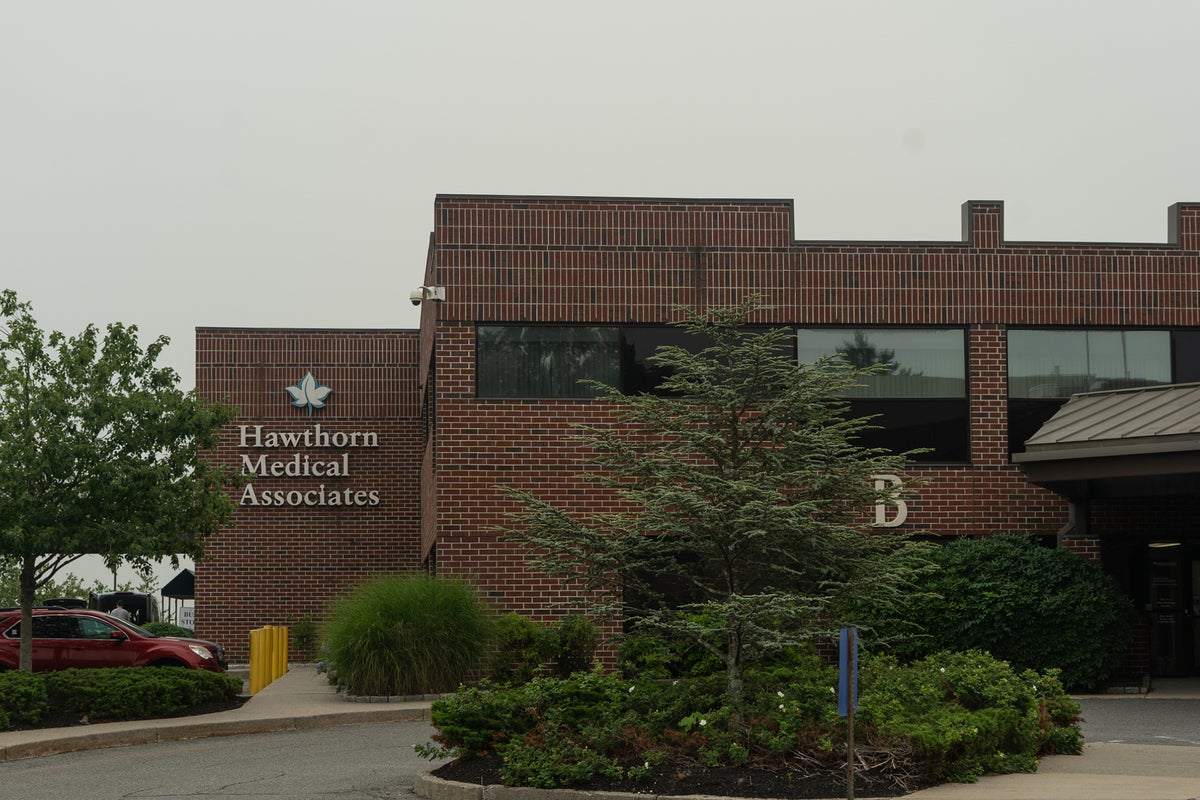
Hawthorn Medical Associates was not accepting new adult primary care patients and had a waiting list of about 4,000 people at the time of the report.
Neither Southcoast Health nor Hawthorn Medical Associates granted an interview request.
The wait time for a new adult patient appointment at New Bedford Community Health was nine months at the time of the report. Bartlett told The Light that the wait time is now three months, but that it regularly changes.
New Bedford faces a unique set of obstacles on top of the statewide primary care challenges.
New Bedford’s poverty rate is twice the statewide rate. As a result, the report said, over 10% of the city’s population reported delaying or not seeking care because of cost.
New Bedford is federally designated as a “low-income population health professional shortage area” for primary care, meaning there are not enough primary care providers to serve the city’s low-income residents.
The report links the city’s economic opportunity to education. New Bedford has one of the lowest levels of educational attainment in the commonwealth, and its high school graduation rate is well below the state average, according to the report.
“Not surprisingly, a lower percentage of students plan to attend college, which reduces the pool of young people who might attend health professional school, and come home to practice in New Bedford,” the report says.
Transportation is also a significant barrier to primary care, as nearly 1 in 5 New Bedford adults do not have a car. Many residents have primary care providers at Southcoast Health and Hawthorn Medical practices in Fairhaven and Dartmouth, both of which are an average of 30 minutes by bus. But residents who have trouble accessing public transportation, including older adults, often cannot get to appointments.
The report adds that 57% of New Bedford residents identified language as a barrier to care. Over 42% of patients have a primary language other than English, but the three primary care practices in the Greater New Bedford area reported that only nine clinicians speak Spanish, 10 speak Portuguese and 11 speak other languages.
Will the House address primary care this session?
The Senate bill has been before the House Ways and Means Committee since June 24, but it is unclear whether the House will take it up this session.
House Speaker Ronald Mariano’s spokesperson, Ana Vivas, told The Light that “the House is reviewing the bill passed by the Senate.” Vivas did not respond to a follow-up question about Mariano’s views on the bill.
Despite House leadership’s lack of commitment to the bill, South Coast representatives identified a clear need for primary care reforms.
Rep. Mark Sylvia, D-Fairhaven, called the Senate legislation “a comprehensive bill that I think tackles all of the different issues that have been raised.”
Sylvia said his constituents, including physicians, have told him about long wait times and other challenges in accessing and providing primary care. Sylvia co-sponsored a primary care bill in the House, which has been pending in the Health Care Financing Committee since November 2025.
“I think a combination of provisions in (the Senate bill) all reflect that it’s not a single solution,” Sylvia said.
Rep. Christopher Markey, D-Dartmouth, also said he supports the Senate bill because it addresses the “bureaucracy that gets in the way of good medicine.”
“I don’t think (primary care providers) signed up for being paper pushers,” Markey said. “I think they signed up to care for people.”
Markey added that he’d like to see an amendment that incentivizes primary care providers to work in underserved areas such as New Bedford, likening it to the city’s Tax Increment Financing Program, which attracts new businesses.
“If you look at our community, compared to the rest of the state, it’s poor. Compared to the rest of the state, it’s not as educated, and as a result, it’s not as healthy,” Markey said. “Primary care doctors are the best preventative medicine we have.”
Rep. Christopher Hendricks, D-New Bedford, said he hopes the House addresses the bill as soon as possible because it’s “incredibly important.”
Rep. Steven Ouellette, D-Westport, declined to comment because he hadn’t yet reviewed the bill. Rep. Antonio F.D. Cabral, D-New Bedford, did not grant an interview.
If the House does not pass its own version of the Senate bill by July 31, the bill will die for the session. If it does pass one, and the two chambers form a conference committee, the Legislature will have the rest of 2026 to reach a compromise.
___
This story was originally published by The New Bedford Light and distributed through a partnership with The Associated Press.

