Эрдэмтэд нойрны хэрэгцээ багатай хүмүүсийн генетикийн онцлогийг судалж, тархины сэргэг байдлыг зохицуулдаг генийн хувьслыг илрүүллээ.
Калифорнийн их сургуулийн судлаачид нойрны хэрэгцээ маш бага буюу хоногт 4-6 цаг унтаад бүрэн амарч чаддаг “байгалийн богино хугацааны унтагчид”-ыг судалжээ. Эдгээр хүмүүс нь нойргүйдэл эсвэл амьдралын хэв маягаас шалтгаалан бага унтдаг хүмүүсээс ялгаатай бөгөөд тэдний нойрны хэв маяг нь генетикийн өөрчлөлттэй шууд холбоотой болохыг тогтоосон байна. Судалгаанд хамрагдсан 100 орчим хүний генетикийн шинжилгээгээр нойр болон сэрүүн байдлыг хянадаг тархины үйл ажиллагаанд нөлөөлдөг хэд хэдэн генийн хувилбарыг илрүүлжээ.
Судлаачид DEC2, NPSR1, GRM1 болон ADRB1 зэрэг генүүдэд гарсан мутаци нь нойрны үргэлжлэх хугацааг бууруулдаг болохыг тогтоов. Тухайлбал, ADRB1 генийн өөрчлөлт нь тархины үүдэл хэсгийн “dorsal pons” бүс дэх эсүүдийг идэвхжүүлснээр нойрны хэрэгцээг багасгаж, сэрүүн байх хугацааг уртасгадаг байна. Мэрэгч амьтад дээр хийсэн туршилтаар эдгээр генийн хувилбар нь нойрны үр ашгийг дээшлүүлж, улмаар нойрны дутагдлаас үүдэлтэй ой санамжийн асуудал үүсгэхгүй байгаа нь ажиглагджээ.
Эрдэмтэн Ин-Хуи Фү болон Луис Птачек нарын тайлбарласнаар, нойрны хэрэгцээ багатай хүмүүсийн тархи нойрны үйл явцыг илүү үр ашигтай гүйцэтгэдэг аж. Энэхүү генетикийн өөрчлөлт нь тархины эд эс дэх хорт бодисыг цэвэрлэх үйл явц болон Альцгеймерийн өвчинтэй холбоотой уургийн хуримтлалыг бууруулахад эерэгээр нөлөөлж болзошгүйг амьтны загвар дээр хийсэн туршилт харуулж байна. Энэхүү нээлт нь нойр гэдэг нь ганцхан ген эсвэл тархины бүсээр бус, олон системээр зохицуулагддаг төвөгтэй үйл явц болохыг баталж байна.
Дэлгэрэнгүйг эх сурвалжаас харах
↓Эх сурвалжийг нээх ↓
Joanne Osmond sleeps no more than four hours a night. At 77, she remains active, teaches students about starting businesses, and follows the same unusual sleep pattern seen in her father and several siblings. Scientists call people like Osmond natural short sleepers, a rare group that makes up less than one percent of the population.
Unlike people who lose sleep because of insomnia, work schedules, or personal habits, natural short sleepers wake rested after roughly four to six hours. Their pattern begins early in life, often runs through families, and has been linked to rare genetic changes that alter how the brain controls sleep and wakefulness.
Researchers at the University of California, San Francisco have studied about 100 natural short sleepers and identified several gene variants connected to reduced sleep needs. Their work describes a biological trait rather than a learned ability to function while tired.
Rare Short-Sleep Genes Run Through Families
Human geneticist Ying-Hui Fu and neurogeneticist Louis Ptáček first became interested in families with unusual sleep schedules while studying people who naturally woke very early. One family stood apart because its members woke early without going to bed early. They felt refreshed after about six hours of sleep.
The researchers traced that pattern to a mutation in DEC2, a gene involved in controlling levels of orexin. Orexin is a brain hormone that promotes wakefulness. A lack of orexin is a major cause of narcolepsy, a disorder marked by excessive daytime sleepiness, while orexin production appears to increase in people carrying the short-sleep mutation.
Mice engineered with the same DEC2 mutation slept less than mice without it. Since that early discovery, Fu and her colleagues have reported mutations across several genes associated with natural short sleep. Those genes affect different receptors and signaling systems, which shows that reduced sleep needs do not come from a single biological switch.
One mutation appears in NPSR1, a gene involved in regulating the sleep-wake cycle. Mice carrying that change slept for less time but did not develop the memory problems normally seen after a short night. Two separate mutations in GRM1 also reduced sleep in laboratory mice without producing obvious harmful effects.
ADRB1 Activates Cells That Promote Wakefulness
Another family had natural short sleepers across three generations. Researchers used genetic sequencing to identify a rare mutation in ADRB1, which contains instructions for making the beta-1 adrenergic receptor. This receptor responds to hormones involved in several body functions, including the sleep-wake cycle.
The altered gene was especially active in cells within the dorsal pons, an area of the brain stem involved in regulating sleep. These cells became active while mice were awake or in rapid eye movement sleep, commonly called REM sleep. They were inactive during non-REM sleep.
Mice engineered with the ADRB1 mutation slept almost one hour less each day than ordinary mice. The difference included about 53 fewer minutes of non-REM sleep and seven fewer minutes of REM sleep. Cells carrying the mutation were also easier to activate.
When researchers stimulated receptor-producing cells while the mice were in non-REM sleep, the animals woke. The experiment connected the mutation with increased activity in wake-promoting brain cells, providing a specific mechanism for shorter sleep cycles.
“Sleep is complicated,” Ptáček said in the NIH report of the research. He added that no single gene or brain region controls whether the body sleeps or wakes.
Their Brains May Complete Sleep Tasks Faster
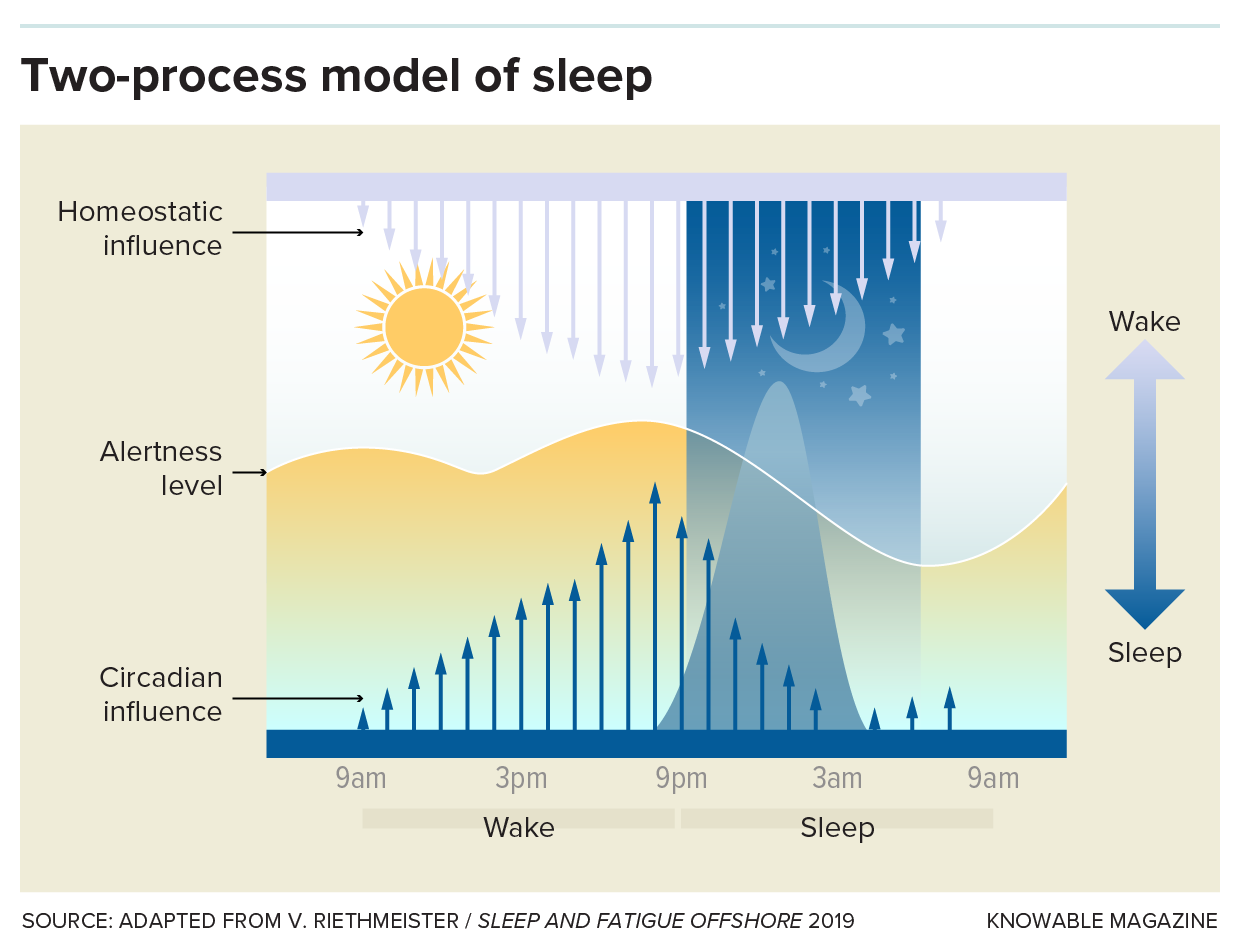
Sleep is controlled partly by the circadian clock, which organizes the body around a roughly 24-hour cycle, and by sleep pressure, which builds the longer a person stays awake. Natural short sleepers appear to move through these systems differently from the wider population.
Researchers describe the central feature as sleep efficiency. Their brains may complete the physical work of sleep in less time, although the exact process can differ among people with different mutations.
“It’s all about efficiency, sleep efficiency,” Fu told Knowable Magazine. “Whatever their body needs to do with sleep, they can get it done in a short time.”
Scientists are examining several possible features of this efficient sleep. These include spending more time in slow-wave sleep, moving through sleep stages faster, or producing more cerebrospinal fluid. This clear liquid surrounds the brain and spinal cord and carries waste away from brain tissue.
Animal research has also examined proteins associated with Alzheimer’s disease. Fu and Ptáček bred mice carrying short-sleep genes with mice genetically predisposed to develop Alzheimer’s-like changes. The second group normally develops accumulations of amyloid plaques and tau tangles, abnormal proteins associated with dementia in humans.
Mice carrying both the Alzheimer’s-related genes and short-sleep mutations developed fewer plaques and tangles than the other Alzheimer’s-model mice. The experiment measured these changes in genetically engineered animals, not in human short sleepers.
Natural Short Sleep Differs From Sleep Deprivation
Natural short sleepers do not force themselves to remain awake. They naturally stop sleeping after a few hours and do not usually need alarms, naps, caffeine, or extra weekend sleep to recover.
Osmond learned in 2011 that she carried a genetic variation linked to short sleep. Her sisters were tested in 2019 and were found to have variations in the same gene. “The world seems to need eight hours, and I don’t,” she told The New Yorker.
Other natural short sleepers described similar lifelong patterns. Lynne White, 83, carries a mutation associated in mice with less non-REM sleep and more brain waves linked to deep sleep. Brad Johnson, 69, comes from a family that included five short sleepers and three people with ordinary sleep needs.
Johnson once slept about five hours a night and now sleeps closer to four and a half. Osmond, White, and Johnson each described difficulty remaining asleep for the longer periods considered normal for most adults. Their short nights reflect their natural sleep requirements rather than an effort to create more waking hours.
For most adults, regularly sleeping too little can impair concentration and physical health. Stimulants such as caffeine can suppress sleepiness, but they do not remove the biological need for sleep. Natural short sleepers represent an inherited exception in which several rare gene variants alter sleep duration and the brain systems that control waking.
Enjoyed this article? Subscribe to our free newsletter for engaging stories, exclusive content, and the latest news.

