
Эрдэмтэд муурны сарвууны дээд хэсэгт байрлах мэдрэгч үс буюу сахал нь тэдний хөдөлгөөн болон ан агнуурт хэрхэн тусалдаг болохыг тайлбарлажээ.
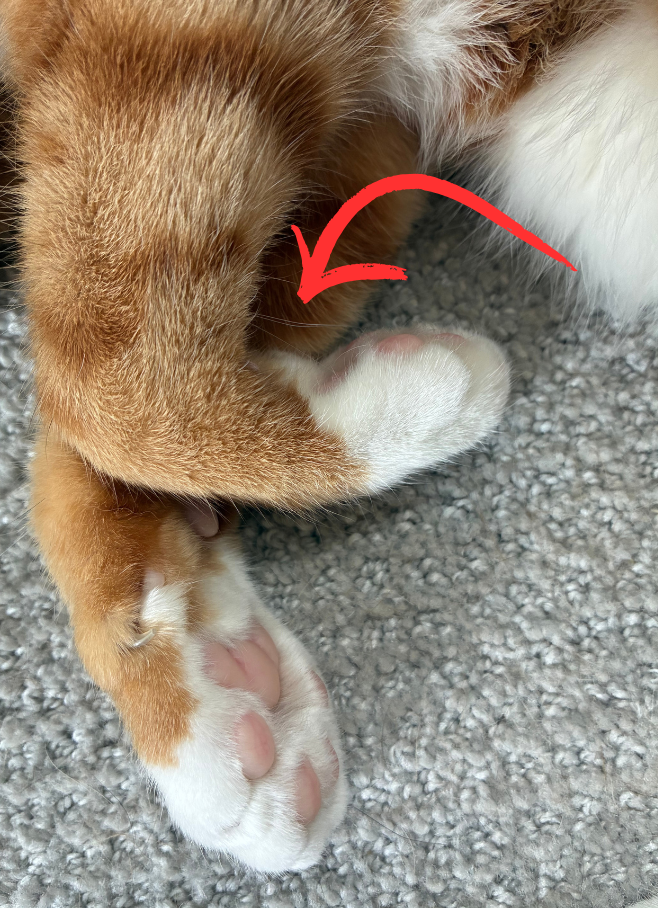
Муурны нүүрэн дээрх сахал нь хүний хурууны өндөгтэй адил мэдрэмтгий байдаг бол сарвуун дээрх “carpal vibrissae” хэмээх богино үснүүд нь тэдний үйл хөдөлгөөнийг удирдан чиглүүлэхэд чухал үүрэгтэй аж. Манчестер Метрополитан их сургуулийн мэдрэхүйн биологич Робин Грантын тайлбарласнаар, эдгээр үс нь муурыг авирах болон идэш тэжээлээ барьж авах үед сарвуугаа зөв байрлуулахад тусалдаг байна.
Вашингтоны их сургуулийн хувьслын биологич Жонатан Лососын судалгаагаар, муур нь нүднийхээ ойрын зайд буюу 25 см-ээс дотогш зүйлийг сайн төвлөрүүлж хардаггүй тул сахал нь ойр орчмынхоо орон зайг мэдрэхэд нэмэлт мэдээлэл өгдөг аж. Ийм төрлийн сахал нь ихэвчлэн мод руу авирдаг эсвэл урд сарвуугаараа олзоо барьдаг махчин амьтдад түгээмэл байдаг.
Муурны сарвуун дээрх эдгээр тусгай үс нь ойролцоогоор 2-3 см урттай бөгөөд ихэнх махчин амьтад, мэрэгчид, лемур зэрэг амьтдад ажиглагддаг. Харин нохой болон туруутан амьтдад ийм сахал байдаггүй нь тэдний амьдралын хэв маяг, биеийн бүтцийн ялгаатай холбоотой гэж эрдэмтэд үзэж байна.
Дэлгэрэнгүйг эх сурвалжаас харах
↓Эх сурвалжийг нээх ↓
Cats are known for the whiskers on their faces. However, if you look closely, you can see that they also have whiskers on their legs. So why do cats have leg whiskers?
To answer why they’re useful, it’s important to understand what whiskers are. Technically known as vibrissae, whiskers are specialized hairs that are stiffer and several times thicker than other hairs. Although whiskers themselves do not contain nerves, their bases are rooted in specialized receptacles loaded with nerve endings, making whiskers very sensitive.
“Facial whiskers are as sensitive as human fingertips,” Robyn Grant, a sensory biologist at Manchester Metropolitan University in the U.K., told Live Science.
Sign up for our weekly Life’s Little Mysteries newsletter to get the latest mysteries before they appear online
A cat’s whiskers around the nose, which are also known as the mystacial vibrissae, are the longest whiskers they have, according to the veterinary reference book “The Feline Patient” (Wiley, 2025). Although there is variation among cats, on average there are 12 mystacial whiskers set in four rows on each side of the muzzle.
Facial whiskers help cats hunt when light is limited or when their vision is poor. Although cats are good at seeing distant objects, “cats can’t really focus on anything less than 10 inches (25 centimeters) from their eyes, so they use their whiskers to figure out where things are,” Jonathan Losos, an evolutionary biologist at Washington University in St. Louis and author of “The Cat’s Meow: How Cats Evolved from the Savanna to Your Sofa” (Viking, 2023), told Live Science.
In addition, cats have a tuft of whiskers known as superciliary vibrissae above each eye. These whiskers help protect the cat’s vision by triggering a blink when stimulated by anything that might fly into their eye, according to The Feline Patient.
Cats also have chin whiskers (mandibular vibrissae) and whiskers on each side of the head, between the ear and chin (genal vibrissae). These also help cats stay aware of the space around them.
Leg whiskers
Cats also possess a tuft of four to six whiskers on the back of each front leg, each about 0.8 to 1.2 inches (2 to 3 centimeters) long. These are known as carpal vibrissae.
“Carpal refers to the bones that, in humans, are in our wrists,” Losos said. “Carpal whiskers are attached to cat forelegs near the carpal bones.” However, in cats, the carpal bones are not located in the same place as the human wrist. Rather, they “are further up the leg, because cats essentially walk on their toes and not their palms,” he explained.
Cats are not the only animals with carpal whiskers. “Most carnivores have them, and many rodents do, as do lemurs and armadillos,” Losos said. “Dogs don’t have them, but other canine species do. Rabbits don’t have them either, nor do ungulates — that is, hooved animals, such as horses and cattle.”
The species that have carpal whiskers “tend to be the ones that either grasp things with their forelimbs or climb up trees,” Losos said. “The idea is that if it’s hard for the animals to see what they’re grasping, carpal whiskers can help supplement their vision. Perhaps cats have them and dogs don’t because cats can move their forearms laterally from side to side and put their palms together to grab things, whereas dogs can’t.”
It remains uncertain what role carpal whiskers play in cats, but they likely “guide locomotion — that is, safe forepaw placement — especially during complex locomotion, such as climbing,” Grant said. “They might guide prey handling too.”
How much of a cat fan are you? Find out by taking our cat quiz!


