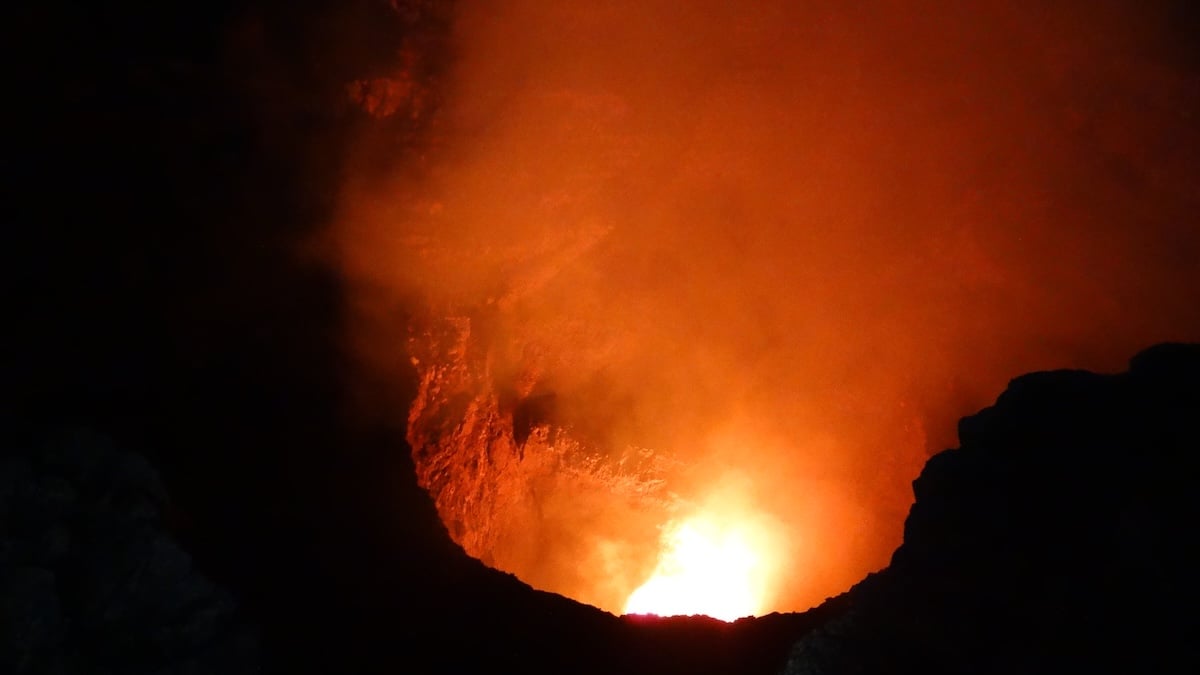
Никарагуа улсын баруун хэсэгт орших Масая галт уул нь өвөрмөц бүтэцтэй бөгөөд базальтлаг бамбай галт уул хэдий ч түүхэндээ хүчтэй дэлбэрэлтүүдийг үүсгэж байсан удаатай. Сүүлийн үеийн судалгаагаар 2018-2024 оны хооронд хиймэл дагуулаас авсан газрын хэв гажилтын өгөгдөлд дүн шинжилгээ хийхэд, галт уулын доорх магмын урсгал хоёр өөр камерт хуваагдан хөдөлж байгаа нь тодорхой болжээ. Энэхүү бүтэц нь Хавайн Килауэа галт уултай төстэй болохыг судлаачид тэмдэглэв.
Масая галт уул нь нийслэл Манагуа хотоос ердөө 20 км зайд оршдог тул хүн амын эрүүл мэнд, аюулгүй байдалд чухал нөлөөтэй. Галт уулын ялгаруулж буй хүхрийн давхар исэл нь агаарын чанарын стандартыг тогтмол давдаг нь тус бүс нутгийн оршин суугчдад эрүүл мэндийн эрсдэл учруулдаг байна. Түүнчлэн галт уулын идэвхжил нь үе үе өөрчлөгддөг тул түүний гүний үйл явцыг судлах нь болзошгүй аюулаас урьдчилан сэргийлэхэд нэн чухал юм.
Энэхүү судалгаа нь галт уулын магмын хөдөлгөөн болон дэлбэрэлтийн шилжилтийн үеийг илүү нарийвчлалтай урьдчилан таамаглах боломжийг бүрдүүлж байна. Масая нь 16-р зууны дунд үеэс хойш бараг тасралтгүй идэвхтэй байгаа бөгөөд түүний лаван нуур нь олон мянган жуулчдыг татдаг байна. Шинжлэх ухааны энэхүү шинэ нээлт нь цаашид галт уулын идэвхжлийг хянах, эрсдэлийг бууруулах ажилд үнэтэй хувь нэмэр оруулах юм.
Дэлгэрэнгүйг эх сурвалжаас харах
↓Эх сурвалжийг нээх ↓
A major volcano in Nicaragua has not one but two active magma chambers, scientists reveal in a new study, shedding important light on the inner workings of a highly active volcanolocated near a large human population.
Masaya in western Nicaragua is one of the region’s busiest volcanoes, although its activity in modern times has been mostly “passive degassing, lava lake formation, and vent-clearing explosions,” the study’s authors write in Geophysical Research Letters.
It’s a basaltic shield volcano, so that behavior isn’t surprising. Shield volcanoes are known for highly fluid lava that erupts in slow, effusive flows –such as typical Hawaiian eruptions – rather than the violent blasts of stratovolcanoes.
But Masaya is not easily pigeonholed. Despite its shield morphology and demeanor, this complex volcano also has a knack for explosive outbursts, including at least four caldera-forming Plinian eruptions during its history.
In hopes of illuminating Masaya’s variable habits –and perhaps gaining insight into its future activity – researchers used satellite radar imagery to analyze and model ground deformation around Masaya over six years.
Of course, even conventional shield volcanoes can be dangerous. In addition to acute hazards like lava flows, potential threats include the subtler release of noxious volcanic gases.
In fact, chronic exposure to Masaya’s prolific gas output may already pose a serious public health hazard for people in and around Nicaragua’s capital, Managua, which is about 20 kilometers (12 miles) northwest of the volcano.
Due to frequent degassing from Masaya, the surrounding area regularly exceeds World Health Organization air-quality standards for atmospheric sulfur dioxide concentrations, an insidious risk that could rival the harm from more obvious volcanic dangers.
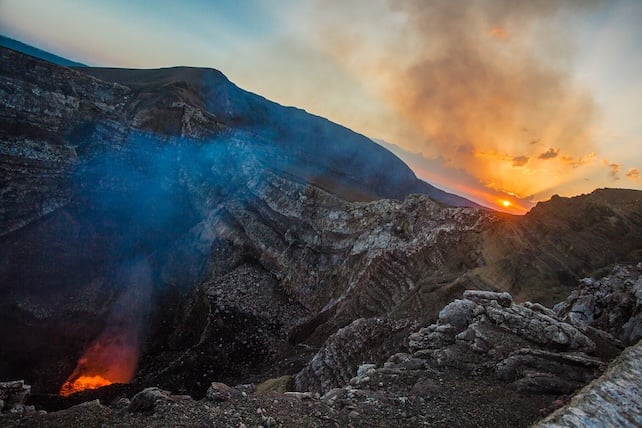
But Masaya is also capable of big, ferocious eruptions that could be catastrophic for metropolitan Managua and beyond. The volcano has been known to shift between periods of effusive or explosive eruptions over time.
Despite periodic reminders of this in recent centuries, Masaya hasn’t produced a major lava flow since 1772, the study’s authors note, and even that flow was mostly confined within its caldera.
Some of Masaya’s earlier work was much more dramatic, however, including major eruptions about 30,000 and 6,500 years ago. The latter was reportedly one of the largest eruptions anywhere on Earth in the last 10,000 years.
Masaya has been almost continuously active since the mid-16th century, and today that ongoing activity helps attract thousands of tourists every year.
At the same time, the volcano’s recent lack of cataclysmic eruptions has allowed a large human population to develop nearby, thanks partly to rich volcanic soil from the region’s ancient lava flows.
If researchers can learn the mechanics of its mercurial behavior, it could yield insights that make Masaya –and other volcanoes – more predictable.
“Masaya volcano sits within 20 km of 2 million people and is a popular tourist destination due to its lava lake, making it critically important to understand transitions in its behavior and shallow magma processes,” the researchers write.
Previous research has found indications of multiple magma chambers beneath Masaya, but much of the volcano’s plumbing remains mysterious.
Many volcanoes do seem to be fed by multiple magma chambers,including Kīlauea and Yellowstone, and that detail could be important in demystifying Masaya’s quirks.
To investigate, the authors of the new study conducted a long-term analysis of satellite radar data collected between 2018 and 2024, revealing subtle movements of the ground around Masaya over time.

The ground north of Masaya’s Santiago crater sank slightly from 2018 until mid-2022, the study found, then rose again from mid-2022 to 2024. Meanwhile, the area surrounding the crater deflated throughout the study period.
The movements hint at two magma chambers, the researchers report, in an arrangement they call “interestingly similar to what is inferred at Kīlauea.”
Related: A Strange, Boiling Hole Just Appeared Out of Nowhere in Yellowstone
Both Masaya and Kīlauea are basaltic volcanoes experiencing semi-persistent lava lake activity with occasional bouts of explosive summit activity, they note.
“Further long-term geodetic and modeling studies will provide a more thorough understanding of transitions between intrusive, effusive, and eruptive activity,” the researchers write, “and allow for effective hazard monitoring and mitigation at Masaya and other lava-lake-hosting basaltic volcanoes.”
The study was published in Geophysical Research Letters.
This article was fact-checked by Rachel Garner and edited by Rebecca Dyer. While we pride ourselves on our process, we are only human. If you spot a mistake, please let us know.

