Данийн музейн тавиур дээр олон арван жил мартагдсан чулуужсан олдворууд 11 сая жилийн өмнөх аварга акулын биеийн бүтцийг судлах шинэ боломжийг нээж өглөө.
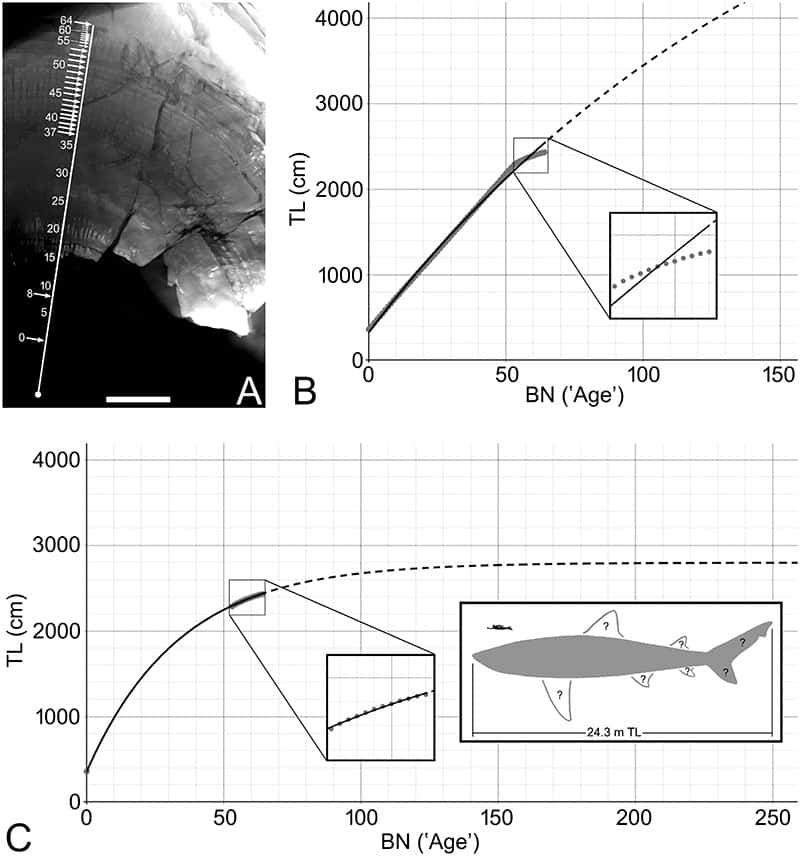
Данийн Байгалийн түүхийн музейн цуглуулгад хадгалагдаж байсан Otodus megalodon акулын нурууны нугалам нь 1989 онд устгагдсан гэж тооцогдож байсан юм. Эдгээр олдворыг санамсаргүйгээр музейн тавиураас дахин олж илрүүлснээр эрдэмтэд уг аварга махчин амьтны биеийн хэмжээг дахин үнэлэх боломжтой болжээ. Palaeontologia Electronica сэтгүүлд нийтлэгдсэн судалгаагаар, 23 см голчтой эдгээр нугалам нь тус зүйлийн олдсон хамгийн том ясны үлдэгдэл аж.
Шинэ судалгааны үр дүнд Мегалодон акул 24 метр хүртэл урттай байсан байж болзошгүй гэсэн таамаглал батлагдаж байна. Мөн судлаачид тус акулын төрсөн зулзага нь 3.6 метр урттай байсан байж болох бөгөөд нийт наслалт нь зуун жил дөхөж магадгүй гэсэн дүгнэлтэд хүрчээ.
Гэсэн хэдий ч эрдэмтэд акулын араг яс нь мөгөөрсөн бүтэцтэй тул чулуужсан олдвор ховор олддог болохыг онцолж байна. Иймд тус зүйлийн хамгийн дээд хэмжээг нарийн тодорхойлохын тулд шүд болон бусад ясны бүтцийг багтаасан илүү бүрэн гүйцэд араг ясны олдвор шаардлагатай байгааг тэмдэглэжээ.
Музейн асар том сан хөмрөгт эд зүйлс ангилалгүй мартагдах тохиолдол өмнө нь ч гарч байв. Палеонтологийн түүхэнд дайн, байгалийн гамшиг эсвэл зүгээр л бүртгэлээс хамааран олон чухал олдвор алга болж байсан жишээ олон бий.
Дэлгэрэнгүйг эх сурвалжаас харах
↓Эх сурвалжийг нээх ↓
Fossil vertebrae from Otodus megalodon that scientists thought had been destroyed in 1989 have resurfaced in a Danish museum collection. The 11-million-year-old remains support estimates that the giant shark could exceed 24 meters (79 feet) in length, while its newborns may already have measured 3.6 meters (12 feet).
Shark skeletons consist mostly of cartilage, so vertebrae are uncommon in the fossil record and can provide valuable information about the size of the individual to which they belonged. There is another story behind the fossils: they were not recovered during a new excavation. They had apparently remained unrecognized on a museum shelf for decades. .
The Largest Known Megalodon Vertebrae Resurface
The vertebrae come from a single O. megalodon found in Denmark and date to around 11 million years ago. They were originally held by the Geological Museum of Copenhagen, now part of the Natural History Museum of Denmark, before being moved to the Museum of Southern Jutland in 1989. The specimens were believed to have been destroyed, leaving the scientific record largely limited to old photographs and descriptions. A couple of the vertebrae were eventually rediscovered after apparently remaining unrecognized on a museum shelf for decades.
According to the new study published in Palaeontologia Electronica, the recovered fossils come from the Upper Miocene Gram Formation in Denmark. Measuring approximately 23 centimeters (9 inches) in diameter, they are the largest known vertebrae attributed to O. megalodon.
Their dimensions allowed researchers to revisit estimates of the species’ size. The analysis supports previous estimates suggesting that O. megalodon, which lived between roughly 15 million and 3.5 million years ago, could have exceeded 24 meters (79 feet) in length. The researchers nevertheless stress the limitations of determining the species’ maximum possible size from the available fossil record.
“A more complete skeletal specimen of O. megalodon, ideally with associated teeth, is required for any further discussion of the maximum possible size of the species,” stated the authors in the paper.
A 12-Foot Newborn With Nearly a Century Ahead
The vertebrae also contain information about the animal’s growth. The researchers estimated that a newborn O. megalodon could have been around 3.6 meters (12 feet) long. The study also indicates that the giant shark could live for nearly a century. Both findings add biological context to an extinct predator whose fossil record is dominated by teeth rather than more complete skeletal material.

The comparison with fictional sharks is almost unavoidable. As the source notes, even the deliberately exaggerated sharks in the Jaws franchise reached only 10.5 meters (34 feet), far below the maximum size supported by the Megalodon analysis.
The rarity of the Danish fossils makes their survival particularly notable. Since shark skeletons are composed largely of cartilage, vertebrae such as these offer evidence that teeth alone cannot provide as directly when researchers investigate the size of an individual animal.
Fossils Can Vanish Without Ever Leaving A Museum
The strange journey of the Danish vertebrae is not unique. Paleontology contains examples of specimens lost through war, accidents, natural disasters and simple misplacement. The original fossils of the sail-backed dinosaur Spinosaurus, for example, were destroyed during an Allied bombing raid on Munich in 1944. Parts of the early dinosaur Thecodontosaurus were destroyed in Bristol in 1940 following an Axis raid.
In another case, the SS Mount Temple sank in 1916 while carrying dinosaur fossils collected in Alberta and being transported to the UK. The source reports that the cargo records are too vague to establish exactly which dinosaur specimens went down with the ship.

In some cases, the reason is much more ordinary. Museum collections can be immense. As mentioned by the Natural History Museum in London, roughly 80 million objects are held in its collection, creating plenty of opportunities for individual specimens to become misplaced.
Enjoyed this article? Subscribe to our free newsletter for engaging stories, exclusive content, and the latest news.

