Хойд Америкийн хоккейн шигшээ багийн хаалгачид олон улсын тавцанд гаргасан амжилтаа NHL-ийн улирлын туршид үргэлжлүүлэн үзүүлж байна.
АНУ-ын Хоккейн холбооноос зохион байгуулсан үндэсний симпозиумд шилдэг хаалгачид болон дасгалжуулагчид цугларч, хаалгачийн байрлалыг хөгжүүлэх арга барил, техникийн шинэ шийдлүүдийг хэлэлцлээ. Өнгөрсөн улиралд АНУ-ын хаалгачид NHL-д бусад орны тамирчдаас илүү хугацаагаар тоглолтод оролцож, Брэндон Бусси Стэнлийн цомыг өргөсөн анхны америк хаалгач болсон нь энэ спортын хөгжилд томоохон түлхэц болжээ.
Симпозиумын үеэр Майк Бакли хаалгачийн байрлал болон зайн удирдлагын “ABC” системийг танилцуулсан бол Жейкоб Фаулер хаалганы өмнөх хөдөлгөөнийг хялбарчлах дасгалуудыг үзүүлсэн байна. Монреаль Канадиенс багийн ирээдүйтэй залуу хаалгач Фаулер өнгөрсөн улиралд 9-6-2 гэсэн үзүүлэлттэй, 0.908 хувийн хаалттай амжилттай тоглосон юм.
АНУ-д хаалгачийн сургалтад хамрагдаж буй залуу тамирчдын тоо жилээс жилд өсөж, 2025-26 оны улиралд өсвөрийн тоглогчдын 7.6 хувийг хаалгачид эзлэх болсон байна. АНУ-ын Хоккейн холбооны хаалгачдын хөгжлийн менежер Стив Томпсон энэ үзүүлэлтийг 10 хувьд хүргэх зорилт тавьж байгаагаа мэдэгдлээ.
Дэлгэрэнгүйг эх сурвалжаас харах
↓Эх сурвалжийг нээх ↓
BOSTON – It’s been a banner year for American goaltending.
Connor Hellebuyck backstopped Team USA to Olympic gold with a legendary performance in the gold-medal game against Canada. Aerin Frankel became the first goalie in Olympic history to record three shutouts in a single tournament, while Griffin LaMarre helped the U.S. sled hockey team complete an Olympic gold-medal sweep.
In the NHL, American goalies played more minutes than any other nationality for the first time in league history, and the 2025-26 season ended with New York native Brandon Bussi becoming the first American netminder in more than a decade to win the Stanley Cup as the starter in the clinching game.
The momentum is palpable and was on display last weekend in downtown Boston, where USA Hockey hosted its National Goaltending Symposium. It was the second event of its kind, following a stellar debut in Minneapolis, Minn., in 2024, and like nearly everything involving American goalies lately, this year’s iteration was even better than the last.
“The momentum of winning all three gold medals was huge,” said Steve Thompson, manager of goalie development at USA Hockey. “Everyone wants to be a part of success and winning.”
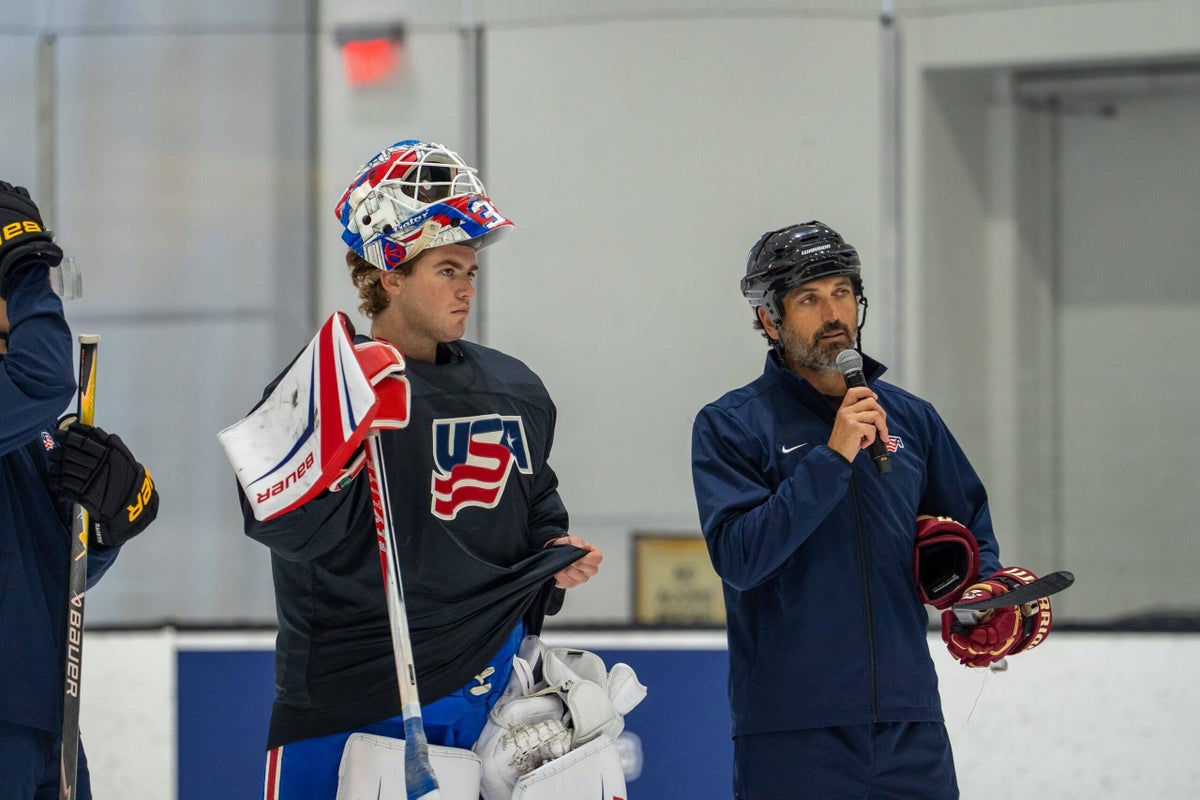
Goalies and goalie coaches from across the country gathered for three days of presentations, discussion and practice sessions. They bounced back and forth between the Track at New Balance, which hosted auditorium-style presentations over the three days, and the Warrior Ice Arena (practice facility of the Boston Bruins), where on-ice sessions were held with coaches and goalies mic’d up.
The lineup of speakers and demonstrators was star-studded. Gold-medal goalies Frankel and Jeremy Swayman, and even Jim Craig from the 1980 Miracle on Ice team, made appearances. Frankel’s goalie partner, Gwyneth Philips, took the ice for demonstrations, as did Jacob Fowler, the Montreal Canadiens’ top goalie prospect.
After a year like the one American goalies have had in 2026, it wasn’t a challenge to find willing participants.
“The amount of emails I get now from former goalies who are saying, ‘I watched the Olympics, and I want to get back involved. How do I help?’ was impressive,” Thompson explained. “The amount of kids that are registering now, and registering as a goalie. It’s huge.”
The swell is apparent at the peak of the position, where Hellebuyck, Swayman, Bussi, Jake Oettinger, Spencer Knight, Dustin Wolf and others are excelling. It’s happening at the major junior level, where Pittsburgh native Ryder Fetterolf became the first American to win the OHL’s goaltender of the year award since 2013-14.
It’s also apparent at the grassroots level, where USA Hockey registration numbers continue to rise. In 2025-26, 7.6 percent of youth hockey players were goalies. That’s up from 6.8 percent in 2024-25 and 6.35 percent the year prior. There’s still work to be done — Thompson’s goal for that percentage is closer to 10, which would give every 20-player team in the U.S. two goalies. The recent surge has made that a realistic goal.
“I don’t even know if we can quantify yet until next season starts as to how far the impact went, but in just pop culture alone, we’re seeing USA Hockey jerseys everywhere,” Thompson said. “I live in Colorado and I didn’t use to see them often, but after the Olympics I’m seeing them in the gym, in the mall, on drink bottles. I’m turning on ‘Family Feud’ and seeing our jersey. It’s incredible how much more USA Hockey has been in front of everybody’s eyes. Previously, it felt like if I went into a hockey rink, I saw the USA Hockey logo, but unless I was in a hockey facility, it didn’t exist. Now I’m seeing it front-facing all over the place, and that is pretty cool.”
After 2024’s symposium focused more on building the position from the ground up by brainstorming ways to get more kids playing goalie, this year’s presentations offered more technical expertise for coaches to add to their toolbox when they return to pupils in their respective cities. Several NHL goalie coaches offered a peek behind the curtain at how they work with their netminders.
Boston Bruins goalie Jeremy Swayman (left) and Maine goalie coach Alfie Michaud (right) take coaches through a film session on stage at the National Goaltending Symposium. (Francis Forte / USA Hockey)
University of Maine goalie coach Alfie Michaud went through a film session with Swayman, whom he coached at the collegiate level. They showed the crowd what they’re looking for and how they interact — and trash talk — with each other throughout. Former New Jersey Devils goalie coach Dave Rogalski gave a presentation on the nuances of skating and how goalies can use positioning to cut the ice in half and create easier reads for themselves.
Here are some highlights from a weekend of puckstopping presentations:
ABCs of depth management
The wealth of knowledge on display in Boston was impressive, but with so much high-level expertise at their disposal, the coaches must resist the temptation to bring too much of it home to their goalies — especially the younger ones.
“We want age-appropriate training, and we don’t want kids to be treated like adults,” Thompson said. “That’s a reason the kids get burned out, and a reason we’ve had failure in the past, because we have had this rush to treat kids like they’re five years older than they actually are.”
Teaching eight-year-olds is obviously very different from sharpening professional goalies, but Mike Buckley’s on-ice presentation on depth management did a wonderful job of blending the two. Buckley is one of the top coaches in the world; he coached the Pittsburgh Penguins’ goalies for four seasons, has been with the Los Angeles Kings for each of the last three years and was Team USA’s goalie coach in the Olympics.
Buckley’s philosophies in skating depth have become a standard: simple enough to teach to brand-new goalies, but important enough that he still goes over them with his NHL goalies on a daily basis. He established three levels of depth that a goalie should be from his goal line: (A) aggressive, (B) base, and (C) conservative depth, and broke down the situations in which goalies should use each level.
Buckley explained the system and then went through several drills he uses with his goalies to improve their play-reading and decision-making when it comes to using each level of depth.

Mike Buckley’s principles of skating depth have become a standard across multiple levels of goaltending. (Jesse Granger / The Athletic)
Fowler makes it look easy
Fowler, who went 9-6-2 as a rookie for the Canadiens this past season with a .908 save percentage and 9.32 goals saved above expected, took the ice on Saturday to show goalies and coaches how to simplify lateral movements in the crease.
He was joined on the ice by Boston College goaltending coach Mike Ayers, who has an impressive resume of goalies that he’s worked with at the collegiate level, including Fowler, Knight, )Joseph Woll and Thatcher Demko. The two went over several drills to improve moving side-to-side in the crease with skating and butterfly slides.
Fowler was brilliant, both in demonstrating the movements and in his advice to the young goalies in attendance: Keep things simple, don’t overthink it and, above all, be an athlete.
Improving practice for goalies (and shooters)
Steve Valiquette views the position through a unique lens. He played six seasons in the NHL, worked as a goaltending consultant for the New York Islanders and is now a television analyst for MSG. He also runs an analytics company called Clear Sight Analytics, which manually tracks scoring chance data for several NHL teams.
On Saturday, he gave an enlightening presentation on how coaches can improve practice quality for their goalies and shooters alike by gamifying their drills. Valiquette gave several examples of drills he likes to run with the goalies he personally coaches, and how he sets up scoring systems within each drill so it’s a competition between the scorers and puck stoppers. He also used data from his analytics company to determine how likely a shooter is to score in each situation and set the scoring parameters based on that. The result is a miniature game within every drill that typically comes down to the final shot, simulating game-like pressure for both sides.
That was one of the more consistent themes of the weekend: improving skater and goalie training so they’re both learning skills simultaneously, rather than taking turns the way many practices are currently run.
The weekend ended with a spirited speech from USA Hockey assistant executive director of hockey development Bob Mancini. A longtime and respected figure within the organization, He has had a front-row seat to the evolution of American goaltending. His message served as a fitting summation of the symposium as he praised the energy and direction Thompson has brought to the department.
Thompson is determined to keep American goaltending on that trajectory. If last weekend was any indication, the future is promising.


