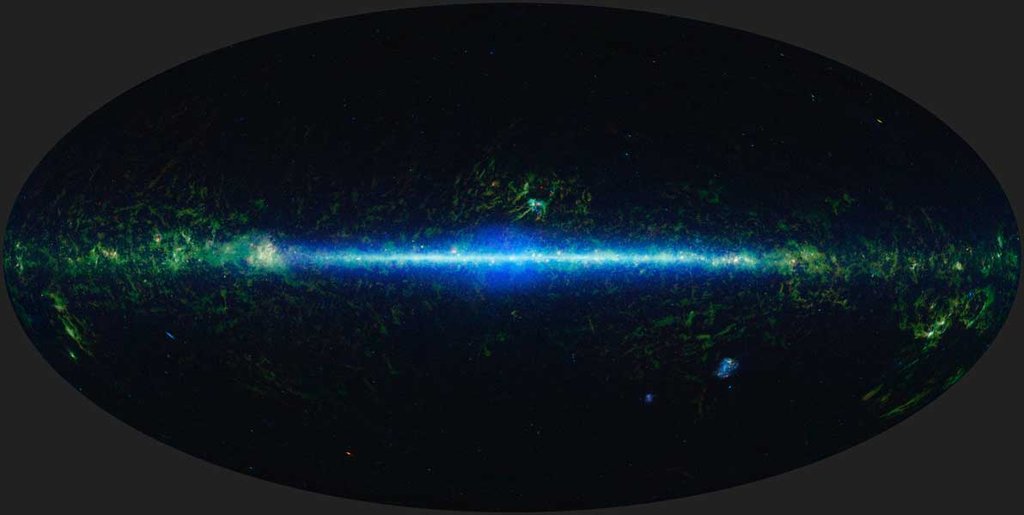
Пасадена хотын ахлах сургуулийн сурагч Маттео Паз NASA-гийн NEOWISE дурангийн архивын өгөгдлийг шинжлэх зориулалттай хиймэл оюун ухааны систем бүтээж, хувьсах шинж чанартай 1.5 сая орчим сансрын объектын нэр дэвшигчийг олж тогтоов.
Маттео Паз Caltech-ийн зуны судалгааны хөтөлбөрт хамрагдахдаа 200 тэрбум орчим бүртгэл бүхий асар том мэдээллийн санг автоматаар боловсруулах VARnet загварыг хөгжүүлжээ. Уг загвар нь долгион задрал, Фурье хувиргалт болон мэдрэлийн сүлжээг хослуулан ашигладаг бөгөөд сансрын хувьсах объектуудыг микросекундэд тооцоолон ангилах чадвартай юм. Энэхүү судалгааны ажлаараа тэрээр The Astronomical Journal сэтгүүлд бие даасан өгүүлэл хэвлүүлж, 2025 оны Regeneron Science Talent Search уралдаанд тэргүүн байр эзэлсэн байна.
Гэсэн хэдий ч илрүүлсэн 1.5 сая объектыг бүрэн батлагдсан нээлт гэж үзэх боломжгүй бөгөөд тэдгээр нь одоогоор зөвхөн “нэр дэвшигч” гэсэн статустай байна. Эдгээр объект нь өмнө нь бүртгэгдсэн эх сурвалжууд эсвэл алдаатай илрүүлэлт байх магадлалтай тул цаашид нэмэлт ажиглалт, ангилалт шаардлагатай гэж судлаачид онцолжээ. Мөн дурангийн ажиглалтын давтамжаас хамааран богино хугацаанд гялсхийгээд өнгөрдөг эсвэл маш удаан хугацаанд өөрчлөгддөг объектуудыг илрүүлэхэд хязгаарлалттай байна.
Судалгааны ажил нь одон орон судлалд машин сургалтыг ашиглах шинэ боломжийг нээж өгсөн бөгөөд Маттео Паз одоогоор IPAC байгууллагад ажиллаж байна. Энэхүү амжилт нь одон орон судлалын асар их хэмжээний өгөгдлийг боловсруулахад хиймэл оюун ухааны гүйцэтгэх үүргийг тод харуулсан чухал алхам боллоо.
Дэлгэрэнгүйг эх сурвалжаас харах
↓Эх сурвалжийг нээх ↓
A Pasadena high school student built an artificial intelligence system to search one of astronomy’s largest datasets, eventually flagging and classifying 1.5 million potential variable objects in observations collected by NASA’s retired NEOWISE telescope.
Matteo Paz, then a student at Pasadena High School, developed the model while conducting research at Caltech. What started as a six-week summer project became a single-author, peer-reviewed paper in The Astronomical Journal and earned Paz the $250,000 first-place prize in the 2025 Regeneron Science Talent Search.
The 1.5 million figure needs context. Paz’s algorithms flagged potential new objects; they are not all confirmed astronomical discoveries. A February 2026 account of the research reported that the candidates require follow-up observation and classification, and that some may turn out to be known sources or false positives.
The project began with a smaller question: what might be hiding inside more than a decade of infrared observations?
A Six-Week Project Confronts Nearly 200 Billion Detections
Paz joined Caltech’s Summer Research Connection program in 2023 and was paired with Davy Kirkpatrick, an IPAC staff scientist who had been thinking about information buried in the NEOWISE archive. Kirkpatrick’s IPAC profile lists his research interests as brown dwarfs, spectral classification, the Solar Neighborhood and low-mass stars.
NEOWISE spent more than 10 years scanning the entire sky in infrared light while searching for asteroids and other objects near Earth. Its observations also recorded changing infrared emissions from more distant sources, including quasars, exploding stars and pairs of stars that dim as they eclipse one another.
The problem was the archive’s size.
By the time Kirkpatrick was considering the project, it was, in his words, “creeping up towards 200 billion rows.” His initial plan was to have a student choose a small area of sky, identify variable stars manually and show astronomers what might be waiting elsewhere in the database.
Paz proposed something larger.
Instead of searching one region by hand, he set out to build machine learning for astronomy that could analyze the broader dataset automatically. Caltech reported that Paz was already studying advanced undergraduate mathematics through Pasadena Unified School District’s Math Academy after completing AP Calculus BC in eighth grade. An elective combining coding, theoretical computer science and formal mathematics had also introduced him to AI.
That summer, Paz began building the model while Kirkpatrick taught him the astronomy behind the measurements. Kirkpatrick also connected him with Caltech astronomers Shoubaneh Hemmati, Daniel Masters, Ashish Mahabal and Matthew Graham, who brought expertise in astronomical machine learning and objects that vary over different timescales.
“I’m so lucky to have met Davy,” Paz told Caltech. Their collaboration continued after the summer program and into 2024, when Paz also mentored other high school students.
VARnet Searches Astronomical Data in Microseconds
Paz’s system became VARnet, a model designed to analyze astronomical time-series data quickly.
Its design combines wavelet decomposition, Fourier-based signal processing and neural-network classification. The peer-reviewed paper in The Astronomical Journal describes a method for extracting variable candidates from the NEOWISE Single-Exposure Database. Caltech identifies Paz as the paper’s sole author.
VARnet looks for patterns in astronomical time-series data, where measurements of a source are collected at different points in time. Its classifications included non-variable sources, transient events, intrinsic pulsators and eclipsing binary systems.

On the hardware described in the research, VARnet processed a source in less than 53 microseconds using a GPU with 22 gigabytes of VRAM. It achieved an F1 score of 0.91 on a validation set of known variable objects.
That speed allowed Paz to move well beyond the small patch of sky envisioned at the start. He refined the system to process the raw NASA NEOWISE data and search for small differences in infrared measurements across the archive. By April 2025, Caltech reported that his algorithms had flagged and classified 1.5 million potential new objects.
NEOWISE was focused on detecting and tracking asteroids and other near-Earth objects, but its repeated observations also captured brightness changes in sources much farther away. VARnet could search those measurements fast enough to produce a catalog-scale collection of candidates rather than a handful found manually.
The 1.5 Million Objects Are Candidates, Not Confirmed Discoveries
Descriptions of Paz’s result vary. Caltech described the research as revealing 1.5 million previously unknown objects, while its more detailed account says the algorithms “flagged and classified 1.5 million potential new objects.”
The entries were more cautiously described as potential variable objects and should not be treated as 1.5 million confirmed discoveries. Astronomers will need further observations and classification to determine what the individual candidates actually are. Some may correspond to objects already identified in other observations, while others could ultimately prove to be false positives.

The NEOWISE observations also limit what VARnet can detect. The telescope observed the sky at a particular cadence, so it could not systematically classify many objects that flashed once and disappeared quickly or changed only gradually over long periods.
If the telescope did not sample a change often enough to record its pattern, the model has no complete pattern to classify.
The Research Leads to a $250,000 Science Prize
Paz’s connection with Caltech began before the NEOWISE project. His mother took him to the institute’s public stargazing lectures when he was in grade school, and in 2022 he attended the Caltech Planet Finder Academy to study astronomy and related computer science.
A year later, the Summer Research Connection paired him with Kirkpatrick. The six-week exploration eventually became a published research project centered on artificial intelligence in space research.

The work took Paz to the Regeneron Science Talent Search, where he won first place and a $250,000 award in March 2025. Caltech’s account records the award ceremony on March 11, 2025.
By April, Paz was finishing high school while working at IPAC as a Caltech employee. IPAC manages, processes, archives and analyzes observations from NEOWISE and other NASA- and NSF-supported space missions. Caltech described the position as Paz’s first paying job.
A summer assignment that began with one small patch of sky ended with a published model, a national science prize and 1.5 million AI-flagged candidates drawn from more than a decade of NEOWISE observations.
Enjoyed this article? Subscribe to our free newsletter for engaging stories, exclusive content, and the latest news.


