Шинэ судалгаагаар шизофрени болон хоёр туйлт эмгэгтэй хүмүүсийн тархины бүсүүдийн харилцан уялдаа холбоо суларсан нь ижил төстэй байдлаар илэрч байгааг тогтоожээ.
Anhui Medical University-ийн сэтгэцийн эмч Li Zhang болон түүний баг шизофрени оноштой 89, хоёр туйлт эмгэгийн I хэлбэртэй 57, эрүүл 45 оролцогчийн тархины үйл ажиллагааг MRI шинжилгээгээр харьцуулсан байна. Судалгаанд 18-50 насны хүмүүс хамрагдсан бөгөөд оролцогчид тайван байх үед тархины 90 бүсийн идэвхжил хэрхэн өөрчлөгдөж буйг судалжээ. Үр дүнгээс үзэхэд, хоёр бүлгийн оролцогчдын тархины өөр хоорондоо алслагдсан бүсүүдийн синхрончлол буюу үйл ажиллагааны уялдаа холбоо хяналтын бүлгийнхнээс сул байв.
Судалгаагаар шизофрени өвчтэй хүмүүст тархины өөрчлөлт илүү өргөн хүрээтэй болохыг тогтоожээ. Тухайлбал, шизофрени өвчтэй хүмүүст дуу авиа, хэл яриа болон нүүр царай танихтай холбоотой тархины бүсүүдэд өөрчлөлт ажиглагдсан бол хоёр туйлт эмгэгтэй хүмүүст энэ нь илрээгүй байна. Мөн хоёр эмгэгийн үед санах ой, сэтгэл хөдлөл, анхаарал төвлөрөл болон мэдрэхүйн үйл ажиллагаанд оролцдог тархины сүлжээнүүдийн харилцан холбоонд өөрчлөлт гарсан нь тогтоогджээ.
Frontiers in Psychiatry сэтгүүлд нийтлэгдсэн энэхүү судалгаа нь сэтгэцийн эмгэгүүд биологийн хувьд огт тусдаа байдаггүй гэсэн таамаглалыг дэмжиж байна. Гэсэн хэдий ч энэ нь оношилгооны баттай сорил биш бөгөөд судалгаа нь зөвхөн нэг агшин дахь тархины үйл ажиллагааг харуулсан тул эдгээр өөрчлөлт нь өвчин эхлэхээс өмнө байсан эсэх, эсвэл эмчилгээний нөлөөгөөр үүссэн эсэхийг тогтоогоогүй юм. Цаашид илүү өргөн хүрээтэй, урт хугацааны судалгаа хийх шаардлагатай гэж судлаачид тэмдэглэжээ.
Дэлгэрэнгүйг эх сурвалжаас харах
↓Эх сурвалжийг нээх ↓
Schizophrenia can affect how a person perceives reality, thinks, and communicates, sometimes causing hallucinations, delusions, disorganized thinking, reduced motivation, and cognitive difficulties.
Bipolar disorder primarily involves episodes of extreme changes in mood and energy, including mania and depression. Some people with bipolar disorder also experience psychosis, which can make the two conditions difficult to distinguish.
Now, a study published in Frontiers in Psychiatry has revealed another similarity.
In brain scans, people with either condition showed less coordination among widely separated brain regions than people without either diagnosis. The differences were more widespread in schizophrenia.
Psychiatrist Li Zhang of Anhui Medical University in China and colleagues compared resting-state functional MRI scans from 89 people with schizophrenia, 57 with bipolar I disorder, and 45 healthy controls. All participants were between 18 and 50 years old.
The participants did not perform a task during the scans. Instead, the researchers recorded how activity changed across the brain while each person rested.
The team divided the brain into 90 regions and looked for regions whose activity rose and fell at similar times. When two regions show coordinated activity over time, researchers describe them as functionally connected.
Functional connectivity does not reveal literal brain ‘wiring’, such as the physical nerve fibers between regions, nor does it prove that two regions communicate directly.
Across the brain as a whole, both patient groups showed lower network synchronization than the control group. Put simply, activity in widely separated regions was less likely to move in step.
This does not mean their brains were merely less active.
Synchronization describes coordination, not total brain activity. Reduced coordination could make it harder to combine information processed in different parts of the brain, though the study did not test that possibility directly.
Both groups also showed altered communication among regions involved in memory, emotion, attention, vision, and sensory processing. Connections between systems that help direct attention and those involved in memory and emotion were stronger than in the control group.
The pattern was broader in people with schizophrenia. Communication within systems involved in sensation and movement was weaker, while some connections within systems involved in memory and emotion were stronger.
The schizophrenia group also showed changes in regions important for processing sound and language and recognizing faces. These differences were not detected in the bipolar disorder group.
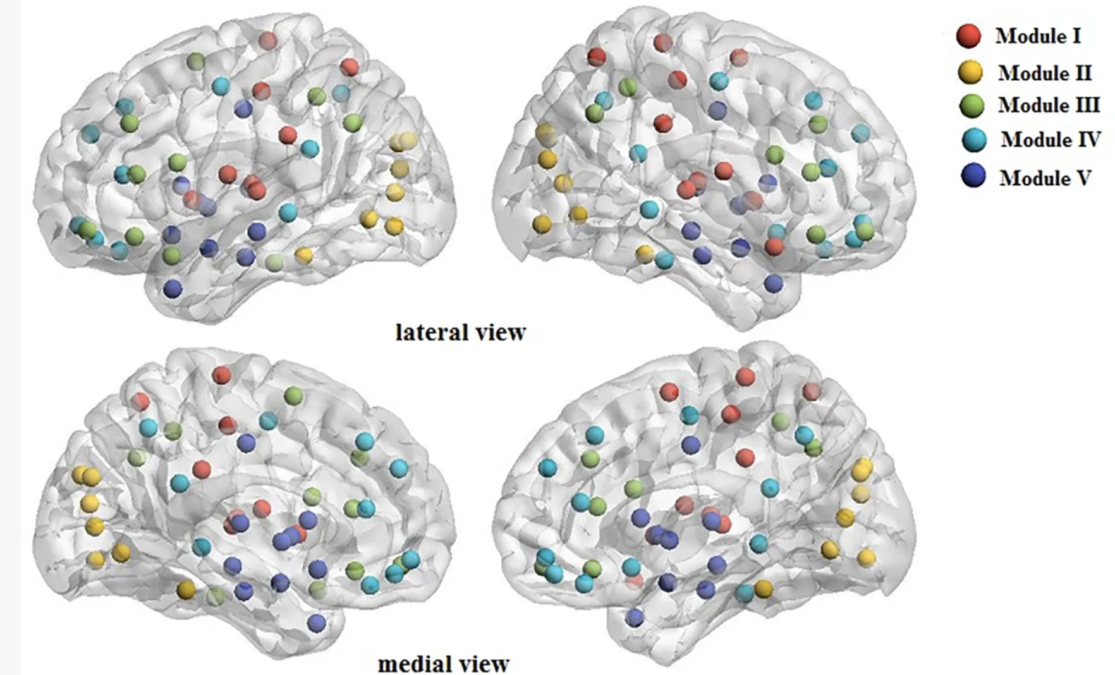
Together, the results suggest the two conditions may share some patterns of disrupted brain communication, while schizophrenia is associated with more extensive changes. They do not show that either condition has a single ‘wiring fault’ or that the observed brain patterns cause the disorders.
The findings fit with evidence that psychiatric diagnoses do not always occupy completely separate biological boxes. Arecent large genetic analysisfound that schizophrenia and bipolar disorder share about 70 percent of their genetic influences.
Previous research has also detected sudden waves of changing brain connectivity, nicknamed ‘brainquakes’, in people with schizophrenia and bipolar disorder. The new study adds a different snapshot of the functional networks that may overlap across the two diagnoses.
“Underlying network abnormalities may function as biomarkers for diagnosis, prognosis, treatment guidance, and ongoing treatment evaluation,” the researchers write.

However, the scans cannot currently be used to diagnose an individual. The study captured brain activity at only one point in time, so it cannot show whether the differences appeared before illness began or developed as a result of the conditions or their treatment.
The network measures did not significantly correspond with the severity of participants’ symptoms after statistical correction. The sample was also relatively small, participants were at different stages of illness, and medication may have influenced their brain activity.
The analysis relied on a relatively coarse map of the brain and divided its networks according to categories chosen in advance. Those methodological decisions may have affected the patterns the researchers detected.
Related: Unprecedented: Scientists Have Built Miniature Brains That Experience The Passage Of Time
Larger studies will need to follow people from their first episode, ideally before medication begins, to determine whether these brain signatures remain stable, change with symptoms, or predict treatment response.
For now, the findings point to a shared reduction in coordination across the brain’s communication networks, accompanied by more extensive differences in schizophrenia. That may help explain some of the biological overlap between the two diagnoses, but it is not yet a clinical test.
The study was published inFrontiers in Psychiatry.
This article was fact-checked by Rebecca Dyer and edited by Rebecca Dyer. While we pride ourselves on our process, we are only human. If you spot a mistake, please let us know.


