Хятадын Юньнань мужаас олдсон олдвор нь Зүүн Азид Turiasauria бүлгийн үлэг гүрвэл амьдарч байсныг гэрчилж буй анхны тохиолдол болж байна.
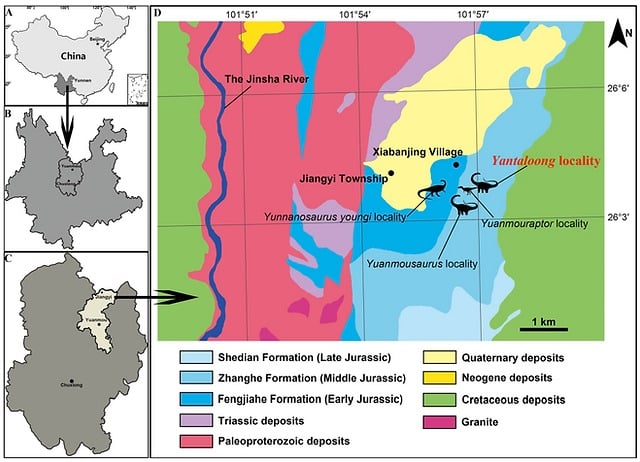
Хятадын Геологийн музейн судлаачид Юньнань мужаас 174-161 сая жилийн өмнөх дунд Юрийн галавын үед хамаарах үлэг гүрвэлийн зургаан нугалам олсноо зарлалаа. Yantaloong lini хэмээн нэрлэсэн энэхүү урт хүзүүт үлэг гүрвэл нь өмнө нь Европ, Хойд Америк, Африк болон Энэтхэгээс олдож байсан Turiasauria бүлэгт багтах магадлалтай юм.
Судлаачид олдсон яснуудын бүтэц, хэлбэрийг бусад сауроподын чулуужсан олдворуудтай харьцуулан шинжилжээ. Шинжилгээгээр уг амьтан нь эртний Eusauropoda бүлгийн шинж тэмдгийг хадгалахын зэрэгцээ Neosauropoda бүлэг рүү шилжих хувьслын завсрын шатанд байж болох шинжүүдийг агуулж байгааг тогтоосон байна.
Энэхүү олдвор нь Зүүн Ази дахь сауроподын хувьслын түүхийг ойлгоход чухал ач холбогдолтой юм. Ясны доторх агаарын хөндий буюу пневматизаци болон нугаламын тулгуур бүтцийн онцлогууд нь энэ амьтныг сауроподын гэр бүлийн модны маргаантай салбаруудын нэгд зүй ёсоор оруулах боломжийг олгож байна.
Гэсэн хэдий ч олдсон ясны тоо хязгаарлагдмал байгаа нь энэ төрөл зүйлийн хувьслын байр суурийг нарийвчлан тогтооход хүндрэл учруулж байна. Цаашид хийх нарийвчилсан судалгаанууд нь Yantaloong lini болон бусад сауроподын хоорондын холбоог илүү тодорхой болгох юм.
Дэлгэрэнгүйг эх сурвалжаас харах
↓Эх сурвалжийг нээх ↓
A new dinosaur discovered in southern China could change what scientists know about the spread of sauropods in Asia. Named Yantaloong lini, the long-necked dinosaur may be the first member of the Turiasauria group ever found in east Asia.
The fossil discovery comes from Yunnan province, where researchers uncovered six vertebrae belonging to a dinosaur that lived between 174 and 161 million years ago during the middle Jurassic. While the remains are limited, they contain enough clues to place this animal among some of the most debated branches of the sauropod family tree.
According to scientists from the Geological Museum of China, Yantaloong lini likely belonged to Turiasauria, a group of large sauropods previously known from Europe, North America, Africa and India. The discovery suggests that these dinosaurs also lived in what is now China.
The finding also comes at a time when researchers are still trying to understand exactly how turiasaurian dinosaurs are related to other sauropods. The group has been discussed and revised several times since it was first identified in 2006.
A New Dinosaur Enters China’s Jurassic World
The middle Jurassic of China was already home to a rich collection of dinosaurs. Researchers have long known the region for its mamenchisaurid sauropods, famous for their extremely long necks, as well as other early sauropod groups.
But one part of the evolutionary story remained unclear. Scientists had not confirmed any transitional species in east Asia that could help explain the possible link between mamenchisaurids and neosauropods, a group that later included many of the giant sauropods known from the fossil record.
Yantaloong lini may help fill that gap. The researchers studied the shape and structure of its vertebrae and compared them with fossils from other sauropods. In most of their analyses, the species appeared inside an unusual version of Turiasauria.
This group included dinosaurs such as Lapparentosaurus, Jobaria and Atlasaurus. Some analyses suggested other possible positions, including a place outside traditional turiasaurians or within Neosauropoda, but the researchers considered those options less likely.
A Dinosaur Still Evolving
The vertebrae of Yantaloong lini show a surprising mix of old and new features. The dinosaur had characteristics seen in more advanced sauropods, including dicraeosaurines and titanosaurs, but it also kept traits found in earlier eusauropods. As explained by the study published in the Zoological Journal of the Linnean Society, these features help researchers better understand how sauropod skeletons changed over time. The team highlighted details such as pneumatization, which created air spaces inside the bones, and the hyposphene-hypantrum complex, a structure that helped reinforce the vertebral column.

The researchers believe these characteristics support the idea that Yantaloong lini was close to an evolutionary transition toward Neosauropoda. Its anatomy does not fit neatly into a single category, which makes it particularly interesting for scientists studying dinosaur evolution.
The exact place of Yantaloong lini in the sauropod family tree remains under discussion. The different results from evolutionary analyses show that the history of these dinosaurs is still being rewritten as new fossils are discovered.
Ancient Giants Found In East Asia
Until now, Turiasauria had been found from the lower Jurassic to the lower Cretaceous in several parts of the world, but not in east Asia. The discovery of Yantaloong lini changes that picture. As explained by the research team:
“The new species probably represents the first discovery of a turiasaurian sauropod in China and even in East Asia.” The fossil gives scientists a new reference point for studying how these large herbivorous dinosaurs spread across ancient continents.

While the Yunnan fossils do not answer every question about turiasaurian evolution, they add relevant new data. This limited number of bones contributes additional information about the Jurassic period and the evolutionary history of sauropod dinosaurs.
Enjoyed this article? Subscribe to our free newsletter for engaging stories, exclusive content, and the latest news.


