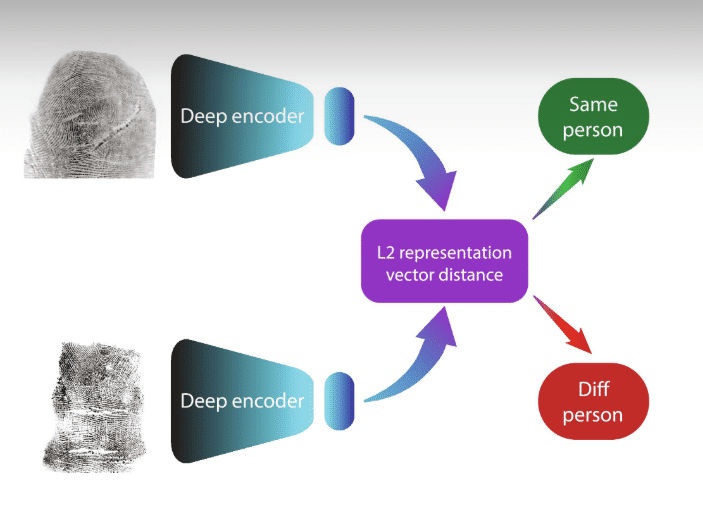
Шинэ судалгаагаар нэг хүний өөр өөр хурууны хээ хоорондоо ижил төстэй бүтэцтэй байх магадлал өндөр болохыг хиймэл оюун ухааны тусламжтайгаар тогтоов.
Сүүлийн зуун жилийн турш шүүх эмнэлгийн шинжилгээнд хуруу бүрийн хээ нь дахин давтагдашгүй гэсэн зарчмыг баримталж ирсэн. Гэвч саяхан хийгдсэн судалгаагаар хиймэл оюун ухааны систем нь нэг гарын хуруунуудын хээ хоорондоо ижил төстэй геометрийн бүтэцтэй болохыг илрүүлжээ. Энэхүү нээлт нь хурууны хээгээр таних уламжлалт аргыг үгүйсгэх бус, харин өөр өөр хурууны хээ нэг хүнийх мөн эсэхийг тогтоох шинэ боломжийг бий болгож байна.
Судлаачид 60,000 орчим хурууны хээний өгөгдлийг ашиглан хиймэл оюун ухааныг сургаж, туршсан байна. Уламжлалт аргаар хурууны хээний нарийн деталь буюу хээний төгсгөл, салаалсан хэсгүүдэд анхаардаг байсан бол шинэ загвар нь хээний чиглэл болон геометрийн ерөнхий урсгалыг шинжилснээр 99.99 хувийн статистик итгэлцлээр ижил төстэй байдлыг олж тогтоожээ. Энэхүү үзүүлэлт нь хурууны хээгээр таних үйл явцад тохиолдлын шинж чанар маш бага болохыг илтгэж байна.
Энэхүү технологи нь гэмт хэргийн газраас олдсон янз бүрийн хурууны хээг хооронд нь холбох замаар мөрдөн байцаалтын ажиллагаанд чухал сэжүүр өгөх боломжтой юм. Хэдийгээр одоогоор хувь хүнийг эцсийн байдлаар таньж тогтоох хэрэгсэл биш ч гэсэн, сэжигтнүүдийн хүрээг хурдан хугацаанд нарийсгахад туслах нэмэлт арга хэрэгсэл болж байна.
Гэсэн хэдий ч судалгаанд тодорхой хязгаарлалтууд байгааг судлаачид онцолжээ. Тухайлбал, гэмт хэргийн газраас олдсон чанар муутай, бүрэн бус эсвэл гэмтсэн хээний үед загварын гүйцэтгэл буурах хандлагатай байна. Түүнчлэн хүн амын бүлгүүдийн хоорондох ялгаатай байдлыг судлах шаардлагатай бөгөөд үүнийг бодит мөрдөн шалгах ажиллагаанд аюулгүй ашиглахын тулд цаашид нэмэлт судалгаа хийх шаардлагатай юм.
Дэлгэрэнгүйг эх сурвалжаас харах
↓Эх сурвалжийг нээх ↓
Forensic fingerprint analysis has been based on the unique pattern of ridges on every finger for over a hundred years. A recent artificial intelligence system does not call this into question; instead, the system has identified an important feature of fingerprints that previous forensic techniques have largely ignored: fingers from the same hand have similar patterns of structure.
Therefore, we need to consider a different type of “fingerprint problem.” Rather than trying to find out if two prints have originated from the same finger, the new system will attempt to find out if two different fingerprints could possibly have originated from the same individual.
This is the core element of the current study, and the results demonstrate that there is a very significant likelihood that different fingers from the same individual will have similar ridge configurations, regardless of how unlikely it may be to match these prints conventionally.
This could provide investigators with a new option when comparing fingerprints from different crime scenes. Traditionally, investigators who obtain usable prints from multiple crime scenes will compare all prints from both crime scenes in search of a match. However, a traditional system may not be able to link together prints that came from completely different fingers.
An investigator who uses an AI model that recognizes cross-finger similarities may be able to identify a possible link.
The Signal Was Hiding in the Ridges
In the typical process of identifying a fingerprint, investigators focus heavily on the minute detail of a fingerprint. These details include where the ridges terminate, split or develop distinctively-shaped structures.
These features allow investigators to differentiate One fingerprint from another.
However, once the objective of the investigation changed, and investigators began to look for connections between fingerprints originating from different fingers, they discovered that the minutia details provided little help in achieving their objectives.
Instead, the majority of useful information arose from ridge orientation, especially in areas where ridge directions rapidly change. The system developed an ability to use the general flow and geometric aspects of a fingerprint as opposed to focusing solely on the detailed aspects of fingerprints used in traditional matches.
Researchers then studied various versions of the fingerprint images to understand what the model was using. The system’s effectiveness was preserved in ridge-based images and in orientation maps. In contrast, minutia maps provided significantly less effective assistance in cross-finger comparisons.
The development demonstrates that fingerprints contain a second layer of information. Characteristics that are useful for distinguishing between two different fingers are not always indicative of whether or not those fingers originate from the same person.
Additionally, the model focused on areas characterized as delta (where ridge orientations change) and on previously described fingerprint categories such as loops, arches and whorls. While these categories did provide some information regarding relationships that the network had discovered, they failed to represent the full extent of the relationships detected by the network.
The Cross-Finger Relationship Held Across Thousands of Prints
Researchers trained and tested the model against several fingerprint databases that contained tens-of-thousands of images.
One source was NIST SD300, which is a database created and managed by the united states’ national institute of standards and technology. This database contains plain and rolled fingerprint-card images. Researchers obtained research-only access to this database due to terms set by NIST.
Research also utilized the University at Buffalo’s RidgeBase benchmark dataset. The RidgeBase dataset included greater-than-15,000 image pairs (contactless and contact-based) from 88 individuals. Images included those taken with a camera-equipped smartphone and those collected with a contact sensor.
Collectively, researchers analyzed approximately 60,000 actual fingerprints for training, validation, and testing purposes. Additionally, researchers employed synthesized fingerprint data to enable learning of meaningful fingerprint features prior to evaluating cross-finger relationships among actual individuals.
The researchers compared fingerprints from the same individual versus those from different individuals and demonstrated a statistically robust separation. According to study results, researchers calculated 99.99 percent statistical confidence that observed cross-finger similarities were not due to chance.
It is critical to note that this number represents statistical evidence supporting existence of same-individual signals across different fingers, and it does not represent an accuracy rate for determining identity. Therefore, this number indicates that there is a 0.01 percent probability that observed cross-finger similarities resulted from chance. Results indicated statistically robust separations across various combinations of fingers (e.g., fingers from opposing hands).
New Tool for Crime Scene Analysis
Although there is currently no intention to utilize this technology to replace traditional fingerprint matching technology, it can serve as a complementary tool when investigators discover usable fingerprints from multiple crime scenes. When investigators retrieve usable fingerprints from different locations during a criminal investigation (i.e., crime scene 1 yields an index finger print and crime scene 2 yields a middle finger print) a traditional system may ignore any possibility of linking the two prints because they came from completely different fingers.
Conversely, an investigator utilizing an AI model trained on cross-finger similarities could potentially link the two prints based upon larger-scale ridge characteristics.
As a result, this technology is more conducive to generating leads than providing definitive identification.

The study examined how investigators could utilize an automated system designed to identify potential links between fingerprints recovered from multiple crime scenes. The research demonstrated that investigators using an automated system could reduce large pools of potential candidates down to smaller groups of suspects more quickly than would be possible by manually searching through each potential match individually using traditional matching techniques.
Investigators would not use the automated system to determine guilt or confirm identity regarding two crime scene prints belonging to the same individual. However, if investigators were able to generate leads and narrow their search space prior to conducting additional forensic testing and evaluating other evidence collected during an investigation, then the automated system would provide investigators with useful information that may otherwise remain unavailable.
The Gap Between Research Findings and Real-World Applications
While there are numerous obvious limitations to this research:
Firstly, this model remains inferior to existing models currently being utilized for matching two impressions of the same finger.
Secondly, researchers primarily examined high-quality images of fingerprints that were relatively intact and complete.
Crime scene prints are typically less cooperative than research examples. Crime scene prints can be partially complete, distorted due to environmental conditions at the time of collection, damaged/smudged due to handling after collection and difficult-to-capture on various surfaces. Poorer quality images affected model performance and accounted for most errors encountered during research.
Finally, there is also the issue of demographic bias. Researchers tested whether the cross-finger signal observed among participants occurred equally well across all participant groups and found that it did so generally speaking although some group differences continued to exist. Further study will be necessary before such methods can be used safely within operational investigations.
Presently, the current research indicates that there exists another layer of information inside fingerprints beyond each individual print being unique. Specifically, the new AI model identified broader structural patterns present in ridgelines that sometimes indicate common ownership between fingers from the same hand.
By creating a new question for forensic systems (“are two different fingerprints likely to have originated from the same hands?”), this research provides investigators with an alternative perspective when analyzing evidence collected from multiple crime scenes
Enjoyed this article? Subscribe to our free newsletter for engaging stories, exclusive content, and the latest news.

