Эрдэмтэд Альцгеймер өвчтэй хулганы тархины эсийг нөхөн төлжүүлж, танин мэдэхүйн үйл ажиллагааг сайжруулах боломжтойг тогтоов.
Өмнөд Каролинагийн их сургуулийн судлаачид “Nano-ERASER” хэмээх нано бөөм агуулсан полимер гелийг ашиглан Альцгеймер өвчнийг эмчлэх шинэ аргыг боловсруулжээ. Энэхүү технологи нь тархины эсүүдийг дэмжигч астроцит эсүүд дэх PTBP1 уургийн түвшинг бууруулснаар тэдгээрийг шинэ мэдрэлийн эс болгон хувиргах зарчимтай юм. 2023 онд анх хөхний хорт хавдрын эсэд туршиж байсан энэхүү системийг одоо тархины мэдрэлийн эсийг нөхөн төлжүүлэхэд ашиглаж байна.
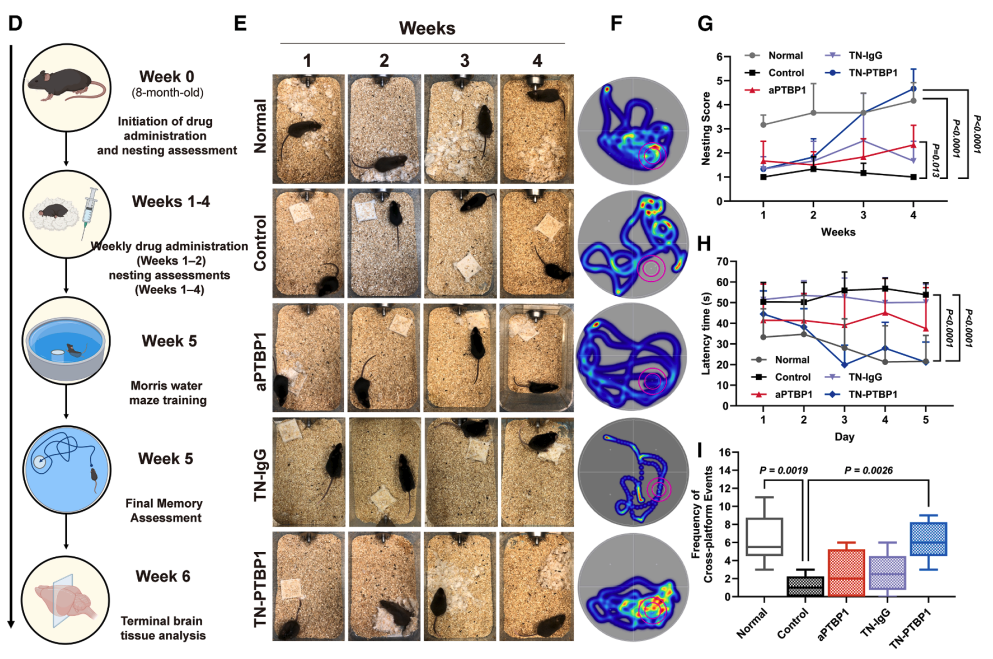
Судалгааны баг лабораторийн орчинд ургуулсан тархины органоидууд болон Альцгеймер өвчний шинж тэмдэг бүхий хулганууд дээр туршилт хийжээ. Судалгааны үр дүнд эмчилгээ хийлгэсэн хулгануудын тархинд мэдрэлийн эсийн нягтрал нэмэгдэж, хоорондоо холбогдсон сүлжээ үүсгэж буй нь батлагдсан байна. Мөн хулгануудын үүр засах чадвар сэргэж, усны лабиринт ашиглан хийсэн ой тогтоолтын сорилтуудыг илүү үр дүнтэй гүйцэтгэжээ.
“Cell Biomaterials” сэтгүүлд нийтлэгдсэн уг судалгааг удирдсан профессор Пэйшэн Шю-гийн тайлбарласнаар, эмчилгээний дараа хулгануудын зан төлөвт эерэг өөрчлөлтүүд ажиглагдсан байна. Гэсэн хэдий ч энэхүү аргачлал нь одоогоор зөвхөн амьтны загвар дээр хийгдсэн бөгөөд хүнд хэрэглэхэд аюулгүй, үр дүнтэй эсэхийг тогтоохын тулд урт хугацааны судалгаа болон примат амьтад дээр нэмэлт туршилт хийх шаардлагатай байгаа юм.
Өмнөх жилүүдэд PTBP1 уургийг бууруулах замаар мэдрэлийн эсийг нөхөн төлжүүлэх оролдлогууд Паркинсон өвчний судалгаанд гарч байсан ч зарим тохиолдолд үр дүнг нь баталгаажуулж чадаагүй байдаг. Энэ удаагийн бүтээл нь мэдрэлийн эсийн дегенератив өвчнүүдийг эмчлэхэд шинэ боломж нээж магадгүй гэж үзэж байна.
Дэлгэрэнгүйг эх сурвалжаас харах
↓Эх сурвалжийг нээх ↓
Slowing the progression of Alzheimer’s disease is the goal of most existing treatments, but reversing it is much harder. That’s because once neurons are lost, the adult brain lacks the ability to replace them.
But new research, led by scientists at the University of South Carolina, has shown promise in regrowing neurons in brain organoids, and restoring cognition in mouse models of Alzheimer’s.
“After just two injections, these mice became smarter,” says Peisheng Xu, professor of pharmaceutics at the University of South Carolina and corresponding author of the new study, published in the journal Cell Biomaterials.
“Even after one injection, we already saw these mice’s behavior differ from that of the nontreated ones.”
In 2017, scientists at the University of Cambridge and the Max Planck Institute for Biophysical Chemistry developed a technique called Trim-Away, which uses antibodies to degrade specific proteins in the cells of mammals, for various purposes.
In 2023, the team behind the new study created a version of Trim-Away that delivers its antibodies through an injectable polymer nanogel full of nanoparticles, which they named Nano-ERASER. In that first experiment, the researchers targeted breast cancer cells.
Now, the team has shown how Nano-ERASER could help treat Alzheimer’s. The targets this time were astrocytes, cells in the brain that support neurons – and if needed, become new ones.
According to our current understanding, this process occurs mostly during development but slows down dramatically in mature brains, and seems to be mediated by a protein called PTBP1.
So, the researchers targeted PTBP1 for degradation by the Nano-ERASER system. In lab-dish-cultured brain cells and in 3D organoids, applying Nano-ERASER did seem to reduce levels of PTBP1, and triggered astrocytes to become new neurons.
The team then used a microelectrode array to confirm that these converted neurons still functioned like regular ones, even forming connected networks.
But would this improve Alzheimer’s symptoms?
In the next tests, the researchers experimented with mouse models of the disease, tracking changes in their brains and behavior.
Mice with Alzheimer’s-like conditions often have trouble making nests, in a sad analog of human patients who might also struggle with day-to-day tasks.
The team also tested their cognition and memory by putting them through water maze experiments.
Sure enough, over the course of a few weeks, treated mice recovered the ability to build nests, and were able to complete the mazes more efficiently.
The team also noted that biological markers of Alzheimer’s disease, including inflammation and the build-up of problematic proteins, seemed to improve inside their brains.
“The new neurons can become mature and survive,” says Xu.
“We also confirmed much higher neuron density in the brains of treated mice.”
Of course, at this early stage, there’s no guarantee that the results will carry across to humans. But the research could provide an intriguing new angle from which to tackle Alzheimer’s.
Previous research by other teams found that reducing PTBP1 regenerated neurons and improved symptoms of Parkinson’s disease in mice, but frustratingly, later studies couldn’t replicate the results.
The new work seems to back up the original findings, which could be useful for reversing a range of neurodegenerative diseases.

“By replenishing neurons in situ, restoring synaptic architecture, and potentially rebuilding damaged circuits, induced neurogenesis offers a path not only to slow neurodegeneration but to address one of its core structural consequences,” the researchers write.
Related: Scientists Found 2 Existing Drugs Could Reverse Alzheimer’s Brain Damage in Mice
Before that can happen, the team first plans to test the technique over a longer period and in primates.
“If we can advance it to the clinic, then we can have hope for patients with Alzheimer’s disease,” Xu says.
The research has been published in the journal Cell Biomaterials.
This article was fact-checked by Fiona MacDonald and edited by Fiona MacDonald. While we pride ourselves on our process, we are only human. If you spot a mistake, please let us know.


Гайхалтай шинэ арга гаргажээ, альцгеймерийн өвчнийг эмчлэхэд үр дүнтэй байж магадгүй шүү дээ. Таны үзэж байгаагаар, энэ шинэ технологи хүнтэй туршиж болох боломжтой юу гэж бодож байна?