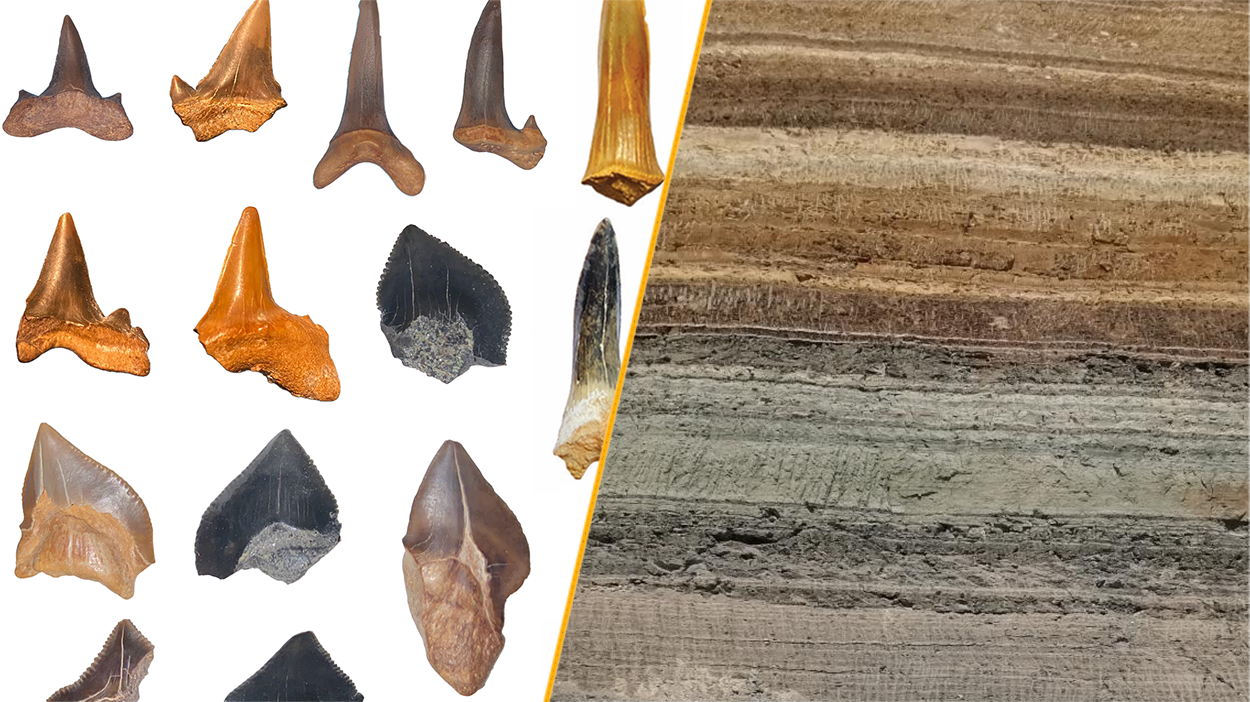
Эрдэмтэд Египетийн баруун цөлийн Абу-Тартур өндөрлөгөөс 66-145 сая жилийн тэртээх Цэрдийн галавын үед хамаарах долоон төрлийн акулын шүдний чулуужсан үлдэгдлийг олсон байна.
Каирын их сургуулийн палеонтологич Тарек Яссин болон түүний багийнхан 2020-2022 онд хийсэн судалгаагаар энэхүү олдворыг илрүүлжээ. Тухайн үед дэлхийн далайн түвшин одоогийнхоос хамаагүй өндөр байсан тул Египетийн өнөөгийн хуурай бүс нутаг нь далайн амьтад амьдрахад таатай, шим тэжээлээр баялаг экосистем бүхий тэнгис байсныг энэхүү судалгаа баталж байна.
Судлаачид Scapanorhynchus raphiodon, Serratolamna serrata, Squalicorax bassanii зэрэг акулын төрлүүдийн шүдийг илрүүлсний дотор Scapanorhynchus raphiodon нь Африкийн нутаг дэвсгэрээс урьд өмнө бүртгэгдэж байгаагүй зүйл юм. Мөн Serratolamna serrata болон Squalicorax bassanii төрлийн акулууд Египетийн нутагт анх удаа олдсон нь шинжлэх ухааны хувьд онцгой ач холбогдолтой юм.
Энэхүү бүс нутаг нь далайн амьтдын ясны үлдэгдлээс бүрддэг фосфоритын ордоор баялаг тул өмнө нь загас, далайн яст мэлхий зэрэг амьтдын чулуужсан үлдэгдэл олддог байв. Олон төрлийн акулын шүд нэг дор олдсон нь тухайн үед энэ бүс нутагт махчин амьтад болон тэдний идэш болох жижиг загаснууд бүхий цогц экосистем оршин байсныг илтгэж байна. Эрдэмтэд Абу-Тартур өндөрлөгт цаашид үргэлжлүүлэн судалгаа хийхээр төлөвлөж байна.
Дэлгэрэнгүйг эх сурвалжаас харах
↓Эх сурвалжийг нээх ↓
Scientists have uncovered an ancient shark “graveyard” in the middle of the Egyptian desert.
Fossilized teeth from seven shark species dating back millions of years were discovered in the Abu-Tartur Plateau — located in Egypt’s Western Desert — between 2020 and 2022, offering new insight into the desert’s watery past. The researchers detailed their discovery in a study published Aug. 18 in the journal Cretaceous Research
“This study provides evidence that the area now occupied by the plateau was once a sea with flourished marine life, with environmental conditions suitable for its development and prosperity, including favourable temperatures, sunlight, and appropriate oxygen levels,” study first author Tarek Yassin, a paleontologist at Cairo University in Egypt, told Live Science in an email.
During the Cretaceous period (145 million to 66 million years ago), temperatures on Earth were generally warmer than they are today, with sea levels up to 558 feet (170 meters) higher than they are now, according to the Natural History Museum in London. As a result, shallow seas formed in areas that are now fairly dry, including the Egyptian desert.
The Abu-Tartur Plateau lies along the Duwi Formation, a Late Cretaceous geological rock formation that spans Egypt’s Eastern and Western deserts. Previous research had already uncovered fossils of fish, sea turtles and other marine reptiles in this region, hinting at the thriving ocean ecosystem that once existed there. The rocks are also rich in phosphorite, a type of sedimentary rock that often forms from the shells and bones of marine animals.
“We had conducted research before our expedition and knew that areas rich in phosphate deposits could also contain fossils of vertebrate marine organisms,” Yassin said, adding that finding the shark fossils was an “exciting surprise.”
Yassin and colleagues had previously found fossilized teeth from two types of mackerel shark, but further expeditions between 2020 and 2022 uncovered 14 more fossilized teeth belonging to at least five additional shark species. One of these species, Scapanorhynchus raphiodon, an ancient relative of present-day goblin sharks (Mitsukurina owstoni), had never been reported in Africa before. Another two,Serratolamna serrata and Squalicorax bassanii, had never been seen in Egypt.
“Finding teeth belonging to seven different shark species was particularly remarkable, especially because they were all discovered in the same location, in the middle of an entire plateau,” Yassin said. “This discovery is more than simply a large assemblage of shark fossils.”
The existence of so many shark species in the same area suggests it was once home to a nutrient-rich, complex ecosystem, with plenty of smaller fish to feed these apex predators. However, the discovery doesn’t necessarily mean these sharks coexisted; rather, their remains may have become jumbled together in the same sediment over time, the study authors noted.
The team plans to continue their research in the Abu-Tartur Plateau and explore the surrounding area. “We believe there is still much more to discover,” Yassin said.
How much of a shark fan are you? Find out with our shark quiz!

