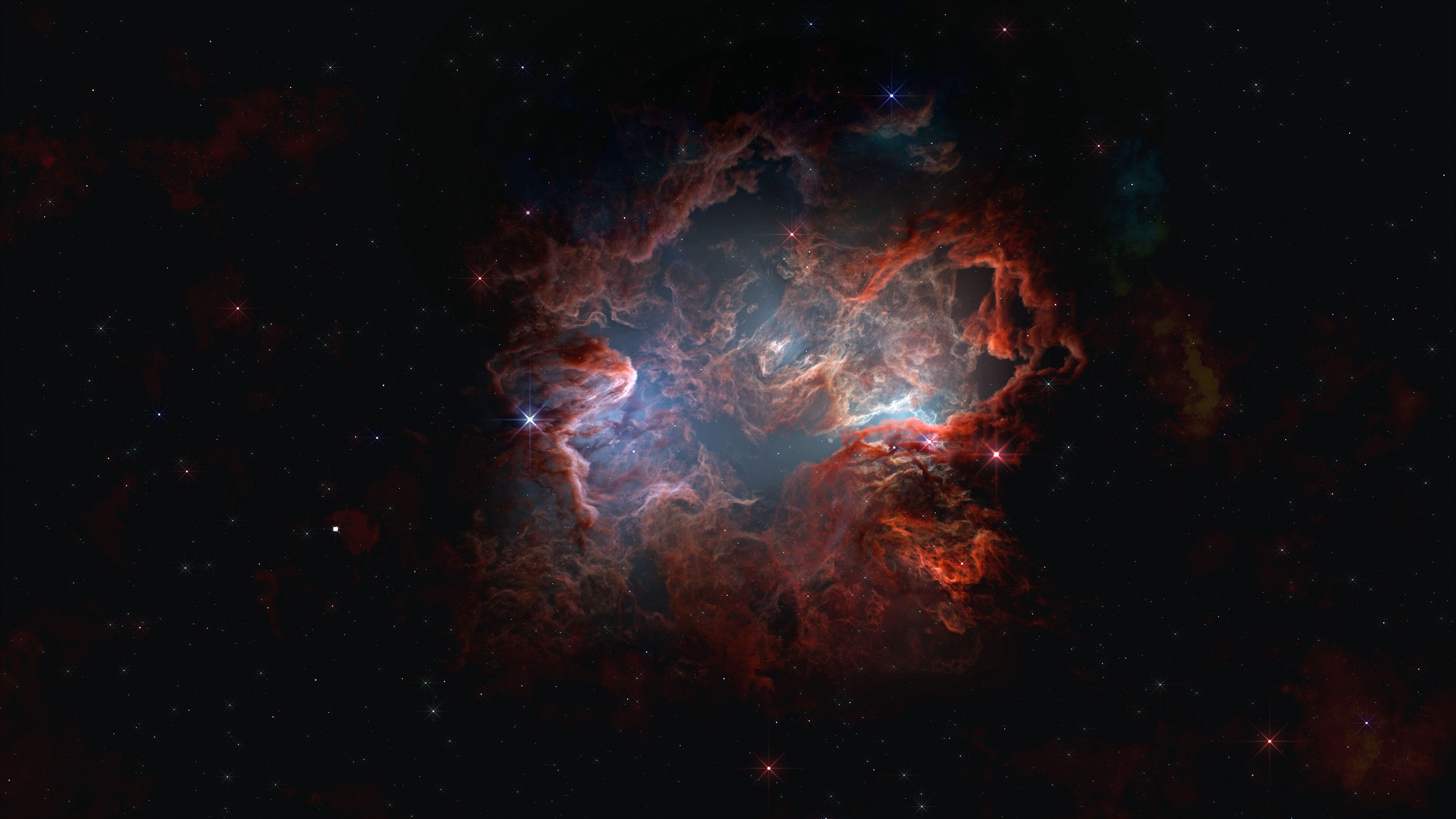
Судлаачид хүчилтөрөгч болон неон ашиглан кварк-глюоны плазмыг үүсгэж, материйн төлөв байдлын хязгаарыг тогтоов.
Европын цөмийн судалгааны төв (CERN)-ийн эрдэмтэд олон улсын багтай хамтран кварк-глюоны плазм (QGP) гэгддэг материйн эрс тэс төлөвийг жижиг хэмжээний атомын цөм мөргөлдүүлэх замаар гарган авчээ. Их тэсрэлтээс хойшхи саяны нэг секундын хугацаанд орчлон ертөнц ийм халуун, нягт төлөвт байсан гэж үздэг. Урьд нь ийм плазмыг үүсгэхийн тулд хар тугалга зэрэг хүнд элементүүдийг ашигладаг байсан бол энэ удаад тэдгээрээс арав дахин хөнгөн хүчилтөрөгч-16 болон неон-20 цөмийг ашигласан байна.
Кварк болон глюонууд нь атомын цөмийн үндсэн бүрэлдэхүүн хэсэг болох протон, нейтроныг үүсгэдэг. Орчлон ертөнцийн эхэн үед эдгээр бөөмс нь хоорондоо холбогдоогүй, халуун плазмын төлөвт байсан бөгөөд ертөнц тэлэхийн хэрээр хөрч, өнөөгийн бидний мэдэх материуд болон хувирчээ. Физикчид энэхүү эрс тэс төлөв ямар хэмжээний мөргөлдөөнөөр үүсэж болох, мөн материйн шингэн төлөв хэрхэн илэрч байгааг судлахыг зорьсон байна.
Туршилтын үр дүнд хүчилтөрөгч болон неон цөмийн мөргөлдөөнөөс плазм үүсэж байгааг харуулсан дохио илэрчээ. Энэхүү матери нь түр зуур шингэн мэт тэлж, улмаар хөрч бөөмс болон хувирсан байна. Нильс Борын нэрэмжит хүрээлэнгийн судлаач Юү Жоугийн тэмдэглэснээр, энэхүү амжилт нь материйн үндсэн төлөв рүү шилжихэд шаардлагатай нөхцөлийг илүү нарийвчлалтай ойлгоход тусална.
Эрдэмтэд энэхүү туршилт нь орчлон ертөнцийн анхны мөчүүдэд плазм хэрхэн төлөвшиж, өнөөгийн бидний эргэн тойрон дахь материйн хэлбэрт хэрхэн хувирсныг тайлбарлахад чухал ач холбогдолтой гэж үзэж байна. Энэ нь кварк-глюоны плазм үүсгэх боломжтой атомын цөмийн хэмжээний хязгаарыг тогтоосон судалгаа болжээ.
Дэлгэрэнгүйг эх сурвалжаас харах
↓Эх сурвалжийг нээх ↓
In the very first moments of the universe, matter didn’t exist as we know today. A millionth of a second or so after the big bang, the universe was a dense, hot soup scientists call quark-gluon plasma (QGP). For several years, particle colliders—which smash molecules together at nearly the speed of light—have been able to replicate this state, but often using heavy elements like lead.
Now, a recent experiment by the European Organization for Nuclear Research (also known as CERN from its French acronym) has demonstrated this plasma can be produced by much smaller collisions. Since there’s no longer an accessible natural source of this primordial sludge, these micro big bangs can help reveal what happened in the first few minutes of our universe.
First, a little context. Quarks are what make up protons and neutrons, which, in turn, are the building blocks of atoms and thus all matter. Meanwhile, gluons—as their name suggests—stick quarks together.
During the first microseconds of the universe, quarks and gluons were not yet confined within protons and neutrons but instead formed an extremely hot plasma. As the universe expanded, the matter cooled, and the quarks condensed into larger particles.
After decades of studying QGP in large nuclear collisions, physicists are now trying to understand the limits of this strange state of matter. In particular, they are exploring just how much they can scale down a collision and still observe a collection of particles that behaves like a drop of fluid.
According to a recent article in Physical Review Letters, CERN and an international team of collaborators were able to generate the substance using oxygen-16 and neon-20. Both are less than a tenth of the weight of a lead atom, which was previously considered one of the lightest elements capable of generating QGP.
“We have pushed the boundary for how small the atomic nuclei can be while still re-creating this primordial matter—what you could call a ‘little big bang.’ We now know more about the fundamental conditions required for matter to transition into this extreme state,” You Zhou, a researcher at the Niels Bohr Institute in the Netherlands and a coauthor of the study, explained in a press release.
The scientists found that, despite the small size of the oxygen and neon nuclei, the collisions produced signals consistent with the behavior they expected to find in QGP. For an instant, the generated matter appeared to expand collectively like a fluid before cooling and reverting to particles.
“Hopefully, this will help us better understand how the plasma behaved during the first moments of the universe—and how it later evolved into the forms of matter that everything around us is made of,” Zhou added.
This story originally appeared on WIRED en Español and has been translated from Spanish.

