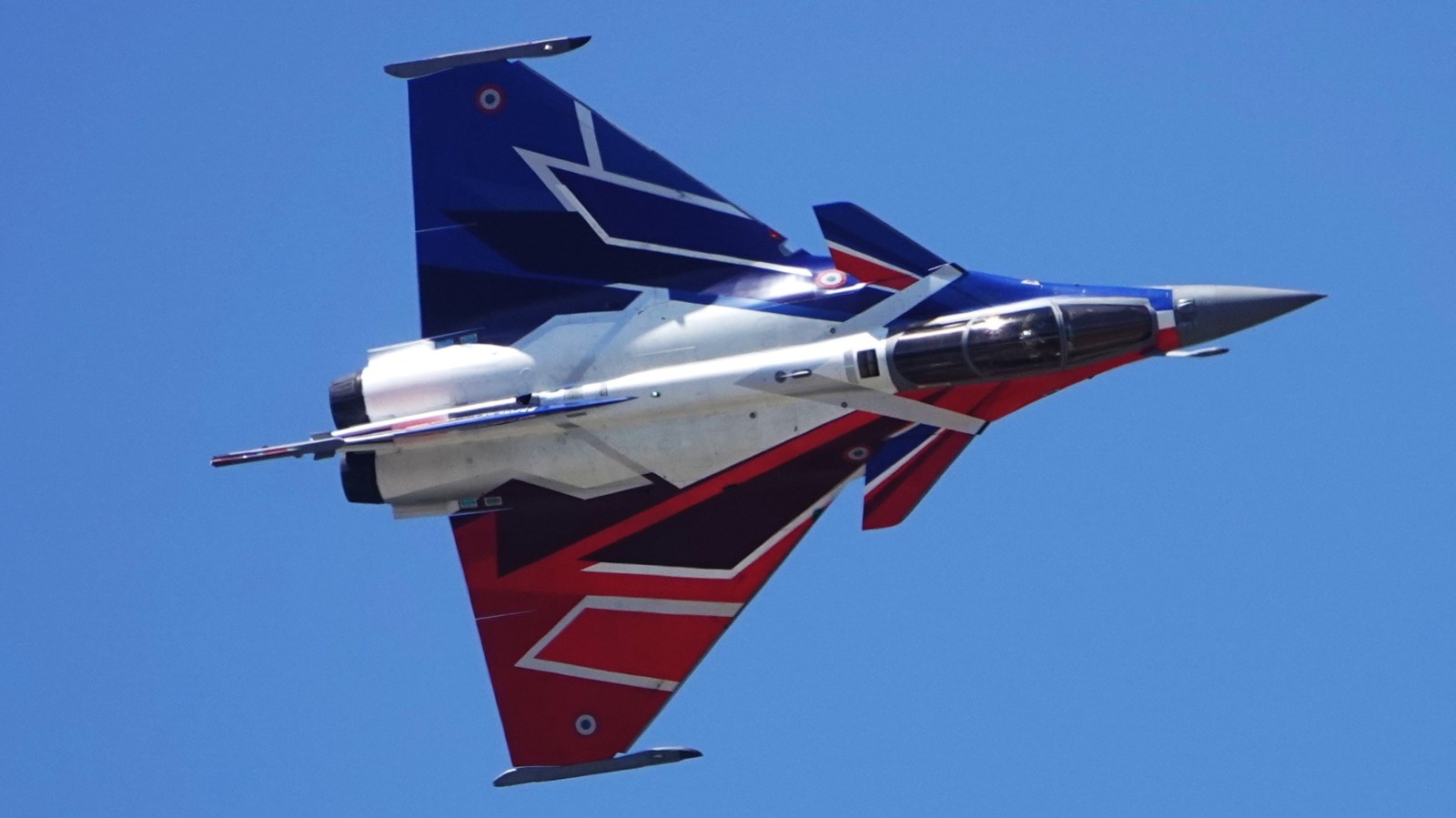
Агаарын тулааны технологийн хөгжил нь хөдөлгүүрийн хүчин чадал, аэродинамик болон нислэгийн гүйцэтгэлийг үеэс үед эрс сайжруулж ирлээ.
Дэлхийн хоёрдугаар дайны сүүлээр Messerschmitt Me 262 онгоцоор эхэлсэн тийрэлтэт сөнөөгч онгоцны эрин үе өдгөө таван үндсэн үеийг дамжин хөгжөөд байна. Эхний үеийн Me 262 болон MiG-15 онгоцууд тухайн үедээ хурд, хүчний хувьд хувьсгал хийсэн бол хоёр болон гуравдугаар үеийн F-104 Starfighter, MiG-21, F-4 Phantom II, Saab 37 Viggen загварууд олон үүрэгт ажиллагаа болон дуунаас хурдан нислэгийн чадавхыг нэвтрүүлжээ. Энэхүү технологийн дэвшил нь агаарын тулааны тактикийг үндсээр нь өөрчилсөн юм.
Дөрөв болон 4.5 дахь үеийн сөнөөгч онгоцууд болох Dassault Rafale, Eurofighter Typhoon, F-15EX Eagle II болон Су-35С нь нийлмэл материал, дижитал удирдлагын систем, өндөр маневрлах чадвар, ачаа тээвэрлэх хүчин чадлаараа ялгарч байна. Ялангуяа F-15EX нь зэвсэг тээвэрлэх асар их багтаамжаараа “пуужин тээгч” хэмээн нэрлэгдэж байгаа бол Су-35С нь форсажгүйгээр дуунаас хурдан нисэх чадамжийг харуулсан.
Тав дахь үеийн F-22 Raptor болон F-35 Lightning II сөнөөгч онгоцууд нь үл үзэгдэгч технологи, мэдрэгчийн цогц систем, автоматжуулалт болон нэгдсэн удирдлагын чадавхаараа орчин үеийн агаарын давуу талыг тодорхойлж байна. Ирэх 2030-аад онд зургаа дахь үеийн F-47 онгоцыг ашиглалтад оруулахаар төлөвлөж байгаа нь агаарын тулааны технологийн цоо шинэ шатыг эхлүүлэх юм.
Дэлгэрэнгүйг эх сурвалжаас харах
Эх сурвалжийг нээх ↓
Fighter jets have been a feature of warfare since the closing months of World War II. There have been five generations of fighter jets since then, and a sixth is expected to start with the F-47, though that aircraft won’t be completed until the mid-2030s.
With each new fighter jet’s introduction, innovations in engine technology, aircraft design, and speed propel fighters into new territory. The F-47 will shatter old benchmarks and age recent predecessors, but every generation has achieved dramatic new levels of sophistication and performance. In addition to the main five generations, there is a 4.5th generation that improves upon its fourth-generation predecessors but falls short of fifth-generation capabilities.
Each of these fighter jets offered innovations in features and capabilities in their respective generations, helping to advance air combat beyond what came before as they took to the unfriendly skies. Here are the most innovative examples from each generation.
First Generation: Messerschmitt Me 262
The Messerschmitt Me 262 was the first operational jet fighter.The plane stunned Allied airmen, cutting through the skies above Europe at over 500 mph.But the Me 262 could not stop Allied air superiority.
On July 25, 1944, the Me 262 became the first jet aircraft used in combat during a mission over Munich. Before the war ended in May 1945, Germany produced over 1,400 Me 262s, but only around 300 saw combat. This was largely due to the destruction of Germany’s infrastructure, which limited supplies, fuel, and transportation, keeping most Me 262s grounded.
The Me 262 had two Junkers Jumo 004 engines, which provided a combined thrust of 3,960 lbs. This gave the fighter a maximum speed of 540 mph and a cruising speed of 460 mph. The North American P-51D Mustang was one of the Me 262’s prime opponents, and while the Mustang was an exceptional fighter, it had a maximum speed of 437 mph and a cruising speed of 275 mph.
First generation: Mikoyan-Gurevich MiG-15
The Soviet Union entered the jet age in 1946 with the MiG-9 and Yak-15, but its most innovative first-generation fighter jet was the MiG-15, introduced in 1949. The aircraft became one of the most mass-produced fighters in history, withmore than 13,000 made. Curiously, the MiG-15 is also one ofthe oldest jet fighters still in service, as some serve in the North Korean Air Force some 80 years after its debut.
The MiG-15 was built around the Klimov VK-1 turbojet engine, which produced 6,000 lbs of thrust. The innovative design incorporated swept wings, helping the fighter approach Mach 1 (767 mph), though its top speed was 668 mph.
The MiG-15 had an immense power-to-weight ratio given its maximum takeoff weight of 13,500 lbs. For comparison, the United States’ North American F-86 Sabre, which challenged the MiG-15 during the Korean War, used a General Electric J47 engine producing 5,200 lbs. of thrust, while the American fighter had a maximum takeoff weight of 13,791 lbs.
Second generation: Lockheed F-104 Starfighter
The second generation of fighter jets incorporated lessons from previous aircraft and significantly modified the overall design methodology. Guns proved ineffective in dogfighting due to supersonic speeds, and the fighter concept evolved into a multirole aircraft. One such aircraft was the Lockheed-manufactured F-104 Starfighter, which entered the inventory in 1969.
The F-104 was designed to be light, fast, and maneuverable, and given its power, it earned the nickname “the missile with a man in it.” The F-104 was the first aircraft capable of sustained flight at Mach 2. It was powered by a General Electric J79 turbojet engineproducing up to 17,000 lbs. of thrust with afterburner. The aircraft had a cruising speed of 575 mph, but when it engaged its afterburner, it could reach 1,320 mph.
In addition to its great power, the engine hadan iconic, howling sound. It also gave the F-104 excellent climbing and acceleration. The F-104 operated as a fighter-bomber, usingAIM-9 Sidewinder missiles to engage enemy aircraft. It set several records, standing out as a significant technological improvement over first-generation fighters.
Second generation: Mikoyan-Gurevich MiG-21
The MiG-21 is one of the USSR’s best fighters. The Mach 2 aircraft is the most-produced supersonic jet ever built, with over 10,000 units produced. Several countries produced their own licensed versions, and India used them until September 2025.
The MiG-21’s innovative design focused primarily on propulsion and the airframe’s overall aerodynamic features, including a swept plain delta wing and an adjustable shock cone in the nose intake. While many variants were produced over the years, most were powered by a single Tumansky R-25-300 afterburning turbojet engine. This provided a great deal of power, with13,000+ lbs. of thrust, giving the MiG-21 a maximum speed of 1,300 mph.
While the United States didn’t fight Soviet pilots during the Vietnam War, it went up against their aircraft, and the MiG-21 was one of the most feared during the conflict. This was largely due to its maneuverability, initially superior to that of its U.S. counterpart, the F-4 Phantom II, which, unlike the MiG-21, didn’t feature an internal gun. MiG-21 pilots exploited this, forcing quick adjustments to U.S. tactics and technology.
Third generation: F-4 Phantom II
The F-4 Phantom II may have entered Vietnam at a disadvantage, but that soon changed.Originally, the F-4 was intended as a U.S. Navy (USN) interceptor, but it didn’t take long for the aircraft to find its way to the U.S. Marine Corps (USMC) and the U.S. Air Force (USAF). Consequently, the F-4 was produced in large numbers, making it the most-produced U.S. supersonic aircraft ever made, with a total of 5,195.
The F-4 is a true multirole aircraft. Later versions featured the 20 mm M61 Vulcan cannon to challenge second-generation aircraft like the MiG-21. It also hadanadvanced radar system. When paired with the AIM-7 Sparrow and AIM-9 Sidewinder air-to-air missiles, the F-4 achieved air superiority over legacy Soviet-built fighters.
The F-4 was powerful, too, thanks to its two J79-GE-8 engines that enabled speeds between Mach 1.4 (1,074 mph) and Mach 2.2 (1,688 mph). The Vietnam War saw five fighter pilots become aces, all of whom flew the F-4 Phantom II. While Iran continues to fly the F-4, the U.S. stopped using them in the 1990s.
Third generation: Saab 37 Viggen
Sweden introduced the Saab 37 Viggen in 1971. The aircraft featured an innovative delta wing design with small canards. This distinguished the Viggen’s look from other fighters of its time, and it was something of a gamble for Sweden, but it paid off. In terms of innovation, canards had been around since the Wright Brothers, so they weren’t new when the Viggen first took to the sky.
Still, the Viggen holds the distinction of being the first production aircraft featuring canards, whichprovide longitudinal stability and control.The Viggen wasn’t solely innovative for its use of canards, though it was an important milestone in the third generation. The aircraft holds another key distinction: it is the only jet to ever lock its targeting system onto an SR-71 Blackbird.
The Viggen is powered by a single Volvo RM8 afterburning turbofan engine, a license-built version of the Pratt & Whitney JT8D. The Viggen first entered service in 1971 and continued operating until its retirement by the Swedish Air Force in 2007. Despite its innovations in aircraft design, only 330 Viggens were made. Saab produced some cool aircraft over the years, and the Viggen stands out as one of the best.
Fourth generation: Dassault Rafale
The fourth generation saw wider use of composite materials, along with fly-by-wire systems, supermaneuverability, and stealth. The first stealth aircraft, the F-117 Nighthawk, was introduced in this generation, but it’s not a fighter, unlike the FrenchDassault Rafale, whichmade significant improvements over prior-generation aircraft and enteredservice in 2001.
The Rafale features a twin-jet canard delta-wing designand serves as a multirole fighter. One of the areas in which it pioneered was its digital fly-by-wire system, which, coupled with its canard, offers improved performance and maneuverability. The Rafale is powered by two Snecma M88 turbofan engines capable ofMach 1.8 (1,381 mph). Another area where the Rafale excels is its versatility, as it can be used for a multitude of missions and has proven itself in combat operations.
In November 2009, a Rafale managed to “down” an F-22 Raptor during a wargame, though it’s unclear how the French fighter would fare against the more advanced American aircraft in real battlespace operations. In addition to its powerful engines, the Rafale can carry a wide range of advanced weapon systems, making it suitable for interception, bombing, ground support, aerial reconnaissance, interdiction, and anti-ship strike operations. The 300th Rafale rolled off the assembly line in October 2025, and over 530 have been ordered by France and other nations.
Fourth generation: Eurofighter Typhoon
One of the best multinational fourth-generation fighters is theEurofighter Typhoon, developed by multiple agencies from several NATO nations. While development began in the 1980s, it didn’t launch until2003, when it began operating for multiple NATO nations, Saudi Arabia, Oman, Qatar, and others. The Typhoon is marketed as “a genuine swing-role aircraft”because of its modularity, allowing it to shift from one role to the next during a mission.
The Typhoon’s internal systems distinguish it from prior-generation aircraft with a canard-delta design and aquadruplex digital fly-by-wire system. These allow for extreme agility at high speed. The aircraft is powered by two Eurojet EJ200 engines, providing 40,000 lbs. of combined thrust that propels the Typhoon to Mach 2 (1,550 mph) at altitude, making it a leading fourth-generation aircraft.
The Typhoon’s greatest strength, aside from its maneuverability, is its versatility. It can function as an air-to-air fighter and interceptor, but it can just as easily strike ground targets using its 13 hardpoints, which allow it to carry a wide range of ordnance. These include 1,000 lb. Paveway II laser-guided bombs and other air-to-ground weapons, many of which were used in combat operations
4.5th generation: Boeing F-15EX Eagle II
The F-15 Eagle first flew in 1976 as a fourth-generation fighter and remains in service worldwide. The original F-15 served as the primary U.S. fighter throughout the Cold War, achieving a remarkable air-to-air combat ratio of 104 kills and no losses. The modernized 4.5th-generation F-15EX Eagle II is one of the best fighters in service today.
The U.S. began using theF-15EX, known as the Air Force’s missile truck, in 2024. The airframe is strengthened, and the aircraft is equipped with updated avionics, a new radar system, stronger engines, two General Electric F110-GE-129s, and two additional wing pylons, allowing for an increased weapons load.
The F-15EX has more than twice the capacity of the F-35 Lightning II. In terms of payload capacity, the F-15EX can carry 12 AIM-120 Advanced Medium-Range Air-to-Air Missiles (AMRAAMs) or mixed ordnance weighing up to 29,500 lbs. The aircraft boasts a maximum speed of Mach 2.5 (1,918 mph), a maximum takeoff weight of 81,000 lbs., and a service life exceeding 20,000 hours of operation.
4.5th generation: Sukhoi Su-35S
The U.S. isn’t the only nation to get into the 4.5th-generation game.In Russia, the Sukhoi Su-35S joined the small club of fighters between the fourth and fifth generations. Derived from the Su-27, the substantially upgraded Su-35S debuted in 2008.
One of the aircraft’s key advancements is its ability to supercruise, or sustained supersonic flight without afterburners. This feature is typically limited tofifth-generation fighters, though some fourth-generation fighters can also do it. The Su-35S does this with twoSaturn AL-41F1S engines, providing a combined 40,000 lbs. of thrust without the afterburner and 66,000 lbs. with the afterburner active.
It’s unclear what speed the Su-35S maintains in supercruise, though with afterburners it flies at Mach 2.25 (1,726 mph) at altitude. Other areas where the Su-35 distinguishes itself include its versatility and payload capacity. The Su-35 features 12 hardpoints and can carry a variety of weapons, from air-to-air missiles to bombs weighing up to 18,000 lbs., enabling the advanced fighter to operate in numerous roles depending on mission requirements.
Fifth generation: Lockheed Martin F-22 Raptor
Introduced in 2005, the F-22 Raptor was the first fifth-generation fighter jet. It took several years and an astounding amount of money to produce the F-22, which explains why just 200 were produced. Despite its low numbers, the F-22 is an incredibly innovative fighter.
Through a combination of avionics, a complex sensor suite, and an advanced in-helmet head-up display,the F-22 is the world’s best air-to-air combat aircraft. It’s designed to project air dominance wherever it operates, and the F-22 is flown solely by the USAF. It isn’t available for sale to other nations, making any pilot who flies one a member of a rather exclusive club.
The F-22 has two Pratt & Whitney F119-PW-100 turbofan engines, providing a combined thrust of up to 35,000 lbs. The aircraft also features two-dimensional thrust-vectoring nozzles, enabling greater maneuverability in the fighter’s pitch. The F-22 can supercruise and be outfitted with both air-to-air and air-to-ground weapon loadouts. With ongoing modernization upgrades, the F-22 is expected to remain in service well into the 2030s.
Fifth generation: Lockheed Martin F-35 Lightning II
The F-35 Lightning II is the second fifth-generation fighter jet the United States has produced.The F-35 is the dominant air superiority strike fighter of the USAF, USN, and USMC. It’s also operated by several other nations, and there are three variants. The F-35A belongs to the USAF, the F-35B belongs to the USMC, and the F-35C is operated by the USN.
The F-35B differs significantly in that it is capable of short takeoff and vertical landing, a capability that required a redesign to serve USMC operations. The F-35C features folding wings and catapult-assisted takeoff and arrested recovery for carrier operations, and the F-35A features conventional takeoff and landing. The F-35 is a combat-proven fighter that operates as a force multiplier wherever it flies, whether in combined joint environments or missions for other nations.
One of the aircraft’s most innovative concepts is the near-complete automation of its instruments. It also features a see-through floor, using stitched external video feeds so a pilot can literally look through the aircraft at their environment, offering greater situational awareness. This is accomplished through the $400,000 custom helmet each pilot wears. All of its technology, weaponry, and flight maneuverability make the F-35 the most advanced and capable fighter jet to date.

