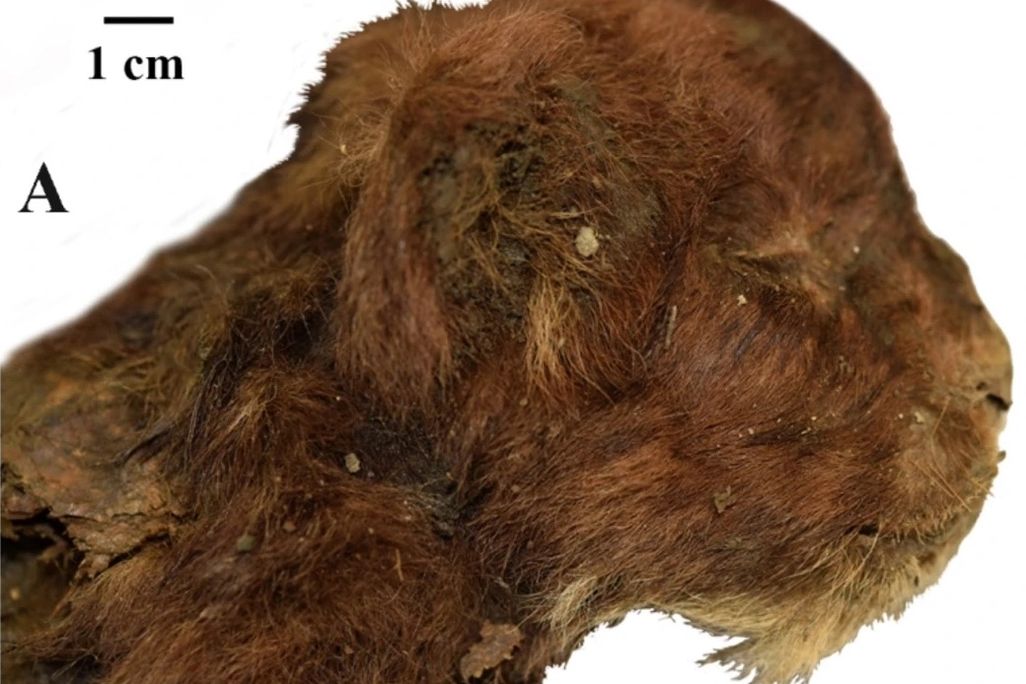
Эрдэмтэд Сибирийн мөнх цэвдэгээс олдсон сэлэмт шүдэт муурны зулзагын олдворыг судалж, эртний амьтны анатомийн онцлогийг нарийвчлан тогтоожээ.
Оросын Якут орчмын Бадяриха голын ойролцоо олдсон Homotherium latidens төрлийн сэлэмт шүдэт муурны зулзага нь өнөөг хүртэл хадгалагдаж үлдсэн арьс, булчин, сарвуу, сахлын хамт олдсон нь палеонтологийн ховор тохиолдол болж байна. Нүүрстөрөгчийн он цаг тогтоох шинжилгээгээр уг амьтан ойролцоогоор 35,471–37,019 жилийн өмнө амьдарч байсныг тогтоосон бөгөөд судалгааны багийнхан уг муур гурван долоо хоногтойдоо үхсэн гэж дүгнэжээ.
Scientific Reports сэтгүүлд нийтлэгдсэн судалгаагаар уг олдворыг орчин үеийн арслангийн зулзагатай харьцуулан, CT дүрслэл ашиглан анатомийн бүтцийг нь нарийвчлан судалсан байна. Үр дүнд нь сэлэмт шүдэт муур нь бага наснаасаа эхлэн хүзүүний хөгжсөн булчин, урт урд мөч, өргөн сарвуу зэрэг онцлог шинжүүдтэй байсныг тогтоожээ. Мөн чих нь жижиг, амны ангайх хэмжээ нь том байсан нь хүйтэн, цастай орчинд амьдрахад зохицсон байж болзошгүй гэж судлаачид үзэж байна.
Олдворын үс нь жигд хүрэн өнгөтэй байсан нь эрдэмтдийн хувьд гэнэтийн нээлт болсон ч, мөнх цэвдэгт удаан хугацаагаар хадгалагдсаны улмаас амьтны арьсны өнгө өөрчлөгдсөн байх магадлалтайг мэргэжилтнүүд анхааруулж байна. Одоогоор уг зулзага бүрэн гүйцэт шүдлээгүй байсан тул насанд хүрсэн сэлэмт шүдэт муурны шүдний бүтэц ямар байсныг баттай хэлэх боломжгүй юм.
Судлаачид цаашид уг амьтны ДНХ-г ялган авч, генетикийн түвшинд нарийвчилсан судалгаа хийхээр төлөвлөж байна. Энэхүү олдвор нь ихэвчлэн ясан үлдэгдлээр тодорхойлогддог устаж үгүй болсон амьтдын талаарх ойлголтыг өргөжүүлэх онцгой боломжийг олгож байна.
Дэлгэрэнгүйг эх сурвалжаас харах
↓Эх сурвалжийг нээх ↓
Dark brown fur still covers the head and front of a saber-toothed cat cub that died tens of thousands of years ago. Two rows of whiskers remain visible on its upper lip. The pads and sharply curved claws on its front paws also survived, frozen in Siberian permafrost, ground that stays frozen for years at a time.
The cub was found near the Badyarikha River in Yakutia, northeastern Russia. Much of its head, chest and front legs survived, along with parts of its hindquarters that were found in ice.
Reaserchers found how long the animal had been alive through testing for radioactive carbon from its fur (and dating materials once living) at 31,808±367 radiocarbon years; after converting this date into calendar years, he determined that it is approximately 35,471 – 37,019 years since the cub was born.
According to a new report published in 2024 on Scientific Reports by Alexey V. Lopatin and colleagues, the animal that died has been identified as an individual of Homotherium latidens, an extinct species of saber-toothed cat, and was only about three weeks when it died.
The animal’s exceptional preservation provided scientists with one of the few opportunities available to them. While most of what we can learn from fossils are limited to bones and teeth, the preservation allowed for studies of such items as skin, muscles, whiskers, paws etc., which represent the majority of the animal’s “soft tissue“.
Ashley Reynolds, a paleontologist at the Canadian Museum of Nature who was not involved in the research, told National Geographic, “I was over-the-moon excited to see such an incredible specimen.” Frozen mammoths and other plant-eating animals have been found in the region, but well-preserved predators are much rarer.
A Three-Week-Old Cat With Unusual Features
To see how this early juvenile Homotherium was constructed relative to that of a contemporary lion cub of roughly the same age, scientists studied the anatomy by comparing features, as well as through CT scanning, which provides a high degree of resolution for anatomical structures. The researchers observed clear differences in the anatomy of the two animals even at a very young stage (only a few weeks) of development.
Homotherium had smaller ears located lower on the skull. In addition, it had a greater size of the opening to the mouth. Also, Homotherium had a significantly longer upper lip than that of a lion cub; the location of this feature is especially important since adult Homotherium had very long canines in their upper jaw.

The mummy’s dark brown color also surprised the researchers. “The uniform dark brown color of the mummy fur turned out to be completely unexpected,” Lopatin told National Geographic.
That color should be treated cautiously. Paleontologist Margaret Lewis noted that animals preserved in ice can change color after death. The mummy’s present shade may therefore not be exactly what the cub looked like when it was alive.
Long Legs and Broad Paws
Some of the clearest differences appeared in the cub’s limbs.
Its front legs were 18 to 23 percent longer than those of the lion cub used for comparison, even though the two animals were similar in overall size. Its mouth opening was also about 15 percent larger.
Adult Homotherium skeletons had already shown scientists that the cat had relatively long limbs and a powerful neck. The mummy suggests that these features began developing very early in life.
Lewis told National Geographic, “The cub had the enlarged neck muscles thought to occur in adults, and also had long, muscular forelimbs seen in adult Homotherium.”
The paws revealed details that bones alone cannot show. The Homotherium cub had broad, rounded front paws that were almost as wide as they were long. The lion cub’s paws were narrower and more stretched out.
/https://tf-cmsv2-smithsonianmag-media.s3.amazonaws.com/filer_public/6d/92/6d9250d5-dfb8-4ed0-b78b-82ca1fe08aac/41598_2024_79546_fig7_html.png)
Researchers also found differences in the soft pads underneath the paws. They did not find a carpal pad, the extra pad found higher up on the front legs of modern cats.
All of the cub’s front claws were preserved. They were sharp, strongly curved and flattened somewhat from side to side, similar in general shape to a lion’s claws.
The researchers suggested that the broad paws, small ears and other features may have helped Homotherium live and move in cold, snowy environments.
What Scientists Still Do Not Know
The mummy answers questions that skeletons could not. Scientists can now see directly that a very young Homotherium already had a powerful neck, long front legs and broad paws.
But some questions remain open. Because the cub had not yet developed its adult saber teeth, researchers still cannot say for certain whether those teeth would have remained visible when an adult closed its mouth.
The specimen may also provide information that cannot be seen from the outside. Smithsonian Magazine reported that researchers hope to study its genetic material.
“DNA can be extracted, and this is one of the next stages of our research,” Lopatin said.
For now, the Badyarikha cub offers an unusually complete look at an animal usually known from bones and teeth. Its whiskers, paw pads and claws remained frozen in Siberia for roughly 36,000 years.
Enjoyed this article? Subscribe to our free newsletter for engaging stories, exclusive content, and the latest news.


Өө, энэ олдвор үнэхээр сонирхолтой байна шүү, 35 мянган жилийн настай амьтан хэдий болтол хадгалагдаж үлдсэн байгааг бодохоор гайхалтай. Тэгвэл ийм эртний амьтны талаар илүү дэлгэрэнгүй судалгаа хийх ямар үр дүн гарах бол?