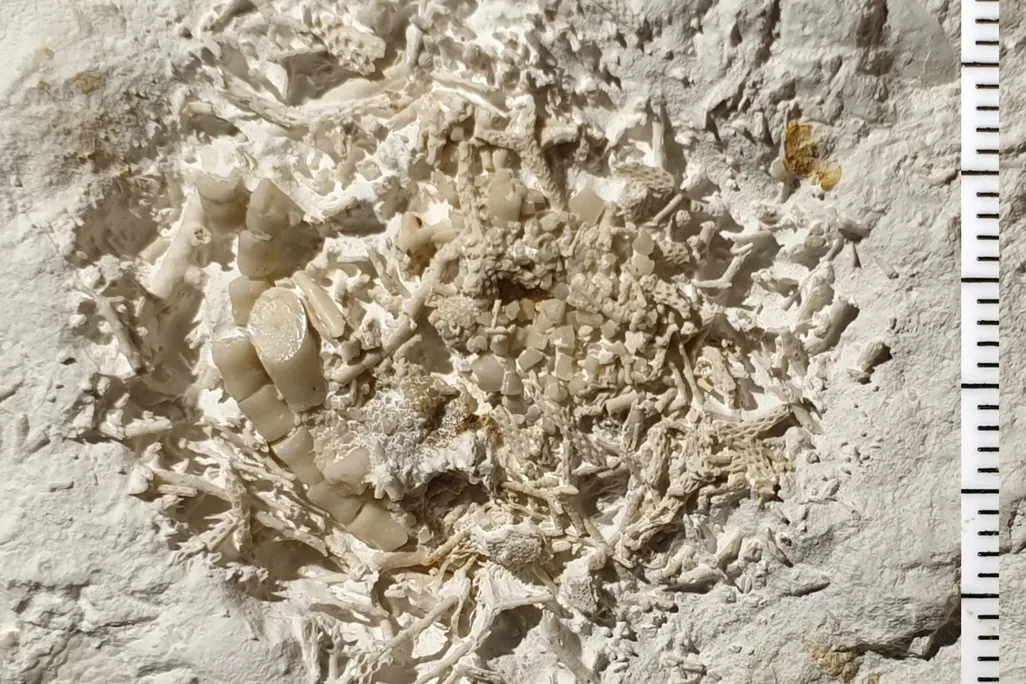
Данийн эрдэмтэд Цэрдийн галавын төгсгөл үед хамаарах, амьтны идсэн зүйлээ буцаан гаргасан ховор олдворыг илрүүлжээ.
Геологич Петер Бенникэ Данийн Стэвнс Клинтын шохойн чулуулагнаас ер бусын бүтэцтэй олдвор олсныг Факсегийн Геомузейд шилжүүлэн судлуулжээ. Далайн сараана цэцгийн төрлийн амьтдын үлдэгдлийг нарийвчлан шинжилсний дүнд энэ нь махчин амьтан хоол тэжээлээ боловсруулахын өмнө буцаан гаргасан “регургиталит” буюу бөөлжис хэмээн дүгнэв. Энэхүү олдвор нь 66 сая жилийн тэртээх далайн амьтдын идэш тэжээлийн зан төлөв, махчин болон идэш тэжээлийн харилцааг илтгэх чухал баримт болж байна.
Колумбийн их сургуулийн палеонтологич Паул Олсен уг үлдэгдлийг бүрэн боловсруулагдаагүй, ирмэгүүд нь тод хурц байгааг онцлон, үүнийг хоолны шингэц бүрэн явагдахаас өмнө ходоодноос гадагшлуулсан “ходоодны ялгадас” гэж тайлбарлажээ. Одоогоор уг олдворыг үлдээсэн махчин амьтныг тодорхойлоогүй байгаа ч судлаачид үүнийг загас эсвэл далайн ёроолоор амьдардаг аварга загасны төрөл байж болзошгүй хэмээн таамаглаж байна.
Данийн Байгалийн түүхийн хуулийн дагуу уг олдвор нь шинжлэх ухааны өндөр ач холбогдолтой тул улсын музейн хамгаалалтад шилжсэн байна. Хэдийгээр үүнтэй төстэй 160 сая жилийн настай олдвор өмнө нь Англид бүртгэгдэж байсан ч, энэ удаагийн олдвор нь хоёр өөр төрлийн далайн сараана цэцгийг нэгэн зэрэг идсэнийг баталж байгаагаараа онцлог юм.
Дэлгэрэнгүйг эх сурвалжаас харах
↓Эх сурвалжийг нээх ↓
When geologist Peter Bennicke broke open a piece of chalk from Stevns Klint in Denmark, he noticed a strange accumulation of items within. He then took the item to Geomuseum Faxe, and after examining the item, John Jagt (a Dutch specialist in sea lilies) determined that there were at least two different types of sea lily fragments within the item.
Based upon this information, the Museums of East Zealand concluded that an animal had consumed the sea lilies, and later regurgitated the indigestible remains of these sea lilies.
This fossil is classified as a regurgitalite; the preserved remnants of materials an animal ingested and later regurgitated. This fossil provides evidence of a feeding episode occurring around 66 million years ago during the final stages of the Cretaceous Period.
“This is an extremely rare discovery,” stated Jesper Milàn, Curator at Geomuseum Faxe and member of the Danekræ Committee in the museum’s press release.
Why would an animal eat a sea lily?
Although named “sea lilies” due to their flower-like shape, they are actually animals, members of a group that includes other marine animals such as starfish and sea urchin. The “sea lilies” fossilized in the fossil lived on the floor of the ancient Cretaceous seas.
These “sea lilies” did not offer a rich source of nutrition for predators.
“Sea lilies are not a particularly nutritious diet as they primarily comprise calcareous plates bound together by a small number of soft tissues,” Milàn explained, according to The Guardian.
The calcareous plates provided much of the skeletal structure of the animals themselves and therefore left limited amounts of soft tissue available for consumption. It is likely that the predator that produced this fossil was some type of fish.
While the rarity of the fossil provides insight into its unique nature, it also reveals information regarding the predator-prey relationships that existed during the time period when this fossil formed.
While bones and shells can indicate which species of animals were alive and present at a particular location during a given time, evidence that one animal ate another can be directly obtained through regurgitated remains.
Milàn explained to the BBC, that this find demonstrates what eating habits existed among animals approximately 66 million years ago.
Could this be true vomit?
Paul Olsen, Paleontologist at Columbia University, offered additional insights. He pointed out that the sea lily fragments appear to have not undergone extensive damage during digestion.
“The edges of the fossils are very sharp and well-defined,” Olsen stated to NPR.
Olsen described the process producing the fossil as a gastric ejection instead of actual vomiting, suggesting that the animal might have expelled the contents from its stomach prior to it being extensively digested. Although he defined this specimen as a prime example of a regurgitalite, he still questioned whether or not it could be classified as true vomit.
Like all other aspects of the fossil itself, it is unknown what type of animal caused this fossil. The museum indicated it was likely a fish, while Smithsonian reported that Milàn has suggested a bottom dwelling shark whose teeth were adapted to crush food.
A protected Danish fossil
As part of Danish law (Danish Natural History Act), finds deemed especially scientifically significant must be surrendered to a national natural history museum, and not retained privately. Over 1,000 specimens have received Danekræ status since January 2025.
It should be noted that this fossil is not the oldest recorded fossilized regurgitation. An almost identical fossil dating to approximately 160 million years ago was discovered in England in 2002.
In contrast to this older specimen however, this new fossil represents a single event involving predation: the predator ate at least two species of sea lily and subsequently excreted their hard body parts. These subsequent body parts eventually became embedded in chalk where Bennicke uncovered them approximately 66 million years later.
Enjoyed this article? Subscribe to our free newsletter for engaging stories, exclusive content, and the latest news.


Энэ олдвор үнэхээр хачирхалтай санагдаж байна, хүний анхаарлыг татахаар зүйл шүү дээ. Тэгвэл та энэ мэт өвөрмөц олдворуудаас ямар нэгэн шинэ мэдээлэл авахыг хүсч байна уу? Мөн энэ тухай сонирхолтой яриа өрнүүлэхэд та ямар асуулт асуухуу?