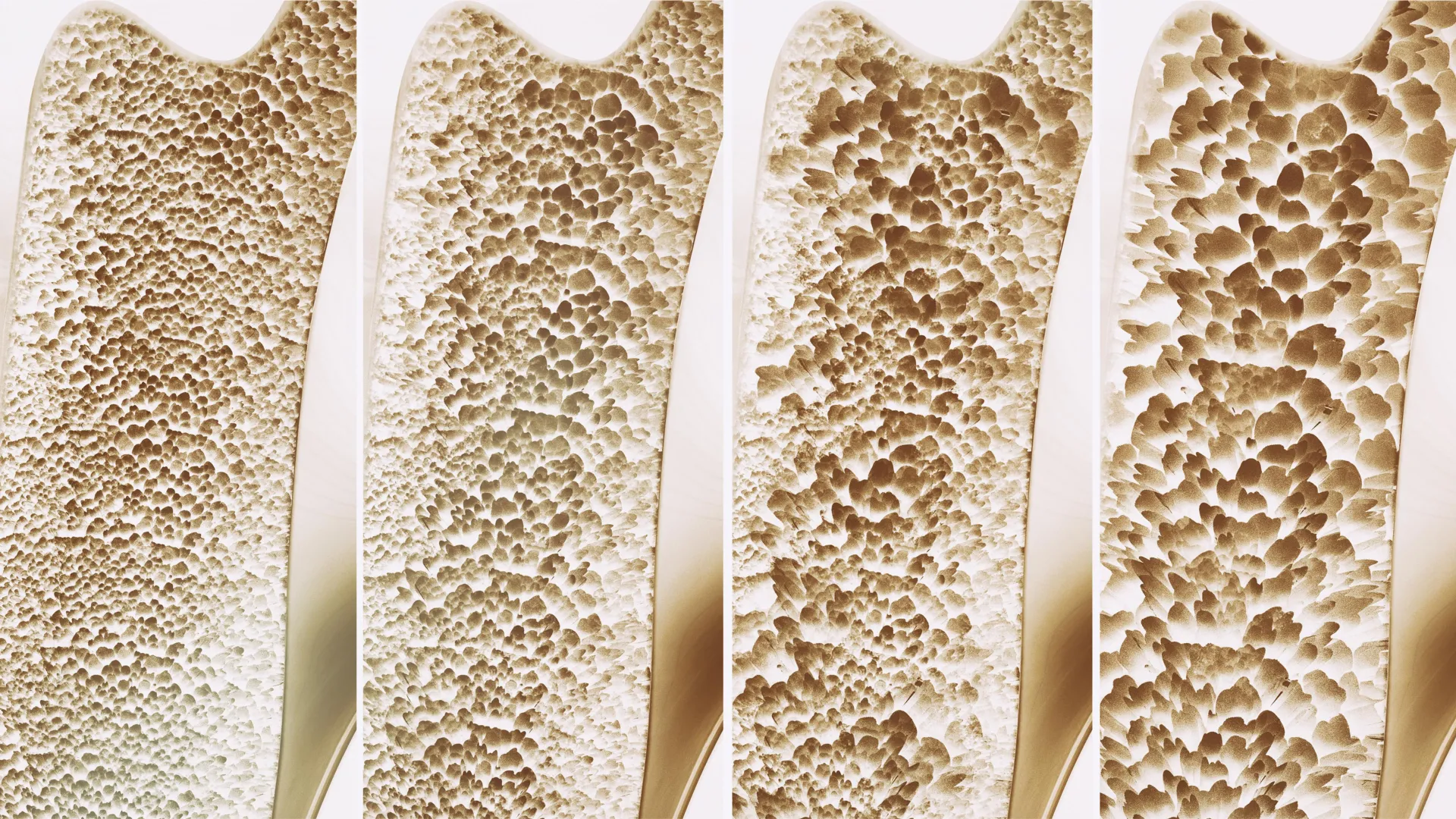
Лайпцигийн их сургуулийн судлаачид ясны нягтыг нэмэгдүүлж, бэхжүүлэх боломжтой GPR133 рецепторыг олж нээлээ.
Ясны сийрэгжилт нь яс сийрэгжиж, хугарах эрсдэлийг нэмэгдүүлдэг нийгмийн эрүүл мэндийн томоохон асуудал юм. Лайпцигийн их сургуулийн эрдэмтэд GPR133 хэмээх эсийн гадаргуу дээр байрлах рецептор нь ясны эрүүл мэндийг хадгалахад чухал үүрэгтэй болохыг тогтоожээ. Уг рецептор нь ясны эд доторх физик хүч болон эс хоорондын харилцан үйлчлэлд хариу үзүүлж, ясны эсүүдийн тэнцвэрт байдлыг зохицуулдаг байна.
Судалгааны явцад GPR133 рецептор идэвхжсэнээр ясны эд үүсгэгч остеобласт эсийн үйл ажиллагааг дэмжиж, ясны эдийг задалдаг остеокласт эсийн үйл ажиллагааг бууруулдаг болохыг ажиглажээ. Эрдэмтэд AP503 хэмээх бодисыг ашиглан хулгана дээр туршилт хийхэд, уг бодис нь рецепторыг идэвхжүүлж, эрүүл болон ясны сийрэгжилттэй хулганы ясны бат бөх чанарыг мэдэгдэхүйц нэмэгдүүлсэн байна. Генетикийн өөрчлөлтөөс шалтгаалан GPR133 рецептор нь гэмтсэн хулганууд эрт үеэс ясны нягтын алдагдалд орж байсан нь уг рецепторын ач холбогдлыг баталж байгаа юм.
AP503 бодис нь ясны бат бөх чанарыг сайжруулахаас гадна араг ясны булчинг бэхжүүлдэг болохыг өмнөх судалгаагаар тогтоосон байдаг. Энэхүү хос нөлөө нь хөгширч буй хүн амд, ялангуяа ясны сийрэгжилт болон булчингийн сулралаар зэрэг шаналж буй ахмад настнуудад эмчилгээний өндөр ач холбогдолтой байж болзошгүй юм.
Одоогоор судлаачид GPR133 рецепторын үйл ажиллагааг илүү гүнзгийрүүлэн судлах төслүүдийг үргэлжлүүлж байна. Мөн AP503 бодисыг бусад өвчний эмчилгээнд ашиглах боломжтой эсэх болон рецепторын бие махбод дахь өргөн хүрээний үүргийг тодорхойлохоор ажиллаж байна. Лайпцигийн их сургууль нь олон жилийн турш эсийн дохио дамжуулах рецепторуудын бүтцийн динамикийг судлах чиглэлээр олон улсад хүлээн зөвшөөрөгдсөн судалгааны төв болон ажиллаж байгаа юм.
Дэлгэрэнгүйг эх сурвалжаас харах
↓Эх сурвалжийг нээх ↓
Osteoporosis, a condition that weakens bones and increases the risk of fractures, affects millions of people and remains a major challenge for doctors seeking safe treatments that can be used over long periods. In Germany alone, about six million people are affected, most of them women.
Because existing therapies can have limitations and side effects, researchers are looking for new biological targets that could lead to more effective ways of preserving or rebuilding bone. Scientists at Leipzig University have now identified one such target in GPR133, a receptor that appears to play an important role in keeping bones strong.
A Little-Known Receptor With a Major Role in Bone Health
GPR133 belongs to a group known as adhesion G protein-coupled receptors. These receptors sit on the surface of cells and help them respond to signals from their surroundings. Although this family of receptors is still not fully understood, the new findings suggest GPR133 is closely involved in the processes that build and maintain healthy bone.
“If this receptor is impaired by genetic changes, mice show signs of loss of bone density at an early age – similar to osteoporosis in humans. Using the substance AP503, which was only recently identified via a computer-assisted screen as a stimulator of GPR133, we were able to significantly increase bone strength in both healthy and osteoporotic mice,” explains Professor Ines Liebscher, lead investigator of the study from the Rudolf Schönheimer Institute of Biochemistry at the Faculty of Medicine.
The results point to GPR133 as a potentially valuable target for future osteoporosis treatments. The researchers found that stimulating the receptor with AP503 increased bone strength not only in healthy mice, but also in mice with osteoporosis-like bone loss.
How GPR133 Helps Build Stronger Bones
Inside bone tissue, GPR133 responds to physical forces and interactions between nearby bone cells. When the receptor is activated, it sets off signaling that changes the balance between the cells that build bone and those that break it down.
Bone-forming cells (osteoblasts) are responsible for producing new bone tissue. Bone-resorbing cells (osteoclasts), by contrast, remove old bone as part of the skeleton’s normal cycle of renewal. Healthy bones depend on maintaining the right balance between these two processes.
Activation of GPR133 encourages the activity of osteoblasts while reducing the activity of osteoclasts. This shifts the balance toward stronger and more durable bone.
AP503 appears to imitate the natural process that activates GPR133. That raises the possibility that the compound could eventually be used to increase bone strength or help restore bone that has already been weakened. One potential application would be osteoporosis associated with menopause, when declining hormone levels can accelerate bone loss in women.
Potential Benefits for Both Bone and Muscle
The findings could have broader implications because AP503 may affect more than the skeleton.
In an earlier study, researchers at Leipzig University had already found that activation with AP503 also strengthens skeletal muscle.
“The newly demonstrated parallel strengthening of bone once again highlights the great potential this receptor holds for medical applications in an aging population,” says Dr. Juliane Lehmann, lead author of the study and a researcher at the Rudolf Schönheimer Institute of Biochemistry.
A treatment capable of improving both bone and muscle strength could be especially relevant for older adults, who often experience declines in both tissues at the same time. Maintaining stronger muscles can also support mobility and stability, while stronger bones can reduce vulnerability to fractures.
The Leipzig team is now pursuing several follow-up projects aimed at understanding GPR133 more fully. Researchers are also investigating whether AP503 could have applications in other diseases and are continuing to examine the receptor’s wider functions throughout the body.
Leipzig’s Longstanding Research Into GPR Receptors
For more than a decade, Leipzig University has made adhesion G protein-coupled receptors a major research priority through Collaborative Research Center 1423, Structural Dynamics of GPCR Activation and Signaling.
The program focuses on understanding how these receptors change shape, become activated, and transmit signals inside cells. Leipzig University is internationally recognized as a leading center for research in this area.

