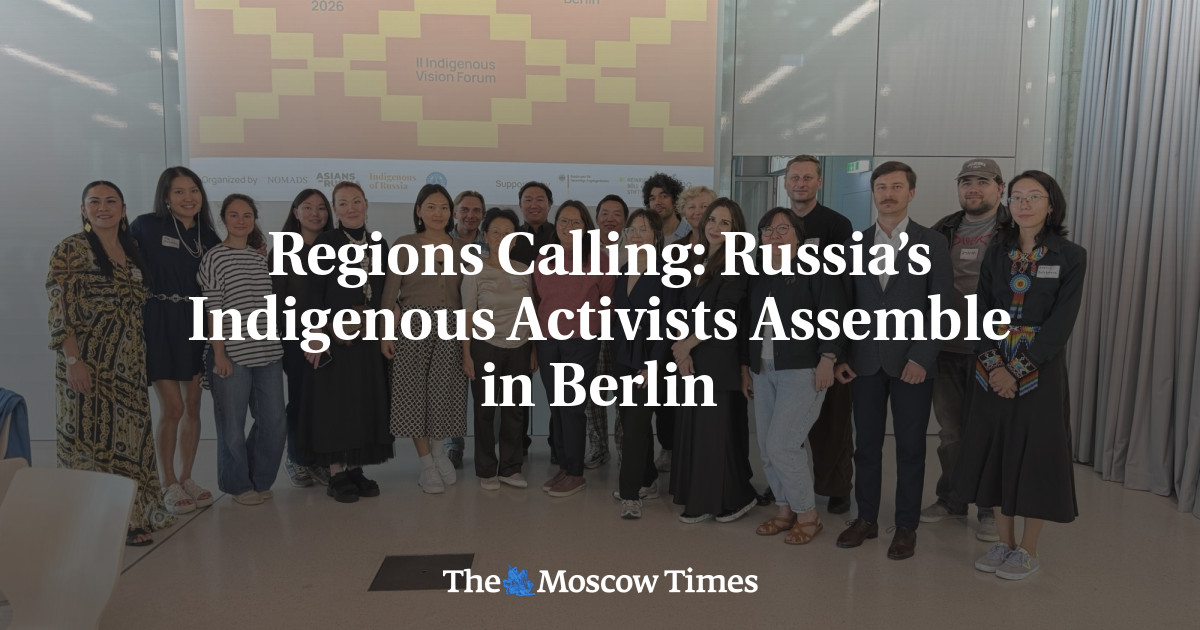
ОХУ-ын үндэстний бүгд найрамдах улсууд болон уугуул иргэдийн төлөөлөл Берлин хотноо хоёр дахь удаагийн “Indigenous Vision” форумыг зохион байгуулж, улс төрийн шинэ нөхцөл байдлыг хэлэлцлээ.
Украйны эсрэг эхлүүлсэн дайны эсрэг үзэл санаан дээр нэгдэж байсан ОХУ-ын уугуул иргэдийн хөдөлгөөн нь өдгөө олон улсын түвшинд ОХУ-ын бодлогод нөлөөлөхүйц улс төрийн хүчин болон өргөжжээ. “Чөлөөт Якут” сангийн төлөөлөл Саргылана Кондаковагийн тэмдэглэснээр, олон улсын тавцанд дуу хоолойгоо хүргэх нь тэдний ард түмний ирээдүйг хамгаалах цорын ганц арга зам болсон байна. Тус хөдөлгөөнийхөн өнгөрсөн хугацаанд НҮБ, ЕАБХАБ болон Европын зөвлөлийн Парламентын ассамблей (PACE)-д төлөөллөө илгээж, Оросын ардчилсан хүчнийхэнтэй хамтран ажиллах платформуудад суудал авчээ.
Украйны парламентын гишүүн Марииа Мезенцева-Федоренко форумын үеэр хэлсэн үгэндээ, ОХУ-ын “деколонизаци” буюу колоничлолоос ангижрах үйл явцыг олон улсын эрх зүйн хүрээнд баталгаажуулах нь Европын аюулгүй байдалд чухал ач холбогдолтой гэдгийг онцолсон байна. Украйны тал Оросын эзэнт гүрний шинжтэй байгууламжийг өөрчлөх нь бүс нутгийн тогтвортой энх тайвныг хадгалах гол нөхцөл хэмээн үзэж, уугуул иргэдийн хөдөлгөөнтэй хамтын ажиллагаагаа гүнзгийрүүлэх сонирхолтой байгаа юм.
Форумын үеэр Герман улсад болсон сонгуулиар баруун жигүүрийн хүчин амжилт гаргасан нь олон улсын бодлогод уугуул иргэдийн эрхийн асуудал хойшлогдох эрсдэлтэйг идэвхтнүүд анхаарууллаа. Мөн тэд Оросын сөрөг хүчний гол урсгалын улс төрчид өөрсдийн “деколонизацийн” хөтөлбөрийг нь булаан авахыг оролдож буйг шүүмжилсэн байна. ОХУ-ын доторх 180 гаруй үндэстэн угсаатныг төлөөлөх энэхүү хөдөлгөөний дотоод нэгдмэл байдал нь улс төрийн үзэл баримтлал болон бүгд найрамдах улсуудын тусгаар тогтнолын асуудлаас үүдэн зөрчилтэй байгаа нь ажиглагдлаа.
Дэлгэрэнгүйг эх сурвалжаас харах
↓Эх сурвалжийг нээх ↓
Hello and welcome to Regions Calling, your guide to developments from beyond the Russian capital by The Moscow Times.
MT’s special correspondent Leyla Latypova traveled to Berlin last week for the Indigenous Vision forum, which brought together some of the leading Indigenous voices from Russia and allies from the U.S., Europe, Central Asia and Oceania.
For this edition of Regions Calling, Latypova spoke with conference organizers and attendees to understand where Russia’s Indigenous rights movement sits on the global political stage.
The Spotlight
BERLIN — Dozens of Indigenous activists from Russia and allies from around the world gathered in Germany’s capital last week for the second annual Indigenous Vision Forum.
Organized by a consortium of NGOs led by exiled and diaspora activists from Russia’s ethnic republics and Indigenous communities, the first forum was held in July 2025 under an umbrella theme of “centering Indigenous voices, resilience and knowledge.”
This year’s topic, “navigating the future,” reflects the transformation that Russia’s Indigenous opposition has undergone since 2022. What began as a grassroots movement united by anti-war sentiment at the start of the invasion of Ukraine has since evolved into a political force aiming to shape global discourse and policies on Russia.
“This was a natural transformation,” said Sargylana Kondakova of the Free Yakutia Foundation, an exiled anti-war group from the republic of Sakha that co-organized the event.
“We understand that if we won’t speak on the international stage, if we won’t enlist the support of our allies, then everything could end very tragically for our peoples,” she added.
Kondakova, who rose to prominence in 2022 with a video condemning the invasion of Ukraine that she filmed on the streets of Melbourne, is reluctant to call herself a politician. Yet she said she realizes that everything Indigenous campaigners from Russia do is political.
“Our future also depends on who we are negotiating with, where we speak, what we say and how we say it,” she said.
Activists and journalists from the republic of Buryatia, including Seseg Jigjitova and Batlay Matenov (second from right and right), at the Indigenous Vision conference.
_anna_zueva__ / Instagram
Since last year’s forum, Indigenous activists from Russia have appeared at the UN, the OSCE and the Parliamentary Assembly of the Council of Europe (PACE), where they gained five out of 15 seats in the body’s Platform for Dialogue with Russian Democratic Forces.
In a likely nod to these achievements, the forum’s inaugural panel tried to locate where the West stands on the discourse surrounding the decolonization of Russia.
Mariia Mezentseva-Fedorenko, a Ukrainian MP and chairwoman of Kyiv’s delegation to PACE, kicked off the event with a speech highlighting Ukraine’s efforts to codify the notions of “decolonization” and “oppressed nations” of Russia in international law.
Mezentseva-Fedorenko — who spoke via videoconference from Kharkiv, where air raid sirens wailed as she spoke — is among a growing number of Ukrainian foreign policy figures who believe Russia’s Indigenous communities could hold the key to ensuring Europe’s long-term political security.
“I’m here out of solidarity, both personal and Ukrainian,” said Tetiana Katrych from the Ukrainian NGO Decolonization. “The same empire colonized us…We are just at different stages of leaving it.”
Katrych believes that a Ukrainian victory in the war can’t guarantee that Russia won’t attack its neighbor again, meaning “stable peace for both Ukraine and Europe can be achieved only when the empire ceases to exist in its current form.”
“We want to cooperate with the republics and Indigenous peoples to ensure stable peace,” said Katrych.
Events in Germany, where the far-right Alternative für Deutschland party won a historic victory in Sunday’s Saxony-Anhalt state election, hung over nearly every discussion at the forum.
Activists warned that the global rise of the far-right risks pushing the fight for Indigenous rights to the margins of international policymaking and further threatens vulnerable groups who fled Russia for the West but remained outspoken about their causes in exile.
Indigenous activists said they are also forced to face off with mainstream Russian opposition movements and politicians, who they accuse of trying to “co-opt and hijack the decolonial agenda.”
“Seeking policy change and publicity for Indigenous people [of Russia] on international platforms is about Indigenous people currently inside the country. This is a foundation for the future, although the results of these efforts will not be immediately noticeable,” said Seseg Jigjitova of Nomads Indigenous Collective, a German NGO that co-organized the forum.
Jigjitova said every discussion at the forum — whether about Indigenous political prisoners in Russia or the revitalization of the Indigenous Māori language in New Zealand — “appealed to all Indigenous peoples, including those inside Russia.”
As Russia is home to more than 180 ethnic groups, the country’s Indigenous rights movement likewise boasts a rich ethnic and political diversity.
While some prominent figures belong to nations numbering fewer than 2,000 people, others number in the millions and have ethnic homelands in Russia’s republics that were once nearly equal players in the federation or attempted to secede from it altogether.
As well as its diversity, the Indigenous rights movement’s growing visibility since the full-scale invasion of Ukraine has also exposed its divisions.
The sources of these divisions range from left-right political lines to differing understandings of who should be considered Indigenous in Russiato varying degrees of support for economic and political independence of the republics to backing cooperation with mainstream opposition groups.
The Berlin forum further shed light on these cracks, with a handful of high-profile Indigenous figures notably absent. Kondakova said this was because organizers were limited to about 100 attendees.
“We couldn’t even invite some of our allies,” said Kondakova.
“There are [Indigenous] organizations whose political views we don’t share and have debates or even conflicts with them, but that’s normal. We still have contact, we talk, we don’t label anyone as enemies and don’t ban them from our platforms],” Kondakova told The Moscow Times. “That’s already a good thing, since we are striving to build democracy [in Russia].”
Forum co-organizer Batlay Matenov, a member of the PACE Platform for Dialogue with Russian Democratic Forces, saw it somewhat differently.
He said he “actually did send out invitations” to his fellow PACE Platform members, none of whom were present at the event.
“Some people didn’t reply, and there were others I decided not to invite,” he said.
Matenov, the only Indigenous activist at the event who currently holds public office, described his time on the PACE Platform as “tough” and “difficult.”
“If a politician promises you something, you 100% won’t see it followed through, or maybe you will, but in three years or something like that,” he said. “I actually became a little disillusioned with politics.”
A Message from The Moscow Times:
Dear readers,
We are facing unprecedented challenges. Russia’s Prosecutor General’s Office has designated The Moscow Times as an “undesirable” organization, criminalizing our work and putting our staff at risk of prosecution. This follows our earlier unjust labeling as a “foreign agent.”
These actions are direct attempts to silence independent journalism in Russia. The authorities claim our work “discredits the decisions of the Russian leadership.” We see things differently: we strive to provide accurate, unbiased reporting on Russia.
We, the journalists of The Moscow Times, refuse to be silenced. But to continue our work, we need your help.
Your support, no matter how small, makes a world of difference. If you can, please support us monthly starting from just $2. It’s quick to set up, and every contribution makes a significant impact.
By supporting The Moscow Times, you’re defending open, independent journalism in the face of repression. Thank you for standing with us.
Continue

Not ready to support today?
Remind me later.
×
Remind me next month
Thank you! Your reminder is set.
We will send you one reminder email a month from now. For details on the personal data we collect and how it is used, please see our Privacy Policy.

