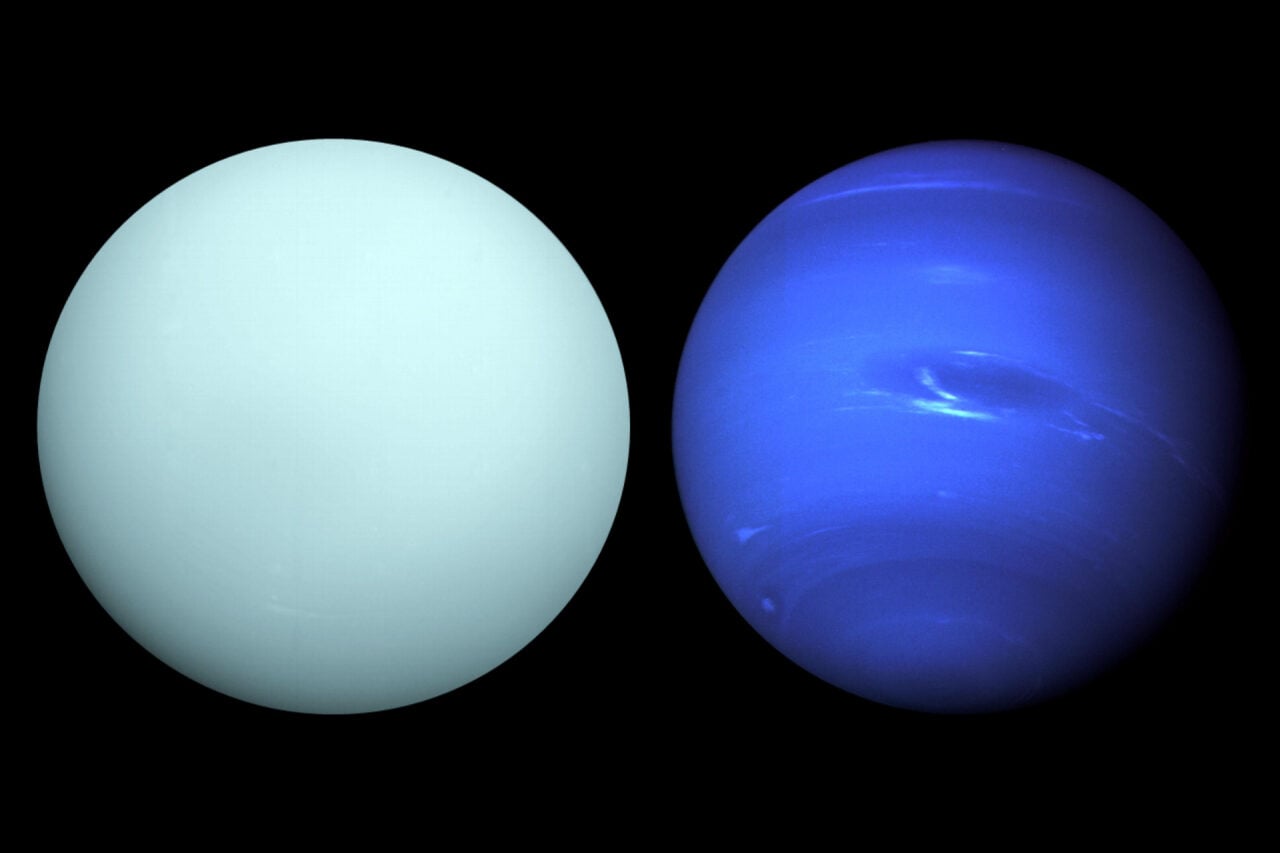
Эрдэмтэд маш өндөр даралт болон температурын нөхцөлд супер-ионт мөсний бүтцийг дуурайлган гаргаж авснаар мөсөн аварга гарагуудын дотоод орчныг илүү тодорхой ойлгох боломж бүрдлээ.
Судлаачид 2018 онд Тэнгэрийн ван болон Далайн ван гарагийн гүнд оршдог гэж үздэг, хагас хатуу ба хагас шингэн төлөвтэй, чөлөөт устөрөгчийн атомууд бүхий супер-ионт мөсний оршин тогтнолыг баталгаажуулсан билээ. Парис-Саклэ их сургуулийн физикч Алексис Форестиер тэргүүтэй эрдэмтдийн баг энэхүү ер бусын мөсийг Дэлхий дээр дахин бүтээхээр туршилт явуулсан байна. Тэд хэт цэвэр усыг алмазан эд эсэд байрлуулж, синхротрон рентген туяаны тусламжтайгаар 2357°C хүртэл халааж, Дэлхийн далайн түвшний агаарын даралтаас хоёр сая дахин их даралтыг үзүүлжээ.
Туршилтын үр дүнд онолын судалгаануудаар урьдчилан таамаглаж байсан супер-ионт мөсний хэлбэрийг гарган авсан байна. Энэхүү мөс нь ойролцоогоор 1526°C-аас дээш температур болон 200 гигапаскаль даралтын дор үүсдэг бөгөөд хүчилтөрөгчийн атомууд нь зургаан өнцөгт бүтэцтэй талст үүсгэж, устөрөгчийн атомууд нь тэдгээрийн дундуур чөлөөтэй хөдөлдөг болохыг ажиглажээ. Энэ нь шахсан инертийн хийнүүдийн зан төлөвтэй төстэй үзэгдэл юм.
Одоогоор шинжлэх ухаанд нийт 22 төрлийн мөс бүртгэгдээд байгаа бөгөөд эдгээр нь даралт болон температурын өөрчлөлтөөс хамааран өөр өөр талст хэлбэрт шилждэг. Эрдэмтдийн бүтээсэн энэхүү супер-ионт мөс нь мөсөн аварга гарагуудын дотоод бүтцийг загварчлахад чухал ач холбогдолтой юм.
Гэсэн хэдий ч Тэнгэрийн ван болон Далайн ван гарагийн гүнд үнэхээр ийм төрлийн мөс оршдог гэдгийг бүрэн дүүрэн нотлоход олон арван жилийн нэмэлт судалгаа шаардлагатай гэдгийг судлаачид онцолжээ. Цаашид супер-ионт мөсний хуванцар шинж чанар болон цахилгаан дамжуулах чадварыг нарийвчлан судлах нь сансрын мөсөн биетүүдийн үйл ажиллагааг ойлгоход илүү тодорхой дүр зургийг гаргаж өгөх юм.
Дэлгэрэнгүйг эх сурвалжаас харах
Эх сурвалжийг нээх ↓
In 2018, scientists confirmed the existence of superionic ice—an odd phase of water that’s part solid and part liquid, trapped in a cubic lattice with free-flying hydrogen atoms. Scientists believe this ice lives deep inside Uranus and Neptune. So, they tried recreating this ice on Earth. Cue weird physics.
Needless to say, the conditions deep inside giant ice planets are as extreme as they get. To simulate this environment, physicists used synchrotron X-rays to bring temperatures as high as 4,274 degrees Fahrenheit (2,357 degrees Celsius) and pressures up to two million times Earth’s atmospheric pressure at sea level, reporting their findings in a recent study in Physical Review Letters. What they ended up getting was a form of superionic that had been “repeatedly predicted by theoretical studies,” according to an accompanying Synopsis column.
“Exploring the phase diagram of water ice under pressure has continuously driven leading-edge experimental developments over the past century,” the team, which includes physicist Alexis Forestier of Paris-Saclay University in France, wrote in the paper.
Ice, but fancy
So far, scientists have discovered a total of 22 types of ice, with the most recent being ice XXI in 2025. (This number includes ice Ih, the same stuff as the cubes in your iced coffee and the snow on mountaintops.) Simply speaking, variations in pressure and temperature push water into distinct crystalline forms, and most have only been created and observed inside lab settings.
By forging these ice forms, scientists can then use their observations to calculate the nature of ice elsewhere—namely, faraway cosmic objects in and out of the solar system. For this particular experiment, the team explored predictions regarding ice X, which previous work suggested would enter a superionic state that “extends the stability of ice in temperature, making this state directly relevant for ice giant planetary interiors,” according to the paper.
Literal super ice
Again, these special types of ice only exist under extreme conditions. The team squirted ultrapure water into a cell made of diamonds, squeezing the diamond cell while blasting it with X-ray lasers. Over two sessions, the researchers kept close track of tiny changes in the water crystal’s molecular arrangement. The crystal started to display superionic behavior—as predicted by theoretical work—above around 2,780 degrees F (1,526 degrees C) and 200 gigapascals.
Here’s what got weird. As more and more pressure and heat were applied to the cell, the ice crystals hopped from one configuration to another, and ended up aligning nicely with previous theories on superionic ice.
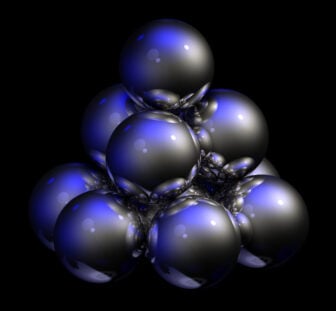
According to the paper, the process resembles the behavior of compressed noble gases, whereas the resulting crystal had a hexagonal close-packed geometry. In this configuration, the lattice is comprised of oxygen atoms, whereas the hydrogen atoms freely move through the molecules.
That said, it will likely take decades of scientific advancements—if not longer—to irrefutably prove that the ice in Neptune or Uranus is like this. That’s something the team acknowledges in the paper, where the researchers invite future theoretical work on the plasticity and conductivity of superionic ice. At the very least, these insights will guide our models of how icy cosmic objects work, they added.

