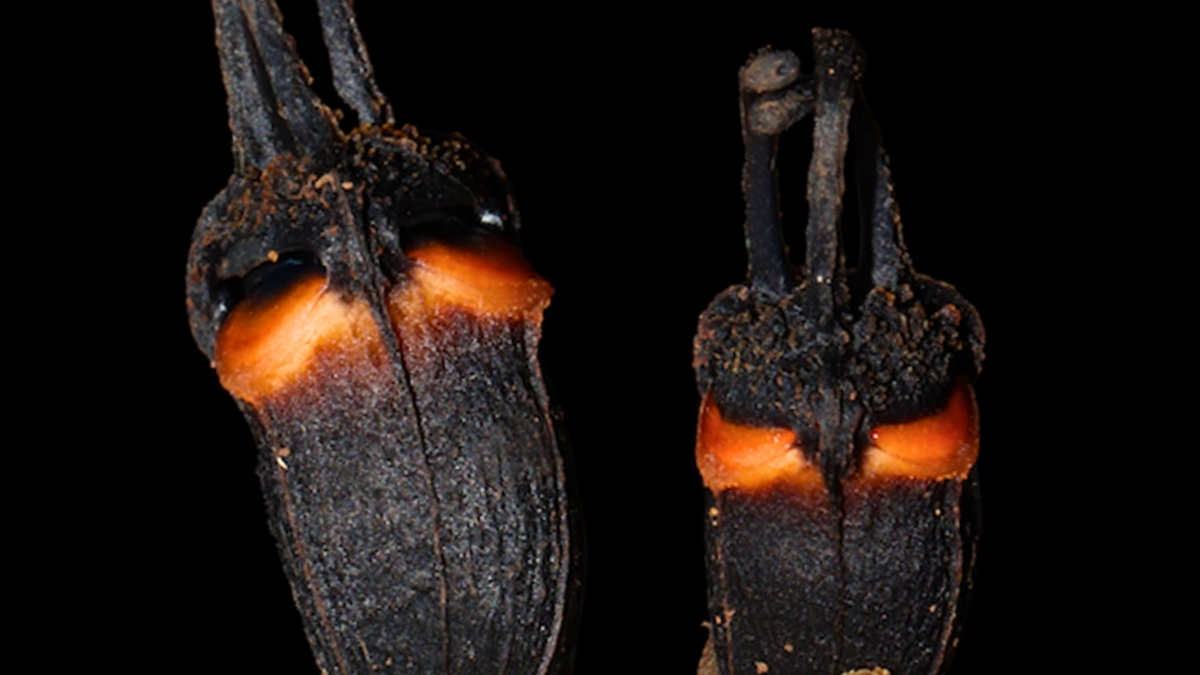
Эрдэмтэд фотосинтез явуулдаггүй, мөөгөнцөртэй симбиоз үүсгэн амьдардаг шинэ төрлийн ургамлыг Тайландын үндэсний цэцэрлэгт хүрээлэнгээс илрүүлжээ.
Тайландын Тонг Фа Фум үндэсний цэцэрлэгт хүрээлэнгээс олдсон Thismia daemona буюу “чөтгөрийн цэцэг” нь хлорофилл агуулдаггүй бөгөөд нарны гэрлээр хооллодоггүй онцлогтой. Энэхүү ургамал нь хөрсөн доорх мөөгөнцрийн сүлжээнээс шим тэжээл авч амьдардаг “микогетеротроф” төрөлд хамаардаг байна. Чонгколон болон Сонгкла хунтайжийн их сургуулийн судлаачид уг нээлтийг PhytoKeys сэтгүүлд нийтэлжээ.
Уг ургамал нь ойролцоогоор 12.5 см өндөртэй, хар өнгийн цэцэгтэй, эвэр мэт урт ургацаг болон нүд мэт харагдах улбар шар толботой өвөрмөц гадаад төрхтэй. Судлаач Сахут Чантанаоррапинтын тайлбарласнаар, энэ нь ургамлын далд, нууцлаг амьдралын хэв маяг болон чөтгөр мэт төрхийг илэрхийлсэн нэр юм. Уг зүйл нь далайн түвшнээс дээш 930–970 метрийн өндөрт, улирлын чанартай уулын ойд ургадаг нь эрдэмтдийн хувьд гэнэтийн нээлт болсон байна.
ДНХ-ийн шинжилгээгээр Thismia daemona нь Малайз, Борнео, Суматрад байдаг Geomitra бүлэгт хамаарах болохыг тогтоожээ. Одоогоор 50 хүрэхгүй тоо толгойтой, маш бага талбайд тархсан тул судлаачид уг ургамлыг нэн ховордсон зүйлд тооцох урьдчилсан дүгнэлтийг гаргаад байна. Аялал жуулчлалын нөлөөгөөр амьдрах орчин нь сүйдэх эрсдэлтэй тул нутгийн иргэдийн оролцоотойгоор хамгаалалтын арга хэмжээ авах нь нэн чухал байгааг эрдэмтэд онцолжээ.
Дэлгэрэнгүйг эх сурвалжаас харах
↓Эх сурвалжийг нээх ↓
Most plants turn toward the Sun. Sunlight means food, energy, and life.
But a tiny plant discovered on the shaded floor of a Thai forest appears determined to break that basic rule.
Imagine walking through the woods and noticing a small, almost black flower peering from beneath the leaves at your feet.
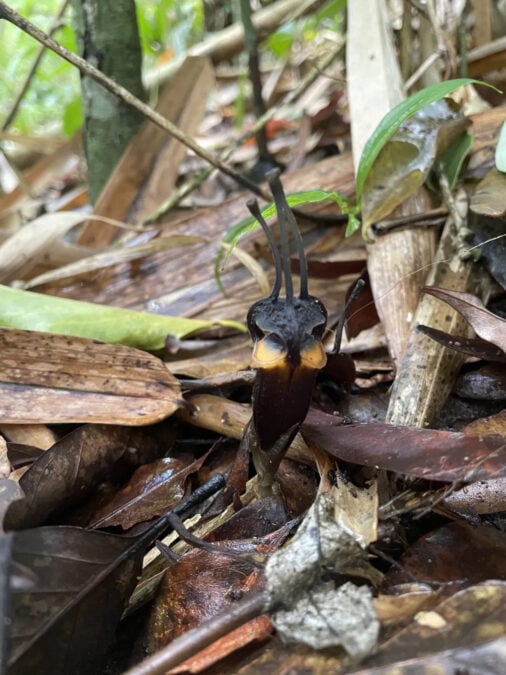
Three long, horn-like appendages rise from its head, while reddish-orange patches resemble glowing eyes. Stranger still, this plant survives without sunlight.
It may look as though it escaped from a horror movie, but it is completely real.
Scientists gave the newly discovered species a name worthy of its appearance:Thismia daemona, or the “devil flower”.
Researchers from Chulalongkorn University and Prince of Songkla University described the species in a study published in PhytoKeys.
T. daemona‘s devilish appearance is not the only thing that makes the plant unusual. It also ignores one of the most familiar rules of plant life.
Most plants contain chlorophyll, the green pigment that absorbs light energy. Through photosynthesis, they use that energy to produce their own food.
ButT. daemonahas no chlorophyll. It cannot use sunlight for energy or make its own food through photosynthesis.
So how does it avoid starving?
The answer lies underground: Fungi.
The plant obtains the carbon and other nutrients it needs through fungi living in the soil. Scientists call this way of life mycoheterotrophy.
Put simply, rather than turning toward the Sun, the devil flower plugs into anunderground fungal network.
This arrangement allows it to survive on the dim forest floor. It spends most of its life hidden beneath fallen leaf litter, appearing above ground only briefly to flower and produce fruit.
Researchers discovered the species in May 2025 in Thong Pha Phum National Park in western Thailand. The specimens were growing among fallen leaves and small bamboo at elevations of approximately 930 to 970 meters (~3,000 feet).
The location surprised the scientists becauseThismiaspecies are generally associated with constantly humid rainforests at lower elevations.
“Finding Thismia daemona was indeed a major surprise,” Prince of Songkla University botanist Sahut Chantanaorrapint says.
Discovering the population in a seasonal mountain forest nearly 1,000 meters above sea level suggests these plants may tolerate a wider variety of environments than scientists previously realized.
Including its flowers, T. daemona can reach approximately 12.5 centimeters (5 inches) in height. Its hairy, pale-brown roots resemble pieces of coral. The nearly black flower has fleshy reddish-orange sections, translucent blue stamens, and three slender ‘horns’ rising above a dome-shaped structure.
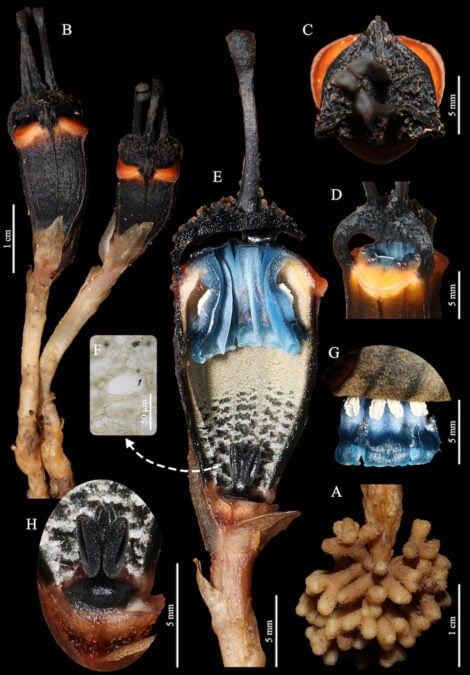
According to Chantanaorrapint, the name captures the plant’s “hidden, subterranean, and mysterious lifestyle”, as well as its “devil-like essence”.
The new species belongs to the genusThismia, a group of unusual plants sometimes known as fairy lanterns. Scientists currently recognize around 120 species in the genus.
To confirm that they had found a new species, the researchers examined its physical features using microscopy and high-resolution photography. They also analyzed five regions of its nuclear and mitochondrial DNA, comparing the results with those of otherThismiaspecies.
Its closest known relative appears to beThismia betung-kerihunensis, found in Borneo. But the importance of the discovery extends beyond adding another unusual name to the list of known plants.
T. daemonabelongs to a smaller group calledGeomitra. Before this discovery, members of that group had been recorded only in Peninsular Malaysia, Borneo and Sumatra.
Finding one in western Thailand extends the group’s known range farther north. The discovery also raises the number of known Thismia species in Thailand from 15 to 16.

Yet the devil flower began ringing alarm bells almost as soon as it was introduced to science.
Only one population is known, containing fewer than 50 plants. They occupy an area smaller than 0.05 square kilometers (0.02 square miles).
Although the site lies within a protected national park, tourists visit it regularly. People could accidentally step on the plants or disturb the delicate forest floor they and their fungal partners depend on.
The researchers have therefore provisionally assessed the species as Critically Endangered under International Union for Conservation of Nature criteria. This does not mean it has formally entered the IUCN Red List; the paper presents it as a preliminary assessment.
Inspiring local people to take pride in their natural heritage not only safeguards the microhabitat, but also supports sustainable, community-led ecotourism,” Chantanaorrapint says.
The devil flower shows that protected, frequently visited places can still conceal species unknown to science.
Related: Hidden Web of Fungus Inside Earth Could Reach The Sun a Billion Times
Sometimes, a new species is not waiting in an impossibly remote wilderness. It may be hiding among the leaves directly beneath our feet.
The study was published in PhytoKeys.
This article was fact-checked by Rebecca Dyer and edited by Rebecca Dyer. While we pride ourselves on our process, we are only human. If you spot a mistake, please let us know.

