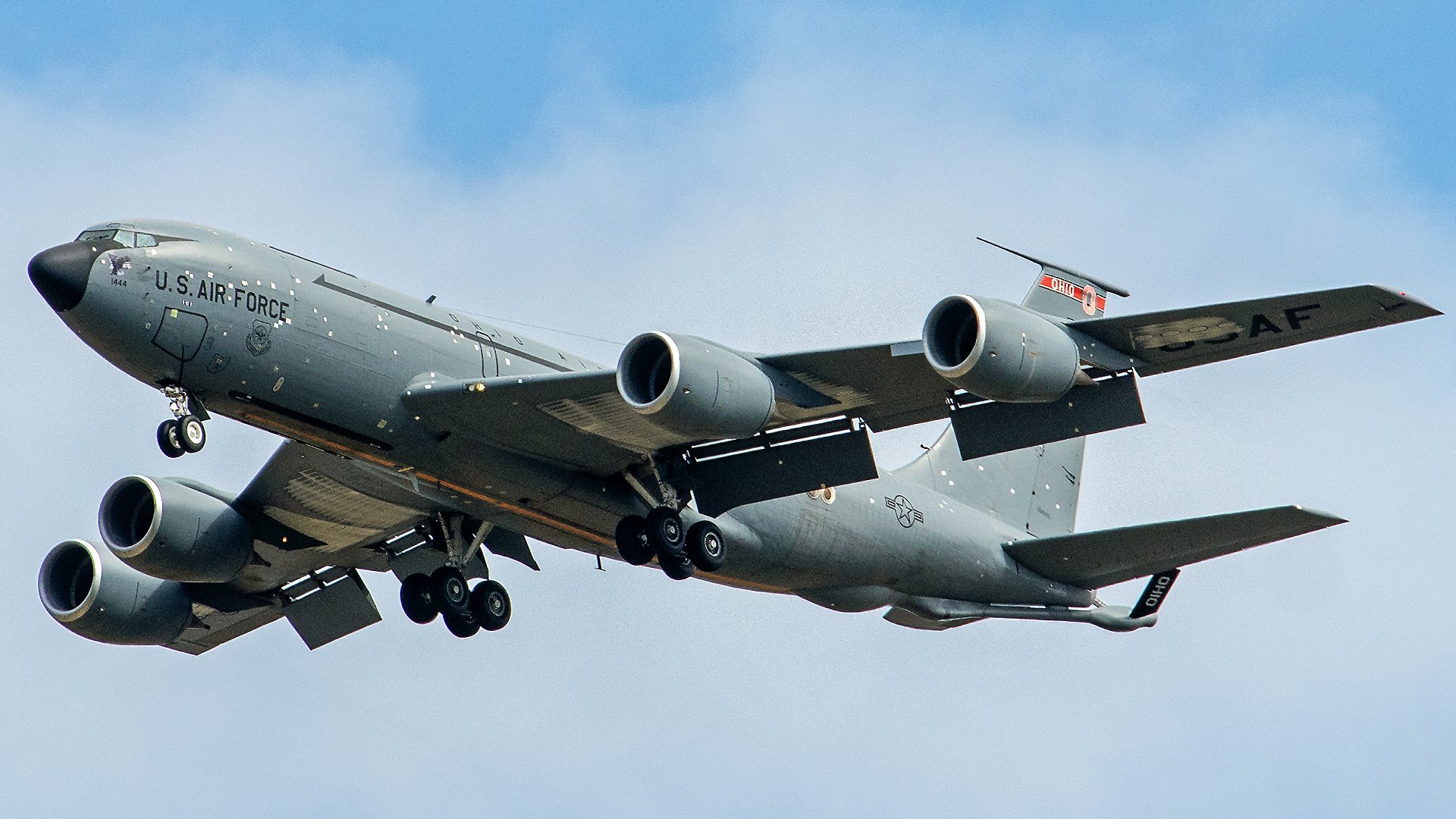
“Epic Fury” ажиллагааны үеэр гэмтсэн түлш цэнэглэгч онгоцнуудыг байлдааны бүсийн ойролцоо сэргээн засварласан нь АНУ-ын Агаарын тээврийн командлалын чадавхийг харууллаа.
АНУ-ын Агаарын тээврийн командлал (AMC) Ираны цэргийн халдлагад өртөж, хэлтэрхийнүүдэд цоолуулсан KC-135 Stratotanker онгоцыг хээрийн нөхцөлд хэрхэн засварласан талаарх дэлгэрэнгүй мэдээллийг “Air, Space and Cyber” бага хурлын үеэр танилцууллаа. Саудын Арабын хунтайж Султаны нэрэмжит агаарын баазад байрлаж байсан уг онгоц дайралтын үеэр их хэмжээний түлштэй байсан тул засварын ажил нэн эрсдэлтэй өрнөсөн байна. Техникийн ажилтнууд 48 цагийн турш түлшийг аюулгүй гадагшлуулж, цоорхойг бөглөснөөр онгоцыг эх орондоо буцаж ирэн бүрэн засварт орох боломжоор хангажээ.
Энэхүү үйл явдал нь АНУ-ын Агаарын цэргийн хүчний байлдааны талбарт тоног төхөөрөмжөө сэргээх, бэлэн байдлыг хангах шинэ арга барилыг илтгэж байна. Тухайлбал, Агаарын цэргийн хүчний материаллаг хангамжийн командлал нь гэмтсэн онгоцны түлш цэнэглэх хошууг АНУ руу тээвэрлэхгүйгээр Их Британид байрлах бааз дээр засварлах ажлыг амжилттай зохион байгуулжээ. Ингэснээр 30 орчим түлш цэнэглэх хошууг богино хугацаанд дахин ашиглалтад оруулсан байна.
Агаарын тээврийн командлал болон Агаарын цэргийн хүчний Глобал цохилтын командлал нь “Epic Fury” ажиллагааны үеэр техник үйлчилгээний хэсгээ байлдааны бүсийн ойролцоо урагшлуулж байршуулсан нь үр дүнгээ өгсөн гэж үзэж байна. Энэхүү туршлага нь стратегийн бөмбөгдөгч онгоц болон бусад нисэх хэрэгслийг эх орондоо буцаахгүйгээр Европ зэрэг бүс нутагт техникийн үзлэг, засварт оруулах боломжийг бүрдүүлжээ. Ирээдүйд тохиолдож болзошгүй томоохон мөргөлдөөнүүдийн үед цэргийн зэвсэг техникийг байлдааны талбарт шуурхай сэргээх нь чухал ач холбогдолтой гэдгийг албаныхан онцоллоо.
Дэлгэрэнгүйг эх сурвалжаас харах
Эх сурвалжийг нээх ↓
The head of Air Mobility Command (AMC) on Wednesday offered some new details about what went into repairing a KC-135 Stratotanker riddled with shrapnel holes from an Iranian attack. We have previously written about a couple of these jets damaged during Operation Epic Fury (OEF) as they came through RAF Mildenhall in the U.K. on their way back to the U.S. for comprehensive repair work. We are also getting new information of how AMC kept its fleet operating at such a prolonged high-tempo ahead of and during OEF.
The discussion about the damaged tanker took place during a panel at the Air & Space Forces’ Air, Space and Cyber Conference that TWZ is attending. The tanker in question was damaged as it was preparing for a mission, explained AMC commander Lt. Gen. Daniel H. Tulley.
“A KC-135 ops crew is in the jet,” he said. “KC-135 maintenance team is about to launch this jet. Unexpected Alarm Red [an attack warning]. Everyone jumps in a bunker.”
After the barrage, the airmen emerged from their bunkers and checked out the plane.
“That aircraft is smoking,” Tulley said. “There are holes in it, and it’s a fully loaded KC-135. Two hundred thousand pounds of jet fuel. Took 48 hours for that [fuel] to be drained out of that aircraft. In the meantime, first on the scene was I think the pro super [production superintendent] and the expediter. They immediately began to collect the fuel… They start to patch the holes. They start to fix all the systems. Long story short, they were eventually able to get that plane to make a transoceanic flight back home to be fully repaired.”
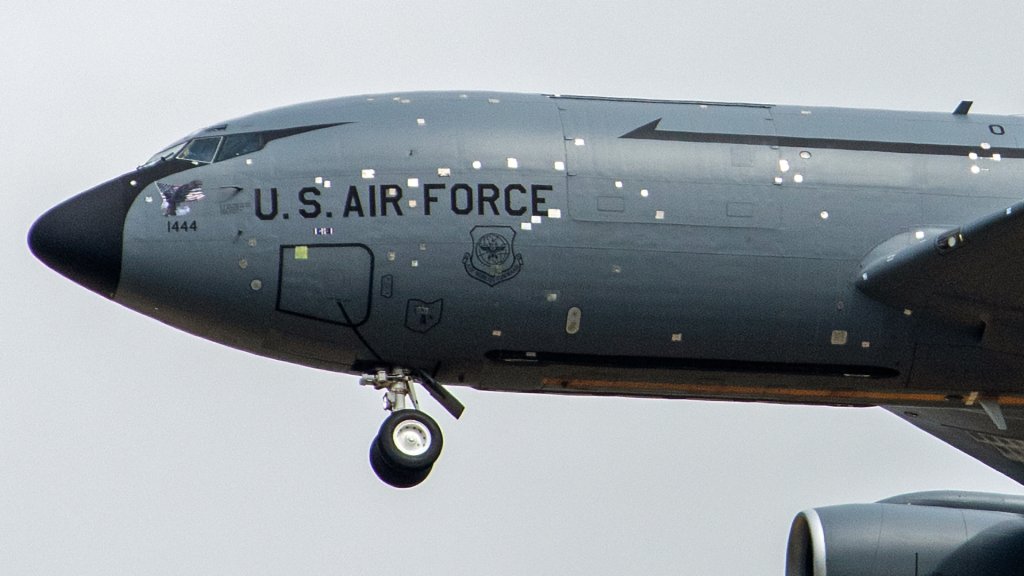
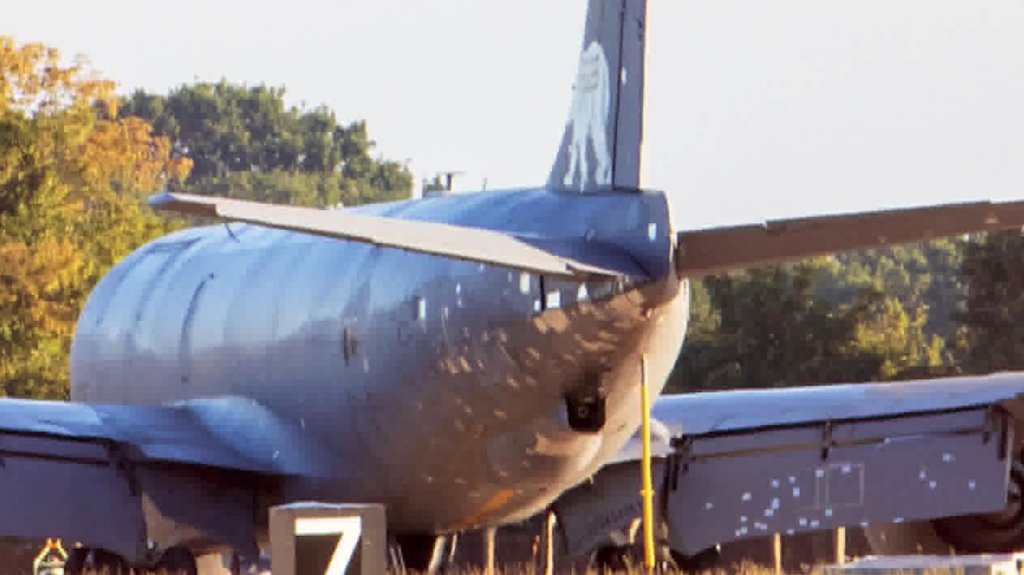
Tulley did not say where the attack took place. However, as we have previously reported, five tankers were reportedly damaged in an Iranian long-range strike on Prince Sultan Air Base (PSAB) in Saudi Arabia on March 14. That was later confirmed in a Department of War Inspector General report released earlier this week.
You can see two of the shrapnel-damaged KC-135s as they passed through the UK on the way home in the following photographs shared with us by aviation photographer Andrew McKelvey. We do not know if either of these is the one discussed by Tulley.
Lt. Gen. Linda Hurry, Commander of Air Force Materiel Command (AFMC), followed Tulley’s comments with additional details about the repair work.
“I’ll pick right up on that because it was our aircraft battle damage repair team that was actually able to patch their aircraft back together to get it back to Tinker [Air Force Base in Oklahoma] that can put it completely back where it needed to be,” she noted. Tinker is home to the Expeditionary Depot Maintenance (EDMX), which is “responsible for maintaining the Air Force’s sole source for Aircraft Battle Damage Repair (ABDR) rapid repair capabilities for the entire tanker and bomber fleets,” according to the Air Force.
“So with Operation Epic Fury, we’re asking those questions: What can we sustain for how long? And it begs a question about regeneration,” Tulley further explained. “You know, our new teammates have regeneration as part of their doctrine, so readiness in contact is the way we’re approaching this. What can we do to improve how we generate capability while under fire, in contact, persistently in an extended or protracted conflict? Lots of great examples of work being done to get after this. General Hurry’s team has brought a lot of capability forward at Mildenhall Air Base.”
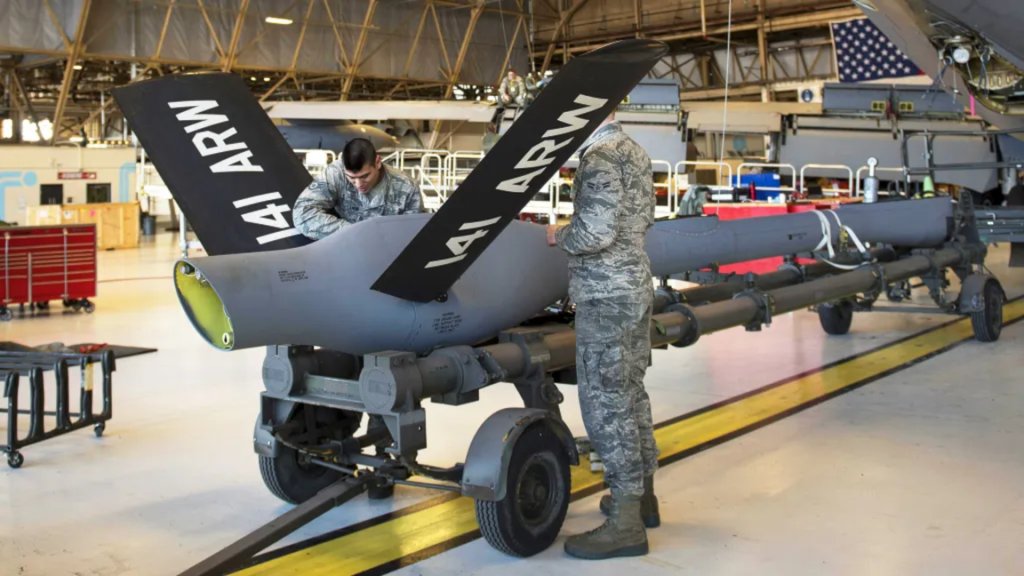
One example of how this has worked has been repairing damaged aerial refueling booms in the U.K. instead of all the way back to the U.S., Tulley highlighted. The booms, which extend from the back of tankers so that receiving aircraft can get their gas, can be damaged by the process, especially during combat refueling.
“I think we turned 30 booms instead of bringing them all the way back to the states,” Tulley noted.
Repairing battle damage is certainly a unique situation for AMC airman, but keeping hundreds of the command’s tankers and cargo aircraft moving at such a high rate prior to and during the war was a huge undertaking that was helped by new maintenance concepts. The Air Force sent maintainers and parts to bases in Europe to drastically speed up major maintenance that would have demanded the aircraft return stateside.
“We moved some maintenance actions forward, so they didn’t have to – the aircraft didn’t have to go all the way back to the states,” Air Force Chief of Staff Gen. Kenneth S. Wilsbach said during his keynote speech earlier this week. “We put some of them in Europe, so they could get through some normal safety inspections that were either due or deferred. Got those done, and the aircraft doesn’t have to go all the way back to the states. They can go somewhere in Europe, get the thing done, and then get right back to the flight. And so, those measures by Air Mobility Command paid dividends in the readiness of our mobility fleet.”
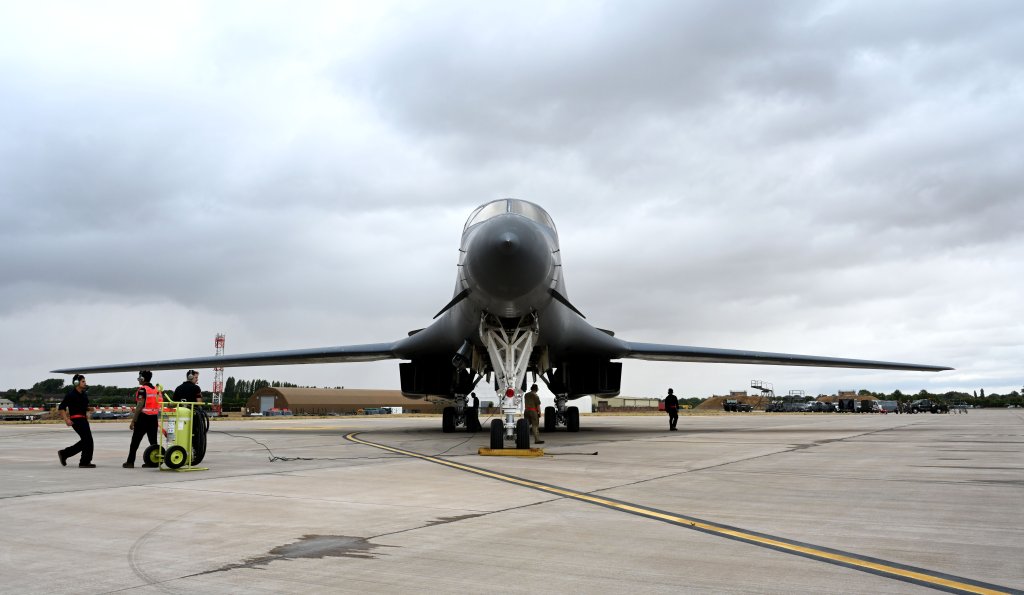
Air Force Global Strike Command (AFGSC), which maintains the service’s fleet of strategic bombers and its ICBM force, did something similar at RAF Fairford in the U.K., AFGSC commander Gen. Stephen L. Davis explained.
“It’s a complex problem,” said Davis. “I would say in the past we probably didn’t do this the right way. When we thought a conflict was kicking off, the first thing we do is start sending bombers forward, and that actually consumes our readiness. So I think we got it right during OEF.”
“We pushed maintainers and support personnel forward to RAF Fairford, and then we actually took the bombers, we loaded them up in CONUS [Continental United States]. We took them to the Middle East. They actually did a mission. They employed, deployed, conducted a combat mission, and then landed at Fairford. And then for the next, well, I guess they’ve been there for now six-plus months.”
“They’ve been conducting nearly daily operations out of there,” Davis proffered. “When bombers are back at home base, they build readiness. When we deploy it forward, they consume readiness. And then, as [Gen. Hurry] said, we’re getting great support in terms of parts, in terms of supplies, and in terms of forward depot support. So that fleet remains healthy.”
Being able to do as much repair and maintenance work as close to the front lines as possible will be hugely important in any future fight against China, and, unfortunately, repairing battle damaged aircraft will be necessary too. Clearly, the Air Force has learned some very important lessons from Epic Fury.
Contact the author: howard@twz.com
The post How The Air Force Patched Up A Shrapnel-Damaged KC-135 appeared first on TWZ.

