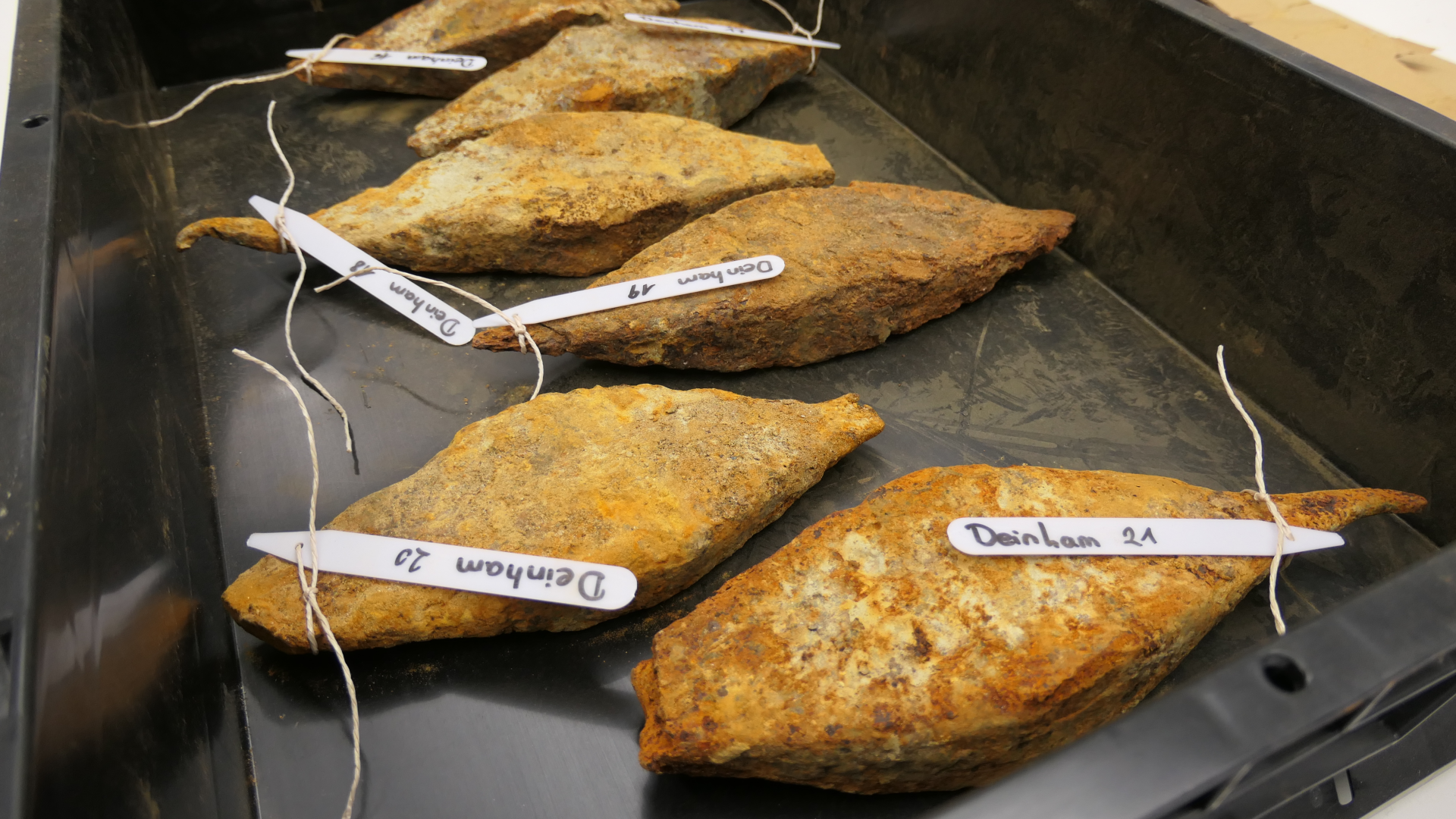
Австрийн Дануб мөрний ёроолоос МЭӨ III-II зууны үед хамаарах, 500 ширхэг төмөр гулдмай бүхий Европын хамгийн том олдворыг олжээ.
Австрийн Дайнхам тосгоны ойролцоох голын голдиролоос 2019 онд хайрга олборлох явцад эдгээр ховор олдворыг анх илрүүлсэн байна. Инсбрукийн их сургуулийн археологич Петер Требше болон Францын технологийн их сургуулийн судлаач Марион Берранжер нарын “Antiquity” сэтгүүлд нийтлүүлсэн судалгаагаар, эдгээр нь нийт нэг тонн жинтэй, 500 орчим төмөр гулдмай болохыг тогтоожээ.
Судлаачдын үзэж байгаагаар, эдгээр нь бэлэн бүтээгдэхүүн бус, харин дархан хүн хожим нь зэвсэг эсвэл бусад эд зүйлс хийхэд ашигладаг хагас боловсруулсан түүхий эд байсан аж. Энэхүү төмөр нь ойролцоогоор 500 ширхэг сэлэм эсвэл 8000 орчим хадаас үйлдвэрлэхэд хүрэлцэхүйц хэмжээтэй тул тухайн үеийн армийн хэрэгцээг хангах зорилгоор тээвэрлэж явсан байх магадлалтай гэж үзэж байна.
Археологичид уг олдворыг голын усаар тээвэрлэж яваад живсэн хөлөг онгоцны ачаа байсан байж болзошгүй хэмээн таамаглаж байна. Герман улсаас ижил төстэй олдворууд олдож байсан нь эдгээр төмрийг Баварийн бүс нутагт үйлдвэрлэсэн байх магадлалыг нэмэгдүүлж байгаа бөгөөд одоогоор эрдэмтэд олдворын гарал үүслийг нарийвчлан тогтоохоор химийн найрлагын шинжилгээ хийж байна.
Энэхүү олдвор нь Төмрийн зэвсгийн үеийн төгсгөл үед Дануб мөрний бүс нутагт төмөр боловсруулах үйлдвэрлэл, худалдааны хүчин чадал өндөр түвшинд хүрснийг баталж буй чухал ач холбогдолтой нээлт юм. Хэдийгээр хайрга олборлох ажлын улмаас олдворын анхны байршил эвдэрсэн ч энэ нь Европ дахь эртний төмрийн хамгийн том цуглуулга гэдгээрээ онцлог юм.
Дэлгэрэнгүйг эх сурвалжаас харах
↓Эх сурвалжийг нээх ↓
More than two millennia ago, a ship carrying a wealth of iron sank in the Danube River in what is now Austria. Archaeologists have identified the “rusty treasure” as a collection of 500 iron bars — the largest cache of ancient iron ever discovered in Europe and enough metal to equip an army.
The assortment was discovered in 2019, when workers who were extracting gravel from the river near the village of Deinham spotted a few unusual double-pointed iron objects and reported them to the Austrian monument authority.
“It is nothing short of a minor miracle that the largest mass find of prehistoric iron bars in Europe did not end up at scrap dealers,” Peter Trebsche, an archaeologist at the University of Innsbruck in Austria, said in a statement.
In a study published Monday (Sept. 21) in the journal Antiquity, Trebsche and co-author Marion Berranger, an archaeologist at the University of Technology of Belfort-Montbéliard in France, detailed their analysis of the extraordinary collection of ancient iron, which dates to the third to second centuries B.C.
From the hundreds of iron fragments recovered from the gravel heaps, Trebsche and Berranger identified 193 complete iron bars and 307 partial bars, for a total of at least 500 bars that were lost centuries ago in the waters of the Danube. On average, the complete bars were 11.2 inches (28.5 centimeters) long and around 4.5 pounds (2 kilograms). Combined, the collection weighed around 2,200 pounds (1 metric ton).
But the Deinham iron bars did not represent finished products. Rather, the double-pointed, semifinished bars — sometimes called ingots — were rough-shaped, intermediate goods that a blacksmith eventually would have forged into other objects.
The semifinished iron bars would have been enough to forge approximately 500 swords, Trebsche said in the statement. “The iron from Deinham would have been sufficient to equip a large group of warriors with weapons,” he said, or to produce up to 8,000 iron nails.
Because the iron was found during gravel extraction with a large bucket excavator, the original context of the archaeological find was destroyed. This erased archaeologists’ opportunity to figure out how the metal ended up in the Danube.
“The possibility of ritual deposition cannot be excluded,” the researchers wrote in the study, but “most studies on river finds have concluded that iron bars are losses incurred during transport.” Before the invention of trains, most ancient cultures transported heavy goods via waterways.
If the iron bars were indeed lost in a shipwreck, they were probably produced somewhere upstream of the archaeological site, the researchers noted. Similar iron bars have been found in Manching, Germany, about 125 miles (200 kilometers) away, so it is plausible that the Deinham bars were forged in Bavaria, the team wrote in the study. Researchers are currently analyzing traces of elements in the bars, which may help to clarify their geographical origin.
“It is incredible that such a large quantity of iron was transported at once and was available in a single exchange transaction in the Late Iron Age,” Trebsche said. “This finding demonstrates the increased capacities of iron production that were reached in the 3rd/2nd century BC in the Danube region.”
Can you identify these historical objects of war? Test your smarts with our weapons of the world quiz!

