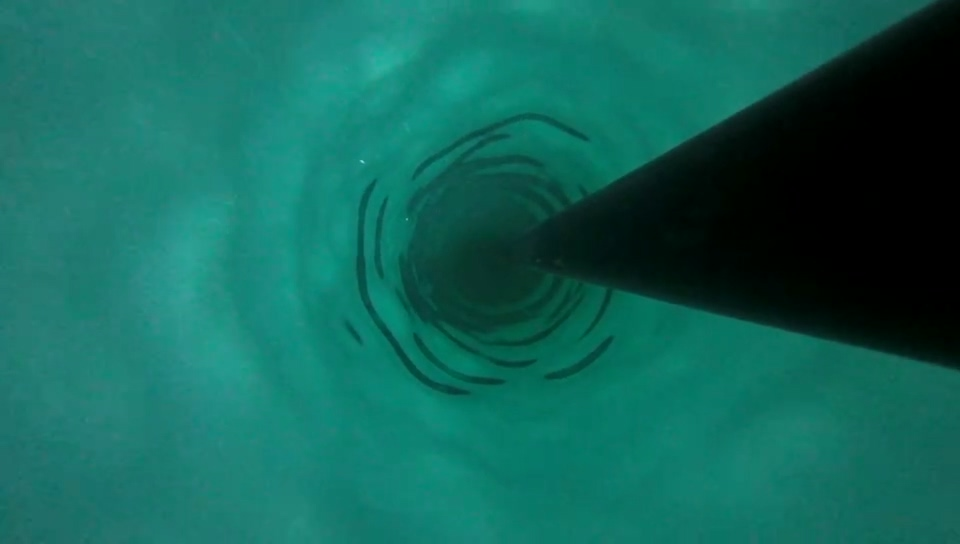
Энэхүү шинжлэх ухааны туршилт нь олон сая жилийн турш тусгаарлагдсан мөсөн доорх нуурыг судлах боломжийг бүрдүүлж, туйлын бүсийн судалгааны шинэ аргачлалыг баталгаажууллаа.
Хоёрдугаар сарын 5-нд Хятадын Антарктидын 42-р экспедицийн баг халуун усны өрөмдлөгийн тусламжтайгаар 3413 метрийн гүнд нэвтэрч, Антарктидын эх газрын гүнд орших “Qilin” мөсөн доорх нуурыг нээлээ. Энэхүү амжилт нь өмнөх олон улсын дээд амжилтыг 873 метрээр ахиулж, Антарктидын мөсөн бүрхүүлийн 90 гаруй хувь болон Арктикийн мөсөн бүрхүүлийг бүхэлд нь өрөмдөх боломжийг нээж өгч байна. Принцесс Элизабет Ландын бүсэд орших уг нуур нь олон сая жилийн турш нарны гэрэл болон гаднын нөлөөллөөс бүрэн тусгаарлагдсан юм.
Механик өрөмдлөгөөс ялгаатай нь халуун усны өрөмдлөгийн технологи нь мөсөн давхаргад бага хохирол учруулж, бохирдолгүй нэвтрэх замыг бүрдүүлдэг. Энэ нь эртний уур амьсгалын төлөв байдал, тусгаарлагдсан орчинд амьд биет байгаа эсэх, химийн нэгдлүүдийг судлахад чухал ач холбогдолтой юм. Одоогоор тус нуураас шууд дээж аваагүй байгаа бөгөөд судалгааны баг уг орчинд бичил биетний бүлгэмдэл байгаа эсэхийг хараахан тогтоогоогүй байна.
Энэхүү туршилт нь зөвхөн Антарктидын судалгаагаар хязгаарлагдахгүй бөгөөд ирээдүйд Бархасбадь гаригийн дагуул Европ, Санчир гаригийн дагуул Энселад зэрэг мөсөн бүрхүүлийн доор далайтай байж болзошгүй сансрын биетүүдийн орчныг судлахад чухал жишиг болох юм. Судлаачид дараагийн шатанд өрөмдлөгийн цооногоор дамжуулан нуурын ус болон ёроолын хурдас, биологийн дээж цуглуулах нарийн төвөгтэй ажлыг гүйцэтгэхээр төлөвлөж байна.
Дэлгэрэнгүйг эх сурвалжаас харах
↓Эх сурвалжийг нээх ↓
On February 5, a column of near-boiling pressurized water burned downward through more than three kilometers of Antarctic ice.
When it stopped, China’s 42nd Antarctic expedition team had opened a shaft to Qilin Subglacial Lake, one of the largest buried lakes known on the continent. In the process, the team set a new global record. China’s Ministry of Natural Resources announced that the drill reached 3,413 meters, beating the previous international benchmark of 2,540 meters.
Nearly 900 meters separated the two marks. That is no narrow technical gain, and it puts far more of Antarctica within reach: the ministry said the achievement gives China the capability to drill across more than 90 percent of the Antarctic ice sheet and the entire Arctic ice sheet.
Qilin Subglacial Lake, formally named by China in 2022, lies in Princess Elizabeth Land in the East Antarctic interior, roughly 120 kilometers from China’s Taishan Station.
Buried under the ice, the lake has been sealed away for an estimated millions of years. No sunlight. No contact with the surface atmosphere, or anything above the ice sheet.
A Record Depth, Not a Narrow Margin
No rotating bits are involved.
A surface unit heats water, then drives it at high pressure down a long hose. The water melts the ice on contact as the hose sinks deeper. The borehole follows.
Compared with traditional mechanical ice drilling, hot-water drilling offers greater penetration capability and higher efficiency, with less disturbance to the ice and an easier path to large-diameter, clean operations. It can efficiently reach critical boundaries such as subglacial lakes, the underside of ice shelves, and subglacial bedrock, making it the mainstream technology internationally for studying the deep environments of polar ice sheets.
That becomes especially important when the target is a pristine lake.
Mechanical drilling can carry surface microbes, fuel, or drilling fluid down into environments biologically cut off for geological timescales. Any contamination could wreck the scientific value of the samples researchers hope to retrieve. A properly managed hot-water system, in contrast, can provide what researchers call a contamination-free pathway.
The experiment targeted ice sheets more than 3,000 meters thick. It brought together multiple pieces of equipment built for polar conditions and tackled a difficult set of technical problems, among them low-temperature operation, external contamination control, and precise management of deep hoses and winches.
A Lake Sealed From the World for Millions of Years
Whatever survives inside a lake sealed for millions of years has adapted to conditions far removed from the surface: near-freezing temperatures, crushing pressure, no light, and a closed chemical system.
But the lake has not yet been directly sampled, so researchers do not yet know whether it contains living microbial communities, how isolated its water has remained through time, or whether the estimated age of its isolation applies uniformly to the lake itself.
The waters and sediments preserve information about past climate states that ice cores and ocean sediments cannot provide in the same form. Any microbial communities there, if they exist, represent biology shaped by long isolation. Polar hot-water drilling is a research method used to study Earth’s ancient environmental changes, predict climate change, and explore the limits of life, according to Xinhua.
In February, the operation focused on proving that access was possible through ice this deep and thick.

The experiment was designed to provide a contamination-free pathway and key technical support for later in-situ observations of the subglacial lake, along with the collection of water and lakebed samples. No samples were collected during this test.
China’s Expanding Reach on the Frozen Continent
In January, the team began formal operations at the Zhongshan-Taishan Ice Cap Atmospheric and Ocean Observation Station, a new inland facility on the East Antarctic Plateau built for sustained climate and environmental monitoring.
The drilling result adds a subsurface dimension to that expanded presence. The Qilin borehole is not yet a scientific instrument. It is a verified access route.
Next comes the harder scientific work: lowering sampling equipment through that passage to collect the first direct measurements and biological material from the lake.
The depth record set in February showed that the Chinese hot-water drilling system can handle whatever ice thickness lies above the targets that matter most. What comes back through that borehole may matter beyond Antarctica, because researchers studying icy moons such as Europa and Enceladus, where subsurface oceans are thought to exist beneath frozen crusts, look to Antarctic subglacial lakes for data on how life might function in analogous conditions.
Enjoyed this article? Subscribe to our free newsletter for engaging stories, exclusive content, and the latest news.

